Introduction
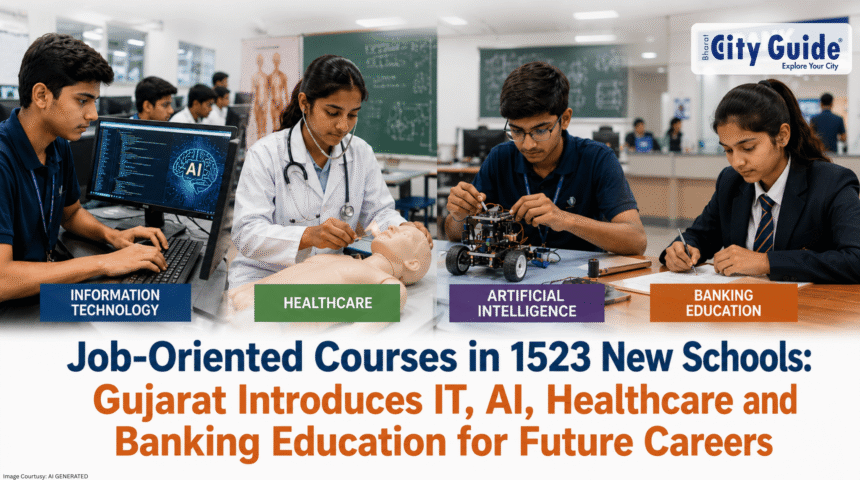
India’s education system is rapidly evolving to meet the demands of the modern workforce. In a significant step toward skill-based learning, the Gujarat government is preparing to launch Job-Oriented Courses in 1523 New Schools, providing students with practical career-focused education from an early stage.
- Introduction
- What Are Job-Oriented Courses in 1523 New Schools?
- Why Gujarat Is Introducing Job-Oriented Courses in 1523 New Schools
- List of 16 Job-Oriented Courses in 1523 New Schools
- How Job-Oriented Courses in 1523 New Schools Will Benefit Students
- Importance of AI and IT Education in Schools
- How Healthcare Courses Can Create New Career Opportunities
- Banking and Financial Education: A Valuable Addition
- Impact on Gujarat’s Education System
- How Schools May Implement These Courses
- Challenges and Opportunities
- Why Skill-Based Education Is the Future
- Expected Long-Term Impact on Students and Society
- Frequently Asked Questions (FAQs)
- Conclusion
According to reports, 16 specialized courses related to Information Technology (IT), Artificial Intelligence (AI), Healthcare, Banking, Retail, Tourism, and other employment-focused sectors will soon be introduced across 1,523 new schools in Gujarat. This initiative aims to bridge the gap between traditional classroom learning and industry requirements.
The announcement has generated excitement among students, parents, educators, and industry experts because it focuses on creating a future-ready workforce. As technology continues to transform industries, skill-based education is becoming just as important as academic knowledge.
This article explores everything about the Job-Oriented Courses in 1523 New Schools, including their objectives, course offerings, benefits, implementation strategy, and the potential impact on students and Gujarat’s economy.
What Are Job-Oriented Courses in 1523 New Schools?
The Job-Oriented Courses in 1523 New Schools initiative is a vocational and skill-development program designed to provide students with industry-relevant knowledge while they are still in school.
Unlike traditional education that mainly focuses on theoretical concepts, job-oriented education emphasizes practical skills, real-world applications, and career readiness.
The objective is to ensure that students:
- Gain employable skills before graduation
- Understand industry requirements
- Explore career opportunities early
- Become self-reliant and job-ready
- Develop technical and professional competencies
The program aligns with India’s broader vision of promoting skill development and enhancing employability among youth.
Why Gujarat Is Introducing Job-Oriented Courses in 1523 New Schools
The decision comes at a time when industries across India are experiencing rapid technological transformation.
Several factors have influenced this move:
Growing Demand for Skilled Workforce
Industries increasingly require employees who possess practical and technical skills rather than only academic qualifications.
Rise of Artificial Intelligence
AI is transforming sectors such as healthcare, finance, manufacturing, and customer service. Introducing AI education at the school level can help students prepare for future opportunities.
Employment Readiness
Many graduates struggle to find jobs due to a mismatch between educational qualifications and industry needs. Skill-based education can reduce this gap.
National Education Policy Alignment
The initiative supports the vision of integrating vocational education into mainstream schooling and encouraging multidisciplinary learning.
Economic Development
A skilled workforce contributes directly to economic growth, innovation, and industrial competitiveness.
List of 16 Job-Oriented Courses in 1523 New Schools
One of the most exciting aspects of the initiative is the wide range of career-focused programs being introduced.
The proposed courses include sectors with strong employment potential.
Information Technology (IT)
Students will learn:
- Computer fundamentals
- Software applications
- Networking basics
- Digital literacy
- Technical troubleshooting
Artificial Intelligence (AI)
Topics may include:
- Machine learning basics
- AI applications
- Data analysis
- Automation technologies
- Future AI careers
Healthcare
Students can gain knowledge related to:
- Basic healthcare support
- Patient care
- Medical administration
- Health awareness
- Community healthcare services
Banking and Financial Services
This course may cover:
- Banking operations
- Financial literacy
- Digital payments
- Customer service
- Financial management
Retail Management
Students can learn:
- Sales techniques
- Inventory management
- Customer handling
- Retail operations
- Business communication
Tourism and Hospitality
Key learning areas include:
- Tourism services
- Hospitality management
- Travel operations
- Guest relations
- Event management
Electronics
Focus areas:
- Electronic systems
- Circuit basics
- Device maintenance
- Technical repair skills
Logistics and Supply Chain
Students may understand:
- Transportation systems
- Warehousing
- Inventory planning
- Supply chain operations
Agriculture-Based Skills
Training may include:
- Modern farming techniques
- Agricultural technology
- Sustainable agriculture
- Crop management
Beauty and Wellness
This sector offers opportunities in:
- Personal grooming
- Beauty services
- Wellness management
- Client interaction
Automobile Basics
Students may learn:
- Vehicle systems
- Maintenance practices
- Automotive technology
Entrepreneurship
Topics can include:
- Business planning
- Startup concepts
- Innovation
- Financial management
Digital Marketing
Areas of study:
- Social media marketing
- Online branding
- Search engine optimization
- Content promotion
Data Management
Students can gain exposure to:
- Data collection
- Organization
- Analysis techniques
- Digital record management
Communication Skills
Focus areas:
- Public speaking
- Professional communication
- Interview preparation
- Workplace etiquette
Emerging Industry Skills
Additional modules may cover future-oriented technologies and sector-specific competencies based on local industry needs.
How Job-Oriented Courses in 1523 New Schools Will Benefit Students
The initiative provides several advantages for students.
Early Career Exposure
Students can identify their interests and strengths before entering higher education.
Better Employability
Industry-focused training improves job prospects after school and college.
Practical Learning
Students gain hands-on experience instead of relying solely on textbooks.
Increased Confidence
Skill development enhances confidence in professional environments.
Entrepreneurship Opportunities
Students interested in starting businesses can develop entrepreneurial skills early.
Future-Ready Education
Exposure to AI, IT, and emerging technologies prepares students for tomorrow’s job market.
Importance of AI and IT Education in Schools
Among all the courses, Artificial Intelligence and Information Technology are expected to attract significant attention.
The world is increasingly driven by technology, and AI is reshaping industries globally.
Benefits of AI Education
- Enhances problem-solving abilities
- Encourages innovation
- Develops analytical thinking
- Prepares students for high-demand careers
- Improves digital literacy
Benefits of IT Education
- Strengthens computer skills
- Supports digital transformation
- Improves technological awareness
- Creates opportunities in software and networking careers
Students familiar with these technologies will have a competitive advantage in future employment markets.
How Healthcare Courses Can Create New Career Opportunities
Healthcare remains one of the fastest-growing sectors worldwide.
Introducing healthcare education in schools can help students:
- Understand healthcare systems
- Explore medical support careers
- Develop community service skills
- Learn health awareness practices
This initiative may also encourage more students to pursue healthcare-related higher education and professional training.
Banking and Financial Education: A Valuable Addition
Financial literacy is becoming essential in today’s economy.
The banking course can help students understand:
- Savings and investments
- Banking procedures
- Digital transactions
- Personal finance management
- Financial responsibility
These skills benefit students regardless of their future career paths.
Impact on Gujarat’s Education System
The introduction of Job-Oriented Courses in 1523 New Schools represents a major shift in educational priorities.
Expected impacts include:
Modernized Curriculum
Schools will offer more industry-relevant learning opportunities.
Stronger Industry Collaboration
Educational institutions may collaborate with businesses for training and internships.
Increased Student Engagement
Practical learning often improves student interest and participation.
Reduced Skill Gap
Employers can access a more skilled and job-ready workforce.
Enhanced Educational Outcomes
Students gain both academic and practical competencies.
How Schools May Implement These Courses
Successful implementation will require careful planning.
Possible strategies include:
Specialized Training Labs
Schools may establish dedicated labs for IT, AI, healthcare, and technical courses.
Industry Partnerships
Collaboration with companies can provide practical exposure.
Teacher Training Programs
Educators may receive specialized training to teach vocational subjects.
Project-Based Learning
Students can work on real-world projects and practical assignments.
Certification Programs
Industry-recognized certifications could enhance student employability.
Challenges and Opportunities
While the initiative is highly promising, certain challenges may arise.
Potential Challenges
- Infrastructure requirements
- Teacher availability
- Technology access
- Curriculum standardization
- Resource allocation
Major Opportunities
- Better employment outcomes
- Economic growth
- Innovation culture
- Industry-ready graduates
- Increased educational relevance
With proper execution, the opportunities far outweigh the challenges.
Why Skill-Based Education Is the Future
The global workforce is changing rapidly.
Employers now value:
- Technical skills
- Communication abilities
- Problem-solving capabilities
- Digital literacy
- Adaptability
Traditional education alone is no longer sufficient. Skill-based learning helps students meet modern workforce expectations and remain competitive in a dynamic economy.
The Job-Oriented Courses in 1523 New Schools initiative reflects this global trend and positions Gujarat as a leader in educational innovation.
Expected Long-Term Impact on Students and Society
Over the next decade, the program could produce significant benefits.
For Students
- Better career opportunities
- Higher employability
- Improved confidence
- Greater earning potential
For Industries
- Skilled workforce availability
- Reduced training costs
- Improved productivity
For Gujarat
- Economic development
- Enhanced innovation ecosystem
- Stronger educational reputation
For India
- Support for national skill development goals
- Better workforce readiness
- Increased competitiveness in global markets
Frequently Asked Questions (FAQs)
What are Job-Oriented Courses in 1523 New Schools?
These are vocational and career-focused programs that provide practical skills in sectors such as IT, AI, healthcare, banking, retail, and hospitality.
Why is Gujarat introducing these courses?
The initiative aims to improve employability, reduce skill gaps, and prepare students for future industry requirements.
Which sectors are included in the new courses?
The courses cover IT, Artificial Intelligence, Healthcare, Banking, Retail, Tourism, Electronics, Entrepreneurship, Digital Marketing, and several other fields.
How will students benefit from these courses?
Students will gain practical skills, industry exposure, career awareness, and improved job readiness.
Will AI be taught in schools under this initiative?
Yes. Artificial Intelligence is among the key subjects expected to be introduced under the program.
Can these courses help students find jobs faster?
Skill-based education can significantly improve employability by providing industry-relevant competencies.
Are these courses aligned with future job markets?
Yes. Many of the selected sectors, including AI, healthcare, and IT, are expected to experience strong growth in the coming years.
Conclusion
The launch of Job-Oriented Courses in 1523 New Schools marks a transformative step for Gujarat’s education system. By introducing 16 career-focused programs in fields such as IT, Artificial Intelligence, Healthcare, Banking, Retail, Tourism, and Entrepreneurship, the state is moving toward a more practical and employment-oriented model of education.
This initiative recognizes that the future workforce requires more than academic knowledge. Students need technical expertise, digital skills, problem-solving abilities, and real-world experience to succeed in an increasingly competitive economy.
If implemented effectively, these courses can help thousands of students discover career opportunities, develop valuable skills, and contribute to Gujarat’s economic growth. The program also serves as a model for other states seeking to modernize education and prepare young people for the jobs of tomorrow.