Introduction
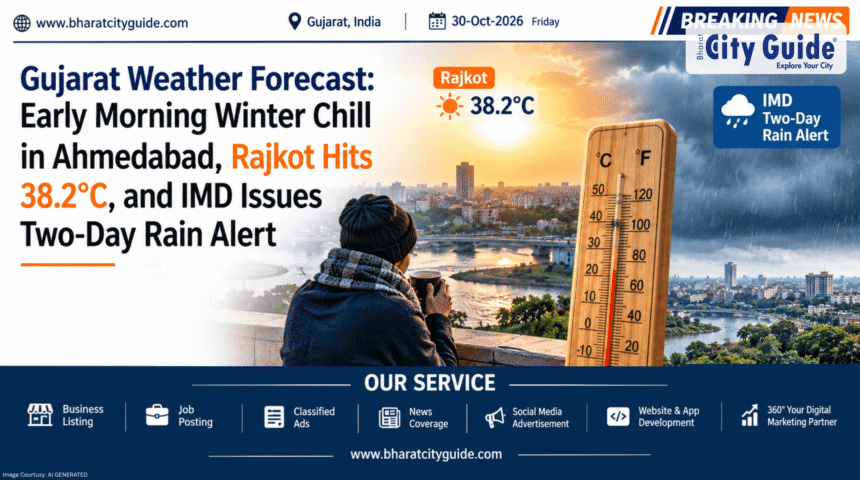
As Western India transitions through its post-monsoon climate cycle, the latest Gujarat Weather Forecast presents a fascinating study in contrasting atmospheric conditions across the state. Residents in Ahmedabad and surrounding central Gujarat regions woke up to pleasant early morning breezes and a light winter chill, locally cherished as “Gulabi Thand.” However, as the day progressed, daytime temperatures surged sharply across the Saurashtra region, with Rajkot recording a blazing maximum temperature of 38.2°C—making it the hottest city in the entire state of Gujarat.
- Introduction
- What is Gujarat Weather Forecast?
- Why This News is Important
- Background Information
- Key Highlights
- Detailed Explanation of Regional Weather Variations
- Benefits and Importance of Tracking Weather Changes
- How It Impacts Citizens, Farmers, and Commerce
- Expert Insights and Meteorological Perspective
- Helpful Guidelines for Managing Fluctuating Weather
- Frequently Asked Questions (FAQs)
- Conclusion
This striking contrast between morning cool breezes and afternoon heat is further complicated by meteorological forecasts. The India Meteorological Department (IMD) has issued a fresh weather bulletin predicting light to moderate unseasonal rainfall and thundershowers across select districts in Gujarat over the next two days. Driven by upper-air cyclonic circulations and moisture-laden easterly winds originating from the Arabian Sea, this sudden shift threatens to disrupt routine life and seasonal agricultural operations across multiple districts.
Understanding the changing dynamics highlighted in the current meteorological report is essential for citizens, farmers, festive shoppers, and daily travelers alike. With fluctuating temperatures creating health challenges and unseasonal rain threats overlapping with post-harvest agricultural cycles and pre-Diwali preparations, tracking atmospheric updates becomes critical. The detailed regional analysis below breaks down temperature distributions, precipitation warnings, and environmental factors shaping Gujarat’s weather over the coming days.
What is Gujarat Weather Forecast?
The Gujarat Weather Forecast refers to the official meteorological assessment, temperature tracking, and precipitation prediction issued by the India Meteorological Department (IMD) Meteorological Centre in Ahmedabad, alongside regional climate monitoring stations. It covers temperature variations, atmospheric humidity, wind speed, and precipitation patterns across Gujarat’s varied geographical zones—including North Gujarat, Central Gujarat, South Gujarat, Saurashtra, and Kutch.
+-----------------------------------------------------------------------+
|             GUJARAT WEATHER METRICS & HIGHLIGHTS AT A GLANCE           |
+--------------------------+--------------------------------------------+
| State Maximum Temperature| 38.2°C Recorded in Rajkot (Hottest City)   |
| Morning Condition        | Light Winter Chill ("Gulabi Thand") in AMD |
| Precipitation Forecast   | Light Rain / Thundershowers over 2 Days    |
| Influencing System       | Arabian Sea Moisture & Cyclonic Curvature  |
| Affected Sectors         | Agriculture, Public Health, Outdoor Commerce|
+--------------------------+--------------------------------------------+
The forecast analyzes how macro-level atmospheric phenomena—such as Western Disturbances, Arabian Sea low-pressure troughs, and continental wind turnarounds—interact with regional topographies. From the coastal belts of Surat and Porbandar to the arid plains of Kutch and the urban heat islands of Ahmedabad and Vadodara, this comprehensive monitoring provides actionable weather intelligence for public safety and economic planning.
Why This News is Important
The current meteorological conditions demand attention across Gujarat due to their direct impact on public health, agriculture, and daily economic activity. First, the sharp temperature variation between cool early mornings and scorching afternoons (exceeding 38°C in Saurashtra) creates severe thermal stress on the human body. Sudden diurnal temperature swings weaken immune responses, triggering widespread seasonal viral fevers, respiratory infections, and throat irritations among children and senior citizens.
Second, the threat of unseasonal rainfall (known locally as “Mavthu”) during the post-monsoon harvesting window presents a serious risk for the farming community. Farmers across Saurashtra and North Gujarat who have harvested or stacked Kharif crops—such as groundnut, cotton, sesame, and castor—in open fields face potential crop damage and financial loss if sudden showers hit open agricultural markets (APMCs) and farm yards.
Finally, this unpredictable weather coincides with peak pre-festive commercial activity. As markets across Ahmedabad, Rajkot, Surat, and Vadodara experience heavy pedestrian traffic for Diwali and wedding season shopping, unexpected rain spells disrupt outdoor night markets, traffic flow, and street vendor operations, making timely weather alerts vital for city logistics.
Background Information
Gujarat’s geographic position along the western coast of India makes its atmospheric conditions highly sensitive to seasonal transition dynamics between October and November. During this transition phase, known as the post-monsoon or autumn season, the Southwest Monsoon completely withdraws from the Indian subcontinent, paving the way for cool northeasterly continental winds.
Historically, October witnesses a temporary resurgence in heat known as the “October Heat” phenomenon, caused by clear skies, high solar radiation, and evaporating ground moisture. However, when easterly and southeasterly moisture-laden winds from the Arabian Sea interact with dry continental air masses, localized instability develops, leading to unseasonal showers.
+-----------------------------------------------------------------------+
|                SEASONAL TRANSITION DYNAMICS IN GUJARAT                |
+--------------------------+--------------------------------------------+
| Climate Phase            | Dominant Atmospheric Behavior              |
+--------------------------+--------------------------------------------+
| Early Morning (Dawn)     | Cool northeasterly breezes, lower humidity |
| Afternoon Peak (Midday)  | Solar heating, clear skies, high max temps |
| Evening / Night Shift    | Radiative cooling, local thermal inversions|
| Unseasonal Interruption  | Trough systems triggering "Mavthu" rain    |
+--------------------------+--------------------------------------------+
The convergence of early morning radiative cooling (which produces the winter-like chill in inland cities like Ahmedabad) alongside intense daytime heating in Saurashtra (pushing Rajkot to 38.2°C) illustrates this volatile transition period.
Key Highlights
- Hottest Spot in Gujarat: Rajkot recorded the highest maximum temperature in the state at 38.2°C, closely followed by warm conditions in Amreli and Surendranagar.
- Early Morning Winter Vibe: Ahmedabad and Gandhinagar experienced a pleasant drop in morning minimum temperatures, offering residents a light “Gulabi Thand” experience.
- IMD Two-Day Rain Alert: India Meteorological Department issued a forecast predicting light unseasonal rain and thunderous skies across isolated districts.
- Saurashtra & South Gujarat Focus: Unseasonal precipitation probability remains elevated over coastal Saurashtra, Surat, Navsari, and Valsad belts.
- Wide Diurnal Range: Cities are recording temperature variations of over 14°C to 16°C between minimum morning lows and maximum afternoon highs.
- Agricultural Caution Issued: Farmers advised to protect harvested groundnut and cotton crops from open storage yards.
Detailed Explanation of Regional Weather Variations
The latest meteorological data reveals distinct weather patterns operating simultaneously across Gujarat’s geographical regions. In Central Gujarat, including Ahmedabad and Gandhinagar, clear overnight skies have facilitated rapid terrestrial radiation, dropping minimum temperatures down toward 20°C–21°C. This nocturnal cooling creates crisp, cool early mornings that give citizens a preview of approaching winter. However, by 2:00 PM, strong solar radiation pushes afternoon temperatures back up into the 35°C–36°C range.
Conversely, the Saurashtra region is experiencing intense solar heating combined with dry land winds. Rajkot registered a scorching maximum temperature of 38.2°C, creating hot and dry afternoon conditions. Similar elevated temperatures were logged across Junagadh, Bhavnagar, and Keshod, making outdoor activity uncomfortable during peak afternoon hours.
+-----------------------------------------------------------------------+
|                   REGIONAL TEMPERATURE & WEATHER SUMMARY              |
+--------------------------+--------------------------------------------+
| Region / City            | Temperature Range & Expected Condition     |
+--------------------------+--------------------------------------------+
| Ahmedabad & Gandhinagar  | Min ~20.5°C | Max ~35.8°C (Morning Chill)  |
| Rajkot (Saurashtra)      | Min ~22.0°C | Max 38.2°C (State Hottest)   |
| Surat (South Gujarat)    | Min ~24.2°C | Max ~34.5°C (Humid + Rain Risk)|
| Bhuj (Kutch)             | Min ~21.0°C | Max ~37.0°C (Warm & Dry)     |
+--------------------------+--------------------------------------------+
Meanwhile, the incoming weather system—marked by moisture influx from the Arabian Sea—is expected to trigger cloud cover and light unseasonal rainfall. South Gujarat districts (Surat, Tapi, Dang, Navsari, and Valsad) along with coastal Saurashtra (Gir Somnath, Amreli, and Bhavnagar) are likely to experience scattered light showers and gusty winds over the next 48 hours.
Benefits and Importance of Tracking Weather Changes
Proactively monitoring meteorological forecasts and seasonal alerts delivers tangible benefits for public safety, economic stability, and health management:
1. Safeguarding Harvested Agricultural Produce
Timely rain alerts allow farmers to cover harvested groundnut pods and cotton bales with protective tarpaulins or move yields into covered APMC godowns, preventing crop damage.
2. Preventive Health and Wellness Management
Awareness of extreme day-night temperature swings helps individuals dress appropriately, stay hydrated during hot afternoons, and take precautions against sudden seasonal viral fevers.
3. Smooth Event and Festive Shopping Planning
Commercial vendors, event organizers, and festive shoppers can adjust outdoor event schedules, market setups, and travel plans to avoid unexpected rain disruptions.
4. Efficient Urban Energy Management
Municipal power utilities can optimize grid distribution by anticipating air-conditioning peak demand during hot afternoons while managing reduced loads during cool mornings.
How It Impacts Citizens, Farmers, and Commerce
The current climate conditions create wide-ranging effects across different segments of society:
- For Farmers and Agriculture: Represents a critical vulnerability window. Unseasonal rain (“Mavthu”) can discolor harvested cotton, increase moisture content in groundnuts, and delay winter crop (Rabi) sowing prep.
- For Common Citizens and Families: Requires balancing morning wardrobes with lightweight clothing for hot afternoons, alongside managing respiratory allergies caused by shifting humidity.
- For Outdoor Retailers and Festive Markets: Unseasonal rain can temporarily reduce footfall in open-air night markets and damage temporary pop-up shops set up for Diwali and wedding shopping.
- For Travelers and Commuters: Sudden afternoon heat followed by localized rain spells requires careful driving on slippery city roads and highway stretches.
Expert Insights and Meteorological Perspective
Climatologists and senior meteorologists emphasize that the current pattern reflects the complex nature of post-monsoon weather transitions in Western India. According to weather experts, the phenomenon of “Gulabi Thand” in early mornings occurs when dry continental winds replace lingering monsoon moisture, allowing rapid heat loss from the ground at night.
However, because global sea surface temperatures in the Arabian Sea remain elevated, small cyclonic circulations easily push moist air inland, colliding with warm land temperatures to trigger localized unseasonal rain.
Furthermore, medical experts warn that the human body struggles to adapt when ambient temperatures fluctuate by more than 15°C within a 12-hour period. Health professionals recommend consuming immune-boosting fluids, avoiding sudden transitions from air-conditioned rooms to hot outdoor environments, and keeping vulnerable family members protected from chilly morning winds.
Helpful Guidelines for Managing Fluctuating Weather
To navigate hot afternoons, chilly mornings, and potential unseasonal showers safely, citizens and farmers should follow these practical recommendations:
- Protect Harvested Crops: Farmers should immediately shift harvested groundnut, cotton, and oilseed crops to dry, covered storage sheds or secure them tightly under heavy-duty waterproof tarpaulins.
- Manage Thermal Health Risk: Layer clothing so you can adjust easily between cool 20°C early mornings and hot 38°C afternoons. Stay hydrated throughout the day despite lower morning thirst.
- Secure Open Market Inventory: Small shopkeepers and festive stall operators should keep plastic sheets ready to protect decorative goods, electronics, and textiles from sudden rainfall.
- Practice Food and Water Hygiene: Avoid consuming exposed street food or unpasteurized beverages during sudden rain spells, as shifting humidity accelerates bacterial contamination.
Frequently Asked Questions (FAQs)
What does the latest Gujarat Weather Forecast predict for the next two days?
The forecast predicts a wide temperature variation—including cool early mornings in central Gujarat, hot afternoons in Saurashtra (up to 38.2°C in Rajkot), and light unseasonal rain over isolated districts.
Which city was recorded as the hottest in Gujarat?
Rajkot was recorded as the hottest city in Gujarat, with maximum temperatures touching 38.2°C.
What is meant by “Gulabi Thand” in Gujarat?
“Gulabi Thand” refers to the pleasant, mild winter chill experienced during early morning hours as the post-monsoon transition begins.
Which regions in Gujarat are likely to receive unseasonal rainfall?
Isolated areas in South Gujarat (Surat, Navsari, Valsad) and coastal Saurashtra (Gir Somnath, Amreli, Bhavnagar) face an elevated risk of light unseasonal showers.
How does unseasonal rain (“Mavthu”) affect farmers in Gujarat?
Unseasonal rain can damage harvested Kharif crops like cotton and groundnut lying in open fields or APMC market yards, increasing moisture levels and lowering market value.
Why are daytime temperatures so high despite approaching winter?
Clear skies and strong solar radiation cause intense midday heating (known as October Heat), while night skies allow rapid cooling, creating wide temperature swings.
What precautions should citizens take during wide temperature fluctuations?
Citizens should stay hydrated, dress in layers to adapt to changing day-night temperatures, and protect against viral infections caused by rapid weather shifts.
Conclusion
The latest Gujarat Weather Forecast highlights a dynamic climate scenario across the state, characterized by cool morning breezes in Ahmedabad, intense afternoon heat reaching 38.2°C in Rajkot, and an impending two-day unseasonal rain alert. This complex atmospheric pattern reflects the ongoing seasonal transition from post-monsoon warmth to winter cooling.
Navigating these sudden shifts requires proactive planning across public health, agriculture, and urban administration.
By staying updated on meteorological advisories, protecting harvested crops from unseasonal moisture, and taking basic health precautions against diurnal temperature swings, citizens and farmers across Gujarat can manage the changing weather smoothly. As atmospheric systems stabilize in the coming days, the state will gradually transition toward consistent, comfortable winter conditions.