Introduction
The majestic Asiatic lion (Panthera leo persica) of the Gir forest in Gujarat stands as one of the most iconic symbols of India’s natural heritage and wildlife conservation success. While popular culture often glorifies the adult male lion with his dark, regal mane as the supreme ruler of the jungle, ecological reality tells a far more profound story. A lion is not born a king; he is transformed into one through the fierce, protective, and selfless devotion of a lioness. The fundamental bedrock of pride survival, territory defense, and demographic continuity in Gir rests entirely upon the shoulders of its matriarchs.
- Introduction
- What is Gir Lion Motherhood & Wildlife Photography?
- Why This News is Important
- Background Information
- Key Highlights
- Detailed Explanation of the Event
- Benefits / Features / Importance
- How It Impacts People
- Expert Insights / Industry Perspective
- Challenges / Limitations
- Future Outlook
- Frequently Asked Questions (FAQs)
- Conclusion
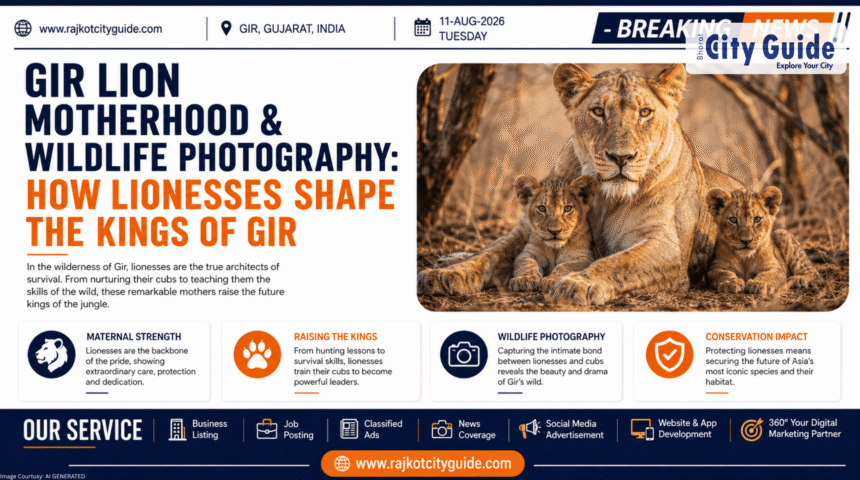
In recent wildlife documentation, noted wildlife photographer Jay Bhinde brought this essential truth into sharp focus through a breathtaking photographic narrative centered on Gir lionesses and their cubs. His observations underscore how maternal care forms the true essence of lion society. From hiding newborn cubs in dense, thorn-scrill thickets to teaching adolescent sub-adults the complex art of hunting sambar and chital, the mother lioness acts as protector, provider, teacher, and guardian.
Understanding this dynamic through the lens of Gir Lion Motherhood & Wildlife Photography provides not only artistic inspiration but also vital insights into big cat behavior, population ecology, and conservation awareness. As Gir remains the sole wild sanctuary for Asiatic lions globally, highlighting maternal behavior offers a fresh and necessary perspective on why protecting lionesses and their cub-rearing habitats is the single most critical factor in securing the future of the species.
What is Gir Lion Motherhood & Wildlife Photography?
Gir Lion Motherhood & Wildlife Photography is an analytical and visual discipline that intersects big cat ethology, maternal biology, and environmental photojournalism within the unique ecosystem of Gujarat’s Gir National Park and Wildlife Sanctuary. It focuses specifically on documenting, studying, and conveying the intricate social life and maternal journey of female Asiatic lions as they birth, nurture, defend, and train their offspring.
Unlike African lions, Asiatic lions exhibit distinct social structures. Female Asiatic lions typically form smaller, tight-knit prides composed of related mothers, sisters, and daughters, while adult males form separate coalitions that associate with females primarily for mating or sharing large kills. Consequently, the daily survival of cubs rests almost exclusively on the female pride members.
Wildlife photography in this context goes beyond capturing aesthetically pleasing images of wild animals. It serves as an empirical visual document that records critical natural behaviors:
- Denning and Isolation: How pregnant lionesses isolate themselves in dense vegetation to give birth to vulnerable, blind litters of two to four cubs.
- Cooperative Creching: The practice where related lionesses nurse and defend each other’s cubs collectively within the pride.
- Tactical Training: The step-by-step physical education where mothers teach growing cubs stalk-and-ambush mechanics, territorial navigation, and social hierarchy rules.
- Ethical Visual Storytelling: Using telephoto optics and patient fieldcraft to observe natural animal interactions without disrupting maternal bonds or provoking defensive stress responses.
Why This News is Important
The insights highlighted by wildlife photographer Jay Bhinde regarding lioness motherhood in Gir come at a pivotal juncture in Asiatic lion conservation. With the Asiatic lion population making a remarkable recovery—growing from fewer than 20 individuals at the turn of the 20th century to over 674 in recent census estimations—the sheer volume of breeding mothers and dispersing sub-adults across the Greater Gir Region has expanded significantly.
This narrative is crucial for several key reasons:
- Shifting the Conservation Narrative: Public attention frequently gravitates toward male lions, territorial fights, and impressive manes. Emphasizing lioness motherhood redirects public appreciation to the core demographic engine driving species recovery.
- Highlighting Habitat Requirements: Lionesses require undisturbed, dense riverine patches and dry deciduous thickets for denning. Understanding maternal needs helps forest officials protect sensitive breeding zones within Gir and human-dominated agricultural landscapes.
- Promoting Ethical Photography: As wildlife photography gains popularity across India, highlighting thoughtful, non-intrusive documentation sets an ethical standard for photographers visiting sensitive wildlife habitats.
- Fostering Community Coexistence: Local communities in the Kathiawar peninsula, particularly the Maldhari pastoralists, live in close proximity to lions. Recognizing the protective, non-aggressive nature of mother lions tending their young builds deeper empathy and reduces human-wildlife conflict.
Background Information
The Asiatic lion is a distinct subspecies that split from its African counterparts thousands of years ago. Historically distributed across Southwest Asia, the Middle East, and Northern India, relentless hunting and habitat destruction reduced the global population of Asiatic lions to a single remnant group in the Gir forest of Kathiawar, Gujarat, by the late 19th century.
Thanks to the visionary protection granted initially by the Nawabs of Junagadh and subsequently sustained by the Gujarat Forest Department, local communities, and conservation scientists, the Gir forest was designated as a sanctuary in 1965 and a national park in 1975.
+-------------------------------------------------------------------------+
|                  ASIATIC LION MATERNAL DEVELOPMENT STAGES               |
+-------------------------------------------------------------------------+
| Stage 1: Birth & Isolation (0 - 2 Months)                               |
| - Mother isolates in dense riverine scrub or cave crevices.             |
| - Cubs are born blind, weighing merely 1.0 to 1.5 kg.                   |
| - Total reliance on mother's milk; hidden from all external predators.  |
+-------------------------------------------------------------------------+
                                    |
                                    v
+-------------------------------------------------------------------------+
| Stage 2: Pride Introduction & Creching (2 - 6 Months)                   |
| - Cubs are introduced to the female pride and older siblings.           |
| - Communal suckling begins; cubs start testing solid meat.              |
| - High vigilance required against rogue nomadic male lions.             |
+-------------------------------------------------------------------------+
                                    |
                                    v
+-------------------------------------------------------------------------+
| Stage 3: Hunting Apprenticeship & Sub-Adult Dispersal (6 - 24 Months)   |
| - Mothers teach stalking, ambushing, and territory marking.             |
| - Cubs transition to full carnivore diet.                               |
| - Young males prepare for independence; females integrate into pride.   |
+-------------------------------------------------------------------------+
As the population expanded beyond the core 1,412 square kilometers of the Gir Protected Area Network into satellite landscapes across Junagadh, Gir Somnath, Amreli, and Bhavnagar districts, the spatial behavior of mother lions evolved. Lionesses now frequently rear cubs in sugarcane fields, prosopis thickets, and river corridors outside formal sanctuary boundaries. This ecological shift makes maternal resilience and human tolerance the two primary pillars sustaining the species today.
Key Highlights
- Core Philosophy: A male lion isn’t born a king of the jungle; he is shaped into royalty through the unconditional dedication, protection, and training of his mother.
- Maternal Resilience: Lionesses routinely endure extreme physical exhaustion, hunting while lactating and putting their own lives on the line to defend cubs against rival males, leopards, and hyenas.
- Visual Documentation: Photographer Jay Bhinde captured rare intimate moments illustrating tender grooming, collective nursing, and tactical hunting lessons in the wild terrain of Gir.
- Social Architecture: Female Asiatic lions establish the permanent foundation of pride territoriality, passing down hunting grounds through generations of daughters.
- Call for Habitat Protection: Safeguarding secluded birthing thickets inside and outside sanctuary borders is crucial for maintaining cub survival rates above critical thresholds.
- Ethical Photography Standard: Emphasizes long-lens observation from approved safari tracks, ensuring zero disturbance to nursing mothers and young litters.
Detailed Explanation of the Event
In his extensive photo-essay and field documentation, wildlife photographer Jay Bhinde focused on the emotional and behavioral depth of mother lionesses in Gir. Having spent long hours observing lion prides across diverse seasons, Bhinde noted that the real drama of the jungle lies not in territorial combat between males, but in the quiet, unrelenting struggle of a mother raising her litter to adulthood.
During the initial two months after giving birth, a lioness leads an incredibly stressful, solitary existence. She must leave her hidden den to hunt prey like chital (spotted deer), sambar, or wild boar, constantly returning to feed her offspring. During her absence, cubs face severe threats from nomadic male lions seeking to infanticide unrelated litters, prowling leopards, jackals, and venomous snakes.
+-------------------------------------------------------------------------+
|                    LIONESS MATERNAL ENERGY EXPENDITURE                  |
|                                                                         |
|  [ Hunting & Securing Prey ] <---> [ Lactation & Direct Feeding ]      |
|              ^                                    ^                     |
|              |                                    |                     |
|              v                                    v                     |
|  [ Territorial Vigilance ]   <---> [ Defensive Stand vs Males ]         |
+-------------------------------------------------------------------------+
As the cubs grow, the mother gradually introduces them to her pride sisters. In Asiatic lion social dynamics, aunt-mother relationships are highly cooperative. Lionesses routinely nurse each other’s cubs—a behavioral phenomenon known as “allonursing.” This communal support system increases overall cub survival rates when one mother is away on an extended hunt.
Bhinde’s photographic work beautifully captures these nuanced interactions:
- The Gentle Touch: High-resolution frames showing a lioness rough-tongue grooming her cubs, which cleans their coats, stimulates blood circulation, and reinforces social bonds.
- Patience in Play: Images depicting cubs pouncing on their mother’s twitching tail—a playful behavior that develops essential motor skills, depth perception, and pouncing mechanics required for future survival.
- Fierce Defense: Documented instances where lionesses put themselves between their cubs and approaching danger, displaying teeth-bared aggression to ward off potential threats.
Through these images, Bhinde eloquently argues that the true architect of the wild king is the mother. Without her sacrifices during their vulnerable early years, no cub would survive to claim territory or lead a pride.
Benefits / Features / Importance
1. Ecological and Scientific Value
Documenting maternal behavioral patterns provides wildlife biologists and field researchers with priceless visual data. Photographers tracking individual marked lionesses over years assist forest departments in monitoring litter sizes, cub mortality rates, inter-birth intervals, and territorial fidelity.
2. Conservation Awareness & Public Engagement
Powerful imagery humanizes wildlife in the public eye without resorting to anthropomorphism. When people witness the tenderness, sacrifice, and fierce love of a lioness protecting her young, public support for conservation policies, forest protection budgets, and anti-poaching measures grows exponentially.
3. Boosting Sustainable Eco-Tourism
High-quality wildlife photojournalism puts Gir National Park on the global eco-tourism map. Responsible safari tourism generates substantial revenue for local economies, creates employment for nature guides and drivers, and funds park management infrastructure.
4. Preserving Indigenous Knowledge
Local naturalists, Maldhari trackers, and forest guards possess immense traditional knowledge regarding lion movements. Visual documentation validating these field insights bridges traditional forest lore with modern ecological science.
How It Impacts People
1. Wildlife Enthusiasts and Photographers
For aspiring and professional photographers, focusing on maternal themes encourages a shift away from sensationalist action shots toward deep, patient, story-driven wildlife photojournalism. It underscores the value of observing subtle behavioral interactions over long periods.
2. Local Communities and Pastoralists (Maldharis)
The Maldhari community has coexisted with Gir lions for centuries inside the sanctuary forests. Understanding that a lioness with young cubs is acting purely out of protective maternal instinct helps herdsmen maintain a safe distance during grazing trips, minimizing accidental conflicts.
3. Forest Department and Conservation Managers
Detailed spatial records of where lionesses prefer to raise cubs outside protected zones allow wildlife officials to establish seasonal tranquility corridors, prevent illegal night safaris, and protect agricultural pockets during critical birthing months.
4. Students and Researchers
This research serves as an educational tool for zoology, ecology, and environmental science students, illustrating evolutionary biology concepts such as parental investment theory, kin selection, and cooperative breeding in mammals.
Expert Insights / Industry Perspective
Wildlife conservationists and carnivore ethologists across the globe unanimously agree that maternal success is the primary barometer of big cat population health. In social carnivores like Asiatic lions, female survivorship and reproductive success determine the demographic trajectory of the entire species.
+-------------------------------------------------------------------------+
|                  EXPERT PERSPECTIVE ON CARNIVORE RECOVERY               |
+-------------------------------------------------------------------------+
|                                                                         |
|  "A lion population does not recover simply because male lions hold     |
|   territory. It recovers when female survival, denning habitat quality, |
|   and cub recruitment rates remain consistently high over generations."  |
|                                                                         |
|   -- Conservation Biology Framework for Big Cat Management              |
|                                                                         |
+-------------------------------------------------------------------------+
Key observations from wildlife industry experts emphasize:
- Habitat Heterogeneity: Lionesses require diverse habitats containing both open hunting glades and dense cover for hideouts. Monocultures or heavy deforestation severely impact cub survival rates.
- Ethical Distance Standards: Professional photography associations emphasize using super-telephoto lenses (400mm to 600mm+) to maintain a safe distance, preventing vehicle noise or human scent from stressing nursing mothers.
- Landscape-Level Corridor Management: Because over 40% of Asiatic lions now reside outside the core Gir protected area, securing safe, green corridors between forest patches is vital for mothers relocating young litters across agricultural zones.
Challenges / Limitations
Documenting and protecting lioness motherhood in the wild involves several complex challenges:
- High Natural Cub Mortality: In the wild, cub mortality in big cats can reach up to 40-50% during their first year due to infanticide by incoming male coalitions, starvation during prey scarcity, disease outbreaks (such as Canine Distemper Virus), and accidental injuries.
- Linear Infrastructure Risks: Railway lines, open irrigation wells, high-voltage electric fences, and busy highways traversing the greater Gir landscape pose fatal risks to young cubs following their mothers across human-dominated terrain.
- Unethical Photography and Disturbance: Unregulated tourist crowds, illegal tracking on private lands, and intrusive camera positioning can frighten mother lions, forcing them to abandon secure dens or relocate cubs to unsafe areas.
- Habitat Fragmentation: Expanding urban developments, mining, and agricultural expansion restrict the availability of secluded, dense birthing covers essential for newborn cubs.
Future Outlook
The future of Asiatic lion conservation in Gujarat hinges on an integrated approach combining science, community stewardship, and responsible visual storytelling. As the lion population expands toward coastal habitats, Barda Wildlife Sanctuary, and surrounding revenue areas, protecting breeding lionesses will require forward-thinking conservation strategies.
+-------------------------------------------------------------------------+
|                     FUTURE LION CONSERVATION ROADMAP                    |
+-------------------------------------------------------------------------+
|  1. Barda Wildlife Sanctuary Relocation & Habitat Preparation           |
|  2. Parapet Wall Construction around Open Agricultural Wells            |
|  3. Underpass & Overpass Eco-Bridges along Linear Infrastructure        |
|  4. Advanced GPS Tracking & Automated Camera-Trap Monitoring            |
|  5. Community-Led Lion Mitra Voluntary Guardian Networks                |
+-------------------------------------------------------------------------+
Expected developments in the coming years include:
- Establishment of Secondary Populations: Actively preparing alternative habitats like the Barda Wildlife Sanctuary to accommodate dispersing breeding prides, reducing density pressures in core Gir.
- Well-Capping Initiatives: Continuing government and NGO projects to cover open wells across the Kathiawar landscape, eliminating a major cause of accidental cub drownings.
- AI-Powered Monitoring: Utilizing smart camera traps and satellite telemetry to track mother-cub movements in real time near railway tracks and highways to prevent accidents.
- Promotion of Conservation Photography: Encouraging responsible, conservation-focused photography workshops that educate visitors on respecting wildlife behavior and prioritizing animal welfare over camera angles.
Frequently Asked Questions (FAQs)
1. What makes Gir lion motherhood unique compared to African lions?
Female Asiatic lions form smaller, highly close-knit female prides that operate independently of male coalitions for daily activities. Maternal care, hunting, and cub protection are managed almost exclusively by female pride members within dense scrubland ecosystems.
2. How many cubs does an Asiatic lioness usually give birth to?
An Asiatic lioness typically gives birth to a litter of 2 to 4 cubs after a gestation period of approximately 105 to 110 days.
3. Why is maternal care considered the key factor in creating a “king of the jungle”?
Male cubs are completely dependent on their mother for food, shelter, protection against male infanticide, and hunting training during their first two years. Without a mother’s dedicated care, no young male would survive to adulthood to establish territory.
4. How long do Asiatic lion cubs stay with their mother in Gir?
Cubs stay with their mother for approximately 18 to 24 months. Young females often stay within their birth pride for life, while young males disperse to form coalitions and seek their own territories.
5. What are the major hazards facing lion cubs in the Greater Gir Region?
Major hazards include male infanticide, diseases like Canine Distemper Virus, falling into open agricultural wells, high-speed road and rail traffic, and extreme climate events like monsoon flooding.
6. What role does wildlife photography play in lion conservation?
Ethical wildlife photography raises public awareness, documents natural animal behaviors, helps forest departments track individuals, and builds global support for habitat preservation.
7. What is allonursing among Asiatic lionesses?
Allonursing is a cooperative behavior where female pride members suckle and nurse each other’s cubs, sharing maternal responsibilities to improve overall cub survival rates in the pride.
Conclusion
The compelling narrative brought to light through Gir Lion Motherhood & Wildlife Photography offers a vital reminder that nature’s grandest stories are built on devotion, resilience, and quiet strength. The male lion may wear the crown of the forest, but it is the unyielding spirit of the lioness that creates royalty. From enduring solitude in dense birthing dens to teaching young cubs how to hunt and survive, mother lions are the true guardians of the Gir ecosystem.
Photographers like Jay Bhinde perform an invaluable service by capturing these intimate maternal moments and sharing them with the world. Their work shifts public perception, showing that wildlife conservation is about protecting ecosystems, social structures, and delicate family bonds, rather than simply preserving individual species.
As the Asiatic lion population expands beyond the borders of Gir National Park into wider landscapes, safeguarding breeding lionesses and their young litters must remain our highest conservation priority. By respecting wild habitats, supporting ethical wildlife photography, and fostering peaceful coexistence between humans and big cats, we can ensure that the mothers of Gir continue to raise the future kings of the jungle for generations to come.