Introduction
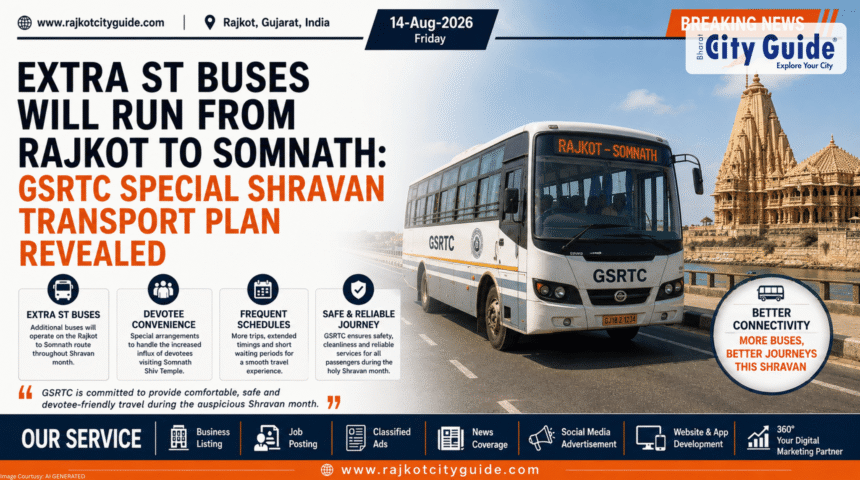
The auspicious Hindu month of Shravan brings an extraordinary wave of religious fervor across Gujarat, with millions of Lord Shiva devotees embark on pilgrimages to sacred Shivalayas across Saurashtra. Recognizing the massive surge in passenger traffic during this holy period, the Gujarat State Road Transport Corporation (GSRTC) Rajkot Division has officially announced that extra ST buses will run from Rajkot to Somnath and Ghela Somnath on every Monday of Shravan, as well as during the upcoming Janmashtami festival season. This decision comes as a major relief for thousands of pilgrims (Shiv bhakts), senior citizens, and families who travel to these historic shrines to perform Jalabhishek, Puja, and seek divine blessings.
- Introduction
- What is Extra ST Buses Will Run From Rajkot To Somnath?
- Why This News is Important
- Background Information
- Key Highlights
- Detailed Explanation of the Event
- Benefits, Features, and Importance
- How It Impacts People
- Expert Insights and Transport Perspective
- Challenges and Limitations
- Future Outlook
- Frequently Asked Questions (FAQs)
- Conclusion
To ensure seamless transit, the Divisional Controller of the Rajkot ST Division has directed depot managers across key hubs—including Rajkot Bus Port, Gondal, Morbi, Jasdan, Wankaner, Chotila, Limbdi, Dhrangadhra, and Surendranagar—to closely monitor passenger demand and dispatch extra buses dynamically. By augmenting regional connectivity between major urban centers and sacred pilgrimage sites like Prabhas Patan (Somnath) and Jasdan (Ghela Somnath), the state transport authority aims to provide safe, comfortable, and affordable public transport. This comprehensive guide breaks down everything you need to know about these special bus services, route details, pilgrim impacts, and travel tips for Shravan.
What is Extra ST Buses Will Run From Rajkot To Somnath?
The announcement that extra ST buses will run from Rajkot to Somnath refers to a dedicated public transport initiative launched by the GSRTC Rajkot Division to manage seasonal holiday traffic during Shravan. During this sacred month, Mondays (Shravan Somvar) hold paramount spiritual significance, leading to a exponential spike in travel demand towards major Shiva temples in Saurashtra.
                    ┌─────────────────────────────────────────────┐
                    │      GSRTC RAJKOT DIVISION SHRAVAN PLAN     │
                    │    Special Transport for Pilgrims & Devotees│
                    └──────────────────────┬──────────────────────┘
                                           │
        ┌──────────────────────────────────┼──────────────────────────────────┐
        ▼                                  ▼                                  ▼
┌────────────────────────┐      ┌────────────────────────┐      ┌────────────────────────┐
│   PRIMARY DESTINATIONS │      │    COVERED DEPOTS      │      │    SERVICE FEATURES    │
│ • Somnath (Prabhas)    │      │ • Rajkot Central Port  │      │ • Dynamic Dispatch     │
│ • Ghela Somnath        │      │ • Gondal, Morbi, Jasdan│      │ • On-Demand Extra Trips│
│   (Near Jasdan)        │      │ • Chotila, Wankaner    │      │ • Affordable Fares     │
│ • Local Shivalayas     │      │ • Surendranagar, Limbdi│      │ • Digital Booking      │
└────────────────────────┘      └────────────────────────┘      └────────────────────────┘
Standard bus schedules often become overloaded during peak religious periods. To avoid overcrowding, unauthorized fare hikes by private operators, and commuter inconvenience, the State Transport (ST) department deploys “extra” or special operational buses beyond the regular daily timetable. These buses operate directly from Rajkot Central Bus Port and surrounding sub-depots to the divine grounds of Shri Somnath Jyotirlinga and Ghela Somnath Temple near Jasdan.
Why This News is Important
This administrative decision by the GSRTC carries significant public importance for several practical and socio-cultural reasons:
- Relief for Thousands of Pilgrims: It ensures that every devotee who wishes to perform Monday Darshan at Somnath or Ghela Somnath can travel without facing acute transport shortages.
- Affordable Travel Alternative: Public ST buses protect commuters from exorbitant surge pricing charged by private travel agencies during festive peaks.
- Enhanced Passenger Safety: Government-operated ST buses adhere to strict road safety regulations, experienced state drivers, and organized depot infrastructure.
- Smooth Regional Connectivity: Connecting peripheral towns like Morbi, Wankaner, Chotila, and Surendranagar directly to primary pilgrimage corridors creates a well-coordinated transit network across Saurashtra.
Background Information
The month of Shravan is considered the most sacred month in the Hindu calendar for worshiping Lord Shiva. In Gujarat, the Mondays of Shravan hold immense devotional value. It is customary for families and religious groups to travel to revered Shiva shrines to offer Bilvipatra, milk, and holy water (Jalabhishek).
                      [ SAURASHTRA SHRAVAN PILGRIMAGE CORRIDOR ]
                                          │
  ┌───────────────────────────────────────┼───────────────────────────────────────┐
  ▼                                       ▼                                       ▼
[Shri Somnath Jyotirlinga]       [Ghela Somnath Temple]          [Local Rajkot Shivalayas]
 • Prabhas Patan, Veraval         • Jasdan Taluka, Rajkot         • Ramnath Mahadev
 • First among 12 Jyotirlingas    • Historic Riverbank Shrine     • Panchnath & Koteshwar
 • Distance: ~235 km from Rajkot  • Distance: ~60 km from Rajkot  • Intra-city Shravan Darshan
Saurashtra is home to two prominent Shiva pilgrimage destinations that witness massive holiday crowds:
- Shri Somnath Jyotirlinga (Prabhas Patan): Located around 235 km from Rajkot, Somnath is revered as the very first among the 12 sacred Jyotirlingas of Lord Shiva in India. Hundreds of thousands of devotees flock here during Shravan Somvar.
- Ghela Somnath Temple (Jasdan): Situated approximately 60 km from Rajkot near Jasdan on the banks of the Gheli River, this historic temple is a deeply cherished local pilgrimage site for residents of Rajkot and neighboring districts.
In previous years, heavy surges on Shravan Mondays led to long waiting lines at bus stands and stranded passengers. To proactively tackle this seasonal crunch, the Gujarat State Road Transport Corporation (GSRTC) Rajkot Division established a flexible system where extra ST buses will run from Rajkot to Somnath whenever passenger counts rise beyond normal capacity.
Key Highlights
- Special Bus Deployment: Extra ST buses will operate every Monday of the holy Shravan month from Rajkot to Somnath and Ghela Somnath.
- Coverage Across 9 Major Depots: Orders have been issued to depot managers at Rajkot Bus Port, Gondal, Morbi, Jasdan, Wankaner, Chotila, Limbdi, Dhrangadhra, and Surendranagar.
- Dynamic On-Demand Operation: Extra buses will be dispatched immediately based on real-time crowd movement at local bus stations.
- Extended Festive Coverage: The extra bus operational plan also covers the upcoming festival surge for Janmashtami.
- Affordable State Fares: Regular ST fare rates will apply, keeping travel budget-friendly for all socio-economic groups.
- Public Advisory: GSRTC officials have urged the traveling public to make full use of these extra bus services for safe and comfortable journeys.
Detailed Explanation of the Event
Following official communications from the Divisional Controller of the GSRTC Rajkot Division, comprehensive arrangements have been finalized to manage the heavy traffic expected on Shravan Mondays. The transport administration recognized that passenger volume spikes dramatically between Rajkot and major temple towns from Sunday night through Monday evening.
Under this plan, all key depot managers within the Rajkot ST Division have been granted authority to operate extra fleet vehicles dynamically. If a regular scheduled bus to Somnath or Ghela Somnath fills up, a secondary extra ST bus will be stationed on the platform to board waiting passengers immediately.
                           [ OPERATIONAL WORKFLOW AT ST DEPOTS ]
                                          │
  ┌───────────────────────────────────────┼───────────────────────────────────────┐
  ▼                                       ▼                                       ▼
[Passenger Monitoring]                  [Dynamic Fleet Dispatch]               [Pilgrim Journey & Return]
 • Real-time platform count at           • Immediate extra bus placement        • Direct transit to Somnath /
   Rajkot Bus Port & Depots                when regular bus fills                 Ghela Somnath
 • Ticket counter crowd check            • Additional drivers on standby        • Scheduled return extra trips
In addition to the primary Rajkot-Somnath highway route (passing through Gondal, Jetpur, and Junagadh), special attention is being given to the Rajkot-Jasdan route for pilgrims heading to Ghela Somnath. Depots in Morbi, Wankaner, Chotila, and Surendranagar will also operate direct or connecting extra trips toward Rajkot and Somnath, ensuring seamless transit across the entire northern and central Saurashtra belt.
The administration has also instructed staff to maintain high standards of vehicle cleanliness, bus maintenance, and passenger safety, given the high volume of senior citizens, women, and children traveling during this religious period.
Benefits, Features, and Importance
The decision to run extra state transport buses provides several direct advantages to travelers and the broader transport ecosystem:
| Feature / Aspect | Description | Primary Benefit |
|---|---|---|
| Dynamic Bus Allocation | Buses dispatched based on immediate platform crowd levels | Eliminates long wait times and overcrowding at bus ports. |
| Broad District Reach | Encompasses 9 distinct depots across Saurashtra | Serves rural and sub-urban travelers, not just city residents. |
| Fixed State Tariffs | Standard GSRTC ticket pricing maintained | Protects pilgrims from private operator surge pricing. |
| Multi-Destination Coverage | Direct trips to both Somnath and Ghela Somnath | Cater to both long-distance and short-distance pilgrimage needs. |
| Festival Readiness | Plan extends through Shravan Mondays & Janmashtami | Ensures long-term traffic control throughout the festive month. |
How It Impacts People
This transport enhancement positively impacts various segments of the local population:
- Devotees & Pilgrims: Commuters gain reliable, hassle-free travel to complete their religious vows (Mannat) and perform rituals without transportation anxiety.
- Senior Citizens & Families: Dedicated state buses offer safer boarding, structured platform management, and predictable schedules compared to unorganized private options.
- Budget Travelers & Students: Economical fare structures allow individuals and student groups to travel across Saurashtra within modest budgets.
- Local Economy & Temple Vendors: Steady, well-managed influxes of pilgrims support local economies, flower vendors, eateries, and small businesses in Somnath, Veraval, and Jasdan.
Expert Insights and Transport Perspective
Logistics and public transport analysts frequently praise GSRTC’s “Extra Bus” strategy during festival seasons as a model of efficient demand-responsive public transport. By empowering local depot managers to deploy spare buses based on ground reality rather than rigid timetables, the transport corporation maximizes vehicle utilization while solving peak-demand bottlenecks.
Transport experts note that Saurashtra’s pilgrimage corridor experiences some of the highest seasonal traffic densities in Gujarat. Proactive public transport management plays a critical role in reducing highway congestion, preventing private vehicle accidents, and lowering the overall carbon footprint compared to thousands of individual private cars and two-wheelers hitting the highways simultaneously.
Challenges and Limitations
While the extra bus initiative is a major positive step, state transport authorities face certain operational challenges during peak Shravan Mondays:
- Monsoon Road Conditions: Rainy weather during Shravan can lead to waterlogging or slick road conditions along coastal and state highways, requiring cautious driving and occasional minor delays.
- Traffic Congestion at Destination Hubs: Heavy private traffic around Somnath temple parking areas and Jasdan roads can create localized bottlenecks for incoming ST buses.
- High Fleet Demand: Managing fleet availability simultaneously for regular routes and festival extra runs requires precise mechanics, spare parts readiness, and driver rotation management.
- Peak Hour Crowds at Terminals: During morning and evening peak hours, bus stands experience heavy footfall, requiring vigilant security and queue management by depot staff.
Future Outlook
Looking ahead, the successful rollout of extra bus services during Shravan serves as a stepping stone for upcoming festival travel management in Gujarat:
- Janmashtami Fair Network: The operational framework created for Shravan will be expanded for the grand Janmashtami celebrations in Rajkot, Dwarka, and Dakor, where millions travel across the state.
- Digital Ticketing & Live Tracking: GSRTC is continually expanding its mobile app and online portal, enabling pilgrims to check real-time extra bus schedules and seat availability directly on their smartphones.
- Electric Bus Fleet Integration: As GSRTC continues introducing eco-friendly electric buses (e-buses) across major inter-city routes, future festival transport corridors are set to become greener and quieter.
Frequently Asked Questions (FAQs)
1. Why are extra ST buses being run from Rajkot to Somnath?
Extra ST buses are being operated to cater to the heavy surge of pilgrims traveling to sacred Shiva shrines like Somnath and Ghela Somnath on the auspicious Mondays of the holy Shravan month.
2. Which depots under the Rajkot ST Division are operating extra buses?
Depot managers at Rajkot Bus Port, Gondal, Morbi, Jasdan, Wankaner, Chotila, Limbdi, Dhrangadhra, and Surendranagar have been authorized to run extra buses based on demand.
3. Which specific pilgrimage sites are covered under this special bus service?
The extra bus service primarily targets Shri Somnath Mahadev Temple (Prabhas Patan / Veraval) and Ghela Somnath Temple (near Jasdan), along with major connecting points across Saurashtra.
4. Will extra buses run only on Shravan Mondays?
While the main surge focus is on every Monday of Shravan, the ST administration has also directed extra bus operations for the upcoming Janmashtami festival period and other high-demand days.
5. How can passengers book tickets for these extra ST buses?
Passengers can purchase tickets directly at the booking counters at Rajkot Bus Port and regional depots, or book online through the official GSRTC portal and mobile application.
6. Are ticket prices higher for these special extra buses?
No, GSRTC operates extra buses at standard state transport fare rates, ensuring affordable and budget-friendly travel for all pilgrims.
7. How far is Somnath and Ghela Somnath from Rajkot by bus?
The distance from Rajkot to Somnath is approximately 235 km (taking around 4 to 5 hours by bus), while Ghela Somnath near Jasdan is about 60 km from Rajkot (taking roughly 1.5 to 2 hours).
Conclusion
The announcement that extra ST buses will run from Rajkot to Somnath and Ghela Somnath reflects GSRTC’s commitment to public service and pilgrim welfare during the holy month of Shravan. By organizing dynamic bus dispatches across nine major depots, the Rajkot ST Division has ensured that thousands of Shiv bhakts can complete their sacred journeys safely, comfortably, and affordably. As chants of “Har Har Mahadev” echo through bus ports and along highways across Saurashtra, this well-planned transport initiative stands out as a shining example of public administration meeting cultural and spiritual needs. Devotees are encouraged to utilize these extra state transport facilities for a smooth and peaceful Shravan pilgrimage.