What Science Really Says About Meal Timing (Not Just the “7 PM Dinner” Rule)
“Don’t eat after 7 pm.”
“Breakfast is the most important meal.”
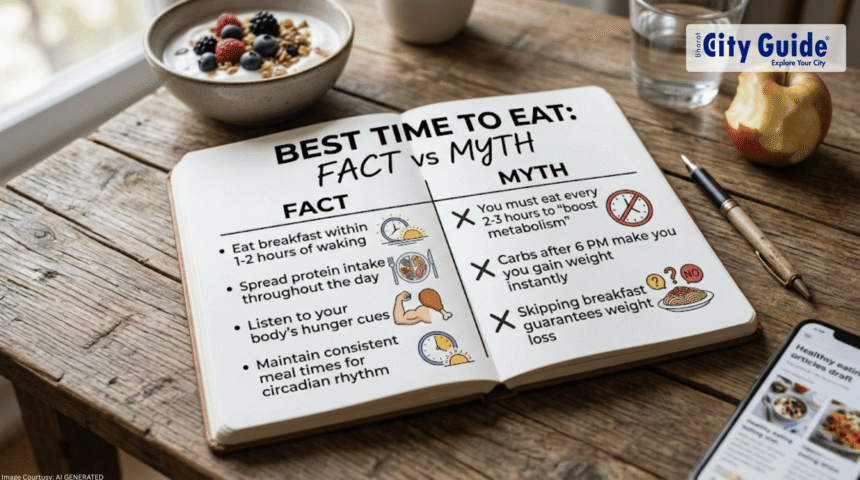
“Eat every 2 hours to boost metabolism.”
“Late dinners make you fat.”
- What Science Really Says About Meal Timing (Not Just the “7 PM Dinner” Rule)
- The Reality
- What Research Shows
- Science Says
- 1) Consistency Beats Perfection
- 2) Late-Night Heavy Eating Can Be Problematic
- 3) Front-Loading Calories May Help Some People
- Early Birds
- Night Owls
- Morning (7–10 am)
- Midday (12–2 pm)
- Evening (4–6 pm)
- Dinner (7–9:30 pm typical)
- 1) Is eating after 8 pm bad?
- 2) Should I skip dinner to lose weight?
- 3) Is late-night fruit bad?
- 4) Can meal timing alone cause weight loss?
- 5) Is intermittent fasting required for health?
In 2026, advice about when to eat is everywhere — social media reels, diet apps, fitness influencers, and even family WhatsApp groups.
But the truth is more nuanced.
Modern research shows that meal timing matters, but not in the extreme, one-rule-fits-all way many people believe. Your body works on biological rhythms, but your lifestyle, sleep schedule, culture, and total diet quality matter just as much.
For Indians juggling long commutes, late work hours, family dinners, and social eating, rigid rules like “never eat after 7 pm” are often unrealistic.
Let’s separate fact from myth and understand what actually works.
No hype. No guilt. Just science + practical Indian life.
Why Meal Timing Is Even a Topic in 2026
Scientists study meal timing because of something called circadian rhythm — your internal body clock.
Your body has daily cycles that affect:
✔ Digestion
✔ Hormone release
✔ Blood sugar control
✔ Appetite signals
✔ Sleep quality
✔ Metabolism
In simple terms:
👉 Your body processes food differently in the morning vs late at night.
But this doesn’t mean one fixed clock time suits everyone.
The Big Idea: Your Body Has a “Metabolic Prime Time”
Research in chrononutrition (timing-based nutrition) shows:
✔ Insulin sensitivity is generally better earlier in the day
✔ Glucose control is often stronger in daylight hours
✔ Late-night eating can impair blood sugar regulation for some people
✔ Digestion slows close to sleep time
This is why very late, heavy dinners may feel uncomfortable or lead to poorer metabolic responses.
But here’s the key:
👉 This is about patterns, not a strict 7 pm deadline.
Myth 1: “Never Eat After 7 PM”
This is one of the most common diet myths.
The Reality
There is nothing magical about 7 pm.
What matters more:
✔ How close your last meal is to sleep
✔ How heavy the meal is
✔ Your daily schedule
✔ Your overall calorie balance
✔ Your sleep quality
A person sleeping at 10 pm vs 1 am has very different needs.
Practical Guideline
Better rule:
👉 Try to finish your last large meal 2–3 hours before sleeping.
Examples:
- Sleep at 10:30 pm → Dinner by 7:30–8 pm
- Sleep at midnight → Dinner by 9–9:30 pm
This is more realistic for Indian households.
Myth 2: “Breakfast Is Always the Most Important Meal”
This statement is oversimplified.
What Research Shows
For many people:
✔ Eating breakfast can improve focus
✔ Helps appetite control
✔ Supports energy for the day
But:
❌ Skipping breakfast does not automatically cause weight gain
❌ Some people function well with later first meals
What matters is:
👉 Total diet quality and regularity.
Indian Context
Breakfast helps when it includes:
✔ Protein (dal chilla, eggs, paneer)
✔ Fibre (poha with veggies, upma, idli with sambar)
Not just:
❌ Biscuits + chai
❌ Sugary cereals
A weak breakfast doesn’t give the benefits studies talk about.
Myth 3: “Eat Every 2 Hours to Boost Metabolism”
This idea was popular in the 2010s and still lingers.
Science Says
Meal frequency has minimal effect on metabolism.
Whether you eat:
- 3 meals
- 4 meals
- 5 small meals
Your metabolism mainly depends on:
✔ Total calories
✔ Food quality
✔ Activity level
✔ Muscle mass
Not constant snacking.
Indian Reality Check
Frequent snacking often means:
❌ Namkeen
❌ Sweets
❌ Tea-time biscuits
❌ Fried snacks
Which may harm more than help.
What Actually Matters in Meal Timing
Let’s focus on what research supports.
1) Consistency Beats Perfection
Your body likes routine.
Eating at wildly different times daily may disrupt appetite signals.
Better:
✔ Roughly similar meal times
✔ Predictable eating pattern
✔ Avoid chaotic late-night binge eating
You don’t need exact times — just general consistency.
2) Late-Night Heavy Eating Can Be Problematic
Eating a full heavy meal right before sleep may:
✔ Affect blood sugar control
✔ Disrupt sleep
✔ Increase reflux/acidity
✔ Reduce next-day appetite regulation
But again:
👉 Occasional late dinners are not harmful.
👉 Regular late heavy dinners may be.
3) Front-Loading Calories May Help Some People
Some studies suggest:
✔ Larger earlier meals
✔ Lighter dinners
May support weight control and glucose management.
But this works best when natural — not forced.
Night Owl vs Early Bird: What Works?
Not everyone has the same body clock.
Early Birds
If you wake early and sleep early:
✔ Eat earlier meals
✔ Heavier breakfast/lunch
✔ Lighter dinner
This aligns with your rhythm.
Night Owls
If you sleep late and wake late:
✔ Later breakfast is fine
✔ Avoid heavy meals near sleep
✔ Try not to push dinner too close to bedtime
Forcing a 6 pm dinner then snacking at midnight is worse than a balanced 9 pm dinner.
Indian Lifestyle Realities in 2026
Urban Indian schedules include:
✔ Late office hours
✔ Traffic commutes
✔ Social dinners
✔ Family meals after 8–9 pm
✔ Shift work and remote jobs
Rigid global diet rules don’t always fit.
Flexible science-based structure works better.
A Practical Indian Meal Timing Template
This is not a strict rule — just a helpful pattern.
Morning (7–10 am)
Balanced breakfast if hungry.
Examples:
- Idli + sambar
- Poha + peanuts + curd
- Eggs + roti + veggies
Midday (12–2 pm)
Main meal window.
✔ Dal
✔ Roti/rice
✔ Sabzi
✔ Curd
Your digestion is active here.
Evening (4–6 pm)
Light snack if needed.
✔ Fruit
✔ Nuts
✔ Chaas
✔ Sprouts
Not deep-fried snacks daily.
Dinner (7–9:30 pm typical)
Keep balanced but moderate.
✔ Roti + sabzi + dal
✔ Khichdi + vegetables
✔ Soup + chapati
Avoid very heavy fried meals late.
Intermittent Fasting & Time-Restricted Eating
Popular in 2026.
Some people benefit from:
✔ 10–12 hour eating window
✔ Earlier dinners
✔ Reduced late-night snacking
But not mandatory for everyone.
It should fit lifestyle, not disrupt it.
Who Should Pay Extra Attention to Timing?
Meal timing may matter more for:
✔ Diabetes or prediabetes
✔ GERD/acidity
✔ Shift workers
✔ Poor sleep patterns
✔ Weight management goals
They may benefit from structured timing.
What Most People Misunderstand
Timing cannot fix:
❌ Poor diet quality
❌ Ultra-processed food intake
❌ Low activity
❌ Chronic stress
❌ Sleep deprivation
You cannot out-time a bad diet.
One Simple Change That Helps
Try this for a week:
👉 Keep a 12-hour eating window.
Example:
8 am breakfast → finish dinner by 8–9 pm.
No extreme fasting.
Just gentle structure.
Many people notice better digestion and appetite control.
Cultural Wisdom Was Already Close
Traditional Indian routines often followed:
✔ Daytime main meals
✔ Lighter dinners
✔ Early waking
✔ Seasonal eating
Modern science is rediscovering these patterns.
Conclusion
The “best time to eat” is not a fixed clock time — it’s a rhythm.
What truly matters:
✔ Regular schedule
✔ Not eating heavy meals right before bed
✔ Balanced diet
✔ Good sleep
✔ Realistic routines
For Indians in 2026:
👉 A 9 pm balanced dinner is fine if you sleep at midnight.
👉 A 7 pm dinner is great if you sleep at 10 pm.
👉 Consistency beats strict rules.
Food should fit your life — not stress it.
Healthy eating is sustainable when it’s practical.
FAQs
1) Is eating after 8 pm bad?
Not automatically. It depends on sleep time and meal size.
2) Should I skip dinner to lose weight?
Usually not necessary and may backfire.
3) Is late-night fruit bad?
No, but very large portions near sleep may disturb some people.
4) Can meal timing alone cause weight loss?
No. Diet quality and calories matter more.
5) Is intermittent fasting required for health?
No. It’s optional, not mandatory.