Introduction
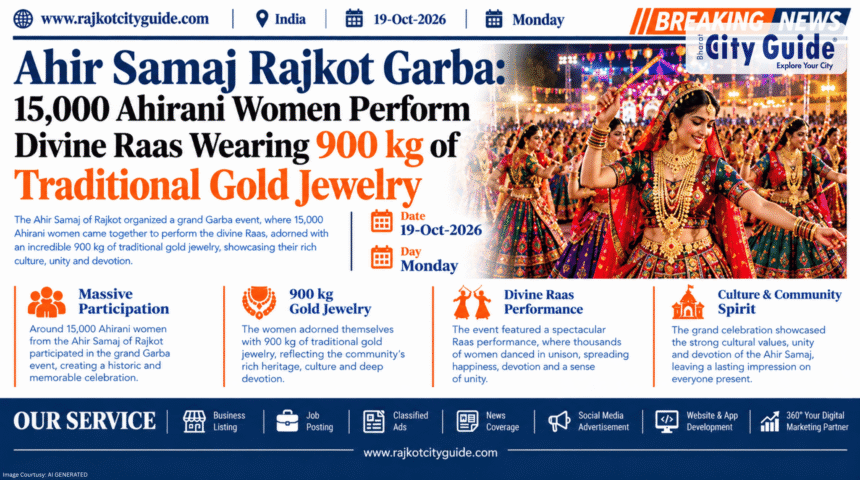
In an extraordinary convergence of sacred devotion, living heritage, and grand visual elegance, the Ahir Samaj Rajkot Garba hosted a monumental ‘Divya Raas’ that captivated onlookers across the nation. Organised by Ahir Sena on Rajkot’s New Ring Road, the festival grounds transformed into a shimmering arena as over 15,000 women from the Ahir community gathered in authentic traditional attire to perform collective Raas. Adorned in pure heirloom gold ornaments weighing an estimated 900 kilograms—valued at over Rs 1,300 crore—the performers turned the venue into a glowing sea of cultural pride.
- Introduction
- What is Ahir Samaj Rajkot Garba?
- Why This News is Important
- Background Information
- Key Highlights
- Detailed Explanation of the Event
- Benefits and Importance of the Cultural Gathering
- How It Impacts People
- Expert Insights and Cultural Perspective
- Challenges and Event Organization Factors
- Frequently Asked Questions (FAQs)
- Conclusion
The atmosphere resonated with deep spiritual emotion as the dancers performed synchronized circular steps to traditional folk beats, evoking the timeless era of Lord Krishna and the Gopis in Vrindavan and Dwarka. Many participating women expressed experiencing a profound spiritual trance, sharing that dancing in such unified devotion felt as if Lord Dwarkadhish Himself was present among them on the Garba ground.
Beyond the glittering display of gold, the event served as a powerful testament to Gujarat’s cultural resilience, safety, and community solidarity. Organized to preserve ancient pastoral customs and pass down sacred traditions to the next generation, the Ahir Samaj Rajkot Garba stands out as one of the most remarkable and soul-stirring cultural gatherings in modern festival history.
What is Ahir Samaj Rajkot Garba?
The Ahir Samaj Rajkot Garba is a grand cultural and devotional event organized annually during Navratri by Ahir Sena and leaders of the Ahir community in Rajkot. The Ahir community, historically tied to cattle rearing, agriculture, and the lineage of Lord Krishna (Yaduvansh), possesses a rich cultural repertoire of distinct folk dances, songs, and hand-loomed embroidery traditions.
Unlike standard commercial Garba venues that incorporate modern electronic music or contemporary fashion, this festival strictly maintains classical, authentic ‘Prachin’ Raas movements. Dancers move in flawless concentric circles, performing traditional two-step, three-step, and handheld clashing rhythms while singing devotional hymns dedicated to Goddess Amba and Lord Dwarkadhish.
The defining hallmark of this gathering is the participation of thousands of Ahirani women wearing ancestral, hand-crafted gold jewelry. From intricate gold neckpieces (Kandora and Hansli) to heavy armlets (Damani and Chudi), nose rings, and ear ornaments, the festival offers an unmatched display of regional jewelry craftsmanship passed down through generations.
Why This News is Important
The scale and execution of the Ahir Samaj Rajkot Garba hold deep socio-cultural, historical, and economic significance. First, it highlights the preservation of intangible cultural heritage in an era dominated by rapid modernization. Seeing 15,000 women voluntarily step onto a public stage in centuries-old attire reinforces regional identity and cultural continuity.
Second, the event serves as an astounding demonstration of public safety and social trust in Gujarat. Displaying an estimated 900 kilograms of gold ornaments worth over Rs 1,300 crore in an open-air venue without fear reflects exceptional civic order, community discipline, and public security.
Finally, the event fosters intergenerational bonding within the community. Bringing together young schoolgirls, university students, mothers, and elderly grandmothers in a single synchronized dance circle ensures that traditional values, folk lyrics, and community heritage are passed seamlessly to future generations.
Background Information
The Ahir community holds a venerated position in the cultural history of Saurashtra, Kutch, and Mathura. Tracing their ancestry back to the Yadava clan, the community has preserved sacred folklore, oral poetry, and distinct pastoral attire for centuries.
In Ahir culture, gold jewelry is not merely a financial asset; it represents family honor, matrimonial heritage, and spiritual protection. Traditional ornaments are custom-crafted by ancestral goldsmiths using dense 22-karat or 24-karat gold, characterized by solid, non-hollow structural designs built to endure for generations.
+-----------------------------------------------------------------------+
|                AHIR SAMAJ RAJKOT GARBA AT A GLANCE                    |
+--------------------------+--------------------------------------------+
| Event Name               | Ahir Samaj Divya Raas Mahotsav             |
| Organizing Body          | Ahir Sena & Rajkot Ahir Samaj Leadership   |
| Venue Location           | New Ring Road, Rajkot, Gujarat             |
| Female Participants      | 15,000+ Ahirani Performers                 |
| Total Gold Weight        | ~900 Kilograms of Heirloom Gold Jewelry    |
| Estimated Valuation      | Over Rs 1,300 Crore (approx. $139 Million) |
| Primary Spiritual Theme  | Devotion to Lord Dwarkadhish & Maa Amba    |
+--------------------------+--------------------------------------------+
Over recent years, Ahir Sena began structuring these informal village gatherings into a unified, large-scale festival in Rajkot. This initiative provides an organized venue where Ahirani women from across Saurashtra can assemble safely to celebrate their shared heritage.
Key Highlights
- 15,000+ Performers: Over 15,000 Ahirani women danced in synchronized concentric circles.
- 900 kg of Gold Jewelry: Performers wore traditional, solid gold ornaments weighing approximately 900 kilograms.
- Rs 1,300 Crore Valuation: The total estimated value of the heirloom gold jewelry on the field exceeded Rs 1,300 crore.
- Lord Dwarkadhish Maha Aarti: The event featured a magnificent collective Maha Aarti dedicated to Lord Dwarkadhish.
- Authentic Traditional Attire: Dancers wore hand-embroidered, mirror-work Kappadu, traditional bandhani odhnis, and ethnic skirts.
- Flawless Safety Record: Executed with total security, order, and community cooperation on Rajkot’s New Ring Road.
Detailed Explanation of the Event
The atmosphere on Rajkot’s New Ring Road turned electric as thousands of Ahirani women arrived at the venue wearing traditional ceremonial garments. As dusk fell, venue floodlights caught the reflection of thousands of solid gold neckpieces, armlets, waistbands, and head ornaments, creating a breathtaking visual shimmer across the field.
The performance commenced with the sacred lighting of the lamp and a grand Maha Aarti dedicated to Lord Dwarkadhish. Thousands of voices joined in chorus to chant traditional stutis, accompanied by the resonant beats of traditional dhol drums, shehnais, and folk vocals.
+-----------------------------------------------------------------------+
|                     FESTIVAL PROGRAMME FLOW                           |
+--------------------------+--------------------------------------------+
| Phase                    | Activity & Cultural Feature                |
+--------------------------+--------------------------------------------+
| Phase 1: Assembly        | Arrival of 15,000+ women in ancestral attire|
| Phase 2: Maha Aarti      | Collective prayers to Lord Dwarkadhish     |
| Phase 3: Traditional Raas| Synchronized circular dance with gold accents|
| Phase 4: Folk Melodies   | Devotional songs recounting Krishna legends|
+--------------------------+--------------------------------------------+
Following the prayers, the 15,000 women formed expansive, synchronized circular rings. Moving with natural grace, they executed traditional Raas steps, swaying in harmony to folk melodies recounting the divine pastimes of Lord Krishna. Spectators from across Gujarat looked on in awe as the massive ground glowed under the golden brilliance of the dancers.
Benefits and Importance of the Cultural Gathering
The continuation of the Ahir Samaj Rajkot Garba yields extensive cultural, social, and psychological benefits:
1. Preservation of Rare Ancestral Craftsmanship
Wearing heirloom gold jewelry and hand-loomed textiles honors the skilled goldsmiths and weavers of Saurashtra, keeping ancient craft techniques alive.
2. Reinforcing Cultural Confidence Among Youth
In an age dominated by global digital media, participating in a monumental traditional event gives young girls deep pride in their ethnic roots, language, and ancestral customs.
3. Fostering Community Solidarity and Equality
Standing shoulder-to-shoulder in the same dance circle unites families from diverse economic backgrounds in shared devotion, reinforcing social harmony.
4. Highlighting Regional Public Safety and Order
Successfully hosting an open-air event featuring high-value jewelry showcases Gujarat’s high standards of public safety, civic discipline, and effective community policing.
How It Impacts People
This divine celebration leaves a profound impression on various sections of society:
- For the Performers: Offers a transformative spiritual experience, instilling joy, community pride, and a deep sense of connection to Lord Krishna.
- For the Ahir Community: Serves as an annual cultural milestone that strengthens social unity and honors ancestral traditions.
- For Spectators and Visitors: Delivers an unforgettable cultural experience, showcasing the vibrant richness of Gujarati folk traditions.
- For Cultural Historians: Provides living documentation of ancient Yaduvanshi folk customs, traditional attire, and classical dance forms.
Expert Insights and Cultural Perspective
Cultural historians and anthropologists view the Ahir Samaj Rajkot Garba as a masterclass in living folk heritage. According to scholars, the Raas performed by Ahirani women is directly linked to the ‘Hallisaka’ and ‘Rasa’ traditions described in ancient Puranic texts, where gopis danced in devotion around Lord Krishna.
Jewelry experts and historians point out that the gold worn by Ahir women represents a unique aesthetic category. Unlike modern lightweight jewelry, Ahir ornaments feature heavy, solid gold construction designed to preserve wealth across generations.
Furthermore, social observers note that the event highlights a unique blend of material wealth and spiritual humility. Despite carrying gold worth thousands of crores, the performers dance with simple devotion, focusing entirely on the worship of Maa Amba and Lord Dwarkadhish.
Challenges and Event Organization Factors
Managing an event of this magnitude involves navigating complex logistical, safety, and security considerations:
- Crowd and Traffic Control: Managing vehicular access and pedestrian movement for tens of thousands of participants along Rajkot’s Ring Road.
- Discreet and Robust Security: Deploying private security stewards, local police patrols, and CCTV monitoring to ensure absolute safety for all participants.
- Hydration and Health Services: Providing dedicated medical booths, water distribution points, and first-aid teams to handle physical fatigue among dancers.
- Preserving Authentic Attire Standards: Ensuring that all participants adhere to traditional attire guidelines, keeping the event focused on authentic folk culture.
Frequently Asked Questions (FAQs)
What made the Ahir Samaj Rajkot Garba famous in 2026?
The event gained global fame after 15,000 Ahirani women performed traditional Raas wearing an estimated 900 kg of solid gold jewelry worth over Rs 1,300 crore.
Who organized the Divya Raas event in Rajkot?
The event was organized by Ahir Sena in association with the regional leaders of the Rajkot Ahir Samaj.
Where was the event held?
The grand Garba festival was held on the sprawling grounds along the New Ring Road in Rajkot, Gujarat.
What is the historical origin of the Ahir Raas?
The dance traces its roots back to the ancient Yaduvanshi pastoral traditions of Lord Krishna, preserved for centuries by the Ahir community in Saurashtra and Kutch.
What types of gold jewelry are traditionally worn by Ahir women?
Ahir women wear traditional solid gold ornaments, including heavy neckpieces (Hansli, Kandora), armlets (Damani, Chudi), nose rings, ear ornaments, and gold waistbands.
Was the event open to spectators?
Yes, thousands of spectators gathered around the designated perimeters to witness the magnificent cultural performance.
How do organizers maintain security during such a high-value event?
Security is maintained through a combination of community volunteer corps, local police deployment, CCTV surveillance, and strict venue access controls.
Conclusion
The Ahir Samaj Rajkot Garba stands out as a breathtaking celebration of faith, heritage, and community unity. By bringing together 15,000 Ahirani women wearing 900 kilograms of heirloom gold jewelry, the event presented a visual spectacle that honored the ancient traditions of Gujarat.
Beyond the glittering brilliance of the gold, the event’s true strength lies in its deep spiritual devotion to Lord Dwarkadhish and Goddess Amba.
As the rhythms of the dhol echo across Rajkot, the success of the Divya Raas reassures us that Gujarat’s cultural heritage remains vibrant and strong. The dedication of the Ahir community ensures that these sacred traditions will continue to shine brightly for generations to come.