Introduction
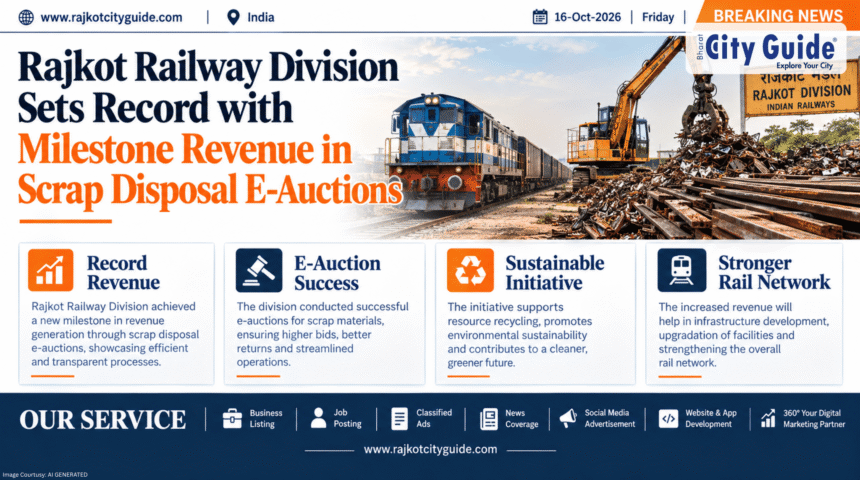
In a major financial and operational breakthrough, the Rajkot Railway Division Sets Record achievements in asset management by generating an impressive Rs 7.09 crore through systematic scrap disposal via transparent e-auctions. Under the strategic vision of Western Railway leadership and Divisional Railway Manager Giriraj Kumar Mina, the division successfully identified, processed, and auctioned released railway materials, decommissioned iron assets, and old track components. This remarkable milestone highlights Indian Railways’ commitment to achieving “Zero Scrap” status across all operational zones.
- Introduction
- What is Rajkot Railway Division Sets Record?
- Why This News is Important
- Background Information
- Key Highlights
- Detailed Explanation of the Event
- Benefits and Importance of the Achievements
- How It Impacts People
- Expert Insights and Industry Perspective
- Challenges and Key Execution Factors
- Frequently Asked Questions (FAQs)
- Conclusion
The systematic clearing of unserviceable material not only provides a massive revenue boost to the division’s non-fare revenue stream but also enhances physical safety and cleanliness across railway yards, workshops, and track sections. By clearing accumulated metal waste, the Rajkot Division frees up critical land space and eliminates potential environmental hazards along busy rail corridors. Simultaneously, the region is witnessing key educational updates, as Saurashtra University announced that its Semester 5 undergraduate examinations will commence from October 21 across affiliated centers.
Together, these administrative developments signal rapid operational efficiency and academic progress across Saurashtra. The achievements of the Western Railway zone demonstrate how modern digital e-auction platforms can transform traditional waste disposal into a highly lucrative revenue generator. As the Rajkot Railway Division Sets Record sales figures this fiscal year, it establishes a benchmark for resource optimization and asset recycling in public sector management.
What is Rajkot Railway Division Sets Record?
The milestone phrase Rajkot Railway Division Sets Record refers to the historical high achieved by Western Railway’s Rajkot Division in scrap disposal sales through the Indian Railways E-Procurement System (IREPS) portal. The division generated an impressive Rs 7.09 crore by auctioning retired rail equipment, unserviceable steel structures, worn-out rails, old wooden sleeper fittings, and obsolete machinery.
Within Indian Railways, scrap disposal is governed under strict material management protocols. Rather than allowing released railway metal and equipment to deteriorate in open yards, specialized materials management teams conduct thorough audits across track yards, loco sheds, and maintenance depots. Once items are declared unserviceable, they are cataloged and listed on transparent digital auction portals.
The “Zero Scrap” initiative is a nationwide campaign launched by the Ministry of Railways to ensure that every scrap item—ranging from heavy steel rails to small metallic fittings—is collected, processed, and monetized cleanly and efficiently through competitive e-bidding.
Why This News is Important
The record-breaking scrap sale revenue achieved by the Rajkot Railway Division is significant for financial, operational, and environmental reasons. First, generating Rs 7.09 crore through scrap sales directly bolsters Indian Railways’ non-fare revenue, providing additional capital for passenger amenities, track modernization, and station redevelopment under initiatives like the Amrit Bharat Station Scheme.
Second, removing bulky iron scrap, old steel rails, and discarded machinery dramatically improves working conditions and safety across railway yards and workshops. Accumulated metal waste creates safety hazards for track maintainers and yard workers while occupying valuable railway land that can be repurposed for operational sidings or green plantations.
Finally, the concurrent announcement from Saurashtra University regarding Semester 5 examinations starting October 21 provides essential clarity for thousands of higher education students across Rajkot, Jamnagar, Junagadh, and surrounding districts. This ensures smooth academic progression and timely career advancement for university youth.
Background Information
The Rajkot Division of Western Railway serves as a critical transport link connecting the industrial and agricultural hubs of Saurashtra with major national rail lines. Handling high volumes of passenger traffic toward Ahmedabad, Mumbai, and Delhi, alongside freight operations serving major ports like Okha, Navlakhi, and Bedi, the division continuously undertakes infrastructure upgrades, track renewals, and electrification projects.
Infrastructure expansion and track doubling projects naturally generate thousands of metric tons of released steel rails, old iron sleepers, bridge girders, and decommissioned wagon parts. Previously, scrap collection and manual auctioning processes faced administrative delays, leading to huge scrap piles in railway yards.
+-----------------------------------------------------------------------+
|             RAJKOT RAILWAY DIVISION SCRAP RECORD AT A GLANCE          |
+--------------------------+--------------------------------------------+
| Organization             | Rajkot Division, Western Railway           |
| Key Milestone            | Historic Scrap Disposal Revenue Record     |
| Total E-Auction Revenue  | Rs 7.09 Crore                              |
| Leadership               | DRM Giriraj Kumar Mina & Materials Wing    |
| Primary Platform         | IREPS (Indian Railways E-Auction Portal)   |
| Primary Scrap Types      | Released rails, steel structures, iron scrap|
| Concurrent Academic Event| Saurashtra University Sem-5 Exams (Oct 21) |
+--------------------------+--------------------------------------------+
With the introduction of digitized e-auctioning under the IREPS platform and proactive management by DRM Giriraj Kumar Mina, the division streamlined scrap identification, valuation, and auctioning. This digital pivot enabled transparent nationwide bidding, driving up scrap asset valuation and culminating in this record achievement.
Key Highlights
- Record Earnings Achieved: Rajkot Railway Division generated a impressive Rs 7.09 crore through e-auctions of unserviceable scrap material.
- Driven by “Zero Scrap” Vision: Part of Indian Railways’ nationwide campaign to monetize all unused metallic assets and keep rail premises clean.
- Digital Transparency: Auctions conducted seamlessly via the official IREPS web portal, attracting certified metal recyclers nationwide.
- Enhanced Yard Safety: Clearing heavy scrap metal eliminates workplace hazards for railway engineers, track maintainers, and yard staff.
- Saurashtra University Exam Schedule: Saurashtra University announced Semester 5 undergraduate examinations starting from October 21.
- Sustained Infrastructure Push: Revenue generated supports ongoing station redevelopment, track doubling, and passenger amenity upgrades across Saurashtra.
Detailed Explanation of the Event
The execution of this record scrap sale was managed through the combined efforts of the Materials Management, Engineering, Mechanical, and Finance departments of the Rajkot Railway Division. Civil and mechanical engineers conducted comprehensive field surveys across major stations—including Rajkot Junction, Surendranagar, Wankaner, Jamnagar, and Okha—to inspect and certify unserviceable items.
Once identified, items like worn steel rails, old iron sleepers, discarded signal posts, and obsolete engine components were weighed, cataloged, and assigned reserve prices based on prevailing market steel prices. These listings were published on the transparent IREPS e-auction portal, inviting verified industrial recyclers and steel re-rolling mills across India to place competitive bids online.
+-----------------------------------------------------------------------+
|                    E-AUCTION & SCRAP DISPOSAL WORKFLOW                |
+--------------------------+--------------------------------------------+
| Stage                    | Operational Action                         |
+--------------------------+--------------------------------------------+
| Stage 1: Identification  | Yard and track surveys to catalog scrap    |
| Stage 2: Quality Audit   | Certification of items as unserviceable    |
| Stage 3: Digital Portal  | Listing inventory on IREPS with base price |
| Stage 4: Competitive Bidding| Transparent nationwide online e-auction   |
| Stage 5: Clearance       | Payment collection & physical scrap removal|
+--------------------------+--------------------------------------------+
The online competitive bidding drove sale prices well above initial base valuations, resulting in total scrap sales reaching Rs 7.09 crore. Following successful payment collection, scrap buyers were issued digital gate passes to lift the material under strict railway security supervision, successfully clearing thousands of tons of metal waste from railway land.
Benefits and Importance of the Achievements
The record-breaking scrap disposal drive and associated developments offer widespread benefits across economics, operations, and education:
1. Significant Non-Fare Revenue Generation
Generating Rs 7.09 crore from discarded materials provides Indian Railways with vital funds that can be reinvested directly into modernizing railway stations, installing digital passenger displays, and building passenger overbridges.
2. Environmental Recycling and Circular Economy
Selling heavy metal scrap directly to accredited recycling mills supports the circular economy. Melting down released steel rails reduces the demand for virgin iron ore mining and energy-intensive steel manufacturing.
3. Reclaiming Valuable Railway Land
Clearing accumulated scrap piles frees up vast acres of land along tracks and inside railway yards, allowing the division to construct new storage sidings, maintenance pits, or green belts.
4. Timely Academic Progression for University Youth
Saurashtra University’s clear scheduling of Semester 5 exams from October 21 eliminates academic uncertainty, allowing thousands of students to focus on preparations for timely graduation.
How It Impacts People
These administrative and educational developments positively influence various sections of society across Saurashtra:
- For Railway Passengers: Higher non-fare revenues allow the division to accelerate station facility upgrades, clean platform spaces, and install modern escalators and lifts.
- For University Students: Provides a clear examination timeline, ensuring smooth academic transitions and post-graduation career opportunities.
- For Industrial Steel Recyclers: Supplies high-grade scrap steel to regional re-rolling mills and foundries, supporting local industrial production in Gujarat.
- For Railway Workers: Creates safer, cleaner, and more organized working environments across loco sheds, maintenance workshops, and track yards.
Expert Insights and Industry Perspective
Financial and logistics analysts praise Indian Railways‘ transition to digital e-auctions as a benchmark for public asset management. According to transportation experts, digitizing scrap auctions eliminates cartelization, increases bidder participation across state lines, and ensures maximum revenue realization for public assets.
Environmental engineers highlight the sustainability impact of systematic scrap disposal. Recycling thousands of tons of heavy structural steel and rails conserves raw natural resources, lowers carbon emissions, and aligns with national green initiative targets.
Furthermore, academic experts commend Saurashtra University for maintaining a structured examination calendar. Synchronizing university assessment schedules with state-wide academic timetables ensures that Gujarati students remain competitive for higher education admissions and national employment opportunities.
Challenges and Key Execution Factors
Maintaining momentum in scrap disposal and academic management involves handling key operational considerations:
- Preventing Metal Theft and Illegal Encroachments: Ensuring that scrap metal stored in remote track sections is weighed, guarded, and removed promptly to prevent pilferage.
- Managing Volatile Scrap Steel Market Prices: Timing e-auctions strategically during periods of high steel demand to maximize auction revenues for public assets.
- Streamlining Physical Logistics: Coordinating truck movements and heavy crane lifting during scrap removal to ensure zero disruption to active train traffic.
- Exam Logistics across Multiple Centers: Managing secure paper delivery, digital hall ticket distribution, and fair evaluation for thousands of students across Saurashtra University exam centers.
Frequently Asked Questions (FAQs)
What record was recently set by the Rajkot Railway Division?
The Rajkot Railway Division set a new record by generating Rs 7.09 crore through the transparent e-auction disposal of unserviceable scrap materials.
What is the “Zero Scrap” mission of Indian Railways?
The “Zero Scrap” mission is a national campaign launched by Indian Railways to identify, collect, and auction all unserviceable metallic assets, maintaining clean, hazard-free rail premises while generating non-fare revenue.
How were the scrap materials sold?
The scrap was auctioned online through the Indian Railways E-Procurement System (IREPS) portal, ensuring transparent, competitive bidding among verified nationwide recyclers.
What types of materials were sold in the e-auction?
Materials included released steel rails, unserviceable iron sleepers, old bridge girders, obsolete wagon parts, and decommissioned machinery.
Who leads the Rajkot Railway Division as DRM?
Giriraj Kumar Mina serves as the Divisional Railway Manager (DRM) of the Rajkot Railway Division.
When will Saurashtra University conduct Semester 5 examinations?
Saurashtra University has scheduled its Semester 5 undergraduate examinations to begin from October 21 across affiliated centers.
How do scrap sales benefit railway passengers?
Scrap sale revenues boost non-fare earnings, which are reinvested into improving station facilities, building foot overbridges, installing digital displays, and upgrading passenger safety infrastructure.
Conclusion
The milestone event where Rajkot Railway Division Sets Record earnings of Rs 7.09 crore in scrap sales highlights a triumphs of modern administrative efficiency, digital transparency, and resource management. By turning obsolete steel assets into substantial revenue, Western Railway’s Rajkot Division demonstrates how public institutions can optimize resources while maintaining safer, cleaner rail premises.
This operational success, paired with Saurashtra University’s announcement of Semester 5 examinations starting October 21, reflects a broader commitment to progress across public governance and higher education in Saurashtra.
As Western Railway continues its track upgrades and station redevelopments under the leadership of DRM Giriraj Kumar Mina, the division stands out as an efficient, forward-thinking transport hub. Generating valuable revenue from scrap recycling ensures that Rajkot remains at the forefront of modern Indian Railways infrastructure development.