Introduction
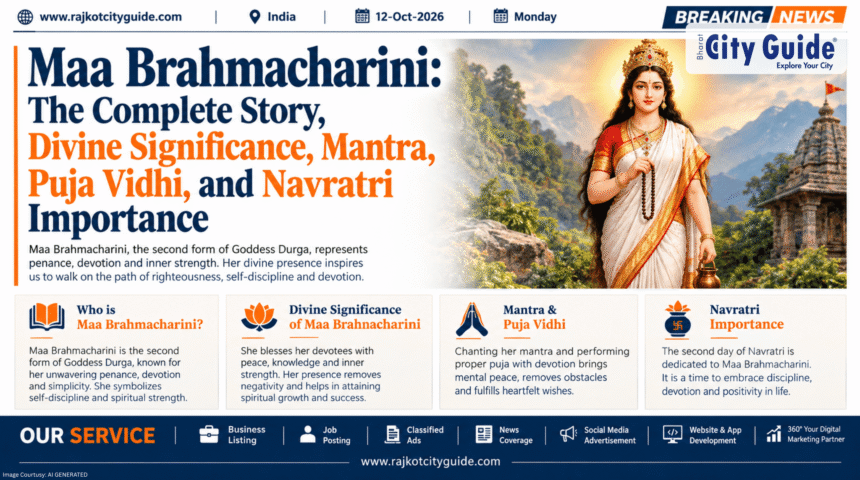
Maa Brahmacharini is the second form of Goddess Durga worshipped during the nine sacred days of Sharadiya Navratri. She represents devotion, discipline, penance, purity, patience, and unwavering determination. Devotees worship Maa Brahmacharini to seek spiritual strength, inner peace, wisdom, and the ability to remain dedicated to their goals even during difficult times. Her divine form reminds people that true achievement requires faith, self-control, sacrifice, and perseverance.
- Introduction
- Who Is Maa Brahmacharini?
- The Meaning of the Name Maa Brahmacharini
- The Divine Appearance of Maa Brahmacharini
- Spiritual Significance of Maa Brahmacharini
- The Real Story of Maa Brahmacharini
- Maa Brahmacharini Puja Vidhi: Step-by-Step Worship Method
- Maa Brahmacharini Mantra and Its Meaning
- Favourite Offerings to Maa Brahmacharini
- Why Is Maa Brahmacharini Worshipped on the Second Day of Navratri?
- The Colour Associated with Maa Brahmacharini
- Benefits and Blessings of Worshipping Maa Brahmacharini
- Maa Brahmacharini and the Importance of Tapasya
- Lessons from the Life of Maa Brahmacharini
- Difference Between Maa Shailputri and Maa Brahmacharini
- Frequently Asked Questions About Maa Brahmacharini
- Conclusion
The name Brahmacharini has a deep spiritual meaning. It is associated with the practice of Brahmacharya, which refers to disciplined living, self-restraint, and dedication to spiritual truth. In Hindu tradition, Maa Brahmacharini is closely connected with the story of Goddess Parvati’s intense penance to attain Lord Shiva as her husband. Her devotion continued despite hardships, demonstrating the extraordinary strength of faith and determination.
During Navratri, the second day is dedicated to Maa Brahmacharini. Devotees offer prayers, flowers, fruits, and other traditional offerings while reciting her sacred mantra. Her worship encourages people to overcome distractions, develop patience, and maintain a pure heart. Understanding the story and significance of Maa Brahmacharini helps devotees appreciate the deeper spiritual message of Navratri beyond rituals and celebrations.
Who Is Maa Brahmacharini?
Maa Brahmacharini is the second manifestation of Navdurga, the nine forms of Goddess Durga worshipped during Navratri. She represents the power of tapasya, or spiritual austerity, through which a person develops discipline, devotion, and control over the mind and senses.
According to Hindu religious traditions, Maa Brahmacharini is a form of Goddess Parvati, the daughter of Himavan, the king of the mountains, and his queen, Mena. In her previous birth, she was Goddess Sati, the consort of Lord Shiva. After Sati left her mortal body, she was reborn as Parvati and became deeply devoted to Lord Shiva.
Parvati’s determination to unite with Lord Shiva led her to undertake intense penance. She willingly endured hardships and continued her spiritual practice with complete faith. This extraordinary dedication is reflected in the form of Maa Brahmacharini.
Unlike the fierce forms of Goddess Durga that are commonly depicted carrying weapons to destroy evil, Maa Brahmacharini is generally portrayed as calm, peaceful, and radiant. Her appearance represents the power of devotion and inner strength rather than physical force. She teaches that patience and spiritual discipline can help individuals overcome challenges and move closer to their highest purpose.
The Meaning of the Name Maa Brahmacharini
The name Maa Brahmacharini is formed from the Sanskrit word Brahmacharini, which refers to a woman who follows a disciplined spiritual path and remains devoted to the pursuit of higher truth.
The word Brahmacharya is traditionally associated with self-control, purity of conduct, moderation, and the disciplined use of one’s physical and mental energy. It does not simply mean avoiding worldly pleasures; in a broader spiritual sense, it involves directing one’s thoughts and actions toward meaningful goals and spiritual development.
Maa Brahmacharini embodies these principles through her unwavering devotion to Lord Shiva. Her life demonstrates that determination becomes powerful when it is guided by a sincere purpose.
Her name also reminds devotees that spiritual progress is not achieved through occasional enthusiasm alone. It requires regular practice, patience, dedication, and the ability to remain committed even when results are not immediately visible.
For this reason, Maa Brahmacharini is regarded as an ideal symbol of students, spiritual seekers, and anyone working toward a difficult but meaningful objective.
The Divine Appearance of Maa Brahmacharini
Maa Brahmacharini is traditionally depicted in a peaceful standing posture, radiating purity, simplicity, and spiritual strength. Her appearance is different from the more elaborate and weapon-bearing forms of Goddess Durga.
She is generally shown wearing simple garments, often depicted in white or light-coloured attire in popular devotional art. The simplicity of her appearance reflects detachment from luxury and a commitment to spiritual discipline.
Maa Brahmacharini is usually represented with two hands. In one hand, she holds a japa mala, or rosary, symbolizing continuous prayer, meditation, and remembrance of the Divine. In the other hand, she carries a kamandalu, a water pot traditionally associated with ascetics and spiritual seekers.
The japa mala represents concentration and devotion, while the kamandalu signifies simplicity, restraint, and the ascetic way of life. Her calm facial expression reflects inner peace and complete faith.
Unlike some other forms of Goddess Durga, Maa Brahmacharini is generally not depicted riding a lion or carrying weapons. Her divine power is expressed through penance, purity, and unwavering spiritual resolve.
Every element of her form communicates a central message: true strength can arise from a disciplined mind, a sincere heart, and a clear spiritual purpose.
Spiritual Significance of Maa Brahmacharini
Maa Brahmacharini represents several qualities that are essential for spiritual and personal development.
Devotion and Faith
Her life demonstrates the importance of sincere devotion. She remained committed to Lord Shiva despite obstacles and uncertainty. Devotees learn that faith should be accompanied by sincere effort and consistent practice.
Patience and Perseverance
Maa Brahmacharini’s penance teaches that meaningful goals may require time. Immediate results are not always possible, and difficulties should not automatically be treated as signs of failure.
Self-Discipline
Her austere lifestyle represents the ability to control impulses and direct energy toward worthwhile objectives. This lesson is relevant to education, professional life, relationships, and spiritual practice.
Inner Strength
Maa Brahmacharini teaches that courage does not always appear as outward aggression. Sometimes, strength means remaining calm, continuing one’s efforts, and responding to difficulties with wisdom.
Purity of Intention
Her devotion reflects the importance of sincerity. Actions become more meaningful when they are guided by honest intentions rather than the desire for recognition or immediate rewards.
Spiritual Growth
Her story encourages devotees to look beyond material achievements and develop qualities such as compassion, humility, self-awareness, and contentment.
The Real Story of Maa Brahmacharini
The story of Maa Brahmacharini is rooted in Hindu scriptural and devotional traditions concerning the birth of Goddess Parvati and her penance to attain Lord Shiva. Different religious texts and regional traditions narrate aspects of this story with variations, but the central theme remains the same: the extraordinary power of devotion and perseverance.
Goddess Sati and Her Connection with Lord Shiva
According to Hindu tradition, Goddess Sati was the daughter of Prajapati Daksha and the first consort of Lord Shiva. Daksha disapproved of Shiva and did not respect the divine union between his daughter and the Lord.
When Daksha organized a great yajna without properly honouring Lord Shiva, Sati attended the ceremony despite Shiva’s reservations. There, she witnessed the disrespect shown toward her husband. Unable to bear the insult, she gave up her mortal body through her yogic power, according to the traditional account.
After this event, Sati was reborn as Parvati, the daughter of Himavan and Mena. From an early age, Parvati felt a deep spiritual connection with Lord Shiva. She wished to reunite with him, but attaining this goal required extraordinary devotion.
Parvati’s Determination to Marry Lord Shiva
As Parvati grew older, she remained devoted to Lord Shiva. The sage Narada is associated in traditional accounts with revealing her spiritual destiny and encouraging her devotion.
Lord Shiva was absorbed in meditation and remained detached from worldly life. Parvati understood that her devotion would require patience and sincere spiritual effort.
She began serving Lord Shiva and dedicated herself to worship. However, the path toward her goal was not easy. She had to demonstrate that her devotion was not based on temporary desire but on unwavering spiritual commitment.
Parvati eventually decided to undertake severe penance. She left behind the comforts of royal life and devoted herself to meditation, prayer, and austerity.
This stage of her spiritual journey is closely associated with Maa Brahmacharini, the goddess who represents disciplined devotion and the power of tapasya.
The Difficult Penance of Maa Brahmacharini
The traditional story describes Parvati’s penance as exceptionally rigorous. Initially, she sustained herself on fruits and roots. As her spiritual discipline deepened, she reduced her dependence on food and eventually survived on leaves. In some devotional accounts, she later gave up even leaves.
Because of this severe austerity, Parvati became associated with the name Aparna, commonly explained as one who did not consume leaves.
Throughout this period, she continued her meditation and worship with remarkable determination. Heat, cold, rain, and other hardships could not weaken her resolve. Her dedication illustrates the depth of her spiritual commitment.
The story is not merely about physical suffering. Its deeper message concerns mastery over desires, control of the mind, patience, and devotion to a worthy purpose. Maa Brahmacharini demonstrates that genuine determination is tested when circumstances become difficult.
Her penance is remembered as a supreme example of tapasya in Hindu devotional tradition.
Lord Shiva Accepts Parvati’s Devotion
According to the traditional narrative, Lord Shiva eventually recognized Parvati’s extraordinary dedication and the purity of her devotion. Her penance demonstrated that she possessed the spiritual strength and commitment required for their divine union.
After the trials associated with her devotion, Lord Shiva accepted Parvati as his consort. Their divine marriage became a significant event in Hindu mythology and symbolizes the union of complementary cosmic principles.
Shiva represents consciousness, while Parvati represents Shakti, the dynamic divine energy. Together, they express the balance and interdependence of these principles in Hindu philosophy.
The story of Maa Brahmacharini therefore extends beyond marriage. It teaches that sincere devotion, self-discipline, and perseverance can transform an individual’s character and spiritual understanding.
Her journey remains an enduring example of how unwavering faith can guide a person through even the most demanding challenges.
Maa Brahmacharini Puja Vidhi: Step-by-Step Worship Method
Devotees can worship Maa Brahmacharini at home by following a simple and respectful puja routine. Practices vary according to family customs, regional traditions, and personal beliefs.
Step 1: Clean the Puja Area
Begin by cleaning the place of worship. Take a bath, wear clean clothes, and arrange a picture or idol of Maa Brahmacharini in a clean and peaceful space.
Step 2: Prepare the Puja Materials
Arrange flowers, fresh fruits, water, a lamp, incense, and other customary offerings. A japa mala may also be kept for mantra recitation. Use the materials available to you without feeling that expensive items are necessary.
Step 3: Light the Lamp
Light a diya before the goddess. The lamp symbolizes the removal of ignorance and the presence of spiritual awareness. If incense is used, place it safely away from flammable materials.
Step 4: Offer Prayers and Flowers
Offer flowers and water while remembering Maa Brahmacharini with devotion. Devotees may also offer fruits, sugar, or other foods according to their family traditions.
Step 5: Recite the Sacred Mantra
Chant the mantra of Maa Brahmacharini with a calm mind. You may repeat it a chosen number of times, such as 11, 21, or 108, according to your ability and customary practice. Regular, sincere prayer is more important than treating a particular count as compulsory.
Step 6: Read or Listen to Her Story
Read the traditional account of Parvati’s penance or listen to devotional readings about the goddess. Reflect on the lessons of perseverance, self-control, and faith.
Step 7: Perform Aarti
Conclude the worship with aarti and a prayer for wisdom, inner peace, courage, and spiritual progress. Distribute the offered food as prasad when appropriate.
These steps provide a simple framework for worship. Devotees may follow additional rituals prescribed by their family tradition or religious guide.
Maa Brahmacharini Mantra and Its Meaning
The commonly recited Navdurga mantra for Maa Brahmacharini is:
ॐ देवी ब्रह्मचारिण्यै नमः॥
Transliteration: Om Devi Brahmacharinyai Namah.
Meaning: Salutations to Goddess Brahmacharini, the divine embodiment of spiritual discipline, devotion, and penance.
Devotees chant this mantra to express reverence for the goddess and reflect on the qualities she represents. It can be recited during the morning puja, meditation, or quiet personal prayer.
Another devotional verse associated with Maa Brahmacharini is:
**दधाना करपद्माभ्यामक्षमालाकमण्डलू। देवी प्रसीदतु मयि ब्रह्मचारिण्यनुत्तमा॥**
This verse describes the goddess holding a rosary and a kamandalu in her lotus-like hands and offers a prayer for her grace.
The mantra and devotional verse help worshippers focus their minds on Maa Brahmacharini’s spiritual qualities. Recitation is traditionally performed with respect, concentration, and a sincere heart.
Favourite Offerings to Maa Brahmacharini
Devotional practices commonly associate Maa Brahmacharini with simple, pure offerings. Fruits, flowers, water, and traditional sweets may be offered during her worship.
Sugar and mishri, or rock sugar, are often mentioned in popular Navratri worship customs as offerings to Maa Brahmacharini. Fresh fruits and other foods may also be offered according to local practice.
Some devotees prepare kheer or other sweets for prasad, although specific offerings vary across families and regions. White flowers may be chosen by devotees who associate them with purity and peace.
The important principle is that offerings should be made with devotion, cleanliness, and gratitude. Hindu worship does not require every devotee to use identical materials, and regional customs may differ.
Food offered during puja should be prepared hygienically and distributed respectfully. Devotees who observe a fast should follow practices appropriate to their health and personal circumstances.
Why Is Maa Brahmacharini Worshipped on the Second Day of Navratri?
Navratri is a Hindu festival dedicated to the worship of the Divine Feminine, particularly Goddess Durga and her nine celebrated forms. The second day is traditionally dedicated to Maa Brahmacharini.
The nine forms of Navdurga represent different aspects of divine energy and spiritual development. Maa Shailputri, worshipped on the first day, is associated with the beginning of the sacred journey. Maa Brahmacharini, worshipped on the second day, represents the discipline and devotion needed to continue that journey.
Her worship encourages devotees to strengthen their resolve, practise self-control, and remain dedicated to their spiritual goals.
During Navratri, many households establish a puja space, light a lamp, offer flowers, recite devotional prayers, and perform aarti. Some devotees also observe fasting according to their family traditions, health, and religious customs.
The second day of Navratri is an opportunity to reflect on personal habits and identify areas where greater discipline, patience, or sincerity may be needed.
The festival’s spiritual message is not limited to formal worship. It also encourages devotees to practise kindness, honesty, restraint, and devotion in everyday life.
The Colour Associated with Maa Brahmacharini
White is commonly associated with Maa Brahmacharini in devotional representations because it symbolizes purity, peace, simplicity, and spiritual clarity.
The colour reflects the calm nature of the goddess and her freedom from unnecessary attachment to luxury. It also represents the peaceful determination required for meditation and self-discipline.
During Navratri, some devotees wear white on the second day as part of their personal or family traditions. However, colour associations and Navratri colour calendars can vary by region, year, and community. Wearing a particular colour is not a universal requirement for worshipping the goddess.
The deeper significance of the colour lies in the values it represents: a clear mind, sincere intentions, and a peaceful heart.
Benefits and Blessings of Worshipping Maa Brahmacharini
In Hindu devotional belief, worshipping Maa Brahmacharini is associated with the development of patience, determination, devotion, and spiritual strength.
Devotees pray to her for the ability to face difficulties without losing hope. Her story serves as a reminder to maintain faith and discipline while working toward meaningful goals.
Students may draw inspiration from her dedication to their studies. People facing personal challenges may reflect on her perseverance. Spiritual seekers may look to her example when developing a regular practice of prayer or meditation.
Her worship is also associated in popular devotional traditions with inner peace, self-control, and the strength to overcome distractions.
These are spiritual beliefs and sources of personal inspiration rather than guaranteed material outcomes. Worship should complement responsible action, thoughtful decision-making, and practical effort.
The lasting blessing of Maa Brahmacharini’s example is the reminder that character develops through consistent choices, patience, and sincerity.
Maa Brahmacharini and the Importance of Tapasya
Tapasya is a central concept in the story of Maa Brahmacharini. The Sanskrit term refers to spiritual discipline, austerity, or dedicated effort undertaken for purification and higher understanding.
In Hindu traditions, tapasya can include meditation, prayer, self-restraint, study, fasting according to one’s capacity, and other disciplined practices. Its purpose is not simply to endure hardship but to refine the mind and strengthen one’s commitment to a meaningful objective.
Maa Brahmacharini’s penance represents an exceptional form of tapasya. Her determination shows that spiritual dedication involves more than words or temporary enthusiasm.
In everyday life, the principle can be practised through regular study, honest work, controlled habits, compassionate behaviour, and the willingness to continue learning from mistakes.
Tapasya should not be confused with unnecessary self-harm or dangerous deprivation. Spiritual practices should be approached with wisdom and respect for one’s health. The central lesson is purposeful discipline, not suffering for its own sake.
Lessons from the Life of Maa Brahmacharini
The life of Maa Brahmacharini offers several lessons that remain meaningful in modern life.
First, it teaches the value of commitment. A clear purpose can help a person remain focused when faced with distractions.
Second, her story emphasizes patience. Important achievements often require sustained effort, and progress may not always be visible immediately.
Third, Maa Brahmacharini represents self-control. Managing impulses and using time wisely can help individuals make better decisions.
Fourth, she teaches humility. Her spiritual journey was centred on devotion rather than public recognition or material display.
Fifth, her example encourages resilience. Difficult circumstances do not always mean that a goal is impossible; they may call for reflection, preparation, and renewed effort.
Finally, her story reminds devotees that inner development matters as much as external success. Kindness, honesty, discipline, and peace of mind are valuable achievements in themselves.
These teachings make Maa Brahmacharini relevant not only during Navratri but throughout the year.
Difference Between Maa Shailputri and Maa Brahmacharini
Maa Shailputri and Maa Brahmacharini are the first two forms of Navdurga worshipped during Navratri, but their traditional symbolism differs.
Maa Shailputri is associated with the mountains and is generally depicted riding a bull, holding a trident and a lotus. Her form symbolizes the beginning of the spiritual journey, stability, and the grounding power of nature.
Maa Brahmacharini is associated with penance, devotion, and disciplined spiritual practice. She is generally depicted standing with a japa mala and a kamandalu in her two hands.
Together, these forms communicate complementary lessons. Maa Shailputri represents the beginning and foundation of the journey, while Maa Brahmacharini represents the dedication needed to progress.
Their worship on the first and second days of Navratri reminds devotees that spiritual growth begins with a firm foundation and develops through discipline, faith, and consistent effort.
Frequently Asked Questions About Maa Brahmacharini
1. Who Is Maa Brahmacharini?
Maa Brahmacharini is the second form of Goddess Durga worshipped during Navratri. She represents devotion, penance, discipline, purity, and perseverance. Her story is associated with Goddess Parvati’s intense tapasya to attain Lord Shiva as her husband.
2. What Is the Mantra of Maa Brahmacharini?
The commonly recited mantra is “ॐ देवी ब्रह्मचारिण्यै नमः॥” (Om Devi Brahmacharinyai Namah). Devotees chant it to express reverence for the goddess and seek inspiration for spiritual discipline, patience, and inner strength.
3. What Should Be Offered to Maa Brahmacharini?
Devotees commonly offer flowers, fresh fruits, water, and traditional sweets. Sugar or mishri is also associated with her worship in popular devotional customs. Offerings may vary according to family traditions and regional practices.
Conclusion
Maa Brahmacharini is a powerful symbol of devotion, spiritual discipline, patience, and unwavering determination. Worshipped on the second day of Navratri, she represents the strength required to follow a meaningful path despite challenges and uncertainty. Her traditional story, centred on Goddess Parvati’s intense penance to attain Lord Shiva, teaches that sincere dedication and self-control can transform the mind and strengthen the spirit. Her peaceful appearance, japa mala, and kamandalu reflect the values of prayer, simplicity, and disciplined living. Through her mantra, puja vidhi, and devotional practices, devotees remember the importance of faith, purity of intention, and perseverance. The message of Maa Brahmacharini extends beyond religious ceremonies: it encourages people to work honestly, remain patient, control distractions, and continue pursuing worthy goals with humility. During Navratri and throughout the year, her divine example inspires devotees to cultivate inner peace and live with greater purpose, wisdom, and devotion.