Introduction
The culmination of Ganeshotsav—the grand festival celebrating Lord Ganesha—is a deeply spiritual and vibrant event across Gujarat. Thousands of devotees gather to bid farewell to their beloved deity, accompanying processions with devotional music, rhythmic dhol beats, and vibrant gulal. However, managing vast crowds near lakes, rivers, check dams, and reservoirs during Ganesh Visarjan presents critical public safety and disaster management challenges.
- Introduction
- What is Rajkot Ganpati Visarjan Security?
- Why This News is Important
- Background Information
- Key Highlights
- Detailed Explanation of the Event
- Benefits and Importance of the Security Plan
- How It Impacts People
- Expert Insights and Disaster Management Perspective
- Challenges and Limitations
- Future Outlook
- Frequently Asked Questions (FAQs)
- Conclusion
Gujarat Samachar
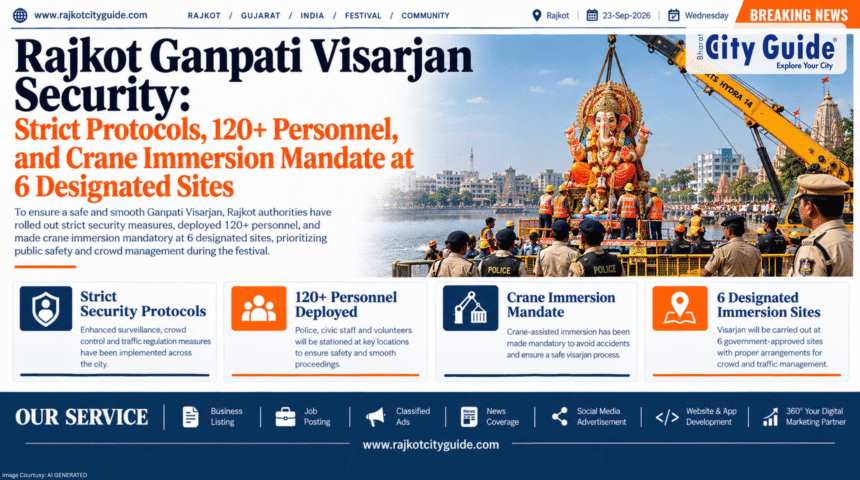
To ensure zero casualties, prevent drowning incidents, and maintain seamless crowd control during the immersion ceremonies, local authorities have rolled out an extensive Rajkot Ganpati Visarjan Security plan. The Rajkot Fire Emergency Services, in tight coordination with the Rajkot City Police and the Rajkot Municipal Corporation (RMC), has deployed over 120 trained personnel across 6 primary designated immersion sites.
Under these revised safety measures, citizens and mandal members are strictly prohibited from stepping directly into deep water bodies. Instead, heavy-duty mechanical cranes and hydraulic lifts will handle the physical immersion of all Ganesha idols—both small household murtis and large public pandal idols. Supported by motorboats, life jackets, professional divers, and continuous CCTV surveillance, this security apparatus establishes a robust safety standard for civic festival management.
For city residents, pandal organizers, commuters, and emergency responders, understanding these official guidelines is essential for a peaceful, organized, and spiritually fulfilling festival conclusion.
What is Rajkot Ganpati Visarjan Security?
The Rajkot Ganpati Visarjan Security protocol is a joint safety framework established by the Rajkot Municipal Corporation (RMC), Rajkot Fire and Emergency Services, and the Rajkot City Police Department. Designed to oversee the final immersion phase of the 10-day Ganeshotsav festival, this system focuses on crowd control, drowning prevention, traffic management, and environmental compliance.
+--------------------------------------------------------------------------+
|            RAJKOT GANPATI VISARJAN SECURITY & SAFETY ARCHITECTURE        |
+--------------------------------------------------------------------------+
                                     |
    +--------------------------------+--------------------------------+
    |                                |                                |
    v                                v                                v
[ FIELD PERSONNEL DEPLOYMENT ]    [ MECHANICAL IMMERSION ]    [ PERIMETER & WATER SAFETY ]
- 120+ Fire & Rescue Officers    - Heavy-duty Hydraulic Cranes- Strict ban on water entry
- Dedicated Police Bandobast     - Trained Operator Crews     - Deep-water barricading
- Expert Scuba Divers & Swimmers - Platform Lifts for Idols   - Motorboats & Lifebuoys
Primary Pillars of the Security Setup
- Total Ban on Water Entry: Devotees are strictly forbidden from entering dam waters, riverbeds, or artificial tanks. RajkotBiz
- Mechanical Crane Immersion: Idols are handed over to trained municipal workers who lower them into designated water zones using heavy cranes.
- Specialized Rescue Squads: Stationing speedboats, life jackets, lifebuoys, and deep-water divers directly at vulnerable water bodies.
- Multi-Layered Barricading: Installing strong perimeter fencing to keep procession crowds safely on shore.
Why This News is Important
Implementing strict security rules and mechanical immersion techniques across Rajkot addresses several pressing civic and safety priorities:
1. Prevention of Tragic Drowning Incidents Gujarat Samachar
Monsoon rains leave reservoirs, check dams, and lakes like Aji Dam and Nyari Dam filled to capacity with unpredictable undertows. Preventing devotees from wading into deep water eliminates the risk of accidental drowning during emotional farewells.
2. Streamlined Immersion Timelines
Handling hundreds of large pandal idols manually often creates massive traffic jams and delayed immersion queues. Using industrial cranes accelerates the process, allowing processions to move smoothly.
3. Public Order and Traffic Management
Controlled entry points prevent severe road blockages along major city arteries like Kalawad Road, Jamnagar Road, and Bhavnagar Highway during peak immersion hours.
Background Information
Rajkot, the commercial and cultural hub of Saurashtra, hosts thousands of public (Sarvajanik) and household Ganesh idols during Ganeshotsav. Historically, procession groups traveled to natural water bodies such as Aji-1 Dam, Aji Overflow Check Dams, Nyari Dam, Lalpari Lake, and local riverbeds for immersion rituals.
[ Uncontrolled Public Access to Natural Water Bodies & High Drowning Risks ]
                                    |
                                    v
[ RMC Infrastructure Push: Creation of Designated Sites & Artificial Ponds ]
                                    |
                                    v
[ Integrated Security Model: 120+ Personnel, Water Entry Ban & Crane-Only Visarjan ]
However, sudden drop-offs in dam beds, muddy slopes, and slippery rocks led to accidental drowning tragedies during past immersion days. In response, the Rajkot Fire Department and City Police transitioned toward an organized, controlled immersion system. By creating dedicated immersion sectors, installing artificial tanks, and bringing in industrial cranes, authorities have replaced risky manual immersions with a safe, managed civic operation.
Key Highlights
- Deployments Across 6 Strategic Sites: Security and rescue setups established at 6 major locations, including three points along Aji Dam Overflow, Pal Village (near Jakhrapir Dargah), Nyara Patiya (Jamnagar Road), and Kalawad Road (near Vagudad Patiya). RajkotBiz
- 120+ Fire and Rescue Personnel: Over 120 trained fire fighters, rescue officers, and expert swimmers deployed in round-the-clock shifts.
- Complete Water Entry Ban: Citizens and devotees are strictly prohibited from stepping into water bodies or artificial pits.
- Crane-Only Immersion: Mechanical cranes operated by certified personnel will perform all idol immersions.
- Emergency Water Gear: Rescue teams equipped with motorboats, life jackets, lifebuoys, ropes, and floodlights for nighttime visibility.
- CCTV & Drone Surveillance: Key sites monitored remotely by police control rooms to manage crowd density and traffic flow.
Detailed Explanation of the Event
1. Designated Immersion Sites and Deployment
To prevent overcrowding at a single location, Rajkot civic authorities established 6 official immersion points around the city perimeter. These locations were selected for their accessible approach roads and solid ground capable of supporting heavy crane machinery.
RajkotBiz
+--------------------------------------------------------------------------+
|                  RAJKOT DESIGNATED VISARJAN LOCATIONS MATRIX             |
+--------------------------------------------------------------------------+
| Location Zone           | Specific Area / Landmark                        |
+-------------------------+-------------------------------------------------+
| Aji Dam Overflow Site 1 | Near Check Dam, Khana No. 1                     |
| Aji Dam Overflow Site 2 | Near Check Dam, Khana No. 2                     |
| Aji Dam Overflow Site 3 | Main Overflow Check Dam Area                    |
| Pal Village Zone        | Near Jakhrapir Dargah (Beyond Mavdi)            |
| Jamnagar Road Zone      | Near Nyara Patiya, Nyara Road                   |
| Kalawad Road Zone       | Under Bridge, after Vagudad Patiya (Opp Balaji) |
+-------------------------+-------------------------------------------------+
2. Operational Execution at the Immersion Points
When a Ganesh procession arrives at a designated site, police personnel direct vehicles to designated parking and unloading zones. Devotees perform their final aarti and rituals within a protected shore perimeter.
Once rituals are complete, municipal rescue workers take charge of the idol. The idol is secured to crane slings and systematically lowered into the deep water zone. Fire brigade personnel operating motorboats remain on the water to unhook slings and ensure complete immersion before returning equipment for the next procession.
Benefits and Importance of the Security Plan
The execution of Rajkot Ganpati Visarjan Security provides substantial safety and administrative advantages:
1. Total Prevention of Water-Related Fatalities
Prohibiting citizens from wading into water bodies eliminates slipping hazards, sudden drop-offs, and undertow risks, safeguarding lives during the festival.
2. Respectful and Orderly Ritual Conduct
Using heavy machinery prevents chaotic rushes at the water’s edge, ensuring that every idol—regardless of size—is immersed with dignity and care.
3. Rapid Emergency Response Capacity
With over 120 fire personnel, divers, motorboats, and medical teams stationed directly on site, immediate aid is available if a medical emergency or accidental fall occurs.
How It Impacts People
| Stakeholder Group | Direct Impact & Required Safety Action |
|---|---|
| Devotees & Pandal Mandals | Must hand over idols to designated crane operators at shore perimeters; no wading into water permitted. |
| City Commuters & Drivers | Need to follow official traffic diversions near Kalawad Road, Jamnagar Road, and Aji Dam routes. |
| Municipal & Fire Staff | Manage high-volume mechanical operations, crane safety, boat movements, and continuous crowd control. |
| Nearby Residents | Experience organized traffic flow and reduced noise disruption around major water reservoirs. |
Expert Insights and Disaster Management Perspective
Safety officials and civil defense experts emphasize that large-scale festival management relies on strict physical barriers and mechanical assistance.
“During emotional public gatherings like Ganesh Visarjan, enthusiasm can lead people to underestimate water depth and currents. By taking away the need for manual water entry and using mechanical cranes operated by trained teams, civic authorities remove the root cause of immersion drownings.”
Disaster management specialists also highlight the importance of public cooperation, noting that adherence to barricades and municipal instructions is crucial for keeping festival celebrations safe.
Challenges and Limitations
Despite rigorous planning, managing large public events presents ongoing operational challenges:
- Managing Peak Hours: Thousands of processions arrive simultaneously during evening hours, placing high demand on crane operators and unloading zones.
- Handling Extra-Large Idols: Extremely tall or heavy idols require careful rigging and heavy-duty cranes to ensure safe lifting.
- Traffic Bottlenecks on Feeder Roads: Narrow approach roads leading to sites like Aji Dam Overflow and Pal Village can experience slow-moving traffic during procession arrivals.
Future Outlook
The structured approach deployed in Rajkot serves as a benchmark for civic event management across Gujarat:
- Expanding Eco-Friendly Artificial Tanks: Rajkot Municipal Corporation (RMC) plans to construct additional permanent artificial immersion ponds closer to residential neighborhoods, reducing travel to distant dam sites.
- Automated Queue Management Systems: Future immersion seasons may feature digital slot booking systems for large Sarvajanik mandals to prevent traffic congestion at crane zones.
- Advanced Eco-Visarjan Initiatives: Encouraging clay (Shadu mati) idols alongside mobile immersion tanks to promote environmental sustainability alongside public safety.
Frequently Asked Questions (FAQs)
1. What is the core rule under the Rajkot Ganpati Visarjan Security plan?
The primary rule strictly prohibits citizens and devotees from entering water bodies. All idol immersions must be carried out by municipal cranes and trained personnel.
2. How many official immersion locations are set up in Rajkot?
Authorities have designated 6 primary immersion locations across the city’s outskirts, including Aji Dam Overflow sites, Pal Village, Nyara Patiya, and Kalawad Road.
RajkotBiz
3. How many fire and rescue personnel are deployed for Visarjan duty?
Over 120 trained personnel from the Rajkot Fire and Emergency Services are stationed across the designated sites.
4. Can devotees perform final aarti rituals at the immersion site?
Yes, dedicated shore areas are set up behind safety barricades where devotees can perform final prayers before handing their idols to crane crews.
5. What emergency equipment is stationed at the water bodies?
Rescue teams are equipped with motorboats, life jackets, lifebuoys, rescue ropes, high-intensity floodlights, and deep-water divers.
6. Where can commuters check for traffic diversions during Ganesh Visarjan? RajkotBiz
Real-time traffic advisories and route diversions are published through Rajkot City Police social media channels and local news updates.
Conclusion
The comprehensive Rajkot Ganpati Visarjan Security strategy demonstrates how modern civic management, clear safety rules, and mechanical support can protect public safety during major cultural events. By deploying over 120 trained rescue personnel across 6 key locations, enforcing a strict ban on entering water bodies, and using industrial cranes for idol immersions, authorities have created a safe environment for devotional celebrations. As Rajkot bids a grand farewell to Lord Ganesha, these proactive measures ensure that the festival concludes with safety, dignity, and peace of mind for all.