Introduction
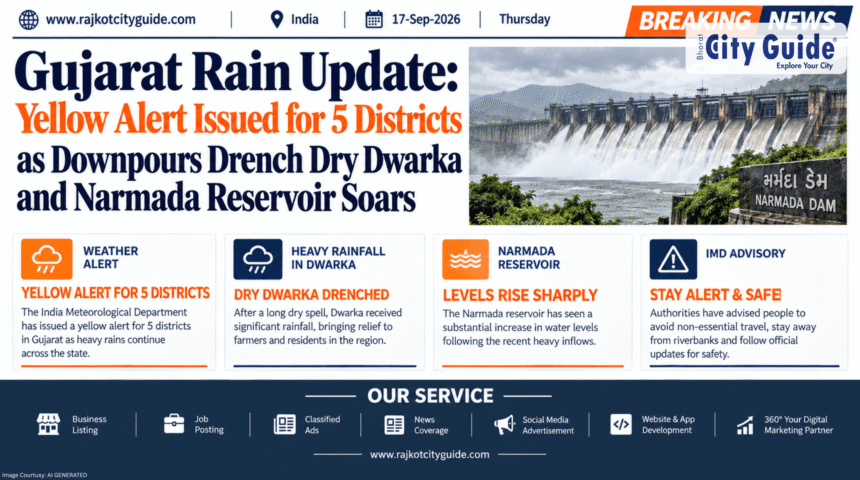
The latest Gujarat Rain Update brings a dramatic shift in weather patterns across Western India as active atmospheric systems trigger intense downpours after a prolonged dry spell. The India Meteorological Department (IMD) has officially placed five districts on yellow alert, warning residents, local authorities, and agricultural communities about imminent heavy rainfall, gusty winds, and localized waterlogging.
- Introduction
- What is Gujarat Rain Update?
- Why This News is Important
- Background Information
- Key Highlights
- Detailed Explanation of the Event
- Benefits and Importance
- How It Impacts People
- Expert Insights and Meteorological Perspective
- Challenges and Considerations
- Future Outlook
- Frequently Asked Questions (FAQs)
- Conclusion
Among the most significant developments in this weather cycle is the sudden, heavy downpour experienced in the coastal pilgrimage city of Devbhumi Dwarka. Having remained virtually dry and deficit-prone throughout the earlier stages of the monsoon, Dwarka witnessed torrential showers that caught visiting pilgrims by surprise as they gathered at the iconic Dwarkadhish temple to seek the blessings of Lord Krishna (Kalia Thakor).
Beyond coastal Saurashtra, the widespread monsoon activity has driven vital inflows into major reservoirs across the state, including the Sardar Sarovar Narmada Dam. With catchment areas receiving steady rainfall, water reserves are swelling, offering immense relief to Gujarat’s agricultural sector, rural drinking supply networks, and urban municipal bodies.
What is Gujarat Rain Update?
The Gujarat Rain Update provides crucial daily and seasonal weather insights published by meteorologists, state disaster management authorities, and civil administration teams. It tracks precipitation levels, monsoon depression movements, cyclone developments, and dam storage statistics across Gujarat’s three primary geographic divisions: South Gujarat, North Gujarat, and the peninsular Saurashtra-Kutch region.
This periodic update serves as an essential advisory system for various economic and public safety sectors:
- Agricultural Planning: Advising farmers on sowing, irrigation scheduling, and harvesting schedules based on localized rainfall projections.
- Civic and Emergency Preparedness: Alerting municipal corporations about potential urban flooding, traffic disruptions, and drainage overflows.
- Water Resource Management: Monitoring reservoir capacities, river discharge rates, and dam gate operations to manage flood control and irrigation storage.
Why This News is Important
Monsoon dynamics dictate the socio-economic vitality of Gujarat. The unexpected onset of heavy rain in previously dry areas carries multi-fold importance for the state’s economy and public welfare:
- Relief for Deficit Zones: Regions like Devbhumi Dwarka and parts of coastal Saurashtra had been experiencing severe rainfall deficits, threatening standing kharif crops.
- Crucial Water Security: Steady inflows into the Sardar Sarovar Narmada Dam secure drinking water supplies for millions of residents and ensure irrigation availability for upcoming farming cycles.
- Disaster Management Activation: Yellow alerts prompt local administrative machinery, National Disaster Response Force (NDRF) teams, and coastal warning systems to stay vigilant.
Background Information
The monsoon season in Gujarat typically operates under complex micro-climatic conditions influenced by Arabian Sea weather systems, cyclonic circulations over the Bay of Bengal, and low-pressure troughs moving across Central India. While South Gujarat and East-Central districts traditionally receive abundant rainfall, peninsular Saurashtra and the arid expanse of Kutch often face erratic distribution.
          [Arabian Sea Moisture Feed]
                      │
                      ▼
     [Low-Pressure System / Trough]
                      │
                      ▼
   ┌──────────────────┴──────────────────┐
   │                                     │
   ▼                                     ▼
[Saurashtra Coast]            [Narmada Catchment Area]
(Dwarka, Jamnagar, etc.)      (Sardar Sarovar Reservoir)
   │                                     │
   ▼                                     ▼
Downpours & Relief             Inflows & Storage Boost
Prior to this spell, several coastal pockets in West Saurashtra reported patchy showers, creating anxiety among groundnut and cotton farmers. However, a low-pressure system developing off the coast revived monsoon strength, funneling moisture directly into coastal districts like Dwarka, Jamnagar, Porbandar, Junagadh, and Rajkot.
Key Highlights
- 5 Districts Under Yellow Alert: IMD issued heavy rainfall warnings for Dwarka, Jamnagar, Porbandar, Junagadh, and Rajkot.
- Breakthrough Rain in Dwarka: Dry conditions broken by heavy downpours, soaking thousands of devotees visiting the Dwarkadhish Temple.
- Rising Narmada Dam Levels: Upstream rainfall has driven significant water inflows into the Sardar Sarovar Dam, pushing levels past vital storage markers.
- Wind Warnings for Fishermen: Advisory issued cautioning fishermen against venturing into the deep Arabian Sea due to rough sea conditions and gusty winds.
- Agricultural Boost: Late-stage monsoon showers provide essential nourishment for standing Kharif crops like groundnut, sesame, and cotton.
Detailed Explanation of the Event
The recent weather shift unfolded rapidly as a localized low-pressure circulation formed over the Arabian Sea, drawing heavy moisture inland toward Saurashtra. Devbhumi Dwarka, which had remained mostly dry throughout the current stretch, experienced sudden thunderstorm activity accompanied by high-velocity winds and intense downpours.
[Dry Spell in Coastal Saurashtra] ➔ [Atmospheric Depression Forms] ➔ [IMD Issues 5-District Yellow Alert] ➔ [Heavy Rain Hits Dwarka] ➔ [Reservoir Inflows Surge]
Visually dramatic scenes emerged from the holy town of Dwarka, where thousands of pilgrims visiting Kalia Thakor at the historic Dwarkadhish shrine were caught in the cloudburst. Rather than deterring visitors, the rains brought welcome relief from heat and humidity.
Simultaneously, heavy rainfall in the catchment zones of the Narmada basin pushed thousands of cusecs of water into the Sardar Sarovar Dam. Hydro-power generators and spillway gates were adjusted by engineers to manage incoming floodwaters smoothly while raising total storage levels.
Benefits and Importance
| Sector | Direct Impact & Benefit |
| Agriculture | Replenishes soil moisture for groundnut, castor, and cotton crops; reduces private irrigation costs. |
| Water Supply | Raises groundwater tables; increases live storage in regional dams like Aji, Nyari, and Narmada. |
| Tourism & Pilgrimage | Lowers ambient temperatures in coastal pilgrimage spots like Dwarka and Somnath, making travel pleasant. |
| Power Generation | Elevated dam levels allow hydro-power stations at Sardar Sarovar to operate at optimum capacity. |
How It Impacts People
For Pilgrims and Tourists
Travelers visiting holy sites in Saurashtra should carry rain gear and remain cautious near coastal cliffs and high tides. While rains lower temperatures, localized street flooding can cause temporary transit delays.
For Farmers and Rural Communities
The sudden deluge provides a life-saving boost to agricultural fields that were suffering under dry spells. It reduces the need for electricity-dependent tube well pumping and enhances ground water recharge.
For Urban Citizens
Residents in cities like Rajkot, Jamnagar, and Junagadh benefit from secured municipal water supplies, though commuters must navigate waterlogged roads during heavy spillover periods.
Expert Insights and Meteorological Perspective
Meteorologists point out that late-monsoon atmospheric depressions are vital for balancing annual rainfall averages across peninsular India. While early monsoon spells may skip certain coastal zones, late-season surges frequently compensate for the initial deficit.
Climate experts emphasize that while these rains secure surface water reservoirs, local administrations must strengthen stormwater drainage infrastructure to prevent urban flooding during concentrated rainfall bursts.
Challenges and Considerations
- Localized Urban Waterlogging: Low-lying areas in coastal towns face water pooling due to saturated soil conditions and limited drainage capacity.
- Coastal Safety Risks: High ocean waves and strong winds pose hazards for small fishing craft operating off the Saurashtra coast.
- Crop Damage Risk: While moisture is welcome, excess rain during crop maturation phases can lead to fungal infections or root damage in groundnut crops.
Future Outlook
The Meteorological Department forecasts that atmospheric conditions will remain active across Gujarat over the next 48 to 72 hours. Yellow alerts remain in place for coastal districts, with emergency administration teams on standby.
As the weather system progresses, water levels in the Narmada dam and regional Saurashtra reservoirs are expected to reach seasonal highs, ensuring complete drinking and irrigation water security for the state through the upcoming dry months.
Frequently Asked Questions (FAQs)
What is the current Gujarat Rain Update regarding weather alerts?
The IMD has issued a yellow alert for 5 districts in Gujarat—Dwarka, Jamnagar, Porbandar, Junagadh, and Rajkot—predicting heavy rainfall and gusty winds.
How did the recent rain affect Devbhumi Dwarka?
After a prolonged dry period, Dwarka experienced heavy downpours, bringing dramatic relief to the region and soaking visiting pilgrims at the Dwarkadhish Temple.
What is the status of the Narmada Dam water level?
Steady upstream rainfall has led to significant water inflows into the Sardar Sarovar Narmada Dam, pushing storage levels up significantly.
Are fishermen advised to go into the sea during this spell?
No. The weather department has issued advisories warning fishermen not to venture into the Arabian Sea along the Gujarat coast due to rough seas and strong winds.
Which regions in Gujarat benefit most from these late monsoon rains?
The peninsular Saurashtra region—especially coastal districts like Dwarka, Porbandar, and Jamnagar—benefits enormously through crop revival and groundwater recharge.
Does a yellow alert mean immediate evacuation?
No. A yellow alert signifies that weather conditions may deteriorate, advising citizens and local authorities to remain updated and cautious.
Conclusion
The latest Gujarat Rain Update highlights a transformative turn in the state’s seasonal monsoon narrative. From breaking dry spells in sacred coastal cities like Dwarka to boosting crucial reserves at the Sardar Sarovar Narmada Dam, these rains have delivered vital water security to both rural and urban Gujarat. While administrative yellow alerts remind residents to exercise caution during heavy downpours, the overall impact promises an enriched agricultural harvest and guaranteed municipal supply for the months ahead.