Introduction
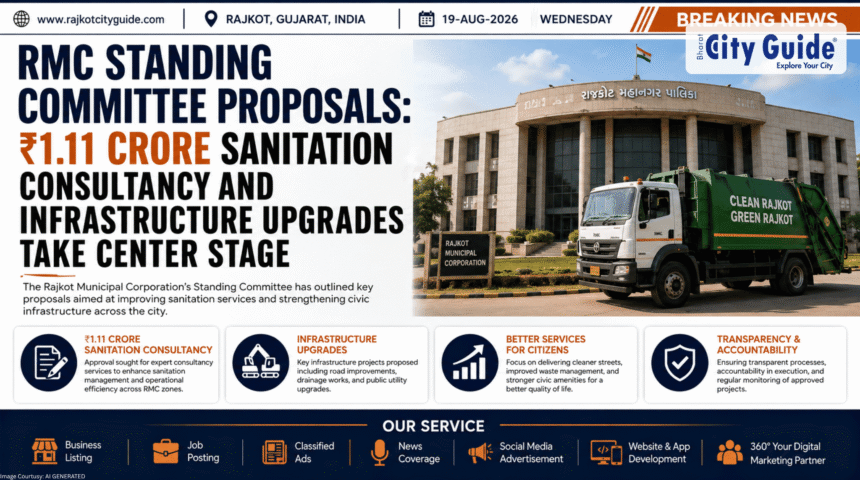
Urban administrative body decisions directly influence city development, public health, and municipal infrastructure. The Rajkot Municipal Corporation (RMC) is set to convene a pivotal meeting where civic leaders will review, debate, and sanction key developmental projects under the upcoming RMC Standing Committee proposals. Heading the agenda is a significant proposal to allocate ₹1.11 crore for specialized consultancy services aimed at elevating urban cleanliness standards and enhancing Rajkot’s national ranking in the annual Swachh Survekshan sanitation evaluations.
- Introduction
- What is RMC Standing Committee Proposals?
- Why This News is Important
- Background Information
- Key Highlights
- Detailed Explanation of the Event
- Benefits, Features, and Importance
- How It Impacts People
- Expert Insights and Industry Perspective
- Challenges and Limitations
- Future Outlook
- Frequently Asked Questions (FAQs)
- Conclusion
As one of Gujarat’s premier urban hubs under the Smart Cities Mission, Rajkot faces continuous pressure to upgrade its civic infrastructure, manage solid waste effectively, maintain roads, and improve public health delivery across its expanding ward divisions. The Standing Committee functions as the executive financial authority within the municipal governance structure, reviewing multi-crore tenders, infrastructure allocations, and policy initiatives before final administrative execution.
The current slate of RMC Standing Committee proposals reflects a strategic focus on data-driven urban management, professional sanitation auditing, and targeted civic infrastructure improvements. Understanding these executive agenda items provides key insights into how municipal funds are managed, how local infrastructure projects are prioritized, and how these decisions impact the daily lives of Rajkot residents.
What is RMC Standing Committee Proposals?
The term RMC Standing Committee proposals refers to formal municipal agenda items, financial estimates, tender approvals, and project blueprints submitted by administrative departments to the Standing Committee of the Rajkot Municipal Corporation for statutory review and financial approval.
                    ┌──────────────────────────────────────────────┐
                    │       RMC STANDING COMMITTEE PROPOSALS       │
                    │   Executive Approval & Financial Sanction    │
                    └──────────────────────┬───────────────────────┘
                                           │
        ┌──────────────────────────────────┼──────────────────────────────────┐
        ▼                                  ▼                                  ▼
┌────────────────────────┐      ┌────────────────────────┐      ┌────────────────────────┐
│ SANITATION CONSULTANCY │      │ CIVIC INFRASTRUCTURE   │      │ PUBLIC HEALTH & WARD   │
│ • ₹1.11 Crore Budget   │      │ • Road & Drainage Works│      │ • Water Supply Outlays │
│ • Swachh Survekshan    │      │ • Maintenance Tenders  │      │ • Community Amenities  │
└────────────────────────┘      └────────────────────────┘      └────────────────────────┘
Within Gujarat’s municipal governance structure—governed by the Gujarat Provincial Municipal Corporations (GPMC) Act—the Standing Committee serves as the principal financial oversight body. While the Municipal Commissioner and department heads draft project plans, no major financial outlay, high-value contract, or external consultancy contract can proceed without formal approval from the Standing Committee. These proposals encompass solid waste management contracts, road resurfacing projects, water distribution network expansions, street lighting contracts, and urban beautification projects across all municipal zones.
Why This News is Important
The upcoming review of municipal proposals by the Rajkot Municipal Corporation carries major political, financial, and civic significance for the region:
- Strategic Shift Toward Expert Consultancy: Allocating ₹1.11 crore specifically for external sanitation consultancy signals a move toward professional, data-backed urban management rather than relying solely on traditional in-house municipal methods.
- Impact on Swachh Survekshan Rankings: National sanitation rankings influence civic pride, central government grant allocations, and urban development funding under Ministry of Housing and Urban Affairs (MoHUA) schemes.
- Public Tax Capital Allocation: High-value municipal approvals directly determine how taxpayer funds are utilized across civic services, including road repairs, storm-water drainage, public parks, and health infrastructure.
- Urban Development Momentum: Approving pending developmental contracts ensures continuity in urban maintenance, preventing project delays in rapidly growing ward areas across Rajkot.
Background Information
In recent years, Indian tier-2 cities have undergone rapid urban expansion, accompanied by heightened public expectations regarding sanitation, air quality, road quality, and civic amenities. Rajkot, serving as the economic and commercial hub of the Saurashtra region, has expanded its geographical limits through new Town Planning (TP) schemes and ward re-alignments.
                      [ EVOLUTION OF RMC CIVIC MANAGEMENT ]
                                         │
  ┌──────────────────────────────────────┼──────────────────────────────────────┐
  ▼                                      ▼                                      ▼
[Legacy In-House Management]          [Smart City Integration]              [Data-Driven Consultancy]
 • Manual sanitation monitoring        • CCTV & GPS vehicle tracking          • Specialized third-party audits
 • Reactive maintenance work           • Mechanized road sweeping             • Performance-based contracts
Despite previous investments in automated door-to-door waste collection vehicles, waste-to-energy processing plants, and mechanized road sweepers, maintaining high cleanliness scores across all city wards remains a challenge. National assessments under Swachh Survekshan evaluate cities across complex parameters, including door-to-door source segregation, plastic waste processing, legacy waste remediation, public toilet hygiene, and citizen feedback mechanisms.
To bridge operational gaps, the administrative wing of RMC drafted a dedicated consultancy proposal valued at ₹1.11 crore. This initiative aims to engage specialized urban sanitation experts to audit daily operations, optimize waste collection routes, improve processing efficiency, and help Rajkot secure a top position in national cleanliness rankings.
Key Highlights
- Sanitation Consultancy Proposal: A major agenda item seeking financial approval for a ₹1.11 crore contract to hire professional cleanliness and urban management consultants.
- Swachh Survekshan Alignment: Designed to optimize door-to-door collection, waste processing, public toilet hygiene, and citizen feedback channels to boost national cleanliness rankings.
- Multi-Departmental Works: Includes various municipal proposals covering road construction, drainage maintenance, street lighting, and water supply projects across East, West, and Central zones.
- Financial Oversight: The Standing Committee will review tender bids, evaluate cost estimates, and verify departmental justification before issuing financial sanctions.
- Zone-Wise Infrastructure Focus: Allocations aim to address civic grievances in both established urban cores and newly included peripheral wards.
Detailed Explanation of the Event
The agenda items before the Standing Committee reflect the administrative machinery required to manage a modern municipal corporation.
                           [ DECISION-MAKING WORKFLOW ]
                                         │
  Departmental Proposal Draft ──► Standing Committee Review ──► Financial Sanction & Work Order
                                                                       │
  Public Deployment & Monitoring ◄── Third-Party Audit & Execution ◄───┘
1. The ₹1.11 Crore Cleanliness Consultancy Proposal
The flagship item on the agenda is the proposal to engage a professional urban sanitation consulting firm. Managing solid waste across dozens of municipal wards requires continuous data collection, route optimization for collection vehicles, worker attendance tracking, processing plant audits, and public awareness campaigns.
The selected consultancy will analyze current solid waste management practices, identify operational bottlenecks, train ground staff, and design action plans tailored to the evaluation criteria set by central government assessment teams.
2. Infrastructure and Maintenance Allocations
Alongside the primary sanitation proposal, the committee agenda includes multiple departmental items addressing daily civic needs:
- Road Repair and Resurfacing: Financial sanctions for asphalt resurfacing, pothole repairs, and paving works across key arterial roads and residential neighborhoods.
- Water Distribution and Drainage: Approvals for pipe replacement, storm-water drain clearing, and pumping station maintenance ahead of seasonal rainfall.
- Ward-Level Civic Amenities: Financial provisions for maintaining public parks, streetlights, municipal school facilities, and primary healthcare centers.
3. Financial Review and Approval
During the meeting, committee members will evaluate bid documents submitted by qualified contractors. The committee holds the legal authority to approve proposals, request administrative revisions, or reject tenders that exceed standard cost benchmarks, ensuring responsible use of municipal funds.
Benefits, Features, and Importance
Executing these municipal initiatives provides clear operational and structural advantages for the city:
| Focus Area | Proposed Initiative | Anticipated Civic Benefit |
| Urban Cleanliness | ₹1.11 Cr Consultancy Contract | Improved waste segregation, efficient collection routes, and higher national rankings. |
| Solid Waste Operations | Third-Party Audit & Monitoring | Standardized daily waste collection, better processing, and cleaner public spaces. |
| Road Network | Resurfacing and Paving Grants | Smoother traffic flow, reduced vehicle wear, and improved road safety across wards. |
| Civic Infrastructure | Drainage and Water Supply Works | Reliable drinking water delivery and reduced monsoon flooding risks. |
| Public Governance | Transparent Financial Reviews | Responsible spending of public tax revenues with clear committee oversight. |
How It Impacts People
+-----------------------------------------------------------------------+
|                    RMC STANDING COMMITTEE DECISIONS                   |
+-----------------------------------+-----------------------------------+
|            CITY RESIDENTS         |          LOCAL BUSINESSES         |
|  - Cleaner neighborhoods          |  - Improved commercial sanitation |
|  - Better roads & drainage        |  - Better logistics infrastructure|
|  - Efficient waste collection     |  - Increased civic investment     |
+-----------------------------------+-----------------------------------+
|         MUNICIPAL WORKERS         |         TAX-PAYING CITIZENS       |
|  - Professional training          |  - Accountable use of tax funds   |
|  - Structured operational workflows| - High-value urban infrastructure |
+-----------------------------------+-----------------------------------+
For Urban Residents
Residents across Rajkot stand to gain directly from improved municipal services. Enhanced sanitation management leads to cleaner residential streets, reliable door-to-door garbage collection, well-maintained public restrooms, and reduced health risks associated with unmanaged waste.
For Local Businesses and Traders
Clean, well-maintained urban corridors support commercial activity. Efficient solid waste collection and smooth road infrastructure benefit retail markets, industrial zones, and logistics hubs by maintaining clean surroundings and reducing transport delays.
For Municipal Administration and Field Staff
Partnering with professional urban consultants provides sanitation workers, ward inspectors, and department heads with modern operational tools, data analytics, and structured workflows, improving daily productivity across all municipal zones.
Expert Insights and Industry Perspective
Urban planning experts and civic policy analysts emphasize that modern city management requires a balance between physical infrastructure investments and specialized administrative consulting.
As municipal governance grows more complex, relying solely on traditional administrative methods often leads to operational inefficiencies. Engaging specialized consulting firms allows municipal bodies to adopt data analytics, GIS route mapping, and modern waste management strategies proven in top-performing cities nationwide.
However, experts also stress that consultancy investments yield long-term value only when recommendations are actively translated into ground-level execution by municipal staff and supported by sustained citizen participation in source waste segregation.
Challenges and Limitations
Implementing complex municipal projects involves several operational challenges:
- Translating Strategy to Ground Action: Bridging the gap between high-level consultancy recommendations and daily field operations requires consistent supervision and worker training.
- Sustaining Citizen Cooperation: Achieving high cleanliness standards depends heavily on household source segregation—separating wet and dry waste—which requires ongoing public participation.
- Timely Execution of Works: Ensuring that approved infrastructure projects, such as road repairs and drainage maintenance, are completed within budget and set deadlines without disrupting daily traffic.
Future Outlook
Following formal review and approval by the Standing Committee, the municipal administration will issue work orders to initiate the consultancy onboarding process and begin approved infrastructure projects.
Over the coming months, the integration of specialized sanitation consulting is expected to produce measurable improvements in daily waste management, public hygiene metrics, and citizen satisfaction across Rajkot. Success in these initiatives will help position the city for higher national recognition in upcoming Swachh Survekshan rankings and provide a framework for future urban development projects.
Frequently Asked Questions (FAQs)
1. What are the key RMC Standing Committee proposals currently under consideration?
The primary proposal involves approving ₹1.11 crore for specialized urban cleanliness consultancy services, along with various municipal proposals for road repairs, water supply upgrades, and drainage maintenance across Rajkot.
2. Why is RMC spending ₹1.11 crore on a cleanliness consultancy?
The consultancy aims to provide professional auditing, data analytics, operational route optimization, and strategic guidance to improve citywide sanitation and boost Rajkot’s score in national Swachh Survekshan rankings.
3. What is the role of the RMC Standing Committee?
The Standing Committee is the executive financial authority of the Rajkot Municipal Corporation, responsible for reviewing administrative proposals, approving high-value tenders, and authorizing municipal expenditure.
4. How will the cleanliness consultancy impact daily garbage collection?
The consultancy will analyze collection routes, monitor vehicle efficiency, evaluate door-to-door waste segregation, and introduce optimized workflows to ensure consistent waste collection across all wards.
5. Who heads the RMC Standing Committee meetings?
The meetings are chaired by the Standing Committee Chairman, alongside committee members, with the Municipal Commissioner and senior civic department heads in attendance to present proposal details.
6. Will these proposals cover road repairs and maintenance?
Yes. The committee agenda includes financial proposals for asphalt resurfacing, road repairs, and storm-water drain maintenance across multiple municipal wards.
7. How do these committee decisions benefit Rajkot taxpayers?
By providing structured financial oversight, the committee ensures public tax funds are allocated efficiently to priority projects, leading to cleaner neighborhoods, improved roads, and better public services.
Conclusion
The review of the RMC Standing Committee proposals marks a proactive step forward in Rajkot’s urban development journey. By combining a targeted ₹1.11 crore investment in professional sanitation consultancy with essential civic infrastructure approvals, the municipal corporation demonstrates a clear commitment to modernizing public services. As these projects move from executive approval to ground-level execution, residents across Rajkot can anticipate cleaner surroundings, improved infrastructure, and a higher standard of urban living.