Introduction
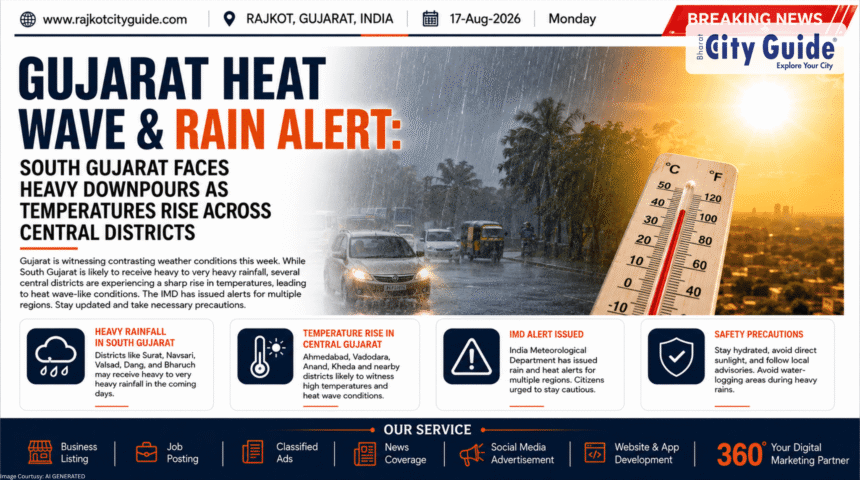
Gujarat is experiencing a unique dual-weather phenomenon this monsoon season. The India Meteorological Department (IMD) has issued an official update regarding a major Gujarat Heat Wave & Rain Alert, highlighting stark contrast across regions. While Southern Gujarat districts—including Navsari, Valsad, Dang, and Tapi—are experiencing persistent rain showers under an official IMD Yellow Alert, major urban centers in Central and Northern Gujarat, such as Ahmedabad, Vadodara, and Gandhinagar, are experiencing rising heat and high humidity levels.
- Introduction
- What is Gujarat Heat Wave & Rain Alert?
- Why This News is Important
- Background Information
- Key Highlights
- Detailed Explanation of the Event
- Benefits, Features, and Importance
- How It Impacts People
- Expert Insights and Meteorological Perspective
- Challenges and Limitations
- Future Outlook
- Frequently Asked Questions (FAQs)
- Conclusion
This contrasting weather pattern is driven by six active monsoonal weather systems operating concurrently over the Indian subcontinent. Moisture-laden winds flowing from the Arabian Sea are dumping localized heavy rainfall along the southern coastal belt and hilly forest zones of Dang. Conversely, prolonged breaks between rain spells in central plains have caused heat indexes to surge, leaving urban residents grappling with muggy afternoons and high temperatures.
Understanding the dynamics of this Gujarat Heat Wave & Rain Alert is crucial for daily commuters, agricultural planning, coastal maritime activities, and public health management. As district collectors across South Gujarat deploy emergency response protocols, city dwellers in central districts must navigate elevated heat indexes alongside sudden lightning thundershowers.
What is Gujarat Heat Wave & Rain Alert?
The Gujarat Heat Wave & Rain Alert describes a dual-action meteorological condition where intense monsoonal precipitation and elevated heat stress occur simultaneously across different geographic zones of Gujarat.
                    ┌──────────────────────────────────────────────┐
                    │      GUJARAT DUAL WEATHER ALERT SYSTEM       │
                    │   India Meteorological Department (IMD)      │
                    └──────────────────────┬───────────────────────┘
                                           │
        ┌──────────────────────────────────┼──────────────────────────────────┐
        ▼                                  ▼                                  ▼
┌────────────────────────┐      ┌────────────────────────┐      ┌────────────────────────┐
│  SOUTH GUJARAT ZONE    │      │ CENTRAL & NORTH ZONE   │      │ SAURASHTRA & COASTAL   │
│ • Yellow Alert Heavy   │      │ • Rising Heat Index    │      │ • Fishermen Warning    │
│   Rain (Navsari/Valsad)│      │ • High Relative        │      │ • High Wind Speeds     │
│ • Drizzle & Downpours  │      │   Humidity (Muggy)     │      │   (40–50 km/h)         │
└────────────────────────┘      └────────────────────────┘      └────────────────────────┘
This pattern occurs when cyclonic circulations and low-pressure troughs draw heavy moisture onto the southern coastline while leaving northern inland regions exposed to solar radiation between scattered cloud covers, driving up both ambient temperatures and relative humidity.
Why This News is Important
This dual weather warning carries broad implications for citizens, local authorities, and the agricultural sector across the state:
- Contrasting Regional Weather Risks: While South Gujarat faces localized flooding and road disruptions, Central Gujarat is dealing with heat discomfort and dehydration concerns.
- Coastal Safety Protocols: The IMD has advised fishermen along the Gujarat coast to avoid venturing deep into the Arabian Sea due to rough sea conditions and gusty surface winds reaching 40 to 50 km/h.
- Kharif Crop Impact: Steady rains in Navsari, Tapi, and Dang benefit standing paddy and sugarcane crops, whereas heat spikes in Central Gujarat require careful irrigation management.
- Urban Health Hazards: Rapid switches between high humidity and sudden rain showers create favorable conditions for seasonal viral infections, waterborne illnesses, and vector-borne diseases.
Background Information
The monsoon season in Gujarat typically sees varying rainfall distribution, with South Gujarat receiving the highest cumulative precipitation (often exceeding 100% of its seasonal average), while Saurashtra, Kutch, and North Gujarat experience more intermittent spells.
                   [ MONSOON WEATHER SYSTEM MECHANICS ]
                                    │
  ┌─────────────────────────────────┼─────────────────────────────────┐
  ▼                                 ▼                                 ▼
[Arabian Sea Moisture]    [Low-Pressure Troughs]      [Micro-Climate Heat Spikes]
 • Sustained Onshore       • Bay of Bengal System      • High Relative Humidity
   Winds over Coast          Interaction                 Inland
In 2026, a series of low-pressure areas over the Bay of Bengal interacting with cyclonic circulations over North Peninsular India created strong westerly wind flows. As these moisture-laden winds hit the Western Ghats and coastal ridges of South Gujarat, they caused heavy precipitation in Valsad and Dang. Meanwhile, inland urban areas like Ahmedabad experienced partial cloud cover, trap heat, and elevated human discomfort levels.
Key Highlights
- Yellow Alert Issued: IMD places Navsari, Valsad, Dang, Tapi, and neighboring union territories under a Yellow Alert for heavy rain.
- Steady Rain in South Gujarat: Continuous drizzling and intense rain spells reported across Chikhli, Bilimora, Ahwa, and Vapi.
- Rising Heat Index in Central Cities: Temperatures in Ahmedabad and Vadodara remain elevated, with high humidity creating muggy conditions.
- Fishermen Advisory: Maritime authorities urge fishermen to refrain from venturing into the Arabian Sea due to strong surface winds (40–50 km/h).
- Cumulative Season Rainfall: Gujarat has covered over 73% of its average seasonal rainfall, with South Gujarat leading all zones.
- Urban Waterlogging Risk: Municipal corporations in Surat and Navsari have activated control rooms to monitor low-lying roads and underpasses.
Detailed Explanation of the Event
The recent weather bulletin from the Meteorological Centre in Ahmedabad indicates that multiple synoptic systems—including a cyclonic circulation over the Gujarat region and a monsoon trough extending across central India—are active simultaneously.
                            [ REGIONAL DYNAMIC SNAPSHOT ]
                                          │
  South Gujarat (Valsad / Dang) ──► Steady Rain & Yellow Alert ──► Saturated Soils
                                                                        │
  Central Gujarat (Ahmedabad) ◄── High Temperature & Humidity ◄─────────┘
South Gujarat Rain Pattern
In the southern districts of Navsari, Valsad, and the forested region of Dang, rainfall has ranged from steady drizzling to sudden heavy downpours. Rivers and local rivulets flowing through the Western Ghats foothills have seen fresh water inflows. Localized waterlogging on rural roads near Bilimora and Chikhli has required caution from motorists.
Heat & Humidity Surge in Central Gujarat
Conversely, major inland cities present a different scenario. In Ahmedabad and Gandhinagar, daytime temperatures have hovered above normal averages. Combined with high relative humidity levels, the real-feel temperature (heat index) has felt significantly warmer. City residents experience oppressive heat during midday hours, followed by brief, scattered thundershowers in isolated patches.
Benefits, Features, and Importance
Understanding the regional details of this weather pattern helps individuals and businesses adapt effectively:
| Region / Zone | Primary Weather Feature | Primary Impact / Protective Action |
|---|---|---|
| South Gujarat (Valsad/Dang/Navsari) | Heavy Rain & Drizzle (Yellow Alert) | Excellent groundwater recharge; drive cautiously through low-lying passages. |
| Central Gujarat (Ahmedabad/Vadodara) | Elevated Heat & High Humidity | High dehydration risk; drink adequate fluids and limit prolonged sun exposure. |
| Coastal Belt (Surat/Veraval/Okha) | Rough Seas & Strong Winds (40-50 km/h) | Maritime warning active; fishermen should strictly avoid deep-sea operations. |
| Agricultural Belts (Saurashtra/Tapi) | Intermittent Thundershowers | Favorable for Kharif paddy and cotton, provided field drainage is maintained. |
How It Impacts People
This atmospheric shift affects daily life across multiple public segments in Gujarat:
- Commuters & Travelers: Drivers navigating National Highway 48 through Navsari and Valsad should anticipate reduced visibility and localized water accumulation.
- Fishermen & Coastal Communities: Coastal residents and fishing operators face economic pauses as boat departures are halted during high-wind advisories.
- Farmers & Agricultural Workers: Farmers in South Gujarat benefit from sustained topsoil moisture, though proper field drainage is necessary to protect young crops from waterlogging.
- Urban Citizens & Children: Rising heat index values in central cities increase the risk of heat exhaustion and summer dehydration, requiring extra precautions during outdoor activities.
Expert Insights and Meteorological Perspective
Meteorologists emphasize that dual weather events—where monsoon rain coexists with localized heat surges—are increasingly common due to shifting regional climate dynamics. When moist maritime air mixes with warm inland continental air without producing full cloud cover, atmospheric enthalpy rises, causing human thermal discomfort.
Public health experts advise that rapid shifts between humid heat and cold rain showers can strain the immune system. Health departments recommend consuming boiled or filtered water, maintaining electrolyte balance during muggy afternoons, and preventing stagnant water accumulation near residential premises to control mosquito breeding.
Challenges and Limitations
Managing a dual-weather emergency presents distinct operational challenges for local administration:
- Resource Allocation: District authorities must simultaneously manage flood-readiness in South Gujarat while addressing heat safety and urban electricity demand in central regions.
- Traffic Disruption in Low-Lying Corridors: In rural South Gujarat, causeways and low-lying culverts are prone to temporary flooding during sudden rain bursts.
- Predictability of Micro-Spells: Isolated convective thundershowers in urban cities like Ahmedabad can form rapidly, making exact neighborhood-level rain timing difficult to forecast.
Future Outlook
Over the coming days, the weather pattern across Gujarat is expected to evolve as active monsoon systems shift across Western India:
- Widespread Rainfall Expansion: As low-pressure systems move westward across Madhya Pradesh, rain activity may spread further into Central Gujarat and Saurashtra.
- Gradual Heat Index Relief: Increased cloud cover over inland cities should help lower afternoon peak temperatures, offering relief from high heat index levels.
- Reservoir & Dam Inflows: Sustained rainfall in catchment areas will boost water levels across major dams in South and Central Gujarat, ensuring reliable irrigation supply for the upcoming agricultural cycle.
Frequently Asked Questions (FAQs)
1. What does the Gujarat Heat Wave & Rain Alert signify?
It indicates a contrasting weather scenario where South Gujarat experiences heavy rainfall under an IMD Yellow Alert while central inland cities face elevated temperatures and high humidity.
2. Which districts are under a Yellow Alert for heavy rain?
The IMD has issued a Yellow Alert primarily for South Gujarat districts, including Navsari, Valsad, Dang, Tapi, and adjacent union territory regions.
3. Why are temperatures rising in cities like Ahmedabad during monsoon season?
Intermittent breaks in rain clouds combined with high atmospheric humidity cause solar radiation to heat the ground level, leading to high heat index values.
4. Is there an active advisory for fishermen in coastal Gujarat?
Yes. The IMD has advised fishermen not to venture into the Arabian Sea due to rough coastal waters and strong surface winds blowing at 40 to 50 km/h.
5. How much rainfall has Gujarat received so far this season?
Gujarat has recorded over 73% of its average seasonal rainfall, with the South Gujarat zone leading the state in cumulative totals.
6. What precautions should people in South Gujarat take during this alert?
Residents should avoid crossing flooded causeways, monitor official weather bulletins, secure loose outdoor structures against strong winds, and ensure proper drainage around agricultural fields.
7. What health precautions are recommended for high heat and humidity?
Stay well-hydrated with water and ORS, wear lightweight cotton clothing, avoid prolonged direct sun exposure during peak afternoon hours, and maintain food hygiene.
Conclusion
The current Gujarat Heat Wave & Rain Alert highlights the diverse weather conditions across the state. While South Gujarat receives valuable monsoon rainfall under an IMD Yellow Alert, central urban centers continue to navigate humid afternoons and high temperatures. By staying informed through official IMD bulletins, respecting maritime safety warnings, and taking simple health precautions against humidity and sudden downpours, citizens and local authorities can navigate this monsoon period safely and efficiently.