Introduction
Every year, the coastal town of Puri in Odisha transforms into a grand arena of visual splendor, roaring chants, and unbridled devotion. The annual chariot festival stands out as one of the largest and oldest religious congregations in the world. As preparations reach their peak, millions of devotees from every corner of the globe are looking forward to Rath Yatra 2026. This mega-festival celebrates the annual journey of Lord Jagannath, his elder brother Lord Balabhadra, and their younger sister Goddess Subhadra. For a few days, the supreme deities step out of their dark, mysterious inner sanctum to meet their creation under the open sky.
- Introduction
- What is the Jagannath Chariot Festival?
- Current Situation and Latest Schedule Updates for Rath Yatra 2026
- Why is Rath Yatra 2026 Highly Important?
- Key Highlights of the Festival
- Detailed Explanation of Mythological Origins
- Deep Spiritual Values: Inclusivity and Cleansing
- Design and Specifications of the Divine Chariots
- Advantages of Participating in Rath Yatra 2026
- Practical Checklist for Devotees and Travelers
- Future Expectations and Legacy
- Frequently Asked Questions (FAQs)
- Conclusion
The current situation surrounding Jagannath Rath Yatra 2026 highlights an incredible surge in travel bookings, tight administrative arrangements by the Odisha government, and a deep spiritual fervor taking over the country. The festival officially commences on July 16, 2026, marking the second day (Dwitiya Tithi) of the bright fortnight of the Ashadha month. This blog post offers you an exhaustive guide on the exact calendar of events, the underlying historical secrets, the construction dynamics of the giant wooden chariots, and the deep spiritual truths that make this festival a global marvel. Read on to uncover how you can experience this transformative event and absorb the blessings of the Lord of the Universe.
What is the Jagannath Chariot Festival?
The world-renowned chariot festival, locally known as Ghosha Jatra or Sri Gundicha Jatra, is a massive public procession where the core deities of the 12th-century Jagannath Temple in Puri emerge from the temple premises. The festival primarily commemorates their trip from the main Jagannath Temple to the Gundicha Temple, which is affectionately considered their aunt’s home. Spanning a distance of roughly three kilometers along the wide avenue known as Bada Danda (The Grand Road), this grand journey symbolizes a joyous family reunion and a period of casual rest for the divine siblings away from their daily formal worship.
Historically, this tradition has continued unbroken for centuries, outlasting empires, colonial rule, and modern socio-political changes. Unlike other temple rituals where entry is strictly restricted to orthodox Hindus, the chariot festival serves as a brilliant symbol of universal brotherhood. It is the time when the Lord himself sheds all royal barriers, steps out into the dirt and dust, and allows everyone—irrespective of their caste, creed, gender, or nationality—to catch a direct glance, touch his chariot, and feel close to the divine.
Current Situation and Latest Schedule Updates for Rath Yatra 2026
The temple administration and authorities have outlined a flawless timeline for Rath Yatra 2026. Unlike previous years where minor shifts in the lunar calendar created tight overlaps between distinct rituals, the schedule for 2026 flows in a structured manner. Lakhs of devotees are already descending upon the state of Odisha, and local authorities have set up elaborate security corridors, drone monitoring stations, and massive drinking water centers along the Bada Danda to handle the massive summer crowds.
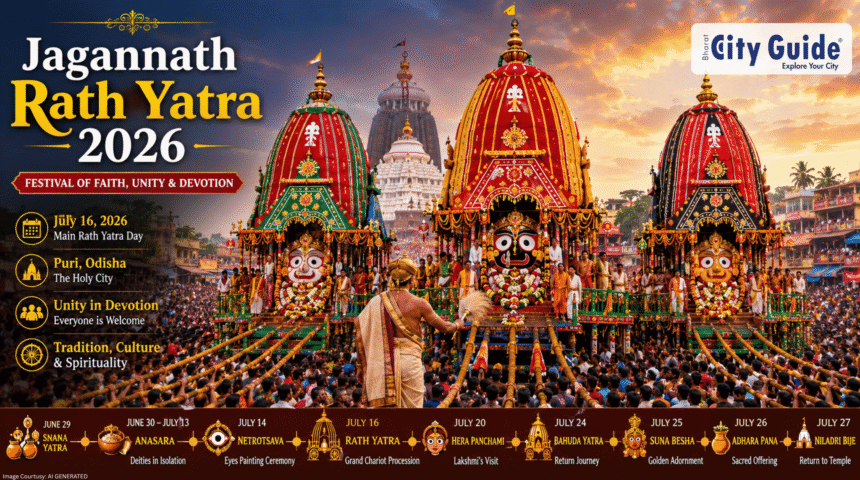
The complete operational schedule for the rituals of Rath Yatra 2026 is officially fixed as follows:
- June 29, 2026 (Monday): Snana Yatra – The ceremonial bathing ritual where the three deities are bathed with 108 pots of herbal, aromatic water on a raised platform, publically visible from outside the temple walls.
- June 30 to July 13, 2026: Anasara Period – A fortnight of complete isolation where the deities are believed to catch a fever from the extensive bath. The main shrine remains closed to the public, and secret natural treatments are carried out by traditional temple healers.
- July 14, 2026 (Tuesday): Nava Yauvana Darshan / Netrotsava – The highly anticipated day when the deities heal completely, showing off their refreshed, youthful forms, and their eyes are ceremonially painted by the priests.
- July 16, 2026 (Thursday): Rath Yatra Day – The absolute climax of the festival when the spectacular chariot procession begins in the morning, moving the deities toward the Gundicha Temple.
- July 20, 2026 (Monday): Hera Panchami – A unique, dramatic ritual where Goddess Lakshmi, the consort of Lord Jagannath, visits the Gundicha Temple in anger because she was left behind, even damaging a piece of her husband’s chariot out of spite.
- July 24, 2026 (Friday): Bahuda Yatra – The grand return journey of the holy trinity back toward the main temple after completing their nine-day stay.
- July 25, 2026 (Saturday): Suna Besha – The breathtaking event where the deities are dressed up in massive armor made of pure gold while resting on their chariots outside the main temple gates.
- July 26, 2026 (Sunday): Adhara Pana – A special ritual where huge clay pots filled with a sweet, aromatic milk drink are offered to the deities and then broken on the chariots to liberate the invisible spirits guarding the structures.
- July 27, 2026 (Monday): Niladri Bije – The final ritual where the three deities officially return to the main altar (Ratna Singhasana) inside the sanctum sanctorum, wrapping up the annual event.
Why is Rath Yatra 2026 Highly Important?
The global and domestic relevance of Rath Yatra 2026 extends far beyond basic religious tourism. From a cultural standpoint, it acts as a massive socio-economic driver for eastern India. Thousands of local artisans, weavers, musicians, and small business owners rely entirely on this annual cycle to sustain their traditional livelihoods.
Furthermore, in a fast-paced digital world, this festival stands out as a vibrant testament to living heritage. It demonstrates how ancient traditions can perfectly co-exist with modern crowd-management systems. For millions of pilgrims who went through personal and collective hardships over recent years, pulling the ropes during Rath Yatra 2026 represents a powerful act of moving forward, shaking off past sins, and building collective hope.
Key Highlights of the Festival
- The World’s Largest Chariots: Three gigantic wooden structures built entirely from scratch every single year without a single iron nail or metal screw.
- The Royal Broom Ritual: The reigning King of Puri performs a humble cleaning service, sweeping the wooden platforms with a golden broom.
- Absolute Inclusivity: The rare occasion where the Lord leaves the temple walls to bless every human being, dissolving all social divides.
- Sacred Sibling Affection: The unique sight of a festival that centers purely around the affectionate bond between brothers and a sister, rather than a god and his consort.
- Total Spiritual Liberation: The ancient belief that a single glance at the Lord on his chariot completely frees an individual from the cycle of rebirth.
Detailed Explanation of Mythological Origins
The Unfinished Idols of Puri
The fascinating appearance of the idols in Puri—with their large round eyes, short stumps for arms, and lack of distinct hands or feet—is explained by an extraordinary story in the ancient scriptures. According to legend, King Indradyumna wanted to build a grand temple to house the sacred remains of Lord Krishna. The celestial architect, Vishwakarma, agreed to carve the divine idols out of a sacred neem log on one strict condition: he must be locked inside a room completely undisturbed for 21 days. If anyone opened the door early, he would stop working immediately.
As days passed in absolute silence, the anxious Queen became worried that the old craftsman had starved to death. Yielding to her pressure, the King opened the palace doors prematurely on the 15th day. Vishwakarma vanished instantly into thin air, leaving the idols in their raw, incomplete state. The King was heartbroken, but Lord Brahma appeared to comfort him, explaining that the Supreme Almighty wished to manifest in this exact form to teach humanity that inner devotion matters far more than outward physical perfection.
The Return to Vrindavan
Another deeply emotional story connects the Rath Yatra to the absolute longing of the devotees in Vrindavan. According to this tradition, the grand chariot journey represents the moment when Lord Krishna, along with his brother Balarama and sister Subhadra, yields to the intense love of the gopis (cowherd maidens) and makes a symbolic return journey from his royal palace to the pastoral woods of Vrindavan. The Gundicha Temple represents the peaceful groves of Vrindavan, where the Lord sheds his heavy royal duties to indulge in pure, simple love with his childhood companions.
Deep Spiritual Values: Inclusivity and Cleansing
The Ultimate Symbol of Equality
The core philosophy of the Jagannath cult is deeply rooted in human equality. While ancient social systems often created rigid boundaries regarding temple entries, the Rath Yatra 2026 breaks down all human-made divisions. The spectacular highlight of this philosophy is the ‘Chhera Pahanra’ ritual. Before the chariots are pulled down the road, the Gajapati Maharaja (the King of Puri), who is highly revered as the first servant of the state, steps onto the chariots dressed in simple clothes. He humbles himself completely, sweeping the wooden floors around the deities using a broom made of gold, and sprinkles holy water mixed with fragrant sandalwood paste. This powerful ritual sends a clear message to the world: in the eyes of the divine creator, a powerful king and a humble street sweeper stand on the exact same level.
The Power of Spiritual Cleansing
The Skanda Purana declares that anyone who catches a glimpse of the deities seated on their majestic chariots, moving through the ocean of humanity, is cleared of multiple lifetimes of negative karma. Actively pulling the thick, heavy coir ropes is seen as a physical manifestation of collective surrender. Devotees believe that by pulling the massive wooden chariot forward, they are actually pulling their own wandering minds back toward a path of righteousness and spiritual peace.
Design and Specifications of the Divine Chariots
Every single year, a specialized team of hereditary carpenters works under the summer sun to build three massive chariots based on ancient design codes. Not a single blueprint is written down on paper; the entire measurement system relies on traditional finger-widths and hand-spans passed down through generations.
| Specification | Nandighosha |(Lord Jagannath) | Taladhwaja (Lord Balabhadra) | Darpadalan (Goddess Subhadra) |
| Total Height | 45 Feet 6 Inches | 45 Feet | 44 Feet 6 Inches |
| Number of Wheels | 16 Massive Wheels | 14 Massive Wheels | 12 Massive Wheels |
| Canopy Colors | Red and Yellow | Red and Green | Red and Black |
| Sacred Rope Name | Sankhachuda | Basuki | Swarnachuda |
| Guarding Deities | Garuda | Vasudev | Jayadurga |
Nandighosha: The Chariot of Lord Jagannath
Standing as the tallest and heaviest structure in the grand procession, Nandighosha is wrapped in vibrant red and bright yellow fabrics. The 16 massive wooden wheels represent the sixteen core arts and faculties of human life. The chariot carries a flag named Maruti, and its wooden horses are white. It is always the final chariot to move down the road, as the Lord prefers to watch over his siblings moving safely ahead of him.
Taladhwaja: The Chariot of Lord Balabhadra
The chariot of the elder brother is easily recognized by its red and deep green fabric wraps. It features 14 large wheels that signify the fourteen structural layers of the created universe. The flag flying high on this structure is named Unnani, and it is pulled forward using the sacred rope Basuki. Following traditional family hierarchy, Taladhwaja always leads the grand procession down the Bada Danda.
Darpadalan: The Chariot of Goddess Subhadra
Also known as Padmadhwaja, the chariot of the beloved younger sister is wrapped in protective red and deep black cloths. It features 12 wheels that mirror the twelve months of the year. The flag on her chariot is called Tramadia, and it is guided by the guarding deity Jayadurga. In the procession, her chariot moves gracefully right in the middle, safely protected by her two protective brothers on either side.
Advantages of Participating in Rath Yatra 2026
- Experiencing Real Cultural Unity: Witnessing millions of people from different socio-economic strata chanting together in complete harmony provides a rare look into human unity.
- Absorbing Ancient Artistic Vibes: The entire festival is a masterclass in traditional Indian engineering, classical Odissi music, and ancient dance forms performed live on the streets.
- Attaining Deep Mental Peace: The immense, collective focus of millions of hearts beating for a single divine concept creates a powerful meditative energy that helps relieve modern stress.
Practical Checklist for Devotees and Travelers
If you are planning to travel to Puri to witness the grand spectacle of Rath Yatra 2026, you must plan every step with extreme care due to the massive crowds.
- Accommodation: Book your hotel rooms or ashram stays at least three to four months in advance. Properties facing the Bada Danda are usually sold out a year early.
- Hydration and Health: The coastal weather in July is incredibly hot and humid. Carry electrolyte packets, comfortable cotton clothing, and reliable umbrellas to protect against sudden monsoon downpours.
- Safety and Security: Keep your wallets, mobile phones, and identity documents in secure, zippered bags. Avoid pushing deep into the dense core of the crowd near the chariots if you are traveling with elderly relatives or small children.
Future Expectations and Legacy
As we look past Rath Yatra 2026, the temple administration is looking into advanced technological measures, such as real-time AI crowd-tracking and eco-friendly waste recycling systems, to ensure the festival remains clean and sustainable. Yet, despite these modern updates, the beating heart of the Yatra remains entirely untouched by time. The ancient legacy of wooden chariots, neem-wood idols, and pure, raw devotion will continue to inspire generations long into the future, reminding humanity of a god who steps out of his comfort zone just to bless his children on the streets.
Frequently Asked Questions (FAQs)
Q1: What is the official date for the main procession of Rath Yatra 2026?
The main chariot procession for Rath Yatra 2026 is scheduled to take place on July 16, 2026. The rituals will begin in the early hours of the morning, and the pulling of the massive chariots will start later in the afternoon. Devotees planning to attend should reach Puri a couple of days early to absorb the preparatory rituals and secure a good spot along the main road.
Q2: Why do the idols of Lord Jagannath, Balabhadra, and Subhadra look incomplete?
The idols look incomplete because, according to mythological history, the celestial architect Vishwakarma was carving them secretly inside a sealed room. He had set a condition that no one should disturb him for 21 days. However, King Indradyumna opened the doors early on the 15th day out of sheer anxiety. Vishwakarma vanished instantly, leaving the idols with stumps for arms and large round eyes. The Lord then revealed that he preferred this raw form to show that he accepts pure devotion over superficial physical perfection.
Q3: What is the significance of the Chhera Pahanra ritual in Rath Yatra 2026?
Chhera Pahanra is a beautiful ritual of inclusivity and humility. The Gajapati Maharaja (the King of Puri) sweeps the wooden floors of all three chariots with a golden broom and sprinkles holy sandalwood water. This tradition highlights that everyone is completely equal before the divine. Even a mighty king serves happily as a humble sweeper when it comes to serving Lord Jagannath.
Q4: Can non-Hindus participate in the celebrations of Rath Yatra 2026?
Yes, absolutely. The Rath Yatra 2026 is world-famous precisely because it breaks down all orthodox barriers. While non-Hindus are traditionally not permitted inside the main ancient temple building, the festival is the special time when the Lord himself steps outside onto the streets. Anyone, regardless of their nationality, caste, or religious belief, can view the deities, touch the chariots, and participate in pulling the ropes.
Q5: What happens to the three giant chariots after the festival ends?
Once the grand festival concludes and the deities return safely to the inner sanctum via the Niladri Bije ritual, the massive wooden chariots are carefully dismantled. The sacred wood is then sent directly to the mega-kitchen of the Jagannath Temple. This wood is used as pure fuel to cook the famous ‘Mahaprasad’—the daily holy feast cooked in earthen pots using ancient steam methods to feed tens of thousands of pilgrims daily.
Q6: What is the Anasara period that occurs before Rath Yatra 2026?
The Anasara period is a special 15-day phase of absolute isolation. After the grand ceremonial bath on Snana Purnima, the deities are believed to catch a high fever. They are kept away from public view in a special isolation chamber where traditional temple physicians treat them with secret herbal pastes and natural remedies. The doors open again only just before the main festival during the Netrotsava ritual.
Conclusion
The grand celebration of Jagannath Rath Yatra 2026 stands as an immortal monument to human faith, artistic heritage, and deep spiritual philosophy. By bringing the supreme deities out of their grand stone temple onto the dusty roads, this unique festival reminds us that the divine is always accessible to those who look for him with an open, humble heart. From the detailed carving of the giant wheels to the deeply moving sight of a king sweeping the floors with a golden broom, every single moment of the Yatra resonates with a message of universal love and human equality. Whether you travel to the vibrant streets of Puri to pull the sacred ropes yourself or tune in from afar, the energy of Rath Yatra 2026 promises to cleanse your soul and fill your life with pure spiritual joy. Jai Jagannath!