Introduction
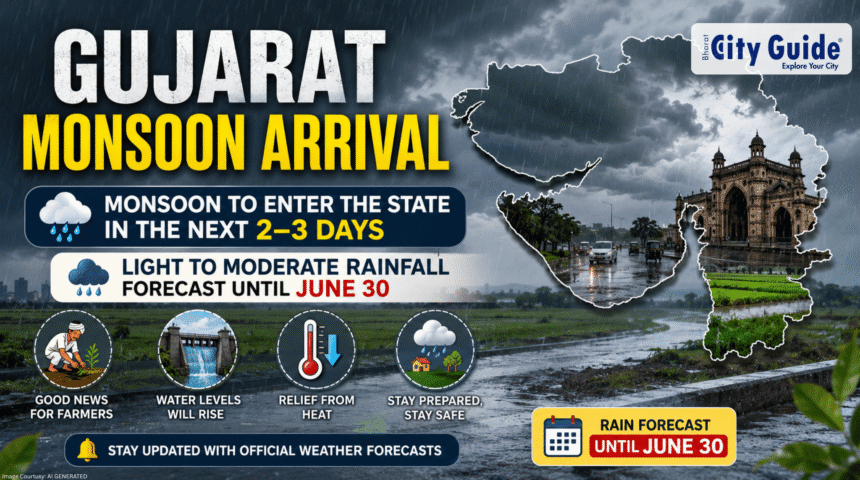
The wait for the monsoon is finally nearing its end for millions of people across Gujarat. According to recent weather forecasts, the Gujarat Monsoon Arrival is expected within the next two to three days, bringing much-needed relief from the intense summer heat. Weather experts have predicted light to moderate rainfall in several districts from today until June 30.
- Introduction
- What is Gujarat Monsoon Arrival?
- Why is the Gujarat Monsoon Arrival Important?
- Current Weather Forecast for Gujarat
- Regions Likely to Receive Rainfall
- Factors Supporting Gujarat Monsoon Arrival
- Impact of Monsoon Arrival on Farmers
- Benefits of Early and Timely Rainfall
- Challenges Associated with Monsoon Season
- How Residents Can Prepare for the Monsoon
- How Monsoon Impacts Gujarat’s Economy
- Climate Trends and Monsoon Patterns
- What Can Citizens Expect Until June 30?
- Frequently Asked Questions (FAQs)
- Conclusion
The arrival of the southwest monsoon is one of the most important weather events for Gujarat every year. It impacts agriculture, water resources, rural livelihoods, urban infrastructure, and overall economic activity. Farmers eagerly await the first monsoon showers as they prepare for the Kharif sowing season, while residents hope for cooler temperatures after weeks of scorching heat.
This latest weather update has generated significant interest because rainfall patterns directly affect crop production, reservoir levels, groundwater recharge, and daily life across the state. In this article, we explore everything about the Gujarat Monsoon Arrival, expected rainfall distribution, impact on agriculture, weather conditions, preparedness measures, and what residents can expect in the coming days.
What is Gujarat Monsoon Arrival?
The Gujarat Monsoon Arrival refers to the official entry of the southwest monsoon into the state of Gujarat after advancing from the Arabian Sea and other parts of India.
The southwest monsoon is a seasonal wind system that brings moisture-laden clouds from the Arabian Sea and the Indian Ocean. These clouds produce rainfall across various regions of India during the monsoon season, typically from June to September.
For Gujarat, the arrival of the monsoon is especially important because:
- It supports agricultural activities.
- It replenishes reservoirs and dams.
- It improves groundwater levels.
- It reduces extreme summer temperatures.
- It supports livestock and rural economies.
The timing and intensity of monsoon rainfall significantly influence the state’s agricultural output and water availability throughout the year.
Why is the Gujarat Monsoon Arrival Important?
The arrival of monsoon rains has far-reaching impacts across multiple sectors.
Agriculture
Agriculture is heavily dependent on rainfall in Gujarat. Timely monsoon showers help farmers begin sowing operations for crops such as:
- Cotton
- Groundnut
- Maize
- Soybean
- Bajra
- Pulses
Good rainfall improves crop growth and boosts agricultural productivity.
Water Resources
Monsoon rains refill:
- Dams
- Reservoirs
- Lakes
- Rivers
- Groundwater reserves
These water sources are essential for drinking water supply and irrigation.
Temperature Relief
Monsoon rainfall brings a significant drop in temperatures, offering relief from heatwaves and extreme summer conditions.
Economic Impact
A healthy monsoon contributes positively to:
- Agricultural income
- Rural employment
- Food production
- Consumer spending
- State economic growth
Current Weather Forecast for Gujarat
Meteorological experts have indicated that the Gujarat Monsoon Arrival is likely within the next two to three days.
Weather forecasts suggest:
- Light rainfall in several districts.
- Moderate showers in selected regions.
- Increased cloud cover across the state.
- Gradual decline in daytime temperatures.
- Improved atmospheric moisture levels.
Rainfall activity is expected to continue until June 30, with different regions receiving varying amounts of precipitation.
The strengthening monsoon system over the Arabian Sea is creating favorable conditions for widespread rainfall across Gujarat.
Regions Likely to Receive Rainfall
Different parts of Gujarat may experience varying rainfall intensity during the upcoming weather system.
South Gujarat
South Gujarat generally receives monsoon rains earlier than many other regions.
Expected conditions:
- Light to moderate rainfall
- Increased humidity
- Cloudy weather
- Cooler temperatures
Saurashtra Region
The Saurashtra region, including Rajkot and surrounding districts, is expected to witness rainfall activity as monsoon currents strengthen.
Possible impacts include:
- Improved soil moisture
- Agricultural preparation
- Relief from heat
Central Gujarat
Several districts in central Gujarat may receive scattered showers during the forecast period.
North Gujarat
Rainfall is expected to be relatively lighter compared to southern regions but could increase as monsoon conditions strengthen.
Factors Supporting Gujarat Monsoon Arrival
Several meteorological conditions are currently supporting the advancement of the southwest monsoon.
Strong Arabian Sea Moisture
Moisture-rich winds from the Arabian Sea are moving toward Gujarat, increasing the probability of rainfall.
Favorable Wind Patterns
Meteorologists have observed favorable wind circulation patterns that support monsoon advancement.
Low-Pressure Systems
Weather systems developing over nearby regions are helping draw moisture into Gujarat.
Increased Cloud Formation
Satellite observations show increasing cloud activity over parts of western India, indicating favorable monsoon conditions.
Impact of Monsoon Arrival on Farmers
The Gujarat Monsoon Arrival is especially significant for the farming community.
Start of Kharif Season
Farmers depend on early monsoon showers to begin sowing operations.
Major Kharif crops include:
- Groundnut
- Cotton
- Maize
- Soybean
- Millet
Improved Soil Moisture
Rainfall softens the soil and improves moisture levels, creating ideal conditions for planting.
Reduced Irrigation Costs
Natural rainfall decreases the need for expensive irrigation, reducing farming expenses.
Better Crop Germination
Timely rainfall supports healthy seed germination and crop establishment.
Benefits of Early and Timely Rainfall
A timely monsoon offers several advantages.
Increased Agricultural Productivity
Good rainfall supports healthy crop growth throughout the season.
Water Storage Improvement
Reservoirs and dams begin accumulating water for future use.
Groundwater Recharge
Rainwater percolates into the ground, improving underground water reserves.
Environmental Benefits
Monsoon rainfall helps:
- Increase greenery
- Improve air quality
- Support biodiversity
- Reduce dust pollution
Challenges Associated with Monsoon Season
While rainfall is beneficial, excessive or poorly distributed rainfall can create challenges.
Urban Waterlogging
Heavy rain can lead to:
- Traffic disruptions
- Road flooding
- Drainage issues
Crop Damage
Excessive rainfall may harm newly sown crops.
Infrastructure Stress
Strong rains can affect:
- Roads
- Bridges
- Electrical systems
Health Concerns
The monsoon season often increases the risk of:
- Waterborne diseases
- Mosquito-borne illnesses
- Contaminated drinking water
How Residents Can Prepare for the Monsoon
Preparing in advance can help reduce inconvenience during the rainy season.
Check Drainage Systems
Ensure that household drainage systems are functioning properly.
Store Essential Supplies
Keep important items ready, including:
- Flashlights
- Batteries
- Drinking water
- Medicines
Protect Electronic Devices
Use waterproof covers and surge protection measures.
Monitor Weather Updates
Stay informed through official weather forecasts and local advisories.
How Monsoon Impacts Gujarat’s Economy
The Gujarat Monsoon Arrival plays a vital role in the state’s economic performance.
Agricultural Growth
Good rainfall generally leads to:
- Higher crop yields
- Increased farmer income
- Better rural purchasing power
Industrial Support
Several industries depend on adequate water availability.
Rural Employment
Agricultural activities create seasonal employment opportunities for thousands of workers.
Food Security
Successful crop production contributes to stable food supplies and market availability.
Climate Trends and Monsoon Patterns
Climate experts have observed changing rainfall patterns in recent years.
Some emerging trends include:
- Irregular rainfall distribution
- Intense rainfall events
- Delayed monsoon onset
- Longer dry spells
These changes highlight the importance of effective weather forecasting and climate-resilient planning.
Farmers and policymakers increasingly rely on scientific weather predictions to make informed decisions.
What Can Citizens Expect Until June 30?
Based on current forecasts, residents can expect:
- Intermittent rainfall
- Cloudy weather conditions
- Lower daytime temperatures
- Increased humidity
- Occasional moderate showers
Travelers, commuters, farmers, and businesses should remain prepared for changing weather conditions during this period.
The progression of the Gujarat Monsoon Arrival will be closely monitored by meteorological agencies, and updates may be issued as weather systems evolve.
Frequently Asked Questions (FAQs)
When will the monsoon officially arrive in Gujarat?
Weather experts predict that the monsoon may enter Gujarat within the next two to three days.
How much rainfall is expected until June 30?
Light to moderate rainfall is expected across various districts of Gujarat through June 30.
Why is the Gujarat Monsoon Arrival important?
It supports agriculture, replenishes water resources, lowers temperatures, and boosts economic activity.
Which regions may receive the earliest rainfall?
South Gujarat and coastal areas are generally among the first regions to experience monsoon rainfall.
How does monsoon rainfall help farmers?
It improves soil moisture, supports sowing activities, reduces irrigation costs, and promotes healthy crop growth.
Can heavy rainfall cause problems?
Yes. Excessive rainfall may lead to flooding, waterlogging, crop damage, and transportation disruptions.
How can residents stay safe during the monsoon?
Residents should monitor weather updates, maintain proper drainage, store emergency supplies, and avoid flooded areas.
Conclusion
The expected Gujarat Monsoon Arrival within the next two to three days marks an important seasonal transition for the state. With forecasts indicating light to moderate rainfall until June 30, farmers, residents, businesses, and government agencies are closely watching weather developments.
The arrival of the southwest monsoon is not just a weather event—it is a lifeline for agriculture, water resources, and economic activity across Gujarat. Timely rainfall can improve crop prospects, replenish reservoirs, reduce temperatures, and support millions of people who depend on seasonal rains.
As monsoon clouds approach the state, citizens should remain informed through official weather updates and take necessary precautions to ensure safety and preparedness during the rainy season.