Introduction
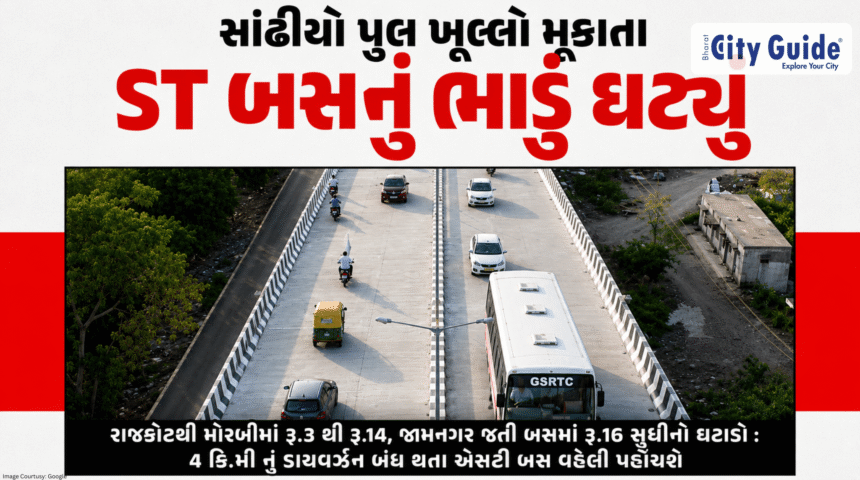
Travelers between Rajkot, Morbi, and Jamnagar have received welcome news as the Rajkot Morbi Bus Fare Reduced announcement has brought financial relief to thousands of passengers. The fare reduction comes after the opening of the newly constructed Santhniya flyover, which has shortened travel distances and improved route efficiency for state transport buses.
- Introduction
- What Does Rajkot Morbi Bus Fare Reduced Mean for Travelers?
- Why Was the Rajkot Morbi Bus Fare Reduced?
- Updated Fare Changes After the Flyover Opening
- Impact on Daily Commuters
- Importance of the Santhniya Flyover
- How Infrastructure Development Influences Public Transport Costs
- Economic Benefits for the Region
- Environmental Advantages of Shorter Routes
- Why Public Transport Remains Essential in Gujarat
- Future Transportation Improvements Expected in Gujarat
- Public Response to the Fare Reduction
- Challenges That Still Need Attention
- Frequently Asked Questions (FAQs)
- Conclusion
Public transportation plays a crucial role in Gujarat’s economic and social connectivity. Every day, students, workers, business owners, and families depend on State Transport (ST) buses for affordable and reliable travel. Even a small reduction in ticket prices can have a significant impact when multiplied across thousands of daily passengers.
The decision to reduce fares reflects how infrastructure development can directly benefit citizens. With shorter routes, reduced fuel consumption, and faster travel times, passengers are now experiencing both economic and practical advantages.
In this article, we will explore the details behind why the Rajkot Morbi Bus Fare Reduced decision was taken, how much fares have changed, the benefits for commuters, the importance of the Santhniya flyover, and what this development means for Gujarat’s transportation future.
What Does Rajkot Morbi Bus Fare Reduced Mean for Travelers?
The phrase Rajkot Morbi Bus Fare Reduced refers to the official decrease in ST bus ticket prices on routes affected by the opening of the Santhniya flyover.
The flyover has shortened travel distances by approximately four kilometers on certain routes. Since bus fare calculations are based on travel distance, authorities revised ticket prices accordingly.
For passengers, this means:
- Lower travel expenses
- More affordable daily commuting
- Improved transportation efficiency
- Better value for public transport users
- Faster travel times due to reduced route length
This is a practical example of how infrastructure improvements can directly reduce transportation costs.
Why Was the Rajkot Morbi Bus Fare Reduced?
The primary reason behind the fare reduction is the opening of the Santhniya flyover.
Previously, buses had to take a longer route because of traffic diversions and road limitations. The new flyover allows vehicles to travel more directly, eliminating unnecessary distance.
Key Reasons for Fare Reduction
- Route distance shortened by around 4 kilometers
- Reduced fuel consumption
- Lower operational costs
- Improved road connectivity
- Faster passenger movement
- Efficient transport planning
When transportation authorities review routes and find a significant reduction in travel distance, fare structures are adjusted to maintain fairness for passengers.
This change demonstrates a customer-focused approach in public transportation management.
Updated Fare Changes After the Flyover Opening
One of the most important aspects of the Rajkot Morbi Bus Fare Reduced announcement is the actual reduction in ticket prices.
Rajkot to Morbi Route
Earlier Fare:
- Approximately ₹3.30 per kilometer
Revised Fare:
- Approximately ₹3.14 per kilometer
Rajkot to Jamnagar Route
Earlier Fare:
- Approximately ₹3.16 per kilometer
Revised Fare:
- Reduced according to the shorter route distance
While the reduction per kilometer may seem small, frequent travelers benefit significantly over time.
For daily commuters, monthly savings can become substantial, especially for students and workers who rely on ST buses every day.
Impact on Daily Commuters
The Rajkot Morbi Bus Fare Reduced decision is especially beneficial for daily travelers.
Students
Many students travel between Rajkot, Morbi, and nearby towns for higher education.
Benefits include:
- Reduced monthly transportation expenses
- Affordable educational access
- Better travel convenience
Working Professionals
Employees commuting between industrial zones and urban centers can save money on daily travel.
Benefits include:
- Lower commuting costs
- Improved travel efficiency
- Faster journey times
Small Business Owners
Business owners who regularly travel between cities for meetings and trade activities can benefit from:
- Lower transportation costs
- Increased travel frequency
- Better business connectivity
Families
Families traveling for personal reasons can also enjoy reduced travel expenses, making public transport even more attractive.
Importance of the Santhniya Flyover
The newly opened flyover is more than just a transportation structure. It represents a major infrastructure improvement for the region.
Key Benefits of the Flyover
Reduced Traffic Congestion
The flyover allows smoother movement of vehicles, reducing bottlenecks and traffic delays.
Faster Travel
Travelers can now reach destinations more quickly due to shorter travel routes.
Fuel Savings
Reduced distance means lower fuel consumption for buses and other vehicles.
Economic Benefits
Better transportation infrastructure supports business growth and regional development.
Improved Road Safety
Modern flyover designs often reduce accident-prone intersections and improve traffic flow.
The flyover serves as an example of how infrastructure investments can create long-term public benefits.
How Infrastructure Development Influences Public Transport Costs
The Rajkot Morbi Bus Fare Reduced decision highlights an important relationship between infrastructure and transportation economics.
When roads become more efficient:
- Travel time decreases
- Fuel consumption reduces
- Vehicle maintenance costs decline
- Operational efficiency improves
- Passenger convenience increases
These factors allow transportation authorities to revise fares and pass some of the benefits directly to passengers.
Across the world, improved infrastructure often leads to better transportation services and lower operating costs.
Economic Benefits for the Region
The fare reduction may appear small on an individual ticket basis, but its broader economic impact can be significant.
Increased Mobility
Affordable travel encourages more people to move between cities for work, education, and business.
Enhanced Trade
Rajkot and Morbi are important economic centers in Gujarat.
Lower travel costs help:
- Traders
- Manufacturers
- Suppliers
- Retail businesses
connect more efficiently.
Support for Industrial Growth
Morbi is known for its ceramic industry, while Rajkot is a major engineering and manufacturing hub.
Improved connectivity strengthens industrial cooperation and workforce mobility.
Consumer Savings
Passengers collectively save thousands of rupees over time, contributing positively to local economies.
Environmental Advantages of Shorter Routes
The Rajkot Morbi Bus Fare Reduced update also has environmental implications.
Lower Fuel Consumption
Shorter routes require less fuel.
Reduced Carbon Emissions
Lower fuel usage means fewer greenhouse gas emissions.
Sustainable Transportation
Efficient public transport systems encourage people to use buses rather than private vehicles.
Improved Urban Mobility
Reduced congestion contributes to cleaner air and better traffic management.
Infrastructure improvements can therefore support both economic and environmental goals.
Why Public Transport Remains Essential in Gujarat
Public transportation remains one of the most important services in Gujarat.
Key advantages include:
- Affordable travel
- Wide connectivity
- Reduced traffic congestion
- Lower environmental impact
- Better access to education and employment
State Transport buses continue to serve millions of passengers annually, connecting urban centers with rural communities.
The fare reduction further strengthens the role of public transport in regional development.
Future Transportation Improvements Expected in Gujarat
The success of projects like the Santhniya flyover demonstrates the value of continuous infrastructure investment.
Potential future improvements may include:
Modern Bus Stations
Improved passenger facilities and waiting areas.
Smart Ticketing Systems
Digital ticket booking and contactless payment options.
Additional Flyovers and Road Projects
Enhanced connectivity between major cities.
Electric Buses
Environmentally friendly public transportation solutions.
Improved Highway Networks
Faster and safer travel across the state.
Such developments can further improve affordability and efficiency for passengers.
Public Response to the Fare Reduction
Passengers generally welcome fare reductions, particularly during periods of rising living costs.
Common positive reactions include:
- Appreciation for passenger-friendly policies
- Support for infrastructure development
- Increased trust in public transportation services
- Greater willingness to use buses regularly
For many commuters, even modest savings accumulate significantly over weeks and months.
The decision has therefore been viewed as a practical benefit arising from public infrastructure investment.
Challenges That Still Need Attention
While the fare reduction is positive, transportation systems continue to face challenges.
Areas for Improvement
- Peak-hour overcrowding
- Fleet modernization
- Digital service expansion
- Road maintenance
- Passenger amenities
Addressing these issues can further improve the travel experience and encourage greater public transport usage.
Frequently Asked Questions (FAQs)
Why was the Rajkot Morbi bus fare reduced?
The fare was reduced because the newly opened Santhniya flyover shortened the route distance, leading to lower operational costs.
How much distance has been reduced?
The route distance has reportedly decreased by approximately four kilometers.
Who benefits from the fare reduction?
Students, workers, business travelers, families, and daily commuters benefit from lower ticket costs.
Does the fare reduction apply only to Morbi routes?
The impact extends to routes affected by the shorter travel distance, including connections involving Jamnagar and nearby regions.
Will travel time also decrease?
Yes. A shorter route generally results in faster travel times and improved journey efficiency.
How does infrastructure affect transportation costs?
Improved roads reduce fuel consumption, travel time, and maintenance expenses, allowing transportation authorities to revise fares.
Is this beneficial for the environment?
Yes. Shorter routes reduce fuel usage and carbon emissions, contributing to environmental sustainability.
Conclusion
The Rajkot Morbi Bus Fare Reduced decision demonstrates how infrastructure improvements can directly benefit citizens. The opening of the Santhniya flyover has shortened travel distances, improved route efficiency, reduced operational costs, and ultimately lowered ticket prices for passengers.
For students, workers, business travelers, and families, this development offers meaningful financial savings and greater convenience. Beyond fare reductions, the flyover contributes to improved traffic flow, reduced fuel consumption, enhanced regional connectivity, and long-term economic growth.
As Gujarat continues investing in transportation infrastructure, similar projects may further improve mobility, affordability, and sustainability for millions of travelers. The reduction in bus fares is not just a pricing adjustment—it is a clear example of how modern infrastructure can positively impact everyday life.