Introduction: Your Body Isn’t Tight—It’s Asking for Movement
If your body feels stiff when you:
- Get up from a chair
- Bend to pick something
- Wake up in the morning
- Sit long hours at work
You’re not “aging badly.”
You’re just not moving enough.
Modern life in 2026 keeps us seated:
- Office work
- Remote jobs
- Screen time
- Long commutes
- Mobile scrolling
Your muscles adapt to stillness.
Stretching is how you remind your body how to move freely again.
And no—you don’t need to be a gymnast.
You just need a few minutes daily.
What Mobility Really Means (Simple Explanation)
Mobility is your body’s ability to move comfortably.
Not extreme flexibility.
Not yoga-level splits.
Just:
✅ Easy bending
✅ Smooth reaching
✅ Pain-free walking
✅ Comfortable sitting and standing
Mobility = freedom in daily life.
Why Stretching Matters More in 2026 Than Ever
Compared to previous generations, we now:
- Walk less
- Sit more
- Use screens longer
- Move less naturally
This leads to:
- Tight hips
- Stiff backs
- Neck tension
- Reduced flexibility
Stretching is no longer optional self-care.
It’s daily maintenance.
Like brushing teeth—but for muscles.
The Benefits of Daily Stretching
Regular stretching can:
- Reduce stiffness
- Improve posture
- Support joint health
- Lower injury risk
- Improve circulation
- Ease back and neck pain
- Increase comfort in daily tasks
But one benefit stands out most:
👉 You feel lighter in your body.
Who Needs Stretching Most?
Honestly? Almost everyone.
Especially:
- Desk workers
- Drivers
- Students
- Homemakers
- Seniors
- Remote workers
- Gym beginners
If you sit a lot, you need stretching.
The 12-Minute Full-Body Mobility Routine
Beginner-friendly.
No equipment.
No floor mat required (but helpful).
Do after a shower or light walk for best results.
Part 1: Legs & Hips (4 Minutes)
Standing Hamstring Stretch
- Stand tall
- Reach toward toes (soft knees)
- Hold 20–30 seconds
Loosens back of legs.
Quad Stretch
- Hold ankle behind you
- Keep knees together
- Switch sides
Helps knees and thighs.
Hip Opener
- Step one foot forward
- Gently lean hips forward
- Switch sides
Great for long sitting hours.
Part 2: Back & Spine (4 Minutes)
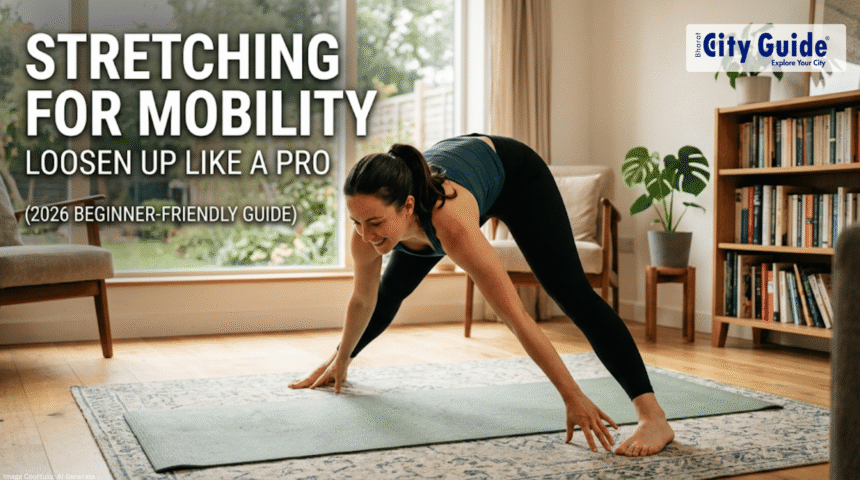
Standing Forward Fold
- Bend forward gently
- Let arms hang
- Relax neck
Releases spine tension.
Torso Twists
- Stand or sit
- Twist slowly side to side
Improves spinal mobility.
Cat-Cow (Optional on Floor)
- Round and arch back slowly
Excellent for desk stiffness.
Part 3: Arms & Shoulders (4 Minutes)
Shoulder Stretch
- Pull one arm across chest
- Switch sides
Reduces upper-body tightness.
Overhead Reach
- Raise both arms up
- Stretch tall
Improves posture.
Neck Stretch
- Tilt head side to side slowly
Relieves screen-time tension.
Total Time: 12 Minutes
Short. Simple. Effective.
Golden Rule: Never Bounce While Stretching
Bouncing can strain muscles.
Instead:
✔️ Move slowly
✔️ Hold gently
✔️ Breathe deeply
Stretching should feel relieving—not painful.
Best Time to Stretch
Good options:
- After shower
- Post-walk
- Before bed
- During work breaks
- After long sitting
Avoid intense stretching on cold muscles.
Habit-Building Tips That Actually Work
1) Attach to Existing Habits
Stretch after:
- Bathing
- Brushing teeth
- Evening tea
Habit stacking works.
2) Keep It Visible
A reminder note helps.
Out of sight = out of mind.
3) Start Small
Even 5 minutes counts.
Consistency beats duration.
4) Track Progress
Notice:
- Less stiffness
- Easier bending
- Better posture
That’s real progress.
Common Stretching Mistakes
❌ Forcing Too Far
Stretching is gentle.
✔️ Stop before pain.
❌ Holding Breath
Breathing helps muscles relax.
✔️ Slow breathing is key.
❌ Doing It Once a Week
Mobility needs frequency.
✔️ Little daily > big occasionally.
❌ Comparing to Others
Your flexibility is personal.
✔️ Progress quietly.
Mobility for Real Indian Lifestyles
Stretching helps in everyday life:
- Climbing stairs
- Sitting cross-legged
- Carrying groceries
- Bending during chores
- Playing with kids
Mobility supports real life—not just workouts.
Mental Benefits of Stretching (Often Ignored)
Stretching also:
- Calms the nervous system
- Reduces stress
- Improves mood
- Encourages mindfulness
Slow movement signals safety to the brain.
It’s mini-meditation.
What Happens After 3–4 Weeks
Many people notice:
- Easier mornings
- Less body aches
- Improved posture
- Better movement comfort
- Reduced neck and back pain
Small daily care builds big results.
Motivation That Lasts
Don’t stretch to become flexible.
Stretch to feel comfortable.
Comfort motivates consistency.
Identity Shift That Helps
Instead of:
“I’m not flexible.”
Say:
👉 “I’m someone who takes care of my body.”
That mindset builds habits.
Reflection Question
Ask yourself:
👉 Did my body feel looser today?
If yes—you’re winning.
Long-Term Impact
12 minutes/day =
84 minutes/week =
70+ hours/year
That’s serious body care.
Consistency compounds.
Encouragement from a Coach
You don’t need perfect form.
You need gentle consistency.
Some days feel great.
Some average.
Both count.
Your body appreciates every stretch.
Stretching in 2026: A Modern Essential
With high screen time and sitting hours, mobility work protects long-term health.
It helps prevent:
- Chronic stiffness
- Posture problems
- Movement discomfort
Stretching is preventive care.
Conclusion: Freedom in Movement Is a Gift
Your body carries you daily.
Stretching is how you thank it.
No pressure.
No performance.
Just gentle care.
A few minutes.
A calm breath.
A relaxed stretch.
That’s enough.
Move freely.
Live comfortably.
Age gracefully.
Stretch free, live free.
FAQ – Stretching for Mobility
Q1: Is daily stretching safe?
Yes, when gentle and controlled.
Q2: How long to hold a stretch?
20–30 seconds is enough.
Q3: Should stretching hurt?
No. Mild tension only.
Q4: Can stretching reduce pain?
It helps reduce stiffness-related discomfort.
Q5: Best time to stretch?
After shower or light activity.
Q6: Can seniors stretch daily?
Yes—gentle stretching is beneficial.
Today’s Simple Task
👉 Try your 12-minute stretch chain.
Legs
Back
Arms
Reflection Question
👉 Did you feel looser today?