Introduction
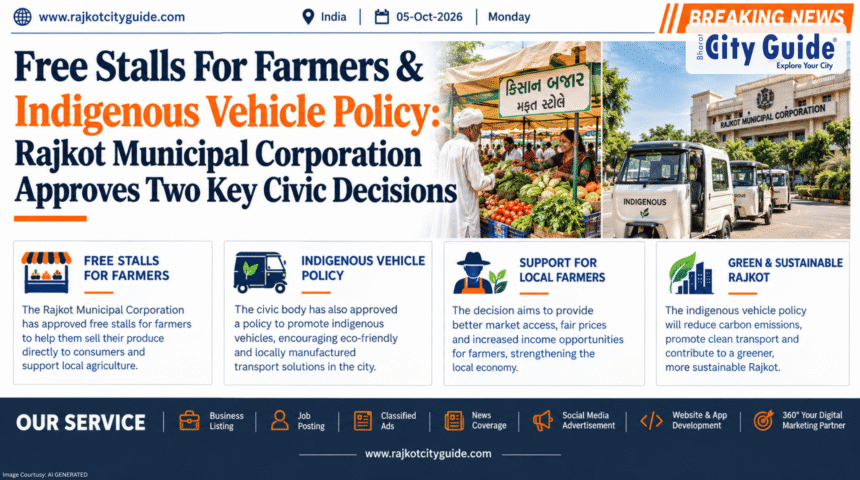
Municipal governance plays a decisive role in shaping the daily lives of urban residents while simultaneously driving broader socio-economic policies at the grassroots level. In a landmark development for civic administration in Saurashtra, the Rajkot Municipal Corporation (RMC) has passed two major resolutions that blend urban agrarian support with national self-reliance initiatives.
- Introduction
- What is Free Stalls For Farmers & Indigenous Vehicle Policy?
- Why This News is Important
- Background Information
- Key Highlights
- Detailed Explanation of the Event
- Benefits and Importance of the Twin Decisions
- How It Impacts Different Audiences
- Expert Insights and Industry Perspective
- Challenges and Limitations
- Future Outlook
- Frequently Asked Questions (FAQs)
- Conclusion
These decisions address two distinct yet impactful areas of public interest: local economic empowerment for small-scale cultivators and local government procurement standards. Under the approved framework, RMC will allocate dedicated spaces near the bustling Pushkardham area to allow regional farmers to sell their agricultural produce directly to consumers without middleman exploitation or vendor fees. Concurrently, the municipal body has enacted a strict procurement mandate directing that all future municipal fleet acquisitions consist exclusively of home-grown automobiles manufactured by domestic brands such as Tata Motors and Mahindra & Mahindra.
Together, the twin initiatives—Free Stalls For Farmers & Indigenous Vehicle policy implementation—demonstrate how local municipal authorities can create direct economic avenues for rural growers while advancing the national vision of “Atmanirbhar Bharat” (Self-Reliant India) and “Make in India.”
What is Free Stalls For Farmers & Indigenous Vehicle Policy?
The phrase Free Stalls For Farmers & Indigenous Vehicle policy refers to the dual administrative resolutions recently adopted by the Standing Committee and administrative leadership of the Rajkot Municipal Corporation.
+--------------------------------------------------------------------------+
|            RAJKOT MUNICIPAL CORPORATION (RMC) TWIN RESOLUTIONS           |
+--------------------------------------------------------------------------+
                                     |
    +--------------------------------+--------------------------------+
    |                                                                 |
    v                                                                 v
[ FARMER EMPOWERMENT INITIATIVE ]                 [ INDIGENOUS FLEET MANDATE ]
- Free Vending Stalls near Pushkardham           - 100% Domestic Vehicle Procurement
- Direct Farmer-to-Consumer Sales                - Mandatory Focus on Tata, Mahindra, etc.
- Zero Middleman Commission / Fees               - Rejection of Foreign Assembly Brands
- Organized Hawking Zone Infrastructure          - Support for "Make in India" Vision
The first component focuses on social welfare and agricultural marketing by creating designated, fee-free vending stalls near the Pushkardham location in Rajkot’s West Zone. This scheme enables small and marginal farmers from surrounding rural belts to set up direct-to-consumer vegetable and fruit stalls.
The second component establishes a progressive government procurement policy. Under this mandate, all municipal departments—including waste management, fire services, health inspection, engineering, and administrative transport—are required to purchase commercial and passenger vehicles produced by Indian-owned vehicle manufacturers rather than foreign brands.
Why This News is Important
The approval of these twin policies by the Rajkot Municipal Corporation holds immense significance for multiple reasons:
- Elimination of Agrarian Middlemen: Providing free vending space ensures that farmers retain 100% of their sales revenue, improving profit margins for rural households.
- Cost Savings for Urban Consumers: Direct farm-to-table sales near Pushkardham give urban residents access to fresh, seasonal vegetables and fruits at fair market prices without multi-tier wholesale markups.
- Promoting National Self-Reliance: Transitioning municipal vehicle procurement to domestic brands keeps municipal funds within the Indian industrial ecosystem and supports home-grown automotive research and engineering.
- Organized Urban Hawking Management: Creating designated vendor spaces reduces traffic congestion, haphazard roadside parking, and unauthorized encroachments along busy western Rajkot corridors.
Background Information
Urban agricultural markets in Gujarat have traditionally relied on APMC (Agricultural Produce Market Committee) yards and private wholesale agent networks. While these systems handle large volumes, small-scale farmers bringing limited daily harvests often struggle with high transportation costs, commission agent fees, and daily municipal hawker levies. In western Rajkot—particularly around rapidly expanding residential hubs like Pushkardham, Kalawad Road, and University Road—the demand for farm-fresh produce has grown rapidly.
[ Traditional APMC / Middleman Commissions ] -> [ High Consumer Prices & Low Farmer Margins ]
                                                               |
                                                               v
[ RMC Policy Shift: Pushkardham Free Stalls ] -> [ Direct Farm-to-Table Sales Platform ]

[ Foreign / Assembled Vehicle Procurement ] -> [ High Maintenance & Capital Outflow ]
                                                               |
                                                               v
[ RMC Native Procurement Policy ] ------------> [ Mandatory Tata / Mahindra Vehicle Purchasing ]
On the administrative front, municipal corporations across India have historically purchased fleet vehicles from various international manufacturers assembled in India. Recognizing the robust engineering capabilities, competitive pricing, and extensive service networks of domestic automotive giants like Tata Motors and Mahindra & Mahindra, RMC decided to align its operational procurement directly with national industrial self-reliance goals.
Key Highlights
- Free Vending Space Allocation: RMC to build and allocate organized vending stalls near Pushkardham for regional farmers at zero rental fee.
- Direct Consumer Access: Enables farmers from surrounding villages to sell fresh vegetables, fruits, and organic produce directly to urban buyers.
- Native Automotive Procurement Policy: Mandatory rule directing RMC to buy only Indian-manufactured commercial and utility vehicles (e.g., Tata Motors, Mahindra & Mahindra).
- Traffic & Vending Organization: Streamlines hawker operations in the West Zone, preventing unauthorized roadside stalls and reducing traffic friction.
- Support for Atmanirbhar Bharat: Aligns municipal capital expenditure with domestic manufacturing ecosystem growth.
Detailed Explanation of the Event
1. Pushkardham Free Farmers’ Stalls Initiative
Under the newly approved plan, RMC’s planning and civil departments will lay out an organized vendor platform equipped with basic civic amenities near Pushkardham. Small farmers who cultivate vegetables and seasonal produce in nearby villages will be allotted designated spots through a streamlined verification process.
+--------------------------------------------------------------------------+
|             PUSHKARDHAM FARMERS' MARKET OPERATIONAL STRUCTURE            |
+--------------------------------------------------------------------------+
| Feature / Parameter     | Old Vendor Framework     | RMC Pushkardham Model   |
+-------------------------+--------------------------+-------------------------+
| Daily Vending Fees      | Daily Hawkers' Levy      | 100% Free Allotment     |
| Middleman Intermediary  | APMC Agents & Traders    | Zero Intermediaries     |
| Location Quality        | Encroached Roadside      | Designated Hawker Zone  |
| Consumer Pricing        | Higher Retail Markups    | Fair Farm-Gate Pricing  |
+-------------------------+--------------------------+-------------------------+
By eliminating daily vending charges and middleman commissions, the initiative creates a win-win economic model: farmers receive fair compensation for their labor, while urban families benefit from fresher produce at reasonable rates.
2. Native Vehicle Procurement Mandate
RMC’s second policy transformation changes the framework for civic fleet purchasing. Whether acquiring tipper trucks for solid waste management, utility pick-ups, light commercial vehicles for road maintenance, or passenger cars for administrative officers, the corporation will prioritize indigenous Indian vehicle manufacturers.
[ Municipal Fleet Requirement Identified ] -> [ Check Domestic Indian Automobile Options ]
                                                            |
                                                            v
[ Mandatory Selection: Tata / Mahindra / Indian OEMs ] -> [ Local Manufacturing & Servicing Support ]
This decision supports Indian automotive giants such as Tata Motors and Mahindra & Mahindra, whose commercial vehicle portfolios—including the Tata Ace, Signa, Mahindra Bolero Pik-Up, and Supro series—are tailored specifically for Indian road conditions and heavy-duty municipal tasks.
Benefits and Importance of the Twin Decisions
1. Strengthening the Rural-Urban Economic Bridge
Connecting surrounding farming communities directly with Western Rajkot’s growing residential neighborhoods establishes a resilient regional supply chain.
2. Efficient Municipal Asset Management
Domestic commercial vehicles offer lower total cost of ownership, readily available spare parts, and widespread service infrastructure across Gujarat, reducing municipal vehicle maintenance expenses.
3. Civic Order and Road Safety
Moving informal vendors into dedicated, well-planned stall areas near Pushkardham keeps main thoroughfares clear, improving traffic flow and pedestrian safety.
How It Impacts Different Audiences
| Stakeholder Group | Direct Impact & Event Relevance |
| Regional Farmers | Gain free, organized retail spaces to sell produce directly without paying middleman fees or daily charges. |
| Urban Consumers & Households | Access fresh, farm-direct vegetables and fruits at reasonable prices in a clean, organized market setting. |
| Domestic Auto Manufacturers | Receive steady procurement orders from municipal bodies, strengthening Indian industrial manufacturing. |
| Local Commuters & Motorists | Experience cleaner, less congested roads around Pushkardham as roadside hawking is organized into dedicated stalls. |
Expert Insights and Industry Perspective
Urban governance experts and agricultural economists view RMC’s twin decisions as a pragmatic approach to municipal management.
“Urban local bodies hold immense economic leverage through their procurement budgets and urban land planning. By dedicating organized, fee-free spaces for direct farm marketing, RMC strengthens regional rural incomes while reducing informal street congestion. Simultaneously, mandating domestic automobile procurement aligns public spending with national industrial growth, demonstrating how municipal corporations can drive real policy impact at the grassroots level.”
Challenges and Limitations
While both initiatives offer clear benefits, effective long-term implementation will depend on addressing a few key considerations:
- Fair Allotment Verification: RMC must establish a transparent verification process to ensure that free stalls are granted exclusively to genuine farmers rather than commercial traders or subletting middlemen.
- Market Sanitation and Upkeep: Maintaining cleanliness, waste disposal, and water supply at the Pushkardham stall site will require consistent municipal maintenance.
- EV Transition Alignment: As domestic automakers expand their electric commercial vehicle offerings, RMC will need to build charging infrastructure alongside its native vehicle policy.
Future Outlook
Following the approval of these resolutions, Rajkot Municipal Corporation (RMC) will begin civil development at the Pushkardham site while setting up vendor registration frameworks for nearby farming communities.
If the Pushkardham direct-to-consumer farmer market proves successful, RMC may replicate the model across East and South Zone residential sectors in Rajkot. Concurrently, the domestic vehicle procurement policy will reshape the corporation’s fleet composition over the coming years as older vehicles are retired and replaced with Indian-made trucks, vans, and utility vehicles.
Frequently Asked Questions (FAQs)
1. What are the two major decisions recently taken by RMC?
The Rajkot Municipal Corporation approved allocating free vending stalls for farmers near Pushkardham and adopting a policy to procure vehicles exclusively from domestic Indian manufacturers like Tata and Mahindra.
2. Where will the free farmers’ stalls be located in Rajkot?
The designated fee-free vending stalls will be constructed in the Pushkardham area in Rajkot’s West Zone.
3. Who is eligible to use the free stalls at Pushkardham?
Regional farmers from surrounding rural belts who grow fruits, vegetables, and agricultural produce are eligible through a municipal verification process.
4. How does the free stall initiative benefit urban consumers?
It allows consumers to purchase fresh produce directly from farmers at fair market prices without wholesale or middleman markups.
5. Why did RMC adopt a domestic vehicle procurement policy?
The policy supports the “Make in India” initiative, keeps municipal funds within the domestic economy, and utilizes vehicles tailored for Indian road conditions with lower long-term maintenance costs.
6. Which domestic companies will benefit from RMC’s vehicle policy?
Indian automotive manufacturers, including Tata Motors and Mahindra & Mahindra, will supply vehicles for future municipal fleet additions.
Conclusion
The approval of the Free Stalls For Farmers & Indigenous Vehicle policy highlights a thoughtful, community-focused approach to urban governance by the Rajkot Municipal Corporation. By providing free retail spaces for regional growers near Pushkardham and committing public funds to domestic automotive manufacturers, RMC addresses both rural livelihood support and national industrial self-reliance. As these policies take effect, they offer a practical model for how municipal bodies can foster regional economic growth while improving urban living standards.