Introduction
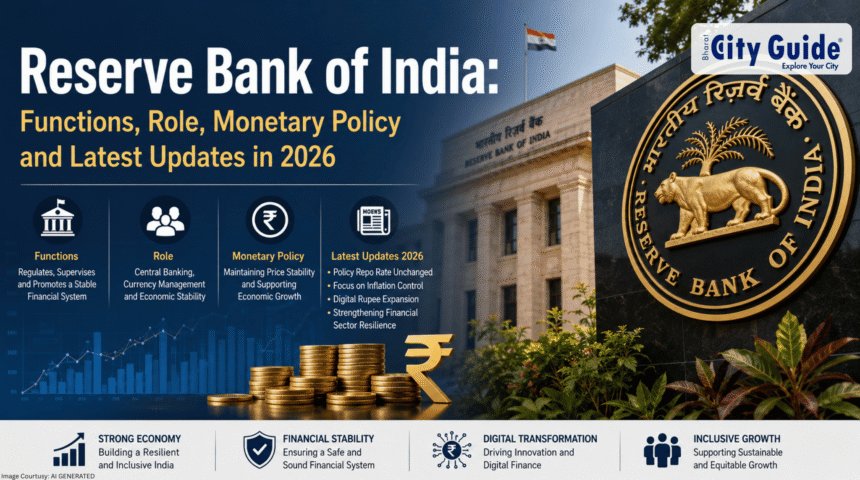
The Reserve Bank of India plays a crucial role in shaping the Indian economy and maintaining financial stability. Whether it is controlling inflation, regulating banks, managing currency circulation, or supporting economic growth, the RBI remains at the center of India’s financial system.
- Introduction
- What is the Reserve Bank of India?
- Why the Reserve Bank of India Matters in 2026
- History and Evolution of the Reserve Bank of India
- Organizational Structure of the Reserve Bank of India
- Major Functions of the Reserve Bank of India
- Reserve Bank of India and Monetary Policy
- Reserve Bank of India as the Currency Issuer
- Reserve Bank of India as the Banker to the Government
- Reserve Bank of India as the Banker’s Bank
- Banking Regulation and Supervision by RBI
- Reserve Bank of India and Digital Payments
- Digital Rupee and RBI’s Future Vision
- Reserve Bank of India and Foreign Exchange Management
- Reserve Bank of India and Inflation Control
- Major Challenges Facing the Reserve Bank of India in 2026
- Latest Reserve Bank of India Developments in 2026
- Benefits of a Strong Reserve Bank of India
- Common Misconceptions About the Reserve Bank of India
- Future Outlook for the Reserve Bank of India
- Frequently Asked Questions (FAQs)
- Conclusion
In 2026, the Reserve Bank of India continues to be one of the most influential institutions in the country as India experiences strong economic growth, rapid digital payment adoption, and evolving global financial challenges. Understanding how the RBI works can help investors, business owners, students, and ordinary citizens make better financial decisions.
This comprehensive guide explains the role, functions, structure, monetary policy, and latest developments related to the Reserve Bank of India in simple and easy-to-understand language.
What is the Reserve Bank of India?
The Reserve Bank of India (RBI) is the central banking institution of India. It was established on April 1, 1935, under the Reserve Bank of India Act, 1934.
The RBI is responsible for managing India’s monetary system, issuing currency, regulating banks, maintaining financial stability, and supporting economic development.
After India’s independence, the RBI was nationalized in 1949 and became fully owned by the Government of India.
Key Facts About RBI
- Established: April 1, 1935
- Nationalized: January 1, 1949
- Headquarters: Mumbai, Maharashtra
- Regulator of Banks and Financial Institutions
- Issuer of Indian Currency Notes
- Manager of Government Debt
- Controller of Monetary Policy
The Reserve Bank of India is often referred to as the “Banker’s Bank” because commercial banks maintain accounts with the RBI and depend on it for liquidity support.
Why the Reserve Bank of India Matters in 2026
India is currently among the world’s fastest-growing major economies. With increasing foreign investments, expanding digital payments, growing financial inclusion, and changing global economic conditions, the role of the Reserve Bank of India has become even more important.
Key reasons why RBI matters today:
- Controls inflation and price stability
- Supports economic growth
- Maintains confidence in the banking system
- Regulates digital payments
- Manages foreign exchange reserves
- Protects depositors’ interests
- Ensures financial stability during economic uncertainty
The decisions taken by the RBI directly affect:
- Loan interest rates
- Home loan EMIs
- Fixed deposit returns
- Business borrowing costs
- Inflation levels
- Currency value
History and Evolution of the Reserve Bank of India
The idea of establishing a central bank in India emerged after recommendations from the Hilton Young Commission in 1926.
Major Milestones
1935: RBI established.
1949: RBI nationalized.
1969: Supported bank nationalization efforts.
1991: Played a key role during India’s economic reforms.
2000s: Introduced modern banking regulations.
2016: Managed currency replacement during demonetization.
2020-2022: Implemented measures to support the economy during the COVID-19 pandemic.
2023-2026: Focused heavily on digital payments, fintech regulation, inflation control, and financial inclusion.
Organizational Structure of the Reserve Bank of India
The RBI operates under a structured governance framework.
Central Board of Directors
The Central Board oversees RBI’s operations and policy decisions.
The board consists of:
- Governor
- Deputy Governors
- Government nominees
- Directors representing various sectors
RBI Governor
The RBI Governor is the highest-ranking official of the Reserve Bank of India and is responsible for implementing monetary policy and supervising banking operations.
The Governor also represents India in global financial institutions and forums.
Major Functions of the Reserve Bank of India
The Reserve Bank of India performs several critical functions that keep the economy running smoothly.
1. Monetary Authority
The RBI formulates and implements monetary policy.
Its objectives include:
- Controlling inflation
- Maintaining price stability
- Supporting economic growth
Monetary policy decisions influence borrowing costs throughout the economy.
Reserve Bank of India and Monetary Policy
One of the most important responsibilities of the Reserve Bank of India is managing monetary policy.
Monetary policy refers to actions taken by the RBI to control money supply and interest rates.
Main Objectives
- Price stability
- Economic growth
- Financial stability
- Employment support
Key Monetary Policy Tools
Repo Rate
The repo rate is the interest rate at which commercial banks borrow money from RBI.
When RBI increases the repo rate:
- Loans become expensive
- Inflation may reduce
- Economic activity may slow
When RBI lowers the repo rate:
- Loans become cheaper
- Spending increases
- Economic growth may accelerate
Reverse Repo Rate
The reverse repo rate is the rate at which RBI borrows money from banks.
Cash Reserve Ratio (CRR)
Banks must keep a portion of deposits with RBI as reserves.
Statutory Liquidity Ratio (SLR)
Banks must maintain a certain percentage of assets in approved securities.
Open Market Operations (OMO)
The RBI buys and sells government securities to regulate liquidity.
Reserve Bank of India as the Currency Issuer
The RBI has the exclusive authority to issue currency notes in India except for the one-rupee note, which is issued by the Government of India.
Responsibilities Include
- Printing currency
- Managing circulation
- Replacing damaged notes
- Preventing counterfeiting
- Ensuring adequate currency supply
The RBI continuously upgrades security features to protect Indian currency.
Reserve Bank of India as the Banker to the Government
The Reserve Bank of India acts as the banker, agent, and financial advisor to both the Central Government and State Governments.
Services Provided
- Managing government accounts
- Handling public debt
- Conducting government transactions
- Advising on financial matters
- Managing government securities
This relationship helps maintain efficient public finance management.
Reserve Bank of India as the Banker’s Bank
Commercial banks maintain accounts with the RBI.
Key Responsibilities
- Providing emergency liquidity
- Supervising banking operations
- Settling inter-bank transactions
- Acting as lender of last resort
When banks face liquidity shortages, RBI can provide temporary financial assistance.
Banking Regulation and Supervision by RBI
The Reserve Bank of India regulates India’s banking sector to ensure safety and stability.
Areas of Supervision
- Commercial banks
- Cooperative banks
- Non-Banking Financial Companies (NBFCs)
- Payment banks
- Small finance banks
Regulatory Functions
- Licensing banks
- Monitoring financial health
- Conducting inspections
- Ensuring compliance
- Protecting depositors
Strong supervision helps maintain public confidence in the banking system.
Reserve Bank of India and Digital Payments
India has become a global leader in digital payments, and RBI has played a major role in this transformation.
Key Initiatives
- UPI ecosystem support
- Digital payment security
- Real-Time Gross Settlement (RTGS)
- National Electronic Funds Transfer (NEFT)
- Digital Rupee (CBDC)
The RBI continues to promote secure, fast, and accessible digital payment systems across India.
Digital Rupee and RBI’s Future Vision
One of the most important developments in recent years has been the introduction of the Digital Rupee.
What is Digital Rupee?
The Digital Rupee is India’s Central Bank Digital Currency (CBDC).
It is:
- Issued by RBI
- Legally recognized
- Digital version of physical currency
- Secure and regulated
Benefits
- Faster transactions
- Reduced cash handling costs
- Improved payment efficiency
- Enhanced financial inclusion
The Reserve Bank of India continues to expand pilot programs and explore wider adoption opportunities.
Reserve Bank of India and Foreign Exchange Management
The RBI manages India’s foreign exchange reserves and oversees foreign currency transactions.
Key Responsibilities
- Managing forex reserves
- Stabilizing currency markets
- Monitoring capital flows
- Implementing foreign exchange regulations
Strong foreign exchange reserves help India withstand global economic uncertainties.
Reserve Bank of India and Inflation Control
Inflation affects every citizen by increasing the cost of goods and services.
The Reserve Bank of India uses monetary policy to keep inflation within targeted levels.
How RBI Controls Inflation
- Raising interest rates
- Reducing money supply
- Managing liquidity
- Monitoring market conditions
Price stability helps consumers and businesses plan effectively.
Major Challenges Facing the Reserve Bank of India in 2026
The economic environment continues to evolve rapidly.
Key Challenges
Global Economic Uncertainty
International conflicts, trade disruptions, and geopolitical tensions can impact India’s economy.
Inflation Management
Balancing growth and inflation remains a constant challenge.
Digital Financial Risks
Cybersecurity threats are increasing with digital payment adoption.
Cryptocurrency Regulation
Managing emerging digital assets requires careful regulatory oversight.
Financial Inclusion
Ensuring access to banking services in rural and underserved areas remains a priority.
Latest Reserve Bank of India Developments in 2026
The Reserve Bank of India is focusing on several strategic priorities in 2026.
Strengthening Digital Payments
RBI continues to enhance payment security and transaction efficiency.
Expanding Digital Rupee Pilots
CBDC initiatives are being tested across various sectors.
Inflation Monitoring
The RBI remains focused on maintaining price stability while supporting growth.
Banking Sector Stability
Regulatory frameworks continue to evolve to address modern financial risks.
Financial Inclusion Initiatives
The central bank is promoting broader access to banking and digital financial services.
These developments highlight RBI’s commitment to building a resilient and future-ready financial ecosystem.
Benefits of a Strong Reserve Bank of India
A strong and effective RBI benefits the economy in multiple ways.
Advantages
- Stable banking system
- Controlled inflation
- Strong currency management
- Economic growth support
- Secure payment systems
- Better investor confidence
- Financial crisis management
These benefits contribute to long-term economic prosperity.
Common Misconceptions About the Reserve Bank of India
RBI is a Commercial Bank
False. RBI is India’s central bank and does not provide regular retail banking services to the public.
RBI Controls Stock Markets Directly
False. RBI influences financial markets indirectly through monetary policy.
RBI Prints Unlimited Money
False. Currency issuance is carefully managed to maintain economic stability.
RBI Sets All Loan Interest Rates
False. Banks determine final lending rates, although RBI policy rates influence them significantly.
Future Outlook for the Reserve Bank of India
The future of the Reserve Bank of India is closely linked to India’s growth story.
Key areas likely to receive attention include:
- Artificial Intelligence in banking
- Digital Rupee expansion
- Stronger cybersecurity frameworks
- Sustainable finance initiatives
- Improved financial inclusion
- Advanced payment infrastructure
- Enhanced banking regulations
As India moves toward becoming a major global economic power, the RBI’s role will continue to expand and evolve.
Frequently Asked Questions (FAQs)
What is the main function of the Reserve Bank of India?
The main function of the Reserve Bank of India is to manage monetary policy, regulate banks, issue currency, and maintain financial stability.
When was the Reserve Bank of India established?
The RBI was established on April 1, 1935.
Who owns the Reserve Bank of India?
The Reserve Bank of India is fully owned by the Government of India after being nationalized in 1949.
What is the repo rate?
The repo rate is the interest rate at which commercial banks borrow money from the RBI.
Does RBI regulate digital payments?
Yes. RBI regulates and supervises digital payment systems across India.
What is the Digital Rupee?
The Digital Rupee is India’s Central Bank Digital Currency (CBDC) issued by the RBI.
Why is RBI important for the Indian economy?
RBI helps maintain inflation control, banking stability, financial security, and sustainable economic growth.
Conclusion
The Reserve Bank of India is the backbone of India’s financial and banking system. From managing inflation and regulating banks to supporting digital payments and introducing the Digital Rupee, the RBI plays a vital role in ensuring economic stability and growth.
In 2026, as India continues its journey toward becoming one of the world’s leading economies, the Reserve Bank of India remains a key institution guiding monetary policy, financial innovation, and banking sector resilience. Whether you are an investor, entrepreneur, student, or ordinary citizen, understanding the RBI helps you better appreciate how financial decisions impact everyday life and the broader economy.
Staying informed about RBI policies, interest rate decisions, and economic developments can help individuals and businesses make smarter financial choices in an increasingly dynamic economic environment.