Introduction
Over the past two decades, India has witnessed a dramatic transformation in its food and beverage landscape. Among the most visible changes is the rise of packaged health drinks that claim to improve energy, immunity, growth, and overall nutrition.
- Introduction
- 1. Malt-Based Drinks
- 2. Protein Drinks
- 3. Energy Drinks
- 4. Fortified Milk Drinks
- 1. Urbanization and Busy Lifestyles
- 2. Aggressive Marketing Campaigns
- 3. Rising Middle-Class Income
- 4. Influence of Celebrity Endorsements
- Why Sugar Is a Concern
- 1. Misleading Nutritional Understanding
- 2. Increased Sugar Consumption
- 3. Shift Away From Traditional Foods
- 4. Dependency on Processed Nutrition
- 5. Growing Nutritional Awareness Gap
- Key Influences:
- Rising Health Issues in India:
- Natural Sources:
- Packaged Drinks:
- 1. Health Halo Effect
- 2. Parental Guilt Marketing
- 3. Brand Trust Bias
- Urban India:
- Rural India:
- 1. Reduced Home-Cooked Nutritional Planning
- 2. Shift in Breakfast Habits
- 3. Increased Snacking Culture
- Positive Changes:
- Expected Trends:
- Healthier Options:
- 1. Misleading Marketing Claims
- 2. Consumer Awareness Gap
- 3. Sugar Addiction Culture
- 1. Are packaged health drinks actually healthy?
- 2. Do they replace real food?
- 3. Why are they popular in India?
- 4. Are they safe for children?
- 5. How much sugar do they contain?
- 6. What is a better alternative?
- 7. Do they improve nutrition awareness?
These products are heavily marketed toward children, teenagers, and even adults as convenient solutions for better health. However, alongside growing popularity, concerns have also emerged regarding their actual nutritional value and hidden sugar content.
The increasing consumption of these beverages is reshaping dietary habits across urban and semi-urban India. At the same time, it is also influencing how people understand nutrition, often blurring the line between genuinely healthy foods and sugar-rich processed products.
In this detailed article, we explore the impact of packaged health drinks on Indian nutritional awareness and sugar intake, their marketing strategies, health implications, regulatory concerns, and what consumers should truly understand.
What Are Packaged Health Drinks?
Packaged health drinks are commercially manufactured beverages marketed as nutritious supplements that support:
- Growth
- Immunity
- Energy
- Strength
These drinks are usually available in powdered or ready-to-drink forms.
Popular Types of Health Drinks in India
1. Malt-Based Drinks
Often marketed for children’s growth.
2. Protein Drinks
Target fitness-conscious consumers.
3. Energy Drinks
Claim to boost alertness and stamina.
4. Fortified Milk Drinks
Marketed as calcium and vitamin-rich supplements.
How Health Drinks Became Popular in India
1. Urbanization and Busy Lifestyles
Parents seek quick nutrition solutions.
2. Aggressive Marketing Campaigns
Advertisements associate products with intelligence and strength.
3. Rising Middle-Class Income
Increased spending on packaged nutrition.
4. Influence of Celebrity Endorsements
Famous personalities promote these products.
The Role of Marketing in Nutritional Perception
Many packaged drinks are marketed as:
- “Complete nutrition”
- “Brain development formula”
- “Immunity booster”
This creates a perception that they are essential for health, especially for children.
The Hidden Sugar Concern
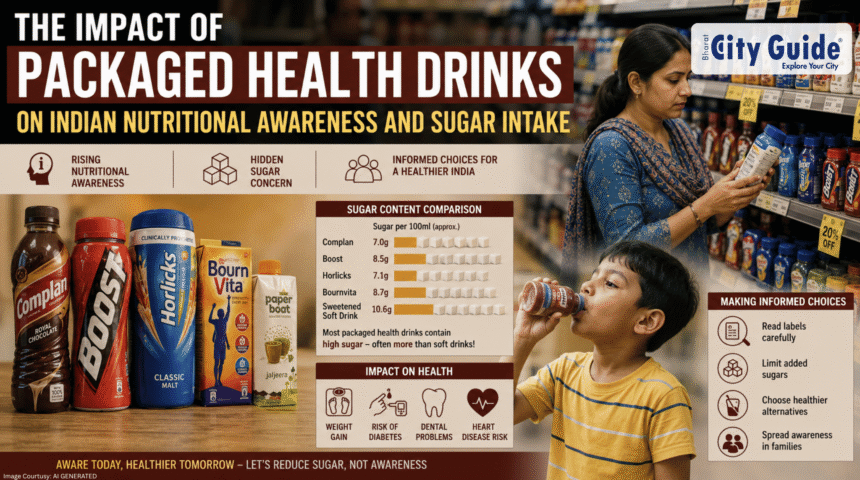
One of the most debated aspects of packaged health drinks is their sugar content.
Why Sugar Is a Concern
Excess sugar intake can lead to:
- Obesity
- Type 2 diabetes
- Tooth decay
- Energy crashes
The Impact of Packaged Health Drinks on Indian Nutritional Awareness and Sugar Intake
The widespread consumption of these beverages is influencing both awareness and behavior.
1. Misleading Nutritional Understanding
Many consumers believe:
- Packaged drinks are healthier than natural foods
- They can replace balanced meals
This is often not accurate.
2. Increased Sugar Consumption
Despite health claims, many drinks contain:
- Added sugars
- Sweeteners
- Flavor enhancers
This contributes to higher daily sugar intake.
3. Shift Away From Traditional Foods
Traditional nutrition sources like:
- Milk
- Fruits
- Nuts
are often replaced by packaged options.
4. Dependency on Processed Nutrition
Families increasingly rely on:
- Instant nutrition solutions
- Ready-made drinks
5. Growing Nutritional Awareness Gap
While awareness of “nutrition” has increased, understanding of:
- Label reading
- Ingredient analysis
remains limited.
Role of Children in Consumption Trends
Children are the primary target group for health drink marketing.
Key Influences:
- School-time consumption
- Cartoon-based advertisements
- Parental perception of growth benefits
Sugar Intake and Public Health Concerns
Rising Health Issues in India:
- Childhood obesity
- Early-onset diabetes
- Lifestyle diseases
Packaged drinks contribute to daily sugar accumulation.
Regulatory Perspective in India
Food safety authorities regulate:
- Labeling requirements
- Nutritional claims
- Ingredient disclosure
However, interpretation of “health claims” can still be complex for consumers.
Comparison: Packaged Drinks vs Natural Foods
Natural Sources:
- Milk
- Fruits
- Pulses
- Nuts
Packaged Drinks:
- Fortified formulations
- Added sugars
- Artificial flavors
Natural foods generally provide more balanced nutrition.
Psychological Impact of Health Drink Advertising
1. Health Halo Effect
Consumers assume all “health” labeled products are beneficial.
2. Parental Guilt Marketing
Ads suggest children may lack growth without these drinks.
3. Brand Trust Bias
Familiar brands are assumed to be healthier.
Urban vs Rural Consumption Patterns
Urban India:
- Higher consumption of packaged drinks
- Greater exposure to advertising
Rural India:
- More reliance on traditional diets
- Lower packaged product penetration
Impact on Dietary Habits
1. Reduced Home-Cooked Nutritional Planning
Families rely on packaged solutions.
2. Shift in Breakfast Habits
Drinks replace traditional meals.
3. Increased Snacking Culture
Liquid nutrition replaces solid foods.
Health Experts’ Perspective
Nutrition experts emphasize:
- Whole foods are superior
- Balanced meals are essential
- Supplements should not replace diets
The Role of Schools and Institutions
Schools influence consumption by:
- Promoting branded products
- Including beverages in meal programs
Awareness programs are now increasing.
Consumer Awareness Trends in India
Positive Changes:
- Reading nutrition labels
- Demand for low-sugar products
- Interest in natural alternatives
Industry Response
Companies are adapting by:
- Reducing sugar content
- Introducing “no added sugar” variants
- Marketing plant-based alternatives
Future of Health Drinks in India
Expected Trends:
- Cleaner labels
- Transparent nutrition data
- Functional natural beverages
- Reduced sugar formulations
Alternatives to Packaged Health Drinks
Healthier Options:
- Milk with natural additives
- Homemade smoothies
- Nut-based drinks
- Fruit-based beverages
Key Challenges Ahead
1. Misleading Marketing Claims
Still prevalent in advertising.
2. Consumer Awareness Gap
Not all users understand nutrition labels.
3. Sugar Addiction Culture
High preference for sweet taste.
Frequently Asked Questions (FAQs)
1. Are packaged health drinks actually healthy?
They may contain nutrients but often include added sugar.
2. Do they replace real food?
No, they should not replace balanced meals.
3. Why are they popular in India?
Convenience, marketing, and urban lifestyles.
4. Are they safe for children?
In moderation, but whole foods are better.
5. How much sugar do they contain?
Varies by brand; some contain significant added sugar.
6. What is a better alternative?
Natural foods like milk, fruits, and nuts.
7. Do they improve nutrition awareness?
They increase awareness but can also mislead consumers.
Conclusion
Packaged health drinks have become a major part of modern Indian diets, especially in urban households. While they are marketed as convenient nutrition solutions, their actual impact on health depends on ingredients, sugar content, and consumption habits.
The The Impact of Packaged Health Drinks on Indian Nutritional Awareness and Sugar Intake highlights a dual reality: increased awareness of nutrition on one hand, and rising hidden sugar consumption on the other.
As India moves forward, greater transparency, consumer education, and balanced dietary habits will be essential to ensure that convenience does not come at the cost of long-term health.