Introduction
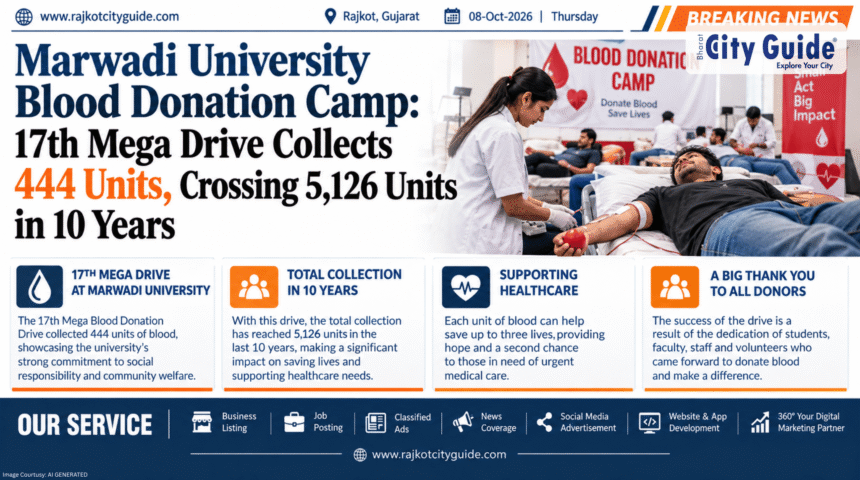
The Marwadi University Blood Donation Camp has once again demonstrated the extraordinary spirit of youth volunteerism and civic responsibility thriving across higher education institutions in Gujarat. In its recently organized 17th voluntary blood donation camp held at the university’s main campus in Rajkot, hundreds of enthusiastic students, faculty members, and campus staff stepped forward to contribute to the noble cause of saving human lives. Organized under the active leadership of the National Service Scheme (NSS), the National Cadet Corps (NCC), and student welfare units, the drive collected an impressive 444 units of blood in a single day.
- Introduction
- What is Marwadi University Blood Donation Camp?
- Why This News is Important
- Background Information
- Key Highlights
- Detailed Explanation of the Event
- Benefits and Social Importance
- How It Impacts People
- Expert Insights and Healthcare Perspective
- Challenges and Operational Considerations
- Frequently Asked Questions (FAQs)
- Conclusion
This latest edition marks a historical watershed for the institution’s ongoing community service initiatives. Over the past decade, regular voluntary blood collection drives on campus have consistently brought together young donors, healthcare workers, and regional blood bank representatives. With the successful completion of this 17th camp, Marwadi University has officially crossed the landmark milestone of accumulating over 5,126 units of donated blood over 10 years of continuous humanitarian service.
The importance of this news extends far beyond numerical achievements on campus. Regional hospitals and blood banks across Rajkot and the broader Saurashtra area frequently face critical supply shortages during emergency surgical procedures, trauma cases, thalassemic care, and cancer treatments. By channeling youth energy into voluntary blood collection, the Marwadi University Blood Donation Camp provides an essential lifeline for healthcare facilities while instilling lifelong values of empathy, social duty, and community leadership in the next generation.
What is Marwadi University Blood Donation Camp?
The Marwadi University Blood Donation Camp is a recurring, large-scale voluntary blood collection initiative organized by Marwadi University in Rajkot, Gujarat. Operating as a core pillar of the university’s corporate social responsibility (CSR) and student extension activities, the initiative brings together campus organizations—specifically the NSS unit, NCC cadets, student clubs, and department faculties—in direct partnership with certified regional blood banks and medical foundations.
Held twice or once annually on the university premises, the camp transforms the campus into a professionally managed medical outreach zone. Specialized medical teams, including doctors, phlebotomists, and healthcare technicians from recognized blood banks across Rajkot, manage donor registration, health screening, hemoglobin checks, sterile blood extraction, and post-donation donor care.
Beyond providing a venue for blood collection, the initiative functions as a comprehensive awareness platform. It educates young university students about the health benefits of voluntary blood donation, debunks prevailing myths regarding blood loss, and encourages first-time young donors to become lifelong voluntary blood givers.
Why This News is Important
The successful completion of the 17th blood donation camp and crossing the 5,126-unit milestone carries profound healthcare and social significance for Saurashtra. Rajkot functions as the primary medical and surgical hub for several surrounding districts, including Morbi, Jamnagar, Amreli, Devbhumi Dwarka, and Junagadh. Major civil hospitals and private healthcare centers in the city depend heavily on voluntary donations to maintain steady inventories for emergency care.
Second, the active participation of youth in health-centric social drives reflects the power of institutional mobilization. At a time when modern lifestyle changes and sedentary habits pose public health challenges, engaging over 400 young students in a self-directed, altruistic health drive highlights strong character development within academic institutions.
Finally, celebrating 10 years of consistent blood donation drives sets a strong benchmark for other universities and educational groups across India. It demonstrates that academic centers can serve as reliable, sustainable sources of voluntary blood supplies, alleviating the burden on patient families who often struggle to find replacement donors during medical crises.
Background Information
Marwadi University, located along the Rajkot-Morbi Highway, is one of Gujarat’s premier private universities, housing thousands of domestic and international students across engineering, management, pharmacy, law, science, and computer applications. Right from its early founding years, the university administration established active NSS and NCC divisions to integrate social work into the core educational environment.
Over the past decade, the university recognized the growing demand for safe, uninfected blood components—including Packed Red Blood Cells (PRBC), platelets, and fresh frozen plasma (FFP)—in regional blood banks. To address this need, the campus launched its annual voluntary blood donation drive series.
+-----------------------------------------------------------------------+
|             MARWADI UNIVERSITY BLOOD DONATION AT A GLANCE             |
+--------------------------+--------------------------------------------+
| Metric / Parameter       | Official Details                           |
+--------------------------+--------------------------------------------+
| Camp Edition             | 17th Voluntary Blood Donation Camp         |
| Organizing Bodies        | NSS Unit, NCC Cadets, Student Welfare Board|
| Units Collected (Camp)   | 444 Blood Units                            |
| 10-Year Cumulative Total | 5,126+ Blood Units                         |
| Primary Location         | Marwadi University Campus, Rajkot          |
| Key Beneficiaries        | Thalassemia Patients, Trauma & Surgeries   |
+--------------------------+--------------------------------------------+
Starting from modest collection numbers in its initial years, the drive steadily grew in scale as awareness spread across various academic departments. Year after year, incoming student batches embraced the tradition, culminating in the 17th edition where 444 units were collected, pushing the cumulative ten-year total past the 5,126-unit mark.
Key Highlights
- 17th Edition Success: The 17th voluntary blood donation drive concluded successfully on the Marwadi University campus.
- 444 Units Collected: A total of 444 units of blood were donated by students, faculty, and administrative staff in a single day.
- 10-Year Milestone Passed: Cumulative blood collection across 10 years of institutional camps crossed 5,126 units.
- Joint Organizing Effort: Smooth coordination led by the NSS unit, NCC cadets, nursing volunteers, and faculty coordinators.
- Professional Healthcare Support: Experienced medical teams and blood bank phlebotomists ensured complete donor safety, sanitary protocols, and health screening.
- First-Time Donor Mobilization: Hundreds of young college students participated as first-time blood donors, receiving official donor cards and appreciation certificates.
Detailed Explanation of the Event
The 17th voluntary blood donation camp was conducted as a full-day mega-event across designated university auditoriums and health centers. Days before the event, NSS volunteers and NCC cadets launched campus-wide awareness rallies, poster competitions, and classroom presentations explaining the medical criteria for safe donation, such as age, weight, hemoglobin levels, and blood pressure requirements.
On the day of the drive, a structured multi-station setup was established to handle the heavy turnout of donors. Arriving participants first registered at automated entry desks, followed by mandatory medical screening where healthcare professionals evaluated pulse rates, blood pressure, and hemoglobin counts to verify donor fitness. Eligible donors then proceeded to sanitary donation couches staffed by expert phlebotomists.
Following the donation process, every donor was guided to a dedicated recovery zone where nutritious refreshments, fruit juices, and energy snacks were provided under medical supervision to ensure quick recovery. Each donor was presented with an official blood donor certificate and a donor card, granting them or their immediate families priority access to blood units in partner blood banks during future emergencies.
Benefits and Social Importance
The Marwadi University Blood Donation Camp yields far-reaching benefits for individual health, campus culture, and public medical welfare:
1. Saving Lives in Emergency Healthcare
A single unit of donated whole blood can be separated into three essential components—red blood cells, platelets, and plasma—potentially saving up to three human lives. The 444 units collected during this camp directly support accident victims, maternity patients, surgical candidates, and cancer patients across Saurashtra.
2. Supporting Thalassemia Patients
Gujarat has a significant population of children suffering from Thalassemia Major who require lifelong, regular blood transfusions every two to three weeks. Consistent bulk donations from university camps provide a stable blood pool that allows blood banks to issue free units to thalassemic children.
3. Health Benefits for Student Donors
Regular voluntary blood donation offers health benefits for donors as well. It stimulates the bone marrow to generate fresh, new blood cells, helps regulate iron levels in the body, and includes a complimentary basic health screening for every participant.
4. Cultivating Social Responsibility
Engaging college youth in organized community service fosters civic consciousness, empathy, and social leadership. Students learn that personal contributions of time and health can make a immediate, positive impact on society.
How It Impacts People
This recurring health initiative creates a positive ripple effect across various sectors of the local community:
- For College Students: Provides a safe, encouraging environment to overcome fear of needles, perform civic duty, and gain practical leadership experience through volunteer management.
- For Patients and Families in Need: Reduces the anxiety and financial burden of searching for emergency blood replacement during sudden medical crises or planned surgeries.
- For Regional Blood Banks and Hospitals: Replenishes depleted blood inventories with fresh, voluntary, uninfected blood units, strengthening regional healthcare readiness.
- For University Community: Enhances institutional pride, establishing the university as a socially conscious academic center dedicated to community welfare alongside technical education.
Expert Insights and Healthcare Perspective
Medical experts and blood transfusion specialists routinely emphasize that voluntary, non-remunerated blood donors represent the safest source of blood supply. According to healthcare professionals, blood collected from voluntary student donors carries a significantly lower risk of Transfusion-Transmitted Infections (TTIs) compared to replacement or paid donors, ensuring high safety standards for vulnerable patients.
Public health specialists also highlight the strategic value of university-level blood drives. Young adults between the ages of 18 and 25 represent the healthiest demographic pool for long-term donor retention. When universities establish regular, well-organized camps, they build a committed base of regular voluntary donors who continue contributing well into their professional lives.
Furthermore, community organizers praise the collaborative execution model used by Marwadi University. Combining the organizational discipline of NCC cadets with the community-reach of NSS volunteers creates an efficient operational framework capable of managing hundreds of donors seamlessly in a single day.
Challenges and Operational Considerations
Organizing large-scale campus blood donation drives involves overcoming specific operational and logistical hurdles:
- Managing Donor Screening and Deferrals: A notable percentage of willing student donors, particularly young female students, often face temporary deferral due to low hemoglobin levels or weight criteria. Providing empathetic counseling and dietary advice during deferrals is essential to keep their morale high.
- Maintaining Strict Hygiene Standards: Handling over 400 donors in a single day requires rigid adherence to sterile procedures, single-use needle protocols, and bio-medical waste management to prevent cross-contamination.
- Cold Chain and Transport Logistics: Transporting hundreds of collected blood bags from the campus to regional blood bank storage facilities demands continuous temperature control (cold chain maintenance) to preserve delicate blood components.
- Addressing Post-Donation Anxiety: Managing first-time donor nervousness requires trained student volunteers who can offer reassurance, monitor recovery zones, and handle minor vasovagal responses (dizziness) promptly.
Frequently Asked Questions (FAQs)
How many blood units were collected at the recent Marwadi University Blood Donation Camp?
A total of 444 units of blood were donated by enthusiastic students, faculty, and staff during the 17th voluntary camp.
What is the total 10-year blood donation milestone achieved by Marwadi University?
Over the past decade, Marwadi University has organized 17 blood donation drives, collecting a cumulative total of 5,126+ blood units for regional healthcare facilities.
Who organized the blood donation drive on the university campus?
The event was jointly organized by the university’s National Service Scheme (NSS) unit, National Cadet Corps (NCC) cadets, nursing volunteers, and student welfare teams in partnership with regional blood banks.
Who can donate blood at these university camps?
Any healthy individual aged 18 to 65, weighing at least 45-50 kg, with a hemoglobin level of 12.5 g/dL or higher, and free from chronic infectious conditions can donate blood.
How does donating blood help Thalassemia patients in Saurashtra?
Children with Thalassemia Major require regular blood transfusions every few weeks to survive. Bulk donations from university camps help blood banks supply free, safe blood units to these young patients.
What benefits do student donors receive after donating blood?
Donors receive a complimentary basic health checkup, nutritious post-donation refreshments, an official blood donor appreciation certificate, and a donor card that provides priority blood access for their families during medical emergencies.
How long does it take for the body to replace donated blood?
The fluid volume (plasma) lost during blood donation is typically replenished by the body within 24 to 48 hours, while red blood cells are fully restored within a few weeks.
Conclusion
The 17th Marwadi University Blood Donation Camp stands as a shining example of how youth energy, academic leadership, and voluntary service can converge to save human lives. Collecting 444 blood units in a single day reflects the deep-rooted spirit of compassion and civic duty nurtured within the university community.
Crossing the landmark threshold of 5,126 units over a ten-year period highlights the power of sustained institutional commitment. By consistently organizing these high-impact camps year after year, Marwadi University has established itself as a dependable pillar of support for blood banks, emergency hospitals, and Thalassemia patients across Rajkot and Saurashtra.
As the university community celebrates this impressive milestone, the tradition of voluntary giving continues to inspire new batches of students. The ongoing success of the Marwadi University Blood Donation Camp serves as an inspiring blueprint for educational institutions nationwide, proving that educated young minds hold the power to heal and uplift society, one drop at a time.