Introduction
The landscape of Indian cinema has been shifting rapidly, balancing between ultra-realistic narrative structures and the unyielding charm of mass-market masala entertainers. When a new courtroom thriller drops in theaters, audiences naturally look for sharp dialogues, realistic legal arguments, and a gripping mystery. The recently released Ikka movie attempts to cross this exact bridge, offering a high-stakes legal battle that pits classic cinematic justice against contemporary storytelling. The current buzz surrounding this project centers on its star-studded cast and its unapologetic reliance on old-school dramatic tropes.
- Introduction
- What is the Ikka Movie?
- Current Situation and Movie Review Analysis
- Why This Film Matters to Indian Audiences
- Key Highlights of the Film
- Detailed Character Breakdown and Performances
- Cinematic Style and Technical Execution
- The Core Themes: Melodrama vs. Moral Ambiguity
- Comparison with Recent Indian Legal Dramas
- Advantages of the Film
- Disadvantages of the Film
- Who Should Watch This Film?
- Release Date and Streaming Availability
- Frequently Asked Questions (FAQs)
- Conclusion
In this deep-dive analysis, we break down why the Ikka movie has become a hot topic of discussion among cinema enthusiasts. This highly detailed review explores the film’s core themes, the standout performances of its lead actors, its structural flaws, and its unique positioning in modern Bollywood. Whether you are a fan of classic high-decibel courtroom showdowns or prefer nuanced psychological thrillers, understanding how this film operates will give you a clear picture of what to expect before booking your tickets.
What is the Ikka Movie?
The Ikka movie is a mainstream Hindi-language legal drama that centers on a profound moral dilemma within the Indian judicial system. At its core, the film explores the conflict of interest, ethics, and emotional compromises that lawyers must navigate when high-profile criminal cases land on their desks. The narrative sets up a classic David versus Goliath scenario, but with a complex twist: the champion of justice is forced into a corner where he must defend the seemingly indefensible.
Historically, Bollywood has a deep-rooted love affair with legal dramas. Films like Damini, Shaurya, Jolly LLB, and the recent streaming hit System have shown that the courtroom is an ideal stage for highlighting societal anxieties, class divides, and systemic corruption. The Ikka movie steps into this legacy by trying to fuse the raw, power-packed performance style of the 1990s with the slick production values of the 2020s. It stands as a testament to the enduring appeal of formulaic good-versus-evil narratives, even in an era dominated by hyper-realistic web series.
Current Situation and Movie Review Analysis
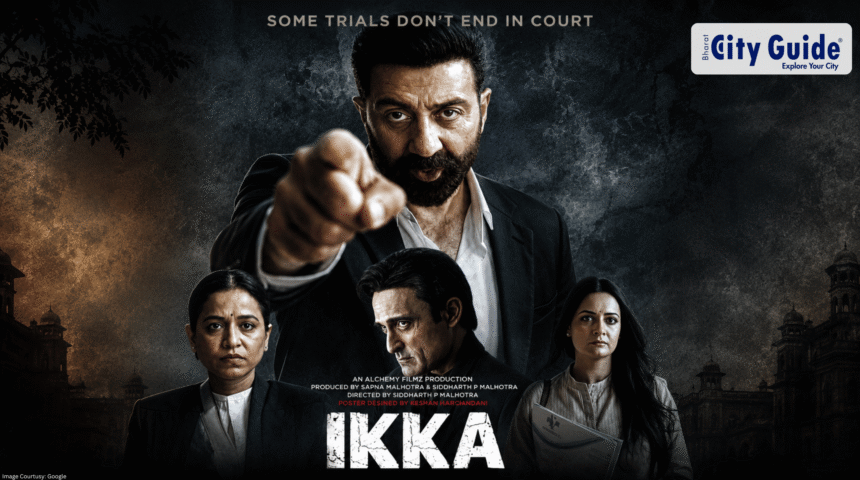
The release of the Ikka movie has split critics and audiences down the middle, sparking intense debates across social media platforms. The current critical consensus highlights a fascinating battle within the film itself: pure cinematic melodrama completely wins over the gritty realism that modern viewers often expect. The film introduces us to Arjun Mehra, played by Sunny Deol, an honest, idealistic, and highly successful lawyer who owns a luxurious sea-facing apartment in Mumbai. Arjun is a man of fierce principles who openly refuses to defend individuals he believes are morally bankrupt.
However, the plot kicks into high gear when Arjun is faced with the ultimate professional nightmare. He is pressured into defending Shauryaman Gaur, portrayed by Akshaye Khanna, an entitled, wealthy man charged with the grievous assault of a young woman. Left to his own devices, Arjun would never touch Shaurya’s case. To force this alliance, the screenwriters introduce a massive plot contrivance—a “you-can’t-be-serious” crutch that forces the righteous lawyer to stand in the corner of a suspected criminal.
While the film asks audiences to completely suspend their disbelief during these convenient narrative turns, it compensates by delivering heavy doses of nostalgia. The face-off between Sunny Deol’s stoic righteousness and Akshaye Khanna’s elite arrogance forms the backbone of the theatrical experience.
Why This Film Matters to Indian Audiences
For Indian moviegoers, the Ikka movie is more than just another weekend release; it represents the revival of a specific style of theatrical storytelling. In recent years, mid-budget films have struggled to pull crowds into theaters unless they offer massive spectacles or intense nostalgic value. This movie leverages both by bringing back iconic actors in setups that define their cinematic identities.
Furthermore, the movie tackles a highly sensitive and relevant social issue: the safety of women and the misuse of systemic power by the wealthy elite. By placing an idealistic lawyer at the center of this storm, the film mirrors the public’s desire for an uncompromising savior who can bypass bureaucratic red tape to deliver absolute justice. It connects deeply with the cultural psyche that still craves larger-than-life heroes who stand up for the marginalized.
Key Highlights of the Film
- The Ultimate Nostalgia Trip: Brings back the powerhouse energy of classic Indian legal dramas with meta-references to iconic dialogues.
- A High-Octane Actor Face-Off: Features a compelling dynamic between Sunny Deol’s explosive intensity and Akshaye Khanna’s calculated, villainous charm.
- An Unconventional Supporting Cast: Integrates stellar independent actors like Tillotama Shome into a highly commercial masala template.
- High Production Value: Beautifully showcases the contrasting worlds of Mumbai, from sea-facing luxury apartments to humble middle-class neighborhoods.
- Unapologetic Melodrama: Embraces emotional confrontations, teary-eyed mothers, and sweeping monologues that recall the golden era of 90s cinema.
Detailed Character Breakdown and Performances
Arjun Mehra (Played by Sunny Deol)
As the righteous protagonist of the Ikka movie, Sunny Deol steps comfortably into a persona that his fans have adored for decades. Arjun Mehra is a top-tier lawyer who fights the good fight, serving as an unyielding champion for wronged women. This role serves as a massive homage to his legendary character in Damini. The filmmakers are fully aware of this connection and lean into it heavily. In a highly meta-moment, the public prosecutor explicitly references Deol’s iconic “dhai kilo ka haath” dialogue right inside the courtroom. Sunny delivers his lines with trademark thunder, ensuring that his screenspace feels authoritative, protective, and intensely emotional.
Shauryaman Gaur (Played by Akshaye Khanna)
Akshaye Khanna plays the primary antagonist, Shauryaman Gaur, an entitled rich jerk who serves as the perfect foil to Arjun’s grounded righteousness. Fresh off his successful post-Dhurandhar career phase, Khanna delivers a performance filled with sharp glances and a perennial sneer. Shaurya is easily the most intriguing and layered character in the entire script. He never backs down from his arrogant stance, yet he drops a line that introduces a massive wave of doubt into the narrative: he admits he may be a terrible person, but firmly maintains that he is not a killer. Khanna handles this ambiguity beautifully, making the audience question his true level of guilt throughout the second act.
The Public Prosecutor (Played by Tillotama Shome)
In an inspired casting choice, Tillotama Shome plays the dogged public prosecutor fighting against Arjun Mehra. Her character comes from a humble background, a narrative element that heavily reminds seasoned viewers of the character played by Jyotika in the acclaimed legal drama System. Shome acts as an anchor of realism in the film. Whenever the plot threatens to devolve into over-the-top pulp fiction, her sharp, grounded delivery pulls the movie back into perspective. However, because the script heavily favors old-school commercial contrivances, there are moments where her realistic acting style feels slightly at odds with the surrounding melodrama.
Supporting Characters (Dia Mirza, Sanjeeda Sheikh, and Jyoti Mukerji)
The women in Arjun and Shaurya’s periphery bring out the emotional core of the film’s B-plots. Dia Mirza plays Arjun’s highly supportive wife, effortlessly gliding through the screenplay’s emotional requirements without breaking a sweat. In contrast, Sanjeeda Sheikh portrays a miserable, anxious wife caught in a web of marital distress, unsure of how to deal with her husband’s actions. Finally, Jyoti Mukerji epitomizes the film’s heavy reliance on maternal melodrama, playing a devastated mother who loudly accuses the legal system of being deeply unfair to her comatose daughter.
Cinematic Style and Technical Execution
The director of the Ikka movie opts for a visual style that balances modern cinematography with retro narrative pacing. The camera work utilizes sweeping shots of Mumbai’s coastline to emphasize Arjun Mehra’s worldly success, contrasting it sharply with the cramped, fluorescent-lit interiors of the local courts. The lighting shifts drastically depending on who is dominating the scene; bright, warm tones accompany Sunny Deol’s moral monologues, while cold, high-contrast shadows follow Akshaye Khanna’s interactions.
Musically, the film relies heavily on an aggressive background score to dictate the audience’s emotions. Every major courtroom revelation is punctuated by thunderous percussion and rising strings. While this approach succeeds in building theatrical tension, it leaves very little room for subtlety. The editing is fast-paced during the trial sequences but slows down significantly during the melodramatic family interactions, leading to a total runtime that occasionally feels bloated.
The Core Themes: Melodrama vs. Moral Ambiguity
The biggest talking point of the Ikka movie is its struggle between modern narrative complexity and traditional Indian cinema melodrama. In a contemporary legal thriller, audiences are typically left to sit with the unsettling reality that human beings are complex creatures capable of doing the wrong things for the right reasons. For a large portion of its runtime, Ikka actually flirts with this exact brand of sophisticated ambiguity, primarily through Akshaye Khanna’s character.
However, the film ultimately falters because it refuses to trust its audience’s maturity. As the third act approaches, the script completely abandons all grey areas and jumps headfirst into over-explaining every single twist and turn. Instead of leaving questions unanswered for viewers to debate on their way home, the movie systematically ties up every narrative loose end with heavy-handed explanations. It chooses the safety of a clear-cut moral victory over the artistic merit of a complex psychological resolution.
Comparison with Recent Indian Legal Dramas
To understand where the Ikka movie stands in today’s cinematic landscape, it is helpful to compare its execution with other recent legal offerings in Indian cinema.
| Feature / Aspect | The Ikka Movie | System (Recent Legal Drama) | Sirf Ek Bandaa Kaafi Hai |
|---|---|---|---|
| Primary Tone | High Melodrama & Mass Appeal | Gritty Realism & Procedural | Intense Realism & Character Study |
| Protagonist Style | Larger-than-life, Heroic Savior | Grounded, Systemic Fighter | Regular, Persistent Common Man |
| Antagonist Layering | Arrogant, Elitist, Ambiguous | Corporate Corruption | Sinister, Cultish, Powerful |
| Climax Resolution | Explicitly explained, emotional | Nuanced, open-ended system critique | Triumphant, fact-based legal win |
| Audience Target | Mass Single-Screens & Nostalgia Fans | Urban Multiplex & OTT Viewers | Premium OTT & Critical Audiences |
Advantages of the Film
- Powerful Nostalgia Factor: The direct and indirect nods to Sunny Deol’s historic film filmography provide immense entertainment value for long-time fans.
- Compelling On-Screen Chemistry: The intense dialogue delivery between the two lead actors keeps the viewers engaged even during weak plot moments.
- Strong Social Message: The movie takes an uncompromising stance on women’s safety and denounces systemic protection for wealthy abusers.
- Stellar Acting by Supporting Cast: Tillotama Shome and Dia Mirza elevate the material, ensuring the film doesn’t completely lose its emotional grounding.
Disadvantages of the Film
- Overreliance on Plot Contrivances: The main reason behind Arjun defending Shaurya feels highly unrealistic and forced.
- Excessive Melodrama: The inclusion of multiple teary-eyed family subplots slows down the narrative momentum of the actual trial.
- Hand-Holding the Audience: By explaining every twist in detail, the film misses an opportunity to be a smart, thought-provoking psychological thriller.
Who Should Watch This Film?
The Ikka movie is tailor-made for audiences who genuinely miss the theatrical flavor of 90s Bollywood dramas. If you enjoy whistle-worthy dialogues, grand emotional confrontations, and seeing justice served with a side of cinematic thunder, this movie will not disappoint you. It is highly suitable for families who prefer clear moral boundaries in their entertainment.
On the flip side, if you are looking for a realistic, step-by-step procedural courtroom drama along the lines of international legal thrillers, the heavy melodrama and structural conveniences might test your patience.
Release Date and Streaming Availability
The Ikka movie made its grand theatrical debut across India earlier this season, securing a wide release across both single-screen theaters and major multiplex chains. Given the massive star power of Sunny Deol following his recent box-office renaissances, the film enjoyed strong initial theatrical footfalls.
For viewers waiting to watch the movie from the comfort of their homes, digital streaming rights have been acquired by a major OTT platform. The official digital rollout is expected to happen approximately eight weeks after its initial theatrical window, following standard industry distribution protocols.
Frequently Asked Questions (FAQs)
What is the core plot of the Ikka movie?
The core plot of the Ikka movie revolves around Arjun Mehra (Sunny Deol), a highly principled and successful Mumbai-based defense lawyer who holds a strict moral code against representing individuals accused of heinous crimes. His beliefs are pushed to the absolute limit when a complex legal loop forces him to defend Shauryaman Gaur (Akshaye Khanna), an arrogant elite accused of assaulting a young woman. The movie chronicles their intense psychological clash and the subsequent courtroom battle.
Is the Ikka movie a remake of any older Bollywood film?
No, the Ikka movie is not an official remake of any specific older film, but it functions heavily as a spiritual successor to classic Bollywood courtroom dramas. It draws deep stylistic and thematic inspiration from Sunny Deol’s legendary movie Damini. The film features multiple meta-references, including iconic dialogues updated for modern contexts, making it feel deeply familiar to fans of retro Indian cinema.
How do Sunny Deol and Akshaye Khanna perform in the Ikka movie?
Both lead actors deliver highly engaging performances that play directly to their historic strengths. Sunny Deol brings his signature intense, moralistic grandeur to the courtroom, commanding the screen with powerful dialogue delivery. Akshaye Khanna shines as the sophisticated, arrogant antagonist, dropping a series of sneers and calculated lines that introduce a layer of mystery regarding his character’s ultimate guilt.
What are the main criticisms against the Ikka movie?
The primary criticism directed at the Ikka movie centers on its heavy reliance on old-school melodrama and highly convenient plot structures. Reviewers note that the script relies on forced narrative crutches to bring the main characters together. Additionally, critics argue that the film over-explains its plot twists in the final act, refusing to let the audience sit with any realistic moral ambiguity or character complexity.
Does Tillotama Shome have a significant role in the Ikka movie?
Yes, Tillotama Shome plays a crucial role as the dogged public prosecutor fighting the case against Akshaye Khanna’s character. Her character is written with a humble background, drawing direct parallels to realistic characters seen in recent gritty legal series. Shome’s grounded and natural performance provides a much-needed contrast to the film’s broader commercial elements, though her realism occasionally clashes with the script’s melodrama.
Is the Ikka movie suitable for family viewing?
Yes, the Ikka movie is highly suitable for a family audience. It frames its narrative around clear moral lines of right versus wrong and focuses heavily on family values, maternal bonds, and standing up for justice. While the underlying case involves a grievous assault, the film handles the subject matter through legal arguments and dramatic dialogue rather than explicit visual depictions.
Where can I watch the Ikka movie right now?
The Ikka movie is currently completing its scheduled theatrical run across various regions in India. Following its theatrical window, the movie is slated to stream officially on a leading digital OTT platform. Keep an eye on official studio announcements for the exact streaming release dates and platform availability details.
Conclusion
In summary, the Ikka movie stands as an entertaining, albeit flawed, tribute to the golden era of high-stakes Indian courtroom dramas. It successfully delivers exactly what mainstream audiences want out of a theatrical experience: heavy dialogues, clear moral stakes, and spectacular performances from industry veterans. Sunny Deol’s return to his righteous legal roots pairs brilliantly with Akshaye Khanna’s cold, calculating screen presence.
While the movie structural vulnerabilities—mainly its heavy-handed melodrama and its frustrating habit of over-explaining its own mysteries—prevent it from reaching the heights of modern cinematic masterpieces, it remains a thoroughly watchable venture. If you want to experience the thrill of a classic Bollywood face-off filled with nostalgic power, this film is well worth your time. The battle of words in this courtroom proves that while storytelling styles evolve, the draw of an uncompromising hero remains completely timeless.