Introduction
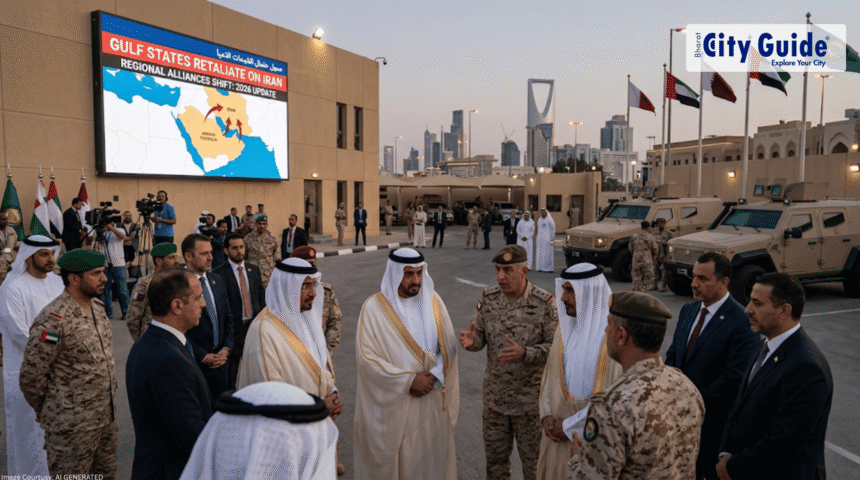
The Middle East conflict has entered a new and dangerous phase as Gulf states retaliate Iran, signaling a dramatic shift in regional alliances in 2026. What began as targeted strikes and proxy tensions has now expanded into a broader confrontation involving multiple Gulf nations.
- Introduction
- Gulf States Retaliate Iran: What Happened?
- Saudi Arabia Takes a Firm Stand
- UAE and Bahrain Strengthen Defense Response
- Iran’s Expanding Target Zone
- Regional Alliances Begin to Shift
- United Nations and Global Response
- Economic Impact: Oil and Trade Disruption
- Military Balance and Future Risks
- What Happens Next?
- Conclusion
- FAQs
Countries across the Gulf—long cautious in their approach to Iran—are now taking firmer positions, both militarily and diplomatically. The escalation reflects growing frustration over repeated drone and missile attacks, as well as concerns about sovereignty and economic stability.
In this blog, we break down how and why Gulf states retaliate Iran, and what this means for the balance of power in the Middle East.
Gulf States Retaliate Iran: What Happened?
The shift began after Iran launched missile and drone attacks targeting multiple Gulf countries, including Bahrain, United Arab Emirates, and Oman.
Key developments:
- Interception of dozens of missiles and drones
- Damage to infrastructure and civilian areas
- Rising casualties and economic disruption
- Immediate condemnation from Gulf governments
For example, Bahrain reported intercepting dozens of missiles and drones, while also suffering damage to key facilities and infrastructure.
This marked a turning point, pushing Gulf states toward stronger retaliation policies.
Saudi Arabia Takes a Firm Stand
A major development came from Saudi Arabia, which signaled a tougher stance against Iran.
Key actions:
- Expulsion of Iranian diplomatic staff
- Warning of possible military retaliation
- Opening military bases to allied forces like the United States
This represents a major shift, especially considering recent efforts to normalize relations between Saudi Arabia and Iran.
UAE and Bahrain Strengthen Defense Response
Other Gulf nations have also intensified their response as Gulf states retaliate Iran.
Key actions by Gulf states:
United Arab Emirates
- Intercepted hundreds of drones and missiles
- Activated advanced air defense systems
- Strengthened military readiness
Bahrain
- Intercepted over 70 missiles and dozens of drones
- Protected strategic assets including military bases
These responses show that Gulf nations are no longer relying solely on diplomacy—they are actively defending and preparing for escalation.
Iran’s Expanding Target Zone
Iran’s strategy has extended beyond Israel and US forces, directly impacting Gulf countries.
Key actions by Iran:
- Drone strikes on oil infrastructure in Saudi Arabia
- Attacks on ports and tankers in Oman
- Missile strikes targeting regional military bases
This expansion has forced Gulf states to view Iran as a direct threat rather than a distant rival.
Regional Alliances Begin to Shift
One of the most important outcomes of the Gulf states retaliate Iran situation is the rapid shift in alliances.
Key alliance changes:
1. Closer Ties with the United States
Countries like Saudi Arabia and United Arab Emirates are increasing military cooperation with the United States.
2. Quiet Alignment with Israel
Shared concerns about Iran are pushing Gulf states toward closer strategic alignment with Israel.
3. Collective Gulf Security Approach
The Gulf Cooperation Council is becoming more unified in its defense posture.
These shifts are reshaping the geopolitical landscape of the Middle East.
United Nations and Global Response
The escalation has drawn international attention, with the United Nations Security Council taking action.
Key developments:
- Adoption of Resolution 2817 condemning Iran’s attacks on Gulf states
- Calls for de-escalation from global leaders
- Increased diplomatic engagement
The resolution highlights the seriousness of the situation and the global concern over regional stability.
Economic Impact: Oil and Trade Disruption
As Gulf states retaliate Iran, the economic consequences are becoming more visible.
Key impacts:
- Disruption of oil production and exports
- Rising global oil prices
- Increased shipping risks in the Persian Gulf
Attacks on facilities like the Saudi Aramco refinery have already caused temporary shutdowns and price spikes.
Military Balance and Future Risks
The growing confrontation raises questions about the future of the conflict.
Key risks:
- Full-scale regional war
- Direct military clashes between states
- Involvement of global powers
The involvement of multiple countries increases the complexity and unpredictability of the situation.
What Happens Next?
The future of the Gulf states retaliate Iran crisis remains uncertain.
Possible scenarios:
- Continued defensive retaliation by Gulf states
- Escalation into broader regional conflict
- Diplomatic negotiations to ease tensions
Much will depend on how both sides manage escalation in the coming weeks.
Conclusion
The moment when Gulf states retaliate Iran marks a turning point in Middle East geopolitics. What was once a series of indirect conflicts has now evolved into a multi-nation confrontation with far-reaching consequences.
From Saudi Arabia’s firm stance to the UAE’s defensive actions, Gulf nations are redefining their role in the region. At the same time, shifting alliances with the United States and Israel signal a new strategic reality.
As tensions continue to rise, the world watches closely. The key question remains whether this confrontation will stabilize through diplomacy—or escalate into a much larger regional conflict.
FAQs
1. Why are Gulf states retaliating against Iran?
Due to repeated missile and drone attacks targeting their territory and infrastructure.
2. Which Gulf countries are involved?
Countries like Saudi Arabia, UAE, Bahrain, and Oman are directly affected.
3. How are alliances changing?
Gulf states are moving closer to the US and Israel while strengthening regional cooperation.
4. What is the economic impact?
Oil supply disruptions and rising global prices are major concerns.
5. Could this lead to a larger war?
Yes, there is a significant risk of escalation into a broader regional conflict.