Introduction
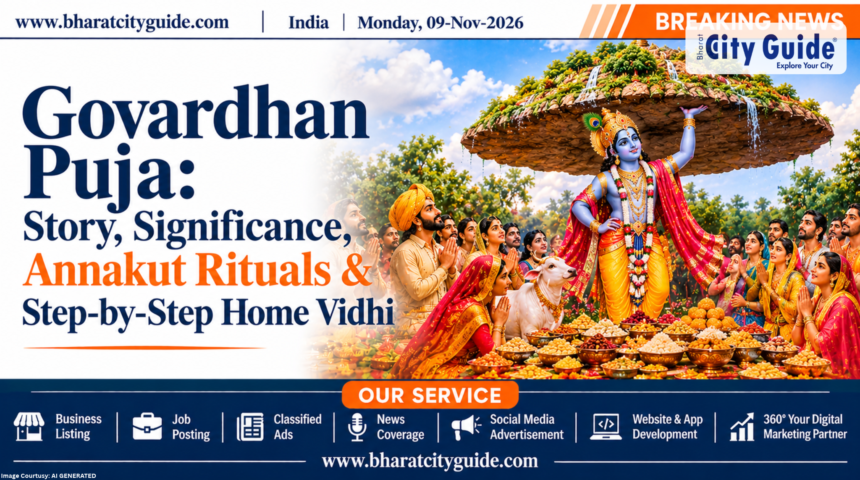
Govardhan Puja, also affectionately known as Annakut, stands as one of the most vibrant, spiritually uplifting, and culturally rich festivals in the Hindu calendar. Falling on the Pratipada Tithi of the Shukla Paksha in the holy Hindu month of Kartik—typically the day immediately following Deepavali—this auspicious occasion transforms households, temples, and entire towns into realms of sacred joy, community feasting, and deep environmental reverence. At its heart, Govardhan Puja celebrates the profound triumph of true devotion, humility, and ecological harmony over human ego, arrogance, and blind ritualism. It commemorates the divine pastime (leela) of Lord Shree Krishna, who lifted the majestic Govardhan Hill on the tip of his little finger to shelter the inhabitants of Braj Bhumi from relentless, torrential downpours unleashed by King Indra, the deity of rain and thunder. Far beyond a historical narration or a seasonal ritual, Govardhan Puja carries timeless spiritual wisdom for modern society, reminding humanity of our fundamental obligation to honor, protect, and live in harmony with mother nature, animal life, and the divine essence that permeates all existence.
- Introduction
- The Sacred Legend: Why Lord Krishna Lifted Govardhan Hill
- Core Spiritual & Philosophical Significance
- What is Annakut? The Deep Story Behind “Chappan Bhog”
- Essential Puja Samagri (Preparatory Checklist)
- Step-by-Step Govardhan Puja Vidhi at Home
- Authentic Traditional Annakut Recipes
- Regional Celebrations Across India
- Do’s and Don’ts for an Auspicious Celebration
- Conclusion
The Sacred Legend: Why Lord Krishna Lifted Govardhan Hill
To comprehend the profound spiritual essence of Govardhan Puja, one must journey back to the mythological era of the Dwapara Yuga in the lush pastures of Braj (spanning modern-day Mathura, Vrindavan, and Gokul).
1. The Ancient Tradition of Indra Worship
Traditionally, the cowherd community (Gopas and Gopis) of Braj gathered every year after the monsoon harvest to perform a grand sacrifice (Yajna) in honor of Lord Indra. Being pastoral people who depended entirely on agriculture and dairy farming, they believed that Indra’s celestial rains were the sole cause of their bountiful crops and lush green pastures for their cattle.
2. Krishna’s Philosophical Intervention
As a young boy, Lord Krishna observed these elaborate preparations and questioned his foster father, Nanda Maharaja, and the village elders. Krishna imparted a revolutionary spiritual philosophy: rather than worshipping a distant celestial deity out of fear or routine obligation, the villagers should express gratitude directly to the tangible elements of nature that sustained their daily lives.
Krishna argued that it was Govardhan Hill that provided rich soil, freshwater streams, medicinal herbs, and grazing meadows for their cows, while the cows provided nutritious milk, butter, and agricultural sustenance. Convincing the elders through gentle wisdom, Krishna guided the villagers to redirect their offerings (Bhog) and devotion directly to Govardhan Hill, the cows, and the local ecosystem.
3. The Wrath of Indra (Samvartaka Clouds)
Perceiving this shift in devotion as a personal insult to his supreme status, Lord Indra grew infuriated with pride. In retaliation, he summoned the apocalyptic Samvartaka clouds—typically reserved for cosmic dissolution—and unleashed devastating thunderstorms, terrifying lightning, and severe flooding over the peaceful hamlet of Vrindavan. The rivers overflowed, cattle shivered in fear, and the helpless villagers turned to young Krishna for protection.
4. The Lifting of Giriraj (Govardhan Leela)
Demonstrating his absolute divinity, seven-year-old Krishna walked calmly to Mount Govardhan, uprooted the vast mountain, and lifted it effortlessly atop the pinky finger of his left hand, holding it up like a giant protective umbrella. He invited all the villagers, children, elders, and cattle to take refuge beneath the shadow of the hill.
For seven continuous days and seven nights, Krishna stood unfaltering without moving, taking a drop of water, or eating a single grain of food. Realizing the futility of his torrential storms and recognizing Krishna as the Supreme Person, Indra’s pride shattered completely. He withdrew the rains, bowed before Lord Krishna, and begged for forgiveness. From that historical day onward, Mount Govardhan earned the divine title Giriraj (King of Mountains), and the day was commemorated as Govardhan Puja.
Core Spiritual & Philosophical Significance
Govardhan Puja is packed with deep philosophical lessons that remain astonishingly relevant to modern life:
                          ┌────────────────────────┐
                          │   GOVARDHAN PHILOSOPHY │
                          └───────────┬────────────┘
                                      │
         ┌────────────────────────────┼────────────────────────────┐
         ▼                            ▼                            ▼
┌──────────────────┐        ┌──────────────────┐        ┌──────────────────┐
│ Environmentalism │        │ Defeating Ego    │        │ Compassion to    │
│ & Gratitude      │        │ & Pride          │        │ Animals (Gau)    │
└──────────────────┘        └──────────────────┘        └──────────────────┘
- Ecological Stewardship & Eco-Spirituality: Thousands of years before modern environmental conservation emerged, Lord Krishna taught humanity to respect natural ecosystems. Worshipping a hill, soil, and forests signifies that nature is divine and worthy of active protection, not reckless exploitation.
- Overcoming Ego (Ahankara): Indra represents the human ego, which becomes arrogant due to power, wealth, or status. Krishna’s act of flattening Indra’s pride reminds us that material arrogance is fleeting, while humility and unconditional surrender (Sharanagati) bring divine protection.
- The Sacred Bond with Animals (Gau Seva): Cows hold a supreme position during Govardhan Puja. By honoring cows, oxen, and calves as Gomata, the festival highlights the interconnectedness between human civilization, domestic animals, and sustainable living.
- Community Unity (Satsang): The festival brings together people of all backgrounds to cook, clean, build symbolic structures, and share sanctified vegetarian meals, tearing down socio-economic divides.
What is Annakut? The Deep Story Behind “Chappan Bhog”
The word Annakut literally translates to “Mountain of Food” (Anna = food/grains, Kut = mountain). On this sacred day, devotees prepare and offer hundreds of vegetarian delicacies arranged in layered tiers, symbolic of the majestic Govardhan Hill.
                     [ Sweets, Halwa & Laddoos ]           <-- Top Tier (Closest to Deities)
               [ Savories, Farsan, Samosas & Puri ]        <-- Middle Tier
         [ Cooked Grains, Rice, Kadhi & Mixed Sabzi ]      <-- Base Tier
The Origins of “Chappan Bhog” (56 Offerings)
A cherished tradition associated with Annakut is the preparation of Chappan Bhog—a divine feast consisting of 56 distinct food items offered to Lord Krishna.
The origin of this sweet tradition comes directly from the Govardhan legend:
- Traditionally, Krishna ate eight meals a day (Ashta Prahar).
- During the torrential storms, Krishna held Govardhan Hill continuously for seven days and seven nights without consuming any food.
- Calculation: $8 \text{ meals/day} \times 7 \text{ days} = 56 \text{ meals}$.
- Once the rains ceased on the eighth day, the overwhelming love of the Braj residents prompted them to prepare all 56 missed meals at once to feed their beloved divine protector with affection and gratitude.
Today, temple altars in Mathura, Vrindavan, Nathdwara, and Swaminarayan Havels showcase breathtaking Annakut displays featuring 56, 108, or even 1,008 unique culinary dishes.
Essential Puja Samagri (Preparatory Checklist)
To perform an authentic and auspicious Govardhan Puja at home, gather the following sacred materials in advance:
| Category | Required Items |
| Primary Structure | Clean sacred cow dung (Gobar) OR alternative (Clay, soil, or rice mound) |
| Sacred Ingredients | Roli (Kumkum), Haldi (Turmeric), Akshata (Unbroken raw rice grains), Abeer, Gulal |
| Decorative Items | Fresh marigold flowers, Durva grass, Mango leaves, Tulsi leaves, Rangoli colors |
| Ritual Items | Pure Ghee, Cotton wicks, Brass/Earthen Diyas, Incense sticks (Agarbatti), Dhoop, Camphor (Kapur) |
| Offerings & Panchamrit | Milk, Curd, Honey, Ghee, Sugar/Jaggery, Panchmeva (Dry fruits), Sugarcane pieces |
| Annakut Bhog | Annakut Sabzi (mixed seasonal vegetables), Kadhi, Bajra khichdi, Puri, Sweets (Kheer, Laddoos, Halwa) |
Step-by-Step Govardhan Puja Vidhi at Home
Performing Govardhan Puja at home creates a divine atmosphere filled with positive vibrations and family bonding. Follow this traditional procedure (Vidhi):
Step 1: Morning Purification & Sankalpa
  │
Step 2: Constructing the Govardhan Representation
  │
Step 3: Decoration & Placement of Deities
  │
Step 4: Performing Gau Puja (Honoring Cattle)
  │
Step 5: The Main Puja Rituals & Abhishekam
  │
Step 6: Offering the Annakut Feast (Bhog)
  │
Step 7: Govardhan Parikrama (Circumambulation)
  │
Step 8: Grand Aarti & Distribution of Prasad
Step 1: Morning Purification & Sankalpa
Wake up early during the Brahma Muhurta, complete morning ablutions, and wear clean traditional clothes. Clean the puja room and the open courtyard or balcony where the puja will be conducted. Take water in your right palm and recite a silent Sankalpa (intention) to seek Lord Krishna’s blessings for your family’s prosperity, health, and spiritual growth.
Step 2: Constructing the Govardhan Representation
In your home courtyard, verandah, or clean floor space, construct a small reclining figure or mountain mound representing Govardhan Maharaj using fresh cow dung.
- Shape the mound with a distinct head, torso, arms, and legs.
- Depict trees, cows, cowherds, and wild animals on the hill using small twigs, durva grass, and clay figures.
- Place a small clay lamp (Diya) or a small circular well (Nabhi) on the navel portion of the figure.
Modern Apartment Adaptation: If fresh cow dung is unavailable, construct a clean mound using garden soil or river clay, or arrange a mound of cooked turmeric rice/sweets on a large brass tray (Thali) decorated with rangoli and flower petals.
Step 3: Decoration & Placement of Deities
Decorate the Govardhan representation with vibrant marigold garlands, peacock feathers, sugarcane stalks, and colorful rangoli patterns around the base. Place an idol or image of Lord Krishna (preferably holding the Govardhan Hill or in his Laddoo Gopal form) right atop or next to the mound.
Step 4: Performing Gau Puja (Cow Worship)
Since cows are dear to Krishna, honor cows on this day. Bathe or clean them if possible, apply Tilak with Kumkum and Haldi on their foreheads, garland them with flowers, and offer them fresh green fodder, jaggery, and wheat rotis. If live cows are not accessible, perform ritual worship to brass or clay cow idols.
Step 5: Main Puja Rituals
- Light the ghee lamps and incense sticks.
- Apply Roli-Akshat (vermilion and unbroken rice) to Lord Krishna and Govardhan Maharaj.
- Pour fresh milk, curd, honey, ghee, and gangajal (Panchamrit) into the central navel well of the Govardhan structure as an offering.
- Offer fresh seasonal fruits, betel leaves (Paan), cloves, cardamom, and coconut.
Step 6: Offering the Annakut Feast (Bhog)
Arrange all cooked vegetarian dishes systematically in front of the deity.
- Mandatory Guideline: Ensure all food prepared for Bhog is strictly Satvik—cooked freshly without onion or garlic.
- Place a sacred Tulsi leaf (Holy Basil) on every single dish, as Lord Krishna accepts offerings only when accompanied by devotion and Tulsi.
Step 7: Performing Govardhan Parikrama
Circumambulate (walk around) the Govardhan structure seven times in a clockwise direction while holding a water vessel (Kalash) that slowly drips water or milk along the path. Sing devotional hymns like “Shri Krishna Sharanam Mamah” or “Govind Bolo Hari Gopal Bolo” during the parikrama.
Step 8: Grand Aarti & Prasad Distribution
Conclude the ceremony by lighting a camphor flame and performing the divine Govardhan Aarti and Krishna Aarti. Ring bells and sing devotional songs (Thaal and Kirtans). Finally, distribute the sanctified Annakut Prasad among family members, neighbors, and the less fortunate.
Authentic Traditional Annakut Recipes
The core element of the Annakut menu is the signature Annakut Ki Sabzi (also known as Kadamba Sabzi), a wholesome dish made by combining seasonal vegetables available after the monsoon harvest.
                     TRADITIONAL ANNAKUT SABZI INGREDIENTS
┌─────────────────────────────────────────────────────────────────────────┐
│ Root Vegetables  │ Eggplant, Yam (Jimikand), Radish, Potato, Sweet Potato│
│ Fresh Greens     │ Spinach, Methi (Fenugreek), Mustard leaves            │
│ Gourds & Beans   │ Pumpkin, Ridge Gourd, Flat Beans (Sem), Cluster Beans │
│ Tempering        │ Pure Ghee, Cumin, Hing (Asafoetida), Ginger, Green    │
│                  │ Chillies, Turmeric, Coriander Powder, Amchur          │
└─────────────────────────────────────────────────────────────────────────┘
Traditional Annakut Sabzi Recipe
- Preparation: Thoroughly wash and chop small portions of 11, 21, or 31 different seasonal vegetables into uniform cubes.
- Tempering: Heat pure ghee in a large heavy-bottomed brass or iron pot. Add cumin seeds, a generous pinch of asafoetida (Hing), finely grated ginger, and chopped green chillies.
- Sautéing: Add hard root vegetables first (potatoes, yam, pumpkin) and cook for 5 minutes. Then add green leafy vegetables, beans, and gourds.
- Spicing: Add turmeric powder, coriander powder, red chilli powder, cumin powder, and rock salt (Saindhava Namak). Mix thoroughly without adding external water—let the vegetables cook in their natural juices on low flame.
- Finishing: Once tender, stir in dried mango powder (Amchur) or fresh lemon juice and garnish with fresh chopped coriander leaves and a pinch of garam masala. Offer hot with fresh puris and kadhi.
Regional Celebrations Across India
While Govardhan Puja carries a unified message of gratitude, various regions across India celebrate it through distinct cultural lenses:
1. Braj Bhumi (Mathura, Vrindavan, Govardhan Hill)
The heartland of the festival. Millions of pilgrims undertake the sacred 21-kilometer Govardhan Parikrama around the actual physical hill. Major temples like Daan Ghati, ISKCON Vrindavan, Banke Bihari, and Mukharvind Temple host grand Annakut darshans featuring thousands of kilograms of sweets and cooked food items.
2. Gujarat (Annakut & Bestu Varas)
In Gujarat, Govardhan Puja coincides with Bestu Varas—the Gujarati New Year. Temples, especially Swaminarayan Mandirs (BAPS Havels), create world-renowned, grand Annakut mountain displays with thousands of sweet and savory dishes, welcoming thousands of devotees to celebrate the New Year with divine blessings.
3. Rajasthan (Nathdwara – Shriji Temple)
In Nathdwara, the Pushtimarg sect celebrates Annakut with unparalleled grandeur. Devotees dress the deity of Shrinathji (Lord Krishna holding Govardhan Hill) in exquisite royal attire and offer massive piles of rice and traditional sweets.
4. Maharashtra (Bali Pratipada / Padwa)
In Western India, the day is also celebrated as Bali Pratipada or Diwali Padwa. It commemorates the benevolent King Bali and celebrates the loving marital bond between husband and wife, marked by gift-giving and ritual blessings.
Do’s and Don’ts for an Auspicious Celebration
To maintain the purity and spiritual sanctity of the festival, keep these guidelines in mind:
                            GOVARDHAN PUJA GUIDELINES
┌──────────────────────────────────────────┬──────────────────────────────────────────┐
│              DO'S (KARTAVYA)             │            DON'TS (VARJIT)               │
├──────────────────────────────────────────┼──────────────────────────────────────────┤
│ ✓ Prepare completely Satvik food without │ ✗ Do not use onion, garlic, or non-      │
│   onion or garlic for Bhog.              │   satvik ingredients in Bhog meals.      │
│                                          │                                          │
│ ✓ Place fresh Tulsi leaves on all food   │ ✗ Never offer Bhog without a sacred      │
│   dishes before offering to Krishna.     │   Tulsi leaf.                            │
│                                          │                                          │
│ ✓ Perform clockwise circumambulation     │ ✗ Avoid stepping on or disrespecting the │
│   (Parikrama) around Govardhan.          │   Govardhan structure after puja.        │
│                                          │                                          │
│ ✓ Honor and feed cows, calves, and street│ ✗ Avoid ill-treatment, harshness, or     │
│   animals with love.                     │   neglect toward animals.                │
│                                          │                                          │
│ ✓ Distribute Annakut Prasad freely to    │ ✗ Do not waste any sanctified food       │
│   family, friends, and the needy.        │   (Prasad) after the offering.           │
└──────────────────────────────────────────┴──────────────────────────────────────────┘
Conclusion
Govardhan Puja is far more than an ancient ritual; it is a radiant festival that bridges humanity, nature, and the divine. Through the captivating story of young Krishna lifting the mighty hill, we are reminded that true spirituality lies in humility, gratitude, community service, and environmental stewardship. As we construct symbolic representations of Govardhan Maharaj in our homes, cook wholesome Annakut feasts, and offer prayers with pure hearts, let us carry forward the timeless message of this sacred day. May Lord Giriraj protect your home from all adversities, bless your family with health, harmony, and abundance, and inspire us all to live in peaceful alignment with Mother Nature. Jai Shri Krishna! Jai Giriraj Maharaj!