Introduction
India’s education system is one of the largest and most complex in the world, serving millions of students across urban centers, rural villages, government schools, private institutions, and multilingual classrooms. At the heart of this vast system are teachers — the foundational force shaping learning outcomes, social mobility, and national development.
- Introduction
- This Includes:
- Major Modern Challenges:
- Core Advantages:
- Government initiatives generally aim to:
- Features:
- Why It Matters:
- Training Areas:
- 1. Anytime, Anywhere Learning
- 2. Self-Paced Professional Development
- 3. Certification and Tracking
- Potential Benefits:
- Important Priorities:
- Best Results Often Come From:
- Key Obstacles:
- Success Depends On:
- Emerging Possibilities:
- Priorities:
- 1. What is Teacher Training in India?
- 2. What is DIKSHA?
- 3. What is NISHTHA?
- 4. Why is digital teacher training important?
- 5. What are major challenges?
- 6. Can digital training replace traditional workshops?
- 7. Why does teacher training matter so much?
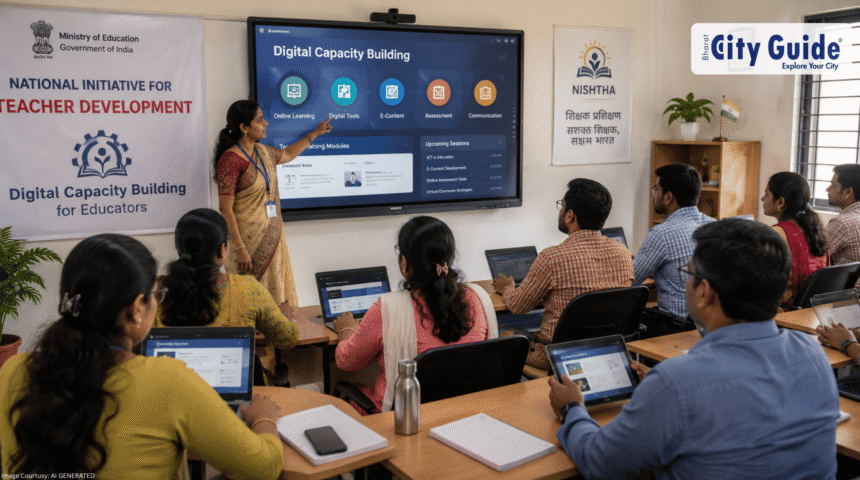
Yet in a rapidly changing educational environment defined by digital transformation, evolving pedagogy, competency-based learning, and diverse classroom needs, traditional teacher preparation models are no longer sufficient on their own. To improve educational quality at scale, Teacher Training in India is increasingly being reimagined through government-led digital capacity building initiatives.
These initiatives are designed not only to train teachers in content delivery but also to enhance digital literacy, pedagogical innovation, inclusive teaching, assessment methods, and continuous professional development. From online certification platforms and blended learning ecosystems to national digital repositories and competency frameworks, India is building an educational future where teacher development can become more scalable, accessible, and adaptive.
In this comprehensive guide, we explore how government-led digital initiatives are transforming Teacher Training in India, why this shift matters, key programs, opportunities, challenges, and the future of teacher empowerment in one of the world’s largest education ecosystems.
What is Teacher Training in India?
Teacher Training in India refers to pre-service and in-service programs designed to prepare educators with the knowledge, pedagogy, subject expertise, classroom strategies, and professional competencies required for effective teaching.
This Includes:
- Subject knowledge
- Pedagogical methods
- Classroom management
- Assessment strategies
- Child psychology
- Inclusive education
- Technology integration
- Professional ethics
Historically, many teacher training systems relied heavily on offline workshops and institution-based certification.
Why Teacher Training Needs Transformation
Major Modern Challenges:
- Digital classrooms
- Learning gaps
- Diverse student needs
- Large-scale education inequity
- Remote learning demands
- Assessment reform
- New curriculum frameworks
Teachers increasingly need continuous upskilling rather than one-time qualification.
Why Government-Led Digital Capacity Building Matters
Core Advantages:
- National scale
- Standardized access
- Lower cost
- Remote reach
- Flexible learning
- Professional continuity
For a country as large as India, digital platforms can dramatically expand teacher support.
Key Goals of Digital Teacher Capacity Building
Government initiatives generally aim to:
- Improve pedagogy
- Expand digital literacy
- Standardize quality
- Support multilingual access
- Strengthen continuous development
- Enable competency-based teaching
Major Government-Led Digital Teacher Training Initiatives in India
1. DIKSHA (Digital Infrastructure for Knowledge Sharing)
DIKSHA has emerged as one of India’s most significant digital education platforms.
Features:
- Teacher training modules
- QR-enabled textbooks
- Lesson plans
- Certification courses
- Multilingual resources
- Classroom tools
Why It Matters:
It supports scalable, nationwide professional development.
2. NISHTHA (National Initiative for School Heads’ and Teachers’ Holistic Advancement)
NISHTHA focuses on holistic teacher and school leadership development.
Training Areas:
- Foundational literacy
- Inclusive education
- Learning outcomes
- Assessment
- Leadership
3. SWAYAM and Online Learning Ecosystems
SWAYAM offers broader digital learning opportunities, including educator-focused content.
How Digital Platforms Are Changing Teacher Development
1. Anytime, Anywhere Learning
Teachers can access modules without geographic barriers.
2. Self-Paced Professional Development
This reduces scheduling limitations.
3. Certification and Tracking
Digital systems can monitor:
- Completion
- Skill areas
- Progress
Rural and Remote Access Benefits
One of the biggest advantages is outreach.
Potential Benefits:
- Remote teacher inclusion
- Reduced travel costs
- Resource democratization
- Rural professional equity
Digital Literacy as a Foundational Skill
Modern teacher effectiveness increasingly requires:
- Device usage
- LMS familiarity
- Content creation
- Online classroom tools
- Cyber awareness
Government initiatives increasingly address this.
Multilingual and Regional Adaptation
India’s diversity requires localized teacher support.
Important Priorities:
- Regional languages
- Context-specific pedagogy
- Cultural relevance
Blended Learning: Combining Digital and Human Support
Purely digital systems may not always be enough.
Best Results Often Come From:
- Online modules
- Mentorship
- Peer collaboration
- Practical workshops
Benefits for Students Through Better Teacher Training
Improved teacher capacity can support:
- Better learning outcomes
- More engaging classrooms
- Inclusive support
- Higher retention
- Improved digital learning readiness
Challenges Facing Digital Teacher Training in India
Key Obstacles:
- Device access gaps
- Internet connectivity
- Digital confidence
- Overloaded teachers
- Monitoring quality
- Language barriers
Infrastructure remains critical.
Teacher Motivation and Adoption
Technology alone is insufficient.
Success Depends On:
- Relevance
- Ease of use
- Recognition
- Incentives
- Leadership support
Role of School Leadership
School heads play a major role in:
- Encouraging participation
- Supporting implementation
- Monitoring progress
Equity and Inclusion
Digital initiatives should also address:
- Gender access
- Disability inclusion
- Rural disparities
- Government school needs
Future Innovations in Teacher Capacity Building
Emerging Possibilities:
- AI-based personalized training
- VR classroom simulations
- Micro-credentials
- Data-driven pedagogy
- Peer learning communities
Why Teacher Training Reform Matters Nationally
Teacher quality impacts:
- Workforce readiness
- Social mobility
- Economic development
- Innovation capacity
Teacher development is ultimately nation-building.
Best Practices for Strengthening Teacher Training in India
Priorities:
- Infrastructure investment
- Practical pedagogy
- Continuous support
- Local adaptation
- Outcome measurement
Frequently Asked Questions (FAQs)
1. What is Teacher Training in India?
It includes programs that prepare and continuously develop educators’ teaching and professional skills.
2. What is DIKSHA?
DIKSHA is a government digital platform for education and teacher development.
3. What is NISHTHA?
NISHTHA is a large-scale government teacher capacity-building initiative.
4. Why is digital teacher training important?
It expands access, scalability, and continuous professional development.
5. What are major challenges?
Connectivity, digital literacy, motivation, and infrastructure.
6. Can digital training replace traditional workshops?
It can complement but often works best in blended models.
7. Why does teacher training matter so much?
Teacher quality strongly influences student learning outcomes.
Conclusion
Teacher Training in India is entering a transformative era, powered increasingly by government-led digital capacity building initiatives that aim to strengthen educational quality at scale. By leveraging digital platforms, structured frameworks, and national policy alignment, India is working toward a future where teachers can continuously evolve alongside educational demands.
While challenges remain — particularly around access, infrastructure, and implementation — the shift toward digital empowerment represents a powerful step in democratizing professional growth.
For a nation as large and diverse as India, investing in teacher capability is one of the most strategic ways to shape future generations. And as digital ecosystems mature, Teacher Training in India may become not just more accessible, but more adaptive, inclusive, and impactful than ever before.