Introduction
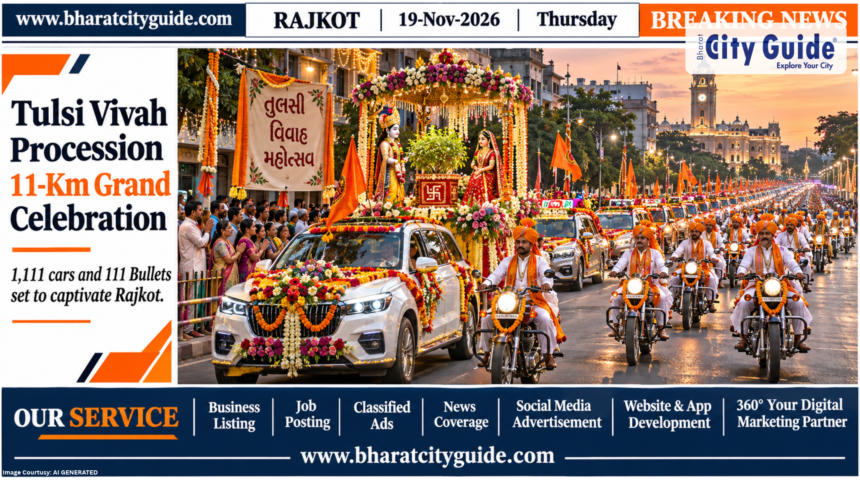
In a spectacle blending deep-rooted Saurashtrian devotion with exuberant modern celebration, the upcoming Tulsi Vivah Procession in Rajkot is generating widespread excitement across the city and surrounding regions. Planned on an extraordinary scale, the grand procession (Shobhayatra / Jaan) is set to stretch across an 11-kilometer route, bringing together 1,111 cars and 111 Royal Enfield Bullets alongside traditional cultural elements. For residents of Rajkot and neighboring districts, such large-scale festive gatherings turn ordinary streets into vibrant arenas of music, devotion, and community solidarity.
- Introduction
- What is Tulsi Vivah Procession?
- Why This News is Important
- Background Information
- Key Highlights
- Detailed Explanation of the Procession and Event Dynamics
- Benefits and Importance of Community Celebrations
- How It Impacts Residents, Commuters, and Local Businesses
- Expert Insights and Event Management Perspective
- Practical Guidelines for Participants and Commuters
- Frequently Asked Questions (FAQs)
- Conclusion
Tulsi Vivah marks a cherished milestone in the Hindu festive calendar, arriving right around Dev Uthani Ekadashi (Friday, November 20, 2026) and Kartik Sud Baras / Dwadashi (Saturday, November 21, 2026). The sacred ceremony celebrates the spiritual marriage of Goddess Tulsi (symbolizing purity, devotion, and household harmony) with Lord Vishnu or Shaligram, signaling the conclusion of Chaturmas and the auspicious opening of the winter wedding and festive season. Staging a massive Tulsi Vivah Procession elevates a household and temple observance into a shared civic celebration.
Beyond the sheer scale of 1,111 cars and 111 Bullets moving through Rajkot’s roads, this event reflects how traditional customs evolve in contemporary urban India. Youth riders, families, local organizers, and onlookers converge around a shared cultural heritage while testing the city’s traffic flow, crowd safety, and public coordination. The detailed overview below explores the significance of the procession, its cultural roots, key highlights, community impact, and practical tips for spectators and commuters.
What is Tulsi Vivah Procession?
A Tulsi Vivah Procession is a ceremonial, festive parade organized to mark the sacred wedding of Mata Tulsi and Lord Vishnu (often worshipped in the form of Shaligram or Thakarji) during the Kartik month. In Rajkot’s grand edition of this celebration, the procession spans roughly 11 kilometers and incorporates 1,111 cars and 111 Bullets—alongside traditional folk elements—to accompany the divine groom’s party (Jaan) in festive style.
+-----------------------------------------------------------------------+
|             TULSI VIVAH PROCESSION IN RAJKOT AT A GLANCE              |
+--------------------------+--------------------------------------------+
| Festival Occasion        | Tulsi Vivah (Kartik Sud Ekadashi / Baras)  |
| Procession Route Length  | ~11 Kilometers Across Rajkot               |
| Automobile Contingent    | 1,111 Cars Participating in Convoy         |
| Two-Wheeler Contingent   | 111 Bullets Joining the Festive Parade     |
| Cultural Essence         | Devotion, Folk Music, Raas & Community Joy |
| Seasonal Significance    | Marks End of Chaturmas & Wedding Season    |
+--------------------------+--------------------------------------------+
Key characteristics that define this large-scale Tulsi Vivah Procession include:
- Landmark Scale & Numbers: Combining a symbolic 11-kilometer stretch with 1,111 cars and 111 Bullets creates a visually striking convoy across the city.
- Fusion of Tradition and Modernity: Pairing sacred wedding rituals and folk traditions with contemporary motorcades and group participation.
- Community-Wide Participation: Drawing together families, youth groups, elders, and local organizers in an atmosphere of shared celebration.
- Festive Transition Marker: Celebrating the return of auspicious muhurats following the four-month Chaturmas period.
Why This News is Important
Announcements surrounding a massive Tulsi Vivah Procession with 1,111 cars and 111 Bullets matter for several cultural, civic, and everyday reasons in Rajkot. First, large-scale processions are major urban events that shape weekend and festival movement patterns across key city corridors. Residents planning errands, medical appointments, highway travel, or family visits benefit from knowing well ahead of time that an 11-kilometer convoy will draw big crowds.
Second, events of this scale highlight the living vibrancy of Saurashtra’s social and religious calendar. In fast-paced cities where neighbors often live busy, isolated routines, major community processions bring generations together—from children watching decorated vehicles to elders participating in devotional chants and folk rhythms.
Third, organizing a procession involving over a thousand vehicles requires careful coordination between event organizers, volunteers, and local traffic authorities. Highlighting both the celebration and practical logistics encourages responsible participation, orderly movement, and safe viewing for everyone along the route.
Background Information
In Hindu tradition, Tulsi holds a revered place in courtyards, temples, and spiritual life. According to Puranic lore, Tulsi (Vrinda) is deeply associated with Lord Vishnu, and her ceremonial marriage to Lord Vishnu or Shaligram during Kartik celebrates dharma, devotion, and auspiciousness. In Gujarat, the observance is closely tied to Dev Uthani Ekadashi and Kartik Sud Baras (Dwadashi), with evening Pradosh rituals forming a central part of family and temple celebrations.
+-----------------------------------------------------------------------+
|             CULTURAL & SEASONAL CONTEXT OF TULSI VIVAH                |
+--------------------------+--------------------------------------------+
| Tradition Aspect         | Meaning & Role in Gujarat                  |
+--------------------------+--------------------------------------------+
| Chaturmas Conclusion     | Follows four monsoon months of restraint   |
| Sacred Union             | Symbolic marriage of Tulsi & Lord Vishnu   |
| Auspicious Calendar Shift| Ushers in winter wedding & festive season  |
| Community Processions    | Turns devotion into collective public joy  |
+--------------------------+--------------------------------------------+
Across Saurashtra, religious and social festivals often feature grand processions (Shobhayatras) marked by folk music, devotional enthusiasm, and community pride. Over the years, organizers in Rajkot have increasingly blended classic cultural motifs with large-scale civic participation, turning Tulsi Vivah processions into memorable citywide spectacles that attract attention across social media and local news platforms alike.
Key Highlights
- 11-Kilometer Route: The procession is planned to cover an expansive 11-kilometer stretch.
- 1,111 Cars in Lineup: A massive fleet of 1,111 cars is slated to participate in the event.
- 111 Bullets Featured: A dedicated contingent of 111 Bullets adds energetic two-wheeler presence to the parade.
- Festive Devotional Spirit: Rooted in the sacred traditions of Tulsi Vivah during the Kartik festive period.
- High Community Engagement: Expected to draw enthusiastic participation from families, youth, and local spectators.
- Major Local Buzz: The distinctive numerical scale (1,111 cars, 111 Bullets, and 11 km) has made the announcement a prominent topic of discussion in Rajkot.
Detailed Explanation of the Procession and Event Dynamics
Staging an 11-kilometer parade with 1,111 cars and 111 Bullets involves far more than simply lining up vehicles. A procession of this size operates almost like a moving festival along city roads:
1. Scale, Pacing, and Formation
When 1,111 cars and 111 Bullets move as part of a single coordinated procession, spacing and speed become critical. Vehicles must maintain steady, safe intervals so the convoy does not stall, bunch up dangerously, or create sudden braking waves. Lead and tail coordinators typically help keep the line cohesive from start to finish.
+-----------------------------------------------------------------------+
|               PROCESSION LOGISTICS & MOVEMENT OVERVIEW                |
+--------------------------+--------------------------------------------+
| Operational Element      | Key Consideration for Smooth Execution       |
+--------------------------+--------------------------------------------+
| Convoy Length & Spacing  | Safe vehicle gaps across an 11-km stretch  |
| Two-Wheeler Discipline   | Orderly riding by the 111 Bullet riders    |
| Crowd & Spectator Zones  | Safe distance from moving vehicles on roads|
| Traffic & Emergency Lanes| Keeping key junctions & emergency access   |
|                          | clear for uninterrupted city movement      |
+--------------------------+--------------------------------------------+
2. Festive Atmosphere and Cultural Expression
Beyond the vehicles themselves, Tulsi Vivah celebrations thrive on warmth, devotion, and togetherness. Families dress up for the occasion, devotional energy fills the air, and spectators line roadsides to witness the spectacle. For many attendees, the highlight is not just counting vehicles, but experiencing the collective joy of a major community gathering in Rajkot.
Benefits and Importance of Community Celebrations
Large cultural and religious processions play an enduring role in urban social life when organized thoughtfully:
1. Strengthening Social Bonds and Belonging
Shared celebrations create moments of connection across age groups and neighborhoods, reinforcing community identity in a growing city.
2. Keeping Cultural Traditions Alive for Younger Generations
Visible, lively events help children and young adults connect emotionally with traditional festivals like Tulsi Vivah rather than viewing them merely as calendar dates.
3. Boosting Local Visibility and Festive Spirit
Vibrant public gatherings energize local markets, eateries, and neighborhood activity during the post-Diwali festive weeks.
4. Encouraging Organized Civic Participation
Large-scale community events bring volunteers, organizers, and local participants together around shared planning and public responsibility.
How It Impacts Residents, Commuters, and Local Businesses
An 11-kilometer Tulsi Vivah Procession featuring 1,111 cars and 111 Bullets touches different segments of Rajkot in distinct ways:
- For Families and Spectators: Offers an exciting, colorful festive outing to watch and celebrate with relatives and neighbors.
- For Bullet Riders and Car Participants: Provides a memorable group experience rooted in festive camaraderie and local pride.
- For Daily Commuters and Drivers: May cause temporary slowdowns, diversions, or longer travel times along affected roads during procession hours, making route planning helpful.
- For Local Shops and Vendors: Can bring brief surges in footfall and festive activity along popular viewing stretches.
Expert Insights and Event Management Perspective
Urban planners, traffic specialists, and large-event organizers frequently note that mega-processions succeed best when enthusiasm is paired with disciplined crowd and traffic management. When more than a thousand cars and over a hundred motorcycles participate in a single event, even minor bottlenecks at intersections can multiply down an 11-kilometer route.
Event coordination experts emphasize clear pre-event communication: publishing starting points, expected timelines, and route corridors helps both participants and non-participating commuters plan smoothly. Similarly, encouraging disciplined driving and riding—without stunts, loud horn misuse, or lane cutting—protects participants and pedestrians alike.
From a cultural standpoint, observers of regional festivals note that blending traditional devotion with contemporary group participation keeps customs dynamic, provided the spiritual and communal heart of the occasion remains front and center.
Practical Guidelines for Participants and Commuters
Whether you plan to join the convoy, watch from the roadside, or simply travel through Rajkot during the event, these practical tips can help:
- Plan Alternate Routes in Advance: If you have time-sensitive appointments or highway connections to catch, check local traffic updates and allow extra buffer time.
- Watch Safely from Designated Edges: If viewing the procession with children or elders, stay well back from moving traffic and avoid standing on road medians or sharp turns.
- Ride and Drive Responsibly: Participants in the 111 cars or 111 Bullets should wear helmets/seatbelts, maintain safe following distances, and follow organizer and traffic police instructions.
- Keep Noise and Celebrations Respectful: Celebrate with high spirits while remaining mindful of residential areas, hospitals, and elderly residents along the route.
- Stay Hydrated and Patient: Large outdoor gatherings involve waiting and slow movement—carry water and stay patient in crowded stretches.
Frequently Asked Questions (FAQs)
What is special about the upcoming Tulsi Vivah Procession in Rajkot?
The event is drawing attention for its ambitious scale, featuring an 11-kilometer procession route with 1,111 cars and 111 Bullets participating.
How long is the planned Tulsi Vivah Procession route?
The procession is planned to span approximately 11 kilometers.
How many cars and Bullets are part of the procession plan?
Organizers have planned for 1,111 cars and 111 Bullets to be part of the grand parade.
Why is Tulsi Vivah celebrated in the Hindu calendar?
Tulsi Vivah marks the ceremonial marriage of Goddess Tulsi with Lord Vishnu (or Shaligram) during the Kartik month around Dev Uthani Ekadashi and Dwadashi, signifying the end of Chaturmas and the start of the auspicious wedding season.
When does Tulsi Vivah fall in November 2026?
In November 2026, Dev Uthani Ekadashi falls on Friday, November 20, and Tulsi Vivah (Kartik Shukla Dwadashi / Baras) is observed on Saturday, November 21, 2026, depending on family and temple traditions.
How might the procession affect daily traffic in Rajkot?
A convoy of this size moving over 11 kilometers can lead to temporary traffic slowdowns, crowd gatherings, or diversions along affected roads, so commuters should plan ahead.
What should spectators keep in mind while watching the procession?
Spectators should stand safely away from active vehicle lanes, keep a close eye on children, and follow instructions from traffic personnel and event volunteers.
Conclusion
The upcoming Tulsi Vivah Procession in Rajkot stands out as a vivid example of how deep-rooted cultural traditions and large-scale community energy come together in Saurashtra. With 1,111 cars and 111 Bullets slated to move along an 11-kilometer stretch, the celebration has already captured public imagination across the city.
For devotees, families, and participants, the occasion blends sacred Kartik customs with collective joy, turning a traditional observance into a shared public landmark.
With thoughtful coordination, safe road discipline, and advance planning by commuters and spectators alike, this grand Tulsi Vivah Procession can be enjoyed smoothly by all—leaving lasting festive memories across Rajkot.