Introduction
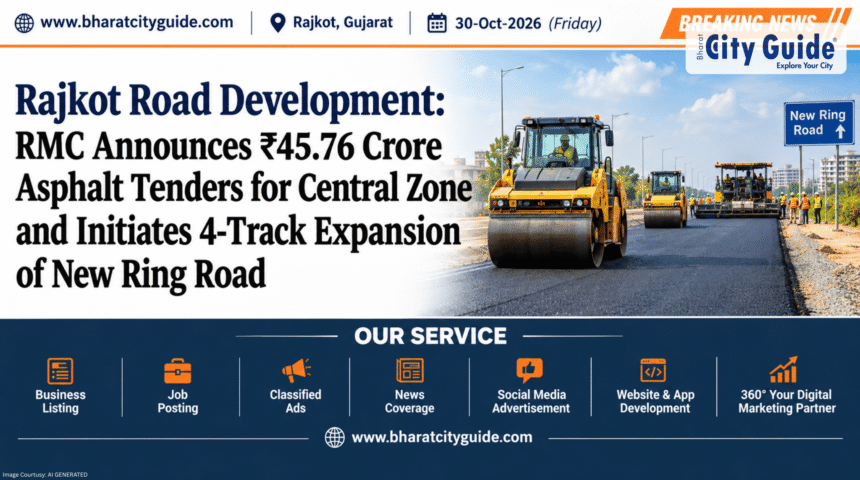
In a major infrastructure push to enhance urban mobility and road safety across Saurashtra’s commercial hub, the Rajkot Road Development initiatives have gained rapid momentum. The Rajkot Municipal Corporation (RMC) has officially issued mega tenders worth ₹45.76 crore dedicated to constructing new asphalt roads and resurfacing worn-out stretches across the city’s densely populated Central Zone. Simultaneously, civil construction teams under the Rajkot Urban Development Authority (RUDA) and municipal engineering wings have commenced groundwork to convert the city’s vital New Ring Road into a widened, four-track arterial corridor.
- Introduction
- What is Rajkot Road Development?
- Why This News is Important
- Background Information
- Key Highlights
- Detailed Breakdown of the Road Infrastructure Projects
- Benefits and Importance of Modern Road Networks
- How It Impacts Citizens, Business, and Commuters
- Expert Insights and Urban Engineering Perspective
- Key Guidelines for Commuters During Road Construction
- Frequently Asked Questions (FAQs)
- Conclusion
This dual infrastructure announcement comes as a crucial relief for thousands of daily commuters, business operators, and logistics transporters navigating urban traffic bottlenecks. Following the monsoon season, several internal city streets, arterial connectors, and commercial avenues required immediate resurfacing and structural strengthening. By allocating ₹45.76 crore specifically for the Central Zone, civic authorities aim to modernize road networks across old city areas, key market hubs, and high-density residential wards.
Furthermore, expanding the New Ring Road into a high-capacity four-track highway represents a strategic leap forward for regional urban planning. As Rajkot continues its rapid expansion toward AIIMS Rajkot, Hirasar International Airport, and surrounding industrial clusters, a robust ring road network is essential to bypass heavy freight traffic outside core municipal boundaries. These synchronized road infrastructure projects reflect RMC’s long-term commitment to delivering smooth, durable, and safe urban transport networks for the city’s 18 lakh-plus residents.
What is Rajkot Road Development?
The Rajkot Road Development program refers to the comprehensive urban infrastructure initiatives spearheaded by the Rajkot Municipal Corporation (RMC) and Rajkot Urban Development Authority (RUDA) to upgrade, expand, and maintain the city’s road grid. This multi-crore framework encompasses asphalt resurfacing, micro-surfacing, cement concrete (CC) road laying, stormwater drain integration, street lighting upgrades, and major highway widening projects.
Key components defining the current phase of development include:
- Central Zone Asphalt Tenders: A dedicated ₹45.76 crore financial allocation earmarked for laying fresh asphalt carpet roads and repairing damaged internal streets across Central Zone wards.
- New Ring Road 4-Track Expansion: Civil widening operations converting existing narrow or 2-lane ring road segments into a modern 4-track (4-lane) divided corridor with central medians and service lanes.
- High-Durability Paving Specifications: Utilizing hot-mix asphalt, bitumen-modified binders, and dense bituminous macadam (DBM) layers designed to withstand heavy traffic and seasonal rainfall.
- Urban Connectivity Linkage: Seamlessly connecting inner city commercial zones with outer bypasses, highway corridors leading to Ahmedabad, Morbi, Jamnagar, and Gondal, and civic landmarks like Racecourse Ring Road.
Why This News is Important
The rapid execution of ₹45.76 crore road tenders alongside the New Ring Road 4-track expansion carries immense economic, social, and civic importance for Rajkot. First, smooth inner-city roads reduce daily commute times, lower vehicle maintenance costs for citizens, and minimize dust pollution caused by deteriorating asphalt surfaces. Upgrading Central Zone roads directly benefits thousands of local shopkeepers, commercial traders, and daily shoppers navigating the city’s busiest market zones.
Second, converting the New Ring Road into a 4-track corridor addresses chronic traffic congestion on outer transit routes. As commercial transport, inter-city passenger buses, and heavy freight vehicles travel between industrial estates (like Metoda, Aji GIDC, and Shapar-Veraval), a widened ring road prevents heavy traffic from clogging internal municipal roads.
Finally, these projects enhance overall urban livability and attract commercial investment. Well-paved roads, integrated drainage channels, and modern multi-track corridors form the backbone of a smart, growing city, positioning Rajkot as a premier business and industrial destination in Gujarat.
Background Information
As one of Western India’s fastest-growing urban centers, Rajkot has experienced exponential population growth and motor vehicle density over the past decade. The city’s concentric road layout—comprising inner market lanes, mid-ring roads, 150 Feet Ring Road, Kalawad Road, and the outer New Ring Road—handles over 10 lakh registered vehicles daily.
Seasonal monsoon rains and routine utility trenching (for water supply pipelines, underground electric cabling, and internet fiber optic lines) often cause surface damage to older asphalt roads. Recognizing the need for systematic post-monsoon reconstruction, Rajkot Municipal Corporation (RMC) established zone-wise administrative budget allocations to fast-track road works.
+-----------------------------------------------------------------------+
|             RAJKOT ROAD DEVELOPMENT AT A GLANCE                       |
+--------------------------+--------------------------------------------+
| Municipal Authority      | Rajkot Municipal Corporation (RMC) & RUDA  |
| Central Zone Tender Value| ₹45.76 Crore Total Allocation              |
| Primary Project Focus    | New Asphalt Roads, Resurfacing & Repairs   |
| Major Highway Expansion  | New Ring Road Conversion to 4-Track Route  |
| Target Locations         | Central Zone Wards, Commercial & Bypasses  |
| Key Beneficiaries        | Daily Commuters, Logistics & Local Markets |
+--------------------------+--------------------------------------------+
With the issuance of the ₹45.76 crore tender for the Central Zone and the commencement of four-tracking on the New Ring Road, civic bodies have transitioned from short-term pothole patching to long-term structural road engineering.
Key Highlights
- ₹45.76 Crore Tender Issued: Dedicated funds released by RMC for new asphalt road construction across Central Zone wards.
- New Ring Road 4-Tracking Started: Civil work underway to convert the New Ring Road into a high-capacity, 4-track divided highway.
- Focus on Dense Urban Wards: Central Zone road works target high-traffic commercial areas, old city connectors, and residential streets.
- Enhanced Road Durability: Utilizing high-grade hot-mix asphalt layers designed to resist seasonal weathering and heavy vehicle loads.
- De-congesting Inner City Traffic: Widening outer ring corridors redirects heavy inter-district freight traffic away from central municipal roads.
- Integrated Infrastructure Work: Road construction projects include proper utility ducts, street light installations, and roadside drainage alignment.
Detailed Breakdown of the Road Infrastructure Projects
The current infrastructure drive is divided into two primary execution phases targeting inner-city road quality and outer transit capacity:
1. Central Zone ₹45.76 Crore Asphalt Road Package
The Central Zone represents the historical, commercial, and administrative core of Rajkot, encompassing dense residential neighborhoods and major trading hubs. Under the ₹45.76 crore tender package, RMC engineering teams have identified key arterial roads, collector streets, and ward lanes requiring complete resurfacing or new asphalt laying.
Contractors awarded these works must adhere to strict quality control standards, including proper sub-base compaction, hot-mix bituminous carpeting, and thermo-plastic lane marking. These upgrades will eliminate rough surfaces, smooth out uneven junctions, and ensure comfortable driving conditions across inner city wards.
+-----------------------------------------------------------------------+
|                 INFRASTRUCTURE PROJECT COMPARISON                     |
+--------------------------+--------------------------------------------+
| Project Parameter        | Central Zone Package | New Ring Road Project|
+--------------------------+----------------------+---------------------+
| Financial Outlay         | ₹45.76 Crore Tender  | RUDA / RMC Allocation|
| Primary Objective        | Inner City Resurface | 4-Track Widening    |
| Infrastructure Type      | Hot-Mix Asphalt Roads| Divided 4-Lane Highway|
| Primary Impact           | Local Market Commute | Inter-City Freight  |
| Key Operational Area     | Central City Wards   | Outer Bypass Ring   |
+--------------------------+----------------------+---------------------+
2. New Ring Road 4-Track Expansion
The New Ring Road serves as the primary peripheral bypass connecting regional highways leading toward Ahmedabad, Morbi, Jamnagar, Bhavnagar, and Porbandar. To accommodate rising traffic volumes, civil machinery and engineering crews have begun earthmoving, sub-grade stabilization, and lane widening to transform the corridor into a modern 4-track route. The expanded design incorporates central concrete medians, street lighting poles, stormwater drainage channels, and dedicated service lanes for nearby residential and commercial layouts.
Benefits and Importance of Modern Road Networks
Investing in high-quality road infrastructure offers wide-ranging civic, economic, and safety benefits for Rajkot:
1. Reduction in Travel Time and Fuel Consumption
Smooth asphalt surfaces and widened 4-track corridors eliminate traffic bottlenecks, allowing vehicles to maintain steady speeds. This significantly cuts daily commute times and reduces fuel consumption for motorists.
2. Enhanced Road Safety and Accident Reduction
Durable asphalt carpeting, clear lane markings, proper junction designs, and central medians on the 4-track Ring Road drastically reduce risks of head-on collisions, skidding, and traffic accidents.
3. Lower Vehicle Repair and Maintenance Costs
Well-maintained roads prevent premature damage to vehicle suspension systems, tires, and mechanical components, saving citizens and transport operators thousands of rupees in maintenance expenses.
4. Boost to Regional Commerce and Industrial Logistics
A seamless ring road network accelerates freight movement between Rajkot’s industrial estates (GIDC hubs), neighboring towns, ports, and regional airports, driving economic growth across Saurashtra.
How It Impacts Citizens, Business, and Commuters
The execution of these major road projects introduces positive, long-term changes across the community:
- For Daily Commuters and Residents: Delivers smooth, pothole-free rides across Central Zone streets, improving the daily commuting experience to schools, offices, and markets.
- For Local Merchants and Traders: Enhances footfall in central commercial markets as improved road surfaces and reduced traffic chaos make shopping hubs more accessible.
- For Logistics and Transport Operators: The 4-track New Ring Road provides a fast, wide bypass for heavy trucks and trailers, bypassing city center congestion.
- For Real Estate and Property Owners: Property values along the expanded New Ring Road and upgraded Central Zone wards are expected to appreciate steadily due to superior infrastructure connectivity.
Expert Insights and Urban Engineering Perspective
Civil engineering experts and urban planners strongly endorse RMC’s dual focus on inner-city resurfacing and outer bypass widening. According to infrastructure specialists, maintaining urban mobility in a growing metropolitan area requires balancing core city street repairs with peripheral arterial expansions.
Transport planners emphasize that converting two-lane ring roads into four-track divided highways is essential for long-term traffic management. By providing sufficient lane capacity outside city limits, heavy commercial vehicles naturally divert away from inner municipal roads, preserving internal street surfaces and improving urban air quality.
Furthermore, municipal experts stress the importance of pre-construction utility coordination. Ensuring that water pipelines, drainage connections, and electric cables are laid before final asphalt carpeting prevents post-construction road digging, extending the lifespan of new asphalt roads.
Key Guidelines for Commuters During Road Construction
While civil construction and asphalt laying works are underway, citizens and motorists can ensure smooth daily travel by following these practical tips:
- Follow Temporary Traffic Diversions: Pay attention to municipal signboards, traffic cones, and directional advisories near active construction zones on the Central Zone and New Ring Road stretches.
- Plan Journeys with Extra Travel Time: Allow an extra 10 to 15 minutes for daily commutes when traveling through active road resurfacing zones during peak hours.
- Report Substandard Road Work: Citizens can report damaged road patches or poor construction quality directly to the RMC civic helpline or through the official mobile app.
- Maintain Safe Driving Speeds: Exercise caution and lower vehicle speeds near ongoing earthmoving, gravel laying, and hot-mix asphalt carpeting zones to protect construction workers and prevent loose stone damage.
Frequently Asked Questions (FAQs)
What is the total budget allocated for Central Zone road work in Rajkot?
The Rajkot Municipal Corporation (RMC) has issued tenders worth ₹45.76 crore specifically for new asphalt road construction and resurfacing in the Central Zone.
What expansion work is taking place on the New Ring Road?
Groundwork has commenced to convert the existing New Ring Road into a widened, 4-track (4-lane) divided arterial highway with central medians and drainage infrastructure.
Which authorities are executing these road development projects?
The projects are being planned and executed jointly by the Rajkot Municipal Corporation (RMC) and the Rajkot Urban Development Authority (RUDA).
How will the 4-track New Ring Road benefit daily traffic?
Converting the Ring Road into a 4-track route allows heavy freight trucks, inter-city buses, and long-distance traffic to bypass the city center, reducing inner-city traffic congestion.
What materials are being used for the new Central Zone roads?
The construction utilizes high-grade hot-mix asphalt, dense bituminous macadam (DBM), and durable surface carpeting designed to withstand heavy traffic and seasonal rains.
How can citizens track or report road issues in their ward?
Residents can log queries, track road project statuses, or report pothole issues through the official RMC portal, civic call center, or municipal mobile application.
Will utility pipelines be laid before the new asphalt carpeting?
Yes, RMC engineering guidelines mandate completing underground water supply, drainage, and utility pipeline works prior to final asphalt carpeting to prevent future road cutting.
Conclusion
The official launch of Rajkot Road Development initiatives through ₹45.76 crore Central Zone asphalt tenders and the 4-track expansion of the New Ring Road marks a transformative milestone for the city’s transport infrastructure. By addressing inner-city street resurfacing and outer peripheral highway capacity simultaneously, RMC and RUDA are building a resilient, modern road network.
These dual infrastructure projects will deliver smoother commutes, enhanced road safety, and reduced travel times for over 18 lakh residents.
As construction crews advance with hot-mix carpeting and highway widening across designated zones, Rajkot moves closer to achieving seamless urban mobility. High-quality road networks will continue to support the city’s expanding industrial footprint, commercial vitality, and overall quality of life, positioning Rajkot as a smart, well-connected urban powerhouse in Gujarat.