Introduction
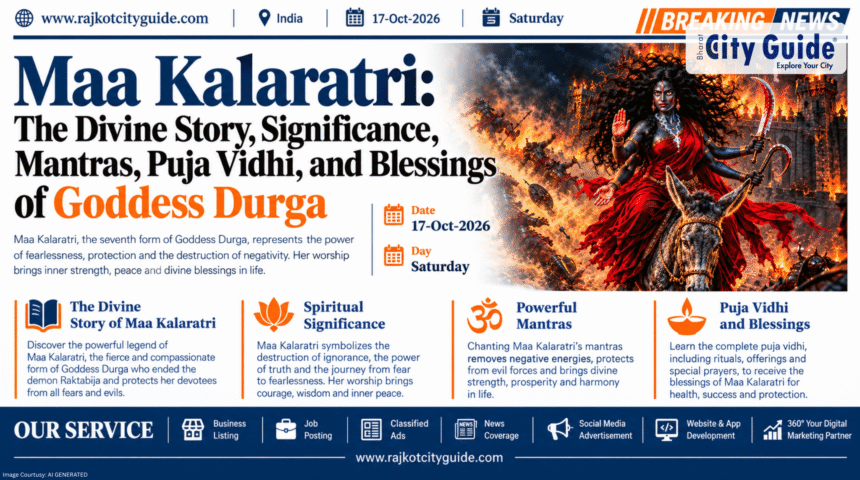
Maa Kalaratri is one of the most powerful and revered manifestations of Goddess Durga in Hinduism. She is the seventh form of Navadurga, the nine divine forms worshipped during the sacred festival of Navratri. Known for her fierce appearance and protective nature, Maa Kalaratri represents the destruction of darkness, ignorance, fear, and negative forces. Although her appearance may seem frightening, devotees believe that her heart is filled with motherly compassion and that she protects those who seek refuge in her. She is also known as Shubhankari, meaning the one who brings auspiciousness and welfare. Her worship holds special significance on the seventh day of Navratri, when devotees offer prayers and seek courage, strength, peace, and spiritual protection. The traditional stories associated with Maa Kalaratri describe the divine power that emerges to defeat demonic forces and restore righteousness. Her symbolism teaches that darkness cannot overcome divine truth forever and that courage is essential when confronting injustice. By understanding the story of Maa Kalaratri, her divine appearance, religious significance, sacred mantras, and worship rituals, devotees can discover the deeper spiritual message behind her fierce yet compassionate form.
- Introduction
- Who Is Maa Kalaratri?
- The Divine Story of Maa Kalaratri
- Maa Kalaratri and the Battle Against Demonic Forces
- The Divine Appearance of Maa Kalaratri
- Why Is Maa Kalaratri Worshipped on the Seventh Day of Navratri?
- The Meaning of Shubhankari: Why Maa Kalaratri Is Auspicious
- Spiritual Significance of Maa Kalaratri
- Maa Kalaratri Puja Vidhi: How to Worship the Goddess
- Powerful Maa Kalaratri Mantra and Its Meaning
- Bhog and Offerings for Maa Kalaratri
- Maa Kalaratri and the Removal of Fear
- Maa Kalaratri and the Deeper Meaning of Darkness
- The Lessons We Can Learn from Maa Kalaratri
- Conclusion
Who Is Maa Kalaratri?
Maa Kalaratri is the seventh manifestation of Goddess Durga among the Navadurga. She is regarded as one of the fiercest forms of the Divine Mother and symbolizes the power that destroys evil and removes fear.
Her name is formed from two Sanskrit words: Kala, which can mean time or darkness, and Ratri, which means night. The name Maa Kalaratri is therefore commonly interpreted as the dark night or the powerful Goddess associated with darkness and dissolution.
In Hindu devotional traditions, darkness is not always a symbol of evil. It can also represent the unknown, the end of an old state of existence, and the transformation that occurs before a new beginning. Maa Kalaratri embodies this formidable divine power.
She is traditionally depicted with a dark complexion, dishevelled hair, three eyes, and four arms. She rides a donkey and carries weapons while displaying gestures of protection and blessing. Her terrifying appearance is directed toward destructive forces, while her devotees regard her as a loving and protective Mother.
Maa Kalaratri is worshipped particularly during Navratri, when devotees pray for courage, spiritual development, and freedom from fear. Her form reminds people that genuine strength is not simply the ability to fight but also the determination to protect righteousness.
The Divine Story of Maa Kalaratri
The traditional story of Maa Kalaratri is connected with the divine struggle between the Goddess and powerful demonic forces that threatened the balance of the universe.
According to one widely followed Navadurga account, Goddess Parvati manifested a fierce and dark form to destroy demons and protect the gods. In this tradition, the Goddess’s transformation into a formidable warrior is associated with the emergence of Maa Kalaratri.
The divine conflict is also connected with the larger stories of Goddess Durga’s battles against Shumbha, Nishumbha, Chanda, Munda, and other demonic forces. These narratives are found in different forms across Hindu devotional literature and traditions.
The Devi Mahatmya, which forms part of the Markandeya Purana, describes the Goddess’s fierce manifestations during her battles against the demons. In one famous episode, a terrifying manifestation of the Goddess appears during the battle against Chanda and Munda. This form is named Chamunda after defeating those two demons.
The Navadurga tradition separately identifies Kalaratri as the seventh form of the Goddess. Although these accounts are closely related through the theme of divine protection, their individual details should not be confused as though they all describe one identical episode.
In devotional retellings, Maa Kalaratri’s fierce manifestation represents the divine response to overwhelming evil. Her appearance frightens demonic forces and demonstrates that the Mother Goddess possesses the power necessary to protect the universe.
The spiritual lesson is that no force of injustice remains beyond the reach of divine righteousness. Maa Kalaratri’s story encourages devotees to face difficult circumstances with courage, patience, and faith.
Maa Kalaratri and the Battle Against Demonic Forces
One of the most important themes associated with Maa Kalaratri is the Goddess’s battle against demonic forces that threaten peace and righteousness.
In the Devi Mahatmya, the Goddess fights against powerful demons who attempt to defeat the divine forces and establish their dominance. These stories describe a cosmic struggle in which divine feminine power ultimately restores balance.
A particularly famous episode concerns Raktabija, a demon whose blood had the extraordinary power to generate another demon whenever a drop fell to the ground. This made him extremely difficult to defeat, because every wound risked creating more enemies.
During the battle, the Goddess manifested a fierce form, commonly identified with Kali in this narrative. She helped prevent Raktabija’s blood from falling to the ground, allowing the Goddess to defeat him.
This episode is often discussed alongside the fierce protective symbolism of Maa Kalaratri. However, it is important to distinguish the specific textual narrative of Kali and Raktabija from the broader Navadurga identification of Kalaratri.
The deeper spiritual message is powerful. Some problems grow when they are addressed without understanding their underlying causes. The Raktabija story can therefore be interpreted as a reminder to confront the source of harmful behaviour rather than merely responding to its repeated consequences.
Maa Kalaratri symbolizes the determination and wisdom required to end destructive cycles and restore peace.
The Divine Appearance of Maa Kalaratri
The appearance of Maa Kalaratri is among the most distinctive forms of the Navadurga. Every element of her traditional iconography carries symbolic meaning.
Dark Complexion
Maa Kalaratri is usually depicted with a dark or black complexion resembling the deepest night. This represents her association with darkness, dissolution, and the destruction of ignorance.
Her dark appearance also conveys that divine power is not limited to beauty or gentleness. The Goddess can assume a terrifying form when necessary to protect the universe.
Three Eyes
Maa Kalaratri is traditionally shown with three eyes. In Hindu iconography, three eyes are associated with divine awareness and the ability to perceive beyond ordinary human limitations.
They may be interpreted as symbols of wisdom, spiritual insight, and awareness of the past, present, and future.
Dishevelled Hair
Her flowing or dishevelled hair emphasizes her fierce, untamed energy. It symbolizes power that cannot be controlled or defeated by demonic forces.
Four Arms
Maa Kalaratri is commonly depicted with four arms. Her left hands carry weapons, traditionally including a sword and an iron implement, while her right hands display gestures of protection and blessing.
The weapons represent the destruction of evil, while the blessing gestures communicate reassurance and divine compassion.
The Donkey as Her Vehicle
Unlike several other forms of Goddess Durga, Maa Kalaratri is traditionally associated with a donkey as her vehicle.
The donkey may be interpreted devotionally as a symbol of endurance, humility, and the ability to carry difficult burdens. Its presence also distinguishes her iconography from that of other warrior forms of the Goddess.
Together, these features communicate a central message: Maa Kalaratri’s appearance may be fearsome, but her divine purpose is protection and the restoration of righteousness.
Why Is Maa Kalaratri Worshipped on the Seventh Day of Navratri?
Navratri is a major Hindu festival dedicated to the worship of the Divine Mother in her nine traditional manifestations. Each day is associated with one form of Navadurga.
Maa Kalaratri is worshipped on the seventh day, known as Saptami in the traditional sequence. Her worship is an important part of the spiritual journey through the nine forms of the Goddess.
The seventh day emphasizes the destruction of fear, ignorance, and harmful influences. Devotees pray to Maa Kalaratri for strength when facing personal difficulties and for the courage to follow the path of truth.
During Navratri, devotees may visit temples, perform puja at home, chant sacred mantras, observe fasting according to their traditions, and participate in devotional gatherings.
Some traditions associate the seventh day with the colour grey, symbolizing strength and the ability to confront difficult circumstances. However, Navratri colour customs can vary by region, calendar, and family tradition.
The central purpose of worship remains devotion to the Goddess and reflection on her divine qualities.
The Meaning of Shubhankari: Why Maa Kalaratri Is Auspicious
Although Maa Kalaratri has a fierce appearance, she is also known as Shubhankari, a name associated with auspiciousness and the granting of welfare.
This name expresses an important principle in Hindu Goddess worship: a divine form that appears terrifying is not necessarily harmful to devotees. Her fierce energy is directed toward destroying destructive forces and protecting those who seek refuge in her.
The contrast between her appearance and her protective role makes Maa Kalaratri especially meaningful.
Her image teaches that difficult experiences do not always signify the absence of goodness. Sometimes, confronting a painful truth or overcoming a challenging situation requires determination and courage.
Maa Kalaratri represents the strength to face such moments without losing faith. Her devotees pray for reassurance, clarity, and the ability to overcome fear.
The name Shubhankari therefore captures the deeper meaning of her worship: the power that destroys harmful influences can also create the conditions for peace, renewal, and spiritual progress.
Spiritual Significance of Maa Kalaratri
Maa Kalaratri holds a special place in Hindu spirituality because she represents the transformation of fear into courage and darkness into awareness.
1. Destruction of ignorance: Her fierce form symbolizes the removal of ignorance and false understanding. Devotees are encouraged to seek knowledge and recognize the difference between truth and deception.
2. Courage during difficult times: Maa Kalaratri represents the determination needed to face uncertainty. Her worship reminds devotees that fear should not prevent them from doing what is right.
3. Protection from negative influences: In devotional belief, the Goddess protects her devotees from harmful forces and provides spiritual reassurance during challenging circumstances.
4. Victory over destructive qualities: Her battles against demons can be interpreted as symbolic reminders to overcome anger, arrogance, jealousy, greed, and cruelty.
5. Spiritual transformation: Darkness can represent the unknown stages of personal growth. Maa Kalaratri encourages devotees to face their inner struggles and develop greater wisdom.
These teachings make her worship relevant beyond religious festivals. Her symbolism can inspire people to become more disciplined, compassionate, and courageous in their daily lives.
Maa Kalaratri Puja Vidhi: How to Worship the Goddess
Maa Kalaratri can be worshipped at home or in a temple. Rituals differ across communities, but devotees commonly follow a simple sequence of prayers and offerings.
Step 1: Clean the Worship Area
Clean the puja space and arrange a picture or idol of Maa Kalaratri on a clean platform. If a Navratri altar has already been established, continue the daily worship according to your family’s tradition.
Step 2: Bathe and Wear Clean Clothes
Devotees traditionally bathe before beginning the puja and wear clean clothes. Sit peacefully before the Goddess and prepare your mind for prayer.
Step 3: Light a Diya
Light an oil or ghee lamp safely and offer incense if it is part of your usual practice. Begin by remembering the Goddess with respect.
Step 4: Offer Flowers and Water
Offer fresh flowers, water, and other customary items. Night-blooming jasmine is associated with Maa Kalaratri in some traditions, while other flowers may be used according to availability and family customs.
Step 5: Offer Bhog
Jaggery, known as gur, is a commonly associated offering to Maa Kalaratri. Fruits and other vegetarian preparations may also be offered.
Step 6: Chant Maa Kalaratri Mantra
Recite the Goddess’s mantra with concentration. Some devotees chant it 11, 21, or 108 times, depending on their personal practice.
Step 7: Read a Sacred Prayer
Devotees may recite the Navadurga prayers, a relevant hymn, or passages from the Durga Saptashati according to their tradition.
Step 8: Perform Aarti
Sing or recite the aarti dedicated to the Goddess. Pray for courage, wisdom, protection, and the strength to act according to dharma.
Step 9: Offer Prasad
Conclude the puja with gratitude and distribute the prasad among family members or devotees, where appropriate.
A simple ritual performed with sincerity is meaningful. Elaborate ceremonies are not necessary for everyone, and devotees should follow the customs familiar to their household.
Powerful Maa Kalaratri Mantra and Its Meaning
Mantra chanting is an important part of Maa Kalaratri worship. Devotees use sacred prayers to express devotion and seek the Goddess’s guidance.
1. Maa Kalaratri Namah Mantra
Mantra:
ॐ देवी कालरात्र्यै नमः॥
Transliteration: Om Devi Kalaratryai Namah.
Meaning: I bow to Goddess Kalaratri, the divine Mother who destroys fear and protects her devotees.
This is a short and widely used mantra for worshipping Maa Kalaratri, especially on the seventh day of Navratri.
2. Maa Kalaratri Beej Mantra
Mantra:
ॐ ऐं ह्रीं क्लीं कालरात्र्यै नमः॥
Transliteration: Om Aim Hreem Kleem Kalaratryai Namah.
This mantra is used in some devotional traditions to invoke the divine energy of Maa Kalaratri. Devotees may chant it during meditation and worship according to their spiritual customs.
3. Maa Kalaratri Dhyana Prayer
A traditional prayer describing her appearance is:
एकवेणी जपाकर्णपूरा नग्ना खरास्थिता।
लम्बोष्ठी कर्णिकाकर्णी तैलाभ्यक्तशरीरिणी॥
वामपादोल्लसल्लोहलताकण्टकभूषणा।
वर्धन्मूर्धध्वजा कृष्णा कालरात्रिर्भयङ्करी॥
Meaning: This prayer describes the dark and fearsome form of Maa Kalaratri, including her distinctive appearance and her association with the donkey.
This traditional description helps devotees meditate on the Goddess’s fierce protective form.
Mantras and prayers may differ in spelling, pronunciation, and wording across devotional traditions. Devotees who wish to follow a specific ritual lineage can consult a trusted priest or traditional prayer text.
Bhog and Offerings for Maa Kalaratri
Offering bhog is a traditional way to express gratitude and devotion to Maa Kalaratri. Certain offerings are particularly associated with her worship during Navratri.
- Jaggery: Gur is a commonly recognized offering associated with Maa Kalaratri.
- Fresh fruits: Seasonal fruits provide a simple and respectful offering.
- Flowers: Devotees offer fresh flowers to honour the Goddess.
- Water: Water is a customary element of Hindu puja.
- A diya: A lamp symbolizes devotion and the spiritual light that guides people through darkness.
- Vegetarian sweets: Homemade sweets and other suitable vegetarian preparations may be offered according to household tradition.
After worship, the offerings can be distributed as prasad.
The purpose of bhog is to express devotion and gratitude rather than to make a transaction with the divine. A sincere prayer offered with a pure heart is central to the devotional experience.
Maa Kalaratri and the Removal of Fear
One of the most important reasons devotees worship Maa Kalaratri is her association with fearlessness.
Her terrifying form symbolizes the ability to confront the most difficult and uncertain aspects of existence. Instead of turning away from darkness, she enters it with extraordinary strength.
In everyday life, fear can prevent people from speaking honestly, making necessary decisions, or standing against injustice. Maa Kalaratri’s symbolism encourages devotees to face such situations with courage and discernment.
Her worship can also provide a moment of reflection and emotional reassurance. Through prayer and meditation, devotees may find renewed determination to deal with challenges and make thoughtful choices.
Religious beliefs concerning divine protection are matters of faith and should not be confused with guarantees of physical safety or medical outcomes. Nevertheless, the spiritual message of Maa Kalaratri can inspire resilience, hope, and positive action.
Maa Kalaratri and the Deeper Meaning of Darkness
Darkness is one of the central symbols associated with Maa Kalaratri. In ordinary language, darkness is often connected with fear, uncertainty, and the unknown. In Hindu spiritual symbolism, however, it can also represent transformation and the dissolution of old limitations.
The Goddess’s dark complexion conveys that divine power can operate beyond familiar ideas of beauty and gentleness. Her fierce appearance reminds devotees that wisdom sometimes requires confronting uncomfortable truths.
The darkness she represents is therefore not simply an absence of light. It is also a space in which fear can be confronted and ignorance can be overcome.
Her worship encourages devotees to examine their own behaviour and recognize negative habits that may be harming themselves or others.
Just as night eventually gives way to dawn, difficult circumstances can create opportunities for renewal. Maa Kalaratri symbolizes the courage required to move through those circumstances without abandoning truth, compassion, or faith.
The Lessons We Can Learn from Maa Kalaratri
The story of Maa Kalaratri provides meaningful lessons that remain relevant in modern life.
Be courageous: Do not allow fear to prevent you from standing up for what is right. Courage involves thoughtful action, not unnecessary aggression.
Overcome negative qualities: Her victory over demons can remind devotees to challenge arrogance, dishonesty, greed, and hatred within themselves.
Protect others: The Goddess’s protective nature encourages people to support those who are vulnerable and oppose injustice.
Remain disciplined: Regular prayer, reflection, and responsible behaviour can help strengthen personal character.
Welcome transformation: Difficult periods may reveal weaknesses and opportunities for growth. Face them with patience and a willingness to learn.
Balance strength with compassion: Maa Kalaratri’s protective role demonstrates that power has a higher purpose when it is used to defend goodness and restore harmony.
These lessons make her a powerful symbol of inner transformation. Her worship can encourage devotees to develop the strength to confront difficulties while remaining committed to truth and kindness.
Conclusion
Maa Kalaratri is one of the most powerful manifestations of Goddess Durga and the seventh form of Navadurga worshipped during Navratri. Her dark complexion, three eyes, four arms, weapons, and donkey vehicle symbolize her extraordinary strength and her role in destroying harmful forces. Although her appearance is fierce, she is also known as Shubhankari, the auspicious Mother who offers protection and reassurance to her devotees. The stories associated with Maa Kalaratri, including the wider traditions of the Goddess’s battles against demonic forces, emphasize the victory of righteousness over evil and the importance of confronting ignorance and fear. Her worship on the seventh day of Navratri provides devotees with an opportunity to offer prayers, chant sacred mantras, perform puja, and reflect on the deeper meaning of divine protection. Through traditional offerings such as jaggery, flowers, and fruits, devotees express their gratitude and devotion. Beyond religious rituals, Maa Kalaratri teaches that courage, wisdom, discipline, and compassion are essential for overcoming life’s challenges. Her timeless message inspires people to face uncertainty without surrendering to fear, stand firmly for what is right, and use their strength to protect others. By remembering Maa Kalaratri with sincerity and applying her spiritual lessons in daily life, devotees can cultivate greater confidence, inner peace, and commitment to the path of truth.