Introduction
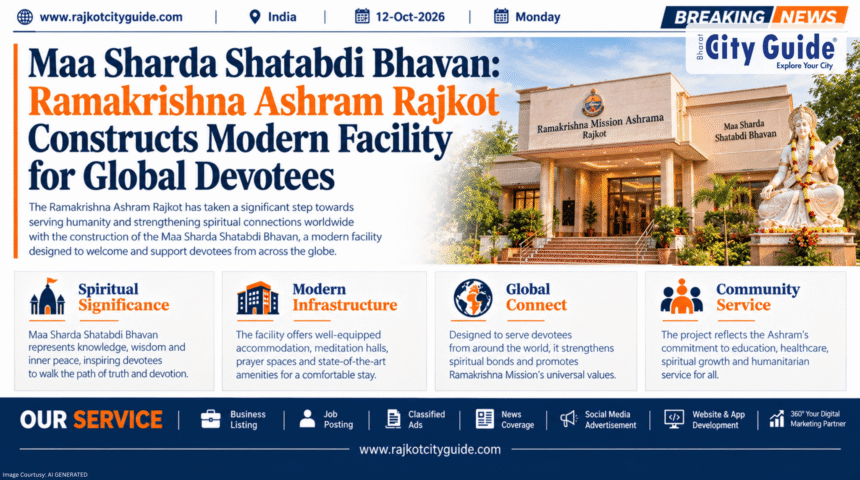
In a historic announcement that has brought immense joy to the spiritual community across Gujarat and around the globe, Shri Ramakrishna Ashrama, Rajkot, has initiated the construction of the Maa Sharda Shatabdi Bhavan. This state-of-the-art residential complex is being established as a permanent memorial facility to mark the upcoming Centenary Celebrations (Shatabdi Mahotsav) of the Rajkot Ashrama, which completes 100 years of dedicated humanitarian and spiritual service in 2027.
- Introduction
- What is Maa Sharda Shatabdi Bhavan?
- Why This News is Important
- Background Information
- Key Highlights
- Detailed Explanation of the Event
- Benefits and Importance of the Project
- How It Impacts People
- Expert Insights and Monastic Perspective
- Challenges and Construction Execution
- Frequently Asked Questions (FAQs)
- Conclusion
Situated on Dr. Yagnik Road in the heart of Rajkot, the Ramakrishna Ashrama serves as a premier spiritual sanctuary in Saurashtra. As the center prepares to host large-scale spiritual retreats, youth conventions, and grand centenary discourses, thousands of monks, scholars, and spiritual seekers from India and abroad are expected to visit the holy premises. The new building initiative addresses the long-standing need for expanded lodging, ensuring that visiting devotees experience comfortable, peaceful, and dignified hospitality.
Named in honor of Holy Mother Sri Sarada Devi—the spiritual consort of Sri Ramakrishna Paramahamsa and a beacon of universal motherhood—the project symbolizes selfless service, spiritual sanctuary, and community welfare. By providing dedicated accommodation, dining facilities, and meditation spaces, the facility will serve as a lasting legacy, furthering Swami Vivekananda’s message of “Atmano Mokshartham Jagat Hitaya Cha” (For one’s own salvation and for the welfare of the world) for generations to come.
What is Maa Sharda Shatabdi Bhavan?
The Maa Sharda Shatabdi Bhavan is a multi-storeyed, eco-friendly residential and spiritual facility being built within the expanded premises of Shri Ramakrishna Ashrama, Rajkot. Designed to function as a modern guest house and spiritual retreat center, the complex is specifically engineered to host visiting monastic members of the Ramakrishna Order, international delegates, research scholars, and spiritual seekers.
The architecture of the building draws inspiration from traditional Ramakrishna Movement aesthetics while incorporating modern green building practices. It will feature well-appointed residential rooms, dormitories for large pilgrim groups, a dedicated prayer and meditation hall, a hygienic dining complex (Annak क्षेत्र / Dining Hall), and administrative consultation desks.
Beyond simple lodging, the facility is conceptualized as an active center for spiritual learning and character-building. It will host periodic residential retreats, moral value workshops for students, study circles on Vedanta philosophy, and international cultural exchange programs, making it a vibrant center for holistic spiritual development in Gujarat.
Why This News is Important
The construction of this facility is significant for spiritual, social, and cultural reasons. First, it marks a major milestone in the historic timeline of the Ramakrishna Math and Mission in Western India. Established in March 1927, the Rajkot Ashrama was the pioneer center of the order in Gujarat. Building this complex to mark its centenary honors a century of unbroken service in healthcare, education, relief work, and spiritual enlightenment.
Second, the initiative greatly enhances Rajkot’s standing as a spiritual and cultural destination on the global map. As foreign delegates and national leaders gather for the Centenary Celebrations, having a dedicated, well-equipped complex ensures smooth hospitality and logistical management, reflecting the traditional Indian ethos of “Atithi Devo Bhava” (The guest is divine).
Finally, the project strengthens the Ashrama’s capacity to expand its social welfare endeavors. The expanded infrastructure will support year-round activities, including free medical camps, youth development conventions, educational seminars, and rural outreach programs that benefit thousands of underprivileged families across Saurashtra.
Background Information
The historical roots of the Ramakrishna Movement in Gujarat trace back to Swami Vivekananda’s historic wandering days (Bharat Parikrama) in 1891 and 1892. Swamiji spent considerable time in Saurashtra—visiting Limbdi, Junagadh, Porbandar, Bhuj, and Rajkot—where he engaged deeply with regional rulers, scholars, and citizens. Inspired by his vision, several direct disciples of Sri Ramakrishna Paramahamsa, including Swami Saradananda and Swami Turiyananda, subsequently visited the region to lay the groundwork for a permanent center.
On March 5, 1927, Shri Ramakrishna Ashrama was formally established in Rajkot, initially operating from modest rented premises before moving to its current location on Dr. Yagnik Road in the 1930s, supported by the Thakore Saheb of Rajkot, Sri Dharmendrasinhji. Over the past century, the Ashrama has grown into a major spiritual and philanthropic landmark.
+-----------------------------------------------------------------------+
|             RAMAKRISHNA ASHRAMA RAJKOT CENTENARY OVERVIEW             |
+--------------------------+--------------------------------------------+
| Landmark Milestone       | Centenary Year (100 Years: 1927 – 2027)    |
| Core Facility Launch     | Maa Sharda Shatabdi Bhavan                 |
| Location                 | Dr. Yagnik Road Campus, Rajkot, Gujarat    |
| Primary Purpose          | Lodging for Monks, Devotees & Delegates    |
| Spiritual Inspiration    | Holy Mother Sri Sarada Devi                |
| Key Ashrama Activities   | Medical Centre, Publication, Youth Camps   |
+--------------------------+--------------------------------------------+
As the center approached its centenary, the management recognized that existing guest rooms were insufficient to handle the increasing surge of pilgrims and international visitors. Consequently, the monastic authorities envisioned a permanent centenary building project, launching the construction of the new complex as a focal point of the 100-year celebrations.
Key Highlights
- Centenary Memorial Project: Built to commemorate the 100th anniversary (1927–2027) of Shri Ramakrishna Ashrama, Rajkot.
- Dedicated to Holy Mother: Named Maa Sharda Shatabdi Bhavan in honor of Holy Mother Sri Sarada Devi.
- Global Pilgrim Accommodation: Designed to accommodate visiting monks of the Ramakrishna Order, national delegates, and international devotees.
- Comprehensive Amenities: Features residential rooms, group dormitories, a meditation hall, a hygienic dining complex, and conference facilities.
- Hub for Spiritual Retreats: Will host residential retreats, youth character-building camps, and seminars on Vedanta and Sri Ramakrishna’s teachings.
- Philanthropic Integration: Supports the Ashrama’s expanding charitable services, including its free eye care center, cerebral palsy clinic, and mobile medical units.
Detailed Explanation of the Event
The announcement and preliminary foundation work for the new complex took place amidst serene chanting and devotional ceremonies at the Ashrama campus. Senior monks of the Ramakrishna Order, joined by prominent citizens, patrons, and devotees, gathered to seek divine blessings for the smooth execution of the project.
The architectural layout of the complex has been meticulously planned to blend aesthetic elegance with spiritual functionality. Spread over multiple levels, the building incorporates energy-efficient lighting, rainwater harvesting systems, and accessible ramps and elevators for elderly and disabled pilgrims.
+-----------------------------------------------------------------------+
|                   FACILITY ARCHITECTURE & SERVICES                    |
+--------------------------+--------------------------------------------+
| Facility Zone            | Operational Purpose & Features             |
+--------------------------+--------------------------------------------+
| Monastic & Guest Wings   | Quiet, well-ventilated rooms & suites      |
| Devotee Dormitories      | Spacious group lodging for pilgrim parties |
| Meditation & Prayer Hall | Tranquil space for silent contemplation   |
| Annakshatra (Dining)     | Hygienic, wholesome vegetarian meals       |
| Convention Seminar Rooms | Audio-visual facilities for youth workshops|
+--------------------------+--------------------------------------------+
During the Centenary Celebrations, the building will serve as the operational command center and primary residential base for visiting dignitaries, spiritual leaders, and international delegation groups. Following the centenary events, the complex will permanently function as a spiritual retreat house, allowing seekers from around the world to stay in the peaceful environment of the Ashrama and participate in daily spiritual discourses and service activities.
Benefits and Importance of the Project
The establishment of the new residential complex offers immense long-term benefits across multiple dimensions:
1. Elevating Pilgrim Experience and Hospitality
Visiting devotees and spiritual seekers often struggle to find peaceful, affordable accommodation near major spiritual centers. The new complex provides a clean, serene, and spiritually charged environment right on the Ashrama premises.
2. Strengthening Monastic and Lay Devotee Exchange
Providing dedicated quarters for visiting monks from Belur Math and global branch centers facilitates deeper spiritual interactions, discourses, and guidance for local Gujarati families and youth.
3. Expansion of Educational and Youth Programs
With additional seminar halls and residential capacity, the Ashrama can host multi-day residential youth camps, teaching leadership, stress management, moral values, and Swami Vivekananda’s message of self-reliance to thousands of students.
4. Boosting Regional Cultural Tourism
Upgrading spiritual infrastructure in Rajkot enhances Gujarat’s broader cultural tourism circuit, allowing pilgrims visiting Somnath, Dwarka, and Gir to spend meaningful time in Rajkot for spiritual rejuvenation.
How It Impacts People
This landmark infrastructure project creates a positive impact across diverse groups in society:
- For Devotees and Pilgrims: Grants access to safe, dignified, and peaceful accommodation during religious festivals, spiritual retreats, and personal visits to Rajkot.
- For Local Citizens: Enhances the cultural and spiritual heritage of Rajkot, providing a serene urban sanctuary for daily meditation, prayer, and community service.
- For Youth and Students: Opens opportunities to participate in multi-day personality development camps, value education workshops, and voluntary service activities.
- For the Local Economy: Draws spiritual tourists and international visitors to Rajkot, generating positive economic spillovers for local transport, handicraft, and retail sectors.
Expert Insights and Monastic Perspective
Monks and scholars of the Ramakrishna Order emphasize that physical infrastructure in a spiritual ashram serves as an instrument for inner transformation and selfless service. According to senior monastics, Holy Mother Sri Sarada Devi exemplified universal love, hospitality, and unconditioned grace; naming the centenary facility after her serves as a constant reminder to treat every visiting pilgrim with divine respect.
Architectural and urban planning experts praise the sustainable design approach adopted for the complex. Incorporating natural ventilation, solar energy, and green spaces within an urban ashram setting creates a tranquil oasis amid the bustle of central Rajkot’s Dr. Yagnik Road.
Furthermore, social observers highlight the enduring relevance of Swami Vivekananda’s ideals in modern society. Establishing infrastructure that nurtures spiritual wisdom alongside humanitarian relief ensures that Rajkot continues to serve as a beacon of peace, harmony, and social service.
Challenges and Construction Execution
Executing a major institutional construction project within an active urban ashram campus requires careful management:
- Managing Urban Space Constraints: Constructing a multi-storeyed facility in the central Dr. Yagnik Road commercial area demands efficient spatial planning and noise control to preserve the peaceful ashram atmosphere.
- Funding and Philanthropic Support: As a non-profit spiritual organization, the Ramakrishna Ashrama relies on voluntary contributions from generous devotees, corporate CSR initiatives, and public donations to fund construction costs.
- Ensuring Timely Completion for 2027: Synchronizing construction timelines to ensure the building is fully functional ahead of the centenary celebration events requires meticulous project management.
- Maintaining Sustainable Operations: Implementing solar power, water recycling, and efficient waste management systems to ensure long-term operational sustainability.
Frequently Asked Questions (FAQs)
What is Maa Sharda Shatabdi Bhavan?
It is a modern multi-storeyed residential and spiritual facility being built at Shri Ramakrishna Ashrama, Rajkot, to commemorate its centenary (100 years) of service and accommodate visiting monks and devotees.
Why is the building named after Maa Sharda?
The complex is named in honor of Holy Mother Sri Sarada Devi, the spiritual consort of Sri Ramakrishna Paramahamsa, symbolizing universal motherhood, compassion, and hospitality.
When was Shri Ramakrishna Ashrama, Rajkot established?
The Ashrama was formally established on March 5, 1927, making it the pioneer center of the Ramakrishna Math and Mission in the state of Gujarat.
Where in Rajkot is the facility located?
It is being constructed within the expanded campus of Shri Ramakrishna Ashrama, located on Dr. Yagnik Road in Rajkot, Gujarat.
Who can stay at the Maa Sharda Shatabdi Bhavan?
The facility is designed to accommodate visiting monks of the Ramakrishna Order, spiritual retreat participants, research scholars, international delegates, and registered devotees.
What amenities will the new complex offer?
It will offer well-furnished rooms, dormitories, a dedicated prayer and meditation hall, a hygienic dining facility (Annakshatra), and seminar rooms for youth programs.
How can citizens contribute to this centenary project?
Citizens and devotees can contribute through voluntary donations directly to Shri Ramakrishna Ashrama, Rajkot, supporting construction and permanent endowment funds.
Conclusion
The construction of the Maa Sharda Shatabdi Bhavan at Shri Ramakrishna Ashrama, Rajkot, stands out as a monumental tribute to a century of selfless service, spiritual enlightenment, and humanitarian care in Gujarat. By establishing this modern residential sanctuary, the Ashrama ensures that visiting monks, pilgrims, and spiritual seekers receive warm, dignified hospitality for decades to come.
As the Ashrama approaches its historic 100-year milestone in 2027, this initiative reflects the enduring power of Sri Ramakrishna, Holy Mother Sri Sarada Devi, and Swami Vivekananda’s timeless teachings. It bridges historic heritage with modern infrastructure, creating an uplifting environment for personal reflection and social service.
The successful completion of this facility will enrich the spiritual landscape of Rajkot and Saurashtra. It reinforces the city’s role as a vibrant center for peace, universal brotherhood, and community welfare, inviting people from all walks of life to experience peace and spiritual joy.