Introduction
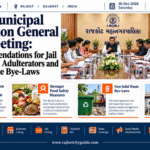
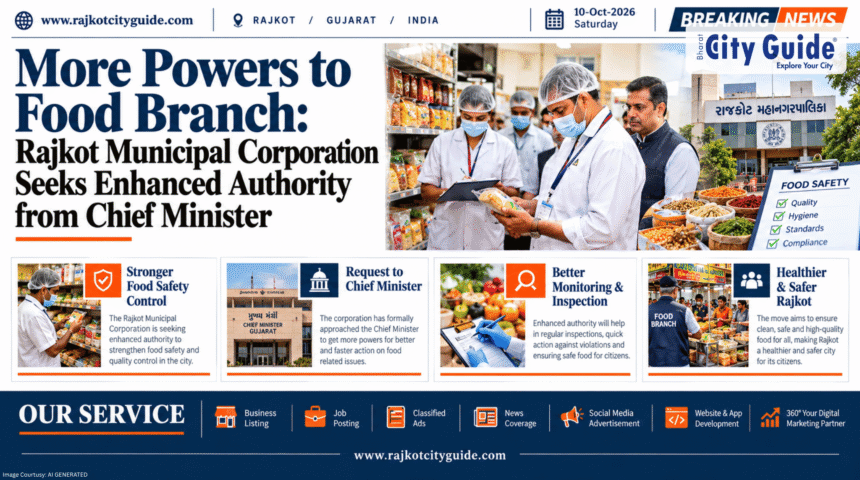
In a significant administrative push aimed at safeguarding public health and curbing widespread food adulteration, the Rajkot Municipal Corporation (RMC) has formally requested the state government to grant More Powers to Food Branch officers. During a high-level delegation meeting with Chief Minister Bhupendra Patel, the Mayor of Rajkot outlined critical operational challenges faced by municipal food safety teams during field raids. The municipal leadership highlighted that existing statutory frameworks under state regulations often limit local officers to sample collection, forcing administrative delays while unsafe food remains on the market.
- Introduction
- What is More Powers to Food Branch?
- Why This News is Important
- Background Information
- Key Highlights
- Benefits and Importance of Granting More Powers
- How It Impacts People
- Detailed Explanation of the Event
- Expert Insights and Public Health Perspective
- Challenges and Key Considerations
- Frequently Asked Questions (FAQs)
- Conclusion
This formal representation comes at a crucial junction as Rajkot undergoes rapid urban expansion and commercial food production scales up significantly. The municipal corporation’s food safety wing regularly inspects dairy vendors, edible oil processors, sweets manufacturers, street food hubs, and restaurant kitchens. However, without immediate spot-sealing authority, penalty-levying powers, and summary suspension rights, municipal inspectors frequently struggle to shut down repeat offenders swiftly.
By seeking an expanded legislative and executive mandate from the Gujarat Chief Minister, the Rajkot Municipal Corporation aims to establish a far more deterrent regulatory framework. Granting enhanced administrative authority to local municipal health units will allow quick, on-the-spot enforcement, ensuring that adulterated, unhygienic, or substandard food products are confiscated and destroyed before they reach consumer plates.
What is More Powers to Food Branch?
The initiative seeking More Powers to Food Branch refers to a structural policy proposal submitted by the Rajkot Municipal Corporation to the State Government of Gujarat, advocating for decentralized, high-efficiency enforcement authority for municipal Food Safety Officers (FSOs) and Designated Officers (DOs). Under the current statutory setup, municipal food departments operate primarily under the Food Safety and Standards Act, 2006 (FSSAI), which prescribes elaborate, multi-stage legal procedures for testing, reporting, and judicial adjudication.
While the existing central framework ensures legal due process, municipal officials argue that routine daily enforcement requires agile, localized powers. The proposed expansion of authority includes empowering local food inspectors to issue immediate spot fines, seize contaminated stock instantly without lengthy preliminary notices, order temporary closure of unhygienic food establishments, and initiate swift criminal proceedings against habitual adulterators.
Additionally, the municipal body is requesting administrative autonomy to expand its local laboratory testing infrastructure, deploy mobile testing vans autonomously, and impose heavy administrative penalties directly at the municipal level, rather than waiting months for judicial tribunal hearings.
Why This News is Important
The decision of the Rajkot Mayor to meet Chief Minister Bhupendra Patel regarding enhanced food safety enforcement holds immense public health and civic importance. Food adulteration—involving harmful chemicals in milk, synthetic dyes in spices, rancid oil reuse in commercial eateries, and adulterated ghee—poses severe long-term health risks, including gastrointestinal disorders, organ damage, and chronic illnesses among citizens.
Second, the festive season in Gujarat—featuring Navratri, Diwali, and New Year celebrations—witnesses a massive spike in sweet and savory food consumption across urban markets. Empowering local food safety teams ahead of peak demand ensures that festive sweet manufacturers and dairy distributors adhere strictly to quality standards, protecting consumer health during major public gatherings.
Finally, this administrative push sets a crucial policy precedent for municipal corporations across Gujarat, including Ahmedabad, Surat, Vadodara, and Bhavnagar. If the state government approves enhanced administrative powers for RMC’s food wing, it will open the door for a modernized, uniform municipal food safety model throughout the state.
Background Information
In recent years, the Rajkot Municipal Corporation (RMC) has intensified its surveillance against food adulteration by conducting specialized mega-drives. Operating across commercial zones like Yagnik Road, Kalawad Road, Dharmendra Road, and industrial outskirts like Metoda and Shapar, municipal teams frequently collect samples of milk, paneer, edible oil, spices, and festival sweets.
However, field officers have continuously encountered legislative bottlenecks. Under the standard FSSAI protocol, when a sample is seized, it must be dispatched to a certified state laboratory, where testing can take weeks. By the time laboratory reports confirm adulteration or sub-standard quality, the suspect batch of food has often already been sold and consumed by the public.
+-----------------------------------------------------------------------+
|                 CURRENT VS PROPOSED FOOD BRANCH POWERS                |
+--------------------------+--------------------------------------------+
| Enforcement Aspect       | Current Framework vs Proposed Powers       |
+--------------------------+--------------------------------------------+
| Action on Unhygienic Units| Warning notices & laboratory delays        | Instant spot closure & unit sealing |
| On-Site Financial Penalty| Limited fixed administrative fines         | High-value instant spot penalties    |
| Product Seizure          | Lengthy procedural seizure protocols       | Immediate confiscation & disposal   |
| Testing Infrastructure   | Dependent on regional state laboratories   | In-house advanced RMC lab authority  |
| Prosecution Speed        | Multi-month tribunal proceedings           | Summary administrative action       |
+--------------------------+--------------------------------------------+
To bridge this operational gap, Mayor Nehal Shukla and senior municipal leaders prepared a comprehensive representation. By presenting these field realities directly to the Chief Minister, the municipal administration seeks state-level legislative amendments or executive orders granting municipal food wings the legal teeth required for real-time enforcement.
Key Highlights
- Mayor Meets Chief Minister: Rajkot Mayor leads an official municipal delegation to discuss food safety challenges with CM Bhupendra Patel.
- Demand for Instant Sealing Powers: Proposal requests legal authority for municipal officers to seal unhygienic or adulterated food processing units on the spot.
- On-the-Spot Penalty Framework: Seeking rights to impose heavy financial spot fines against commercial vendors violating basic hygiene and storage rules.
- Focus on Festival Quality Control: Special emphasis on curbing synthetic milk, adulterated ghee, and chemical-dyed sweets during festive seasons.
- Upgrading Municipal Lab Capabilities: Proposal includes expanding local testing labs for faster sample turn-around times.
- Targeting Habitual Offender Networks: Requesting legal provisions to register police cases (FIRs) directly against repeat food adulterators.
Benefits and Importance of Granting More Powers
Strengthening the operational capacity of municipal food safety branches offers widespread benefits for citizens, consumer trust, and public health infrastructure:
1. Rapid Elimination of Health Hazards
Granting instant spot-sealing and seizure powers ensures that contaminated or toxic food batches are taken off market shelves immediately, preventing widespread food poisoning outbreaks and chronic chemical exposure.
2. Strong Deterrence Against Commercial Adulterators
When unethical food processors face the immediate threat of spot fines, business closure, and public exposure, the financial cost of adulteration far outweighs potential illicit profits, creating a strong market deterrent.
3. Elevated Consumer Confidence and Market Trust
A transparent, highly active food safety department builds public trust in local food markets, benefiting honest restaurant owners, dairy farmers, and sweet vendors who maintain high quality standards.
4. Reduced Burden on Public Healthcare Systems
Preventing food-borne illnesses, chemical toxicity, and vector contamination at the supply source reduces emergency admissions across civil and private hospitals in urban centers.
How It Impacts People
The outcome of this state-level policy representation directly affects various segments of society:
- For General Consumers and Families: Guarantees higher food purity, better kitchen hygiene standards at restaurants, and safer dairy and sweet products during festival shopping.
- For Commercial Food Vendors and Restaurants: Encourages strict compliance with sanitary guidelines, proper oil disposal, and authentic raw material sourcing to avoid severe spot penalties.
- For Municipal Food Safety Inspectors: Equips field officers with the legal backing, administrative authority, and confidence required to confront powerful commercial adulteration networks effectively.
- For the Local Healthcare Sector: Decreases seasonal spikes in gastroenteritis, food poisoning, and water-borne infections across municipal wards.
Detailed Explanation of the Event
During the high-level meeting at the State Secretariat, the Rajkot municipal delegation presented a detailed briefing on urban food safety operations. The Mayor explained that while municipal teams work diligently on the ground, current legal constraints prevent them from taking immediate decisive action against blatant health code violators.
For instance, when food inspectors discover unhygienic kitchens, insect-infested storage areas, or re-used cooking oil at commercial establishments, their current legal powers restrict them to issuing warning notices or taking samples for lab testing. The delegation argued that such situations require immediate administrative intervention, including instant closure of the premises until full compliance is demonstrated.
+-----------------------------------------------------------------------+
|                    PROPOSED ENFORCEMENT WORKFLOW                      |
+--------------------------+--------------------------------------------+
| Enforcement Stage        | Operational Step                           |
+--------------------------+--------------------------------------------+
| Stage 1: Field Inspection| Surprise audit by 8 dedicated RMC teams    |
| Stage 2: Rapid Testing   | On-site analysis via Mobile Testing Vans   |
| Stage 3: Immediate Action| Instant spot fine & confiscation of stock  |
| Stage 4: Severe Violations| On-the-spot sealing of unit & FIR filing   |
+--------------------------+--------------------------------------------+
The Chief Minister listened attentively to the administrative presentation and acknowledged the importance of urban food safety enforcement. The discussion touched upon necessary statutory adjustments under municipal corporation acts, potential coordination with the state Food and Drugs Control Administration (FDCA), and providing advanced technical equipment to municipal health departments.
Expert Insights and Public Health Perspective
Public health specialists and legal experts strongly support decentralizing enforcement powers to urban local bodies. According to public health analysts, municipal corporations are the first responders in urban governance; therefore, their field departments must possess adequate statutory authority to manage daily health hazards without administrative friction.
Food technology experts emphasize that modern food adulteration methods have become sophisticated, involving synthetic emulsifiers, chemical dyes, and industrial grade additives. Combatting these advanced adulterants requires municipal food safety units to deploy rapid testing equipment alongside swift legal powers to confiscate suspicious stock immediately.
Furthermore, legal observers note that while granting broader powers to municipal officers is vital, the state government must build robust oversight mechanisms. Transparent digital reporting, body-worn cameras during raids, and clear appeal frameworks ensure that enhanced enforcement powers are exercised fairly without harassing legitimate small vendors.
Challenges and Key Considerations
Implementing enhanced powers for municipal food branches requires addressing several administrative and operational factors:
- Preventing Misuse and Harassment: Establishing clear checks and balances to ensure that field inspectors exercise spot-finings and unit-sealings transparently without harassing small street hawkers.
- Standardizing Laboratory Infrastructure: Upgrading municipal laboratories to match international accreditation standards so that fast-track lab reports hold up solidly in court challenges.
- Staffing and Technical Skill Gaps: Recruiting qualified food safety officers, chemists, and lab technicians to manage higher case volumes and technical inspections across expanding city zones.
- Inter-Departmental Coordination: Ensuring seamless operational synergy between municipal food wings, state FDCA authorities, and local police departments during high-risk raiding operations.
Frequently Asked Questions (FAQs)
What is the main demand submitted by the Rajkot Mayor to the Chief Minister?
The Mayor requested the state government to grant more powers to the RMC Food Branch, including authority for instant spot-sealing of unhygienic units, higher spot fines, and swift prosecution against food adulterators.
Why is the Rajkot Municipal Corporation seeking these extra powers?
Currently, food inspectors face procedural delays due to lengthy lab testing and notification requirements under existing laws, allowing suspect food items to remain on the market before legal action can be completed.
Which food items are most frequently targeted during adulteration drives?
Key target items include milk, paneer, ghee, edible cooking oil, spices, tea leaves, and festival sweets (Mawa/Mithai).
How will consumers benefit if the state grants these powers?
Consumers will enjoy safer, higher-quality food, reduced risk of food-borne illnesses, and faster removal of contaminated or adulterated products from local markets.
What powers does the RMC Food Branch currently possess?
Currently, officers can inspect premises, collect samples for state lab testing, issue basic hygiene improvement notices, and file cases in specialized tribunals or courts.
Will small street food vendors be affected by these rules?
The proposed rules aim to enforce basic hygiene, clean water usage, and safe ingredients across all food business operators, with strict penalties targeted primarily at habitual and large-scale adulterators.
How can citizens lodge food quality complaints with the municipal corporation?
Citizens can report unhygienic food vendors or suspected adulteration through the RMC civic mobile app, public helpline numbers, or direct written submissions to the municipal Health Department.
Conclusion
The high-level meeting between the Mayor of Rajkot and Chief Minister Bhupendra Patel marks a decisive step toward reforming urban food safety governance in Gujarat. By advocating for More Powers to Food Branch officers, the Rajkot Municipal Corporation is demonstrating a proactive commitment to protecting public health and eliminating unethical food adulteration.
Granting municipal food wings the legal authority for immediate spot closures, heavy financial penalties, and rapid product seizures will transform local enforcement from a reactive administrative process into an active, highly effective health safeguard.
As the state government considers these critical policy recommendations, citizens across Rajkot can look forward to a safer, more transparent food ecosystem. Equipping local municipal bodies with the legal tools necessary to enforce food safety will ensure that every household enjoys pure, unadulterated, and hygienic food year-round.