Introduction
Antimicrobial Resistance (AMR) has emerged as one of the most critical threats to global public health in the twenty-first century. Commonly described as a “silent pandemic,” AMR occurs when bacteria, viruses, fungi, and parasites evolve over time and no longer respond to standard medicines, making common infections difficult or impossible to treat. To address this growing challenge at the grassroots level, healthcare professionals and pharmacy advocates in Saurashtra organized a major public outreach event in Rajkot.
- Introduction
- What is Rajkot AMR Awareness Drive?
- Why This News is Important
- Background Information
- Key Highlights
- Detailed Explanation of the Event
- Benefits and Importance of the AMR Campaign
- How It Impacts Different Audiences
- Expert Insights and Technical Perspective
- Challenges and Limitations
- Future Outlook
- Frequently Asked Questions (FAQs)
- Conclusion
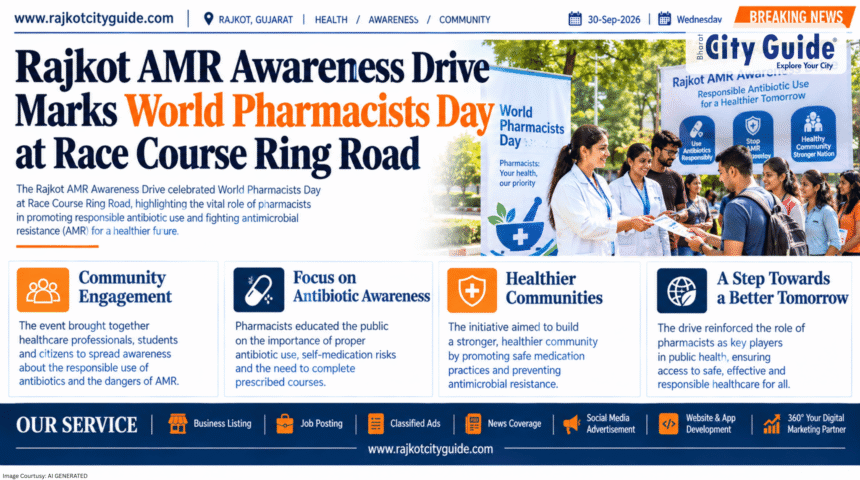
On the occasion of World Pharmacists Day, local pharmacy associations, medical institutions, and public health advocates united for the Rajkot AMR Awareness Drive held at the iconic Race Course Ring Road. The initiative brought together registered pharmacists, medical students, clinical researchers, and local citizens to spread crucial awareness about the dangers of irrational antibiotic consumption, self-medication, and over-the-counter sales without valid prescriptions.
This campaign is vital for Gujarat’s healthcare ecosystem. Urban centers like Rajkot serve as key medical hubs for the entire Saurashtra region. As patient traffic increases across civic and private hospitals, spreading public awareness regarding antibiotic stewardship is essential to prevent untreatable drug-resistant superbugs from entering local communities.
What is Rajkot AMR Awareness Drive?
The Rajkot AMR Awareness Drive is an organized public health initiative designed to educate citizens, healthcare workers, and retail drug suppliers about Antimicrobial Resistance and responsible medication practices. Conducted annually on World Pharmacists Day (September 25), this campaign utilizes public spaces—such as the prominent Race Course Ring Road in Rajkot—to maximum visibility.
+--------------------------------------------------------------------------+
|            RAJKOT AMR AWARENESS DRIVE - OPERATIONAL MATRIX               |
+--------------------------------------------------------------------------+
                                     |
    +--------------------------------+--------------------------------+
    |                                |                                |
    v                                v                                v
[ PUBLIC ADVOCACY RALLY ]      [ CLINICAL & RETAIL STRICTURES ] [ COMMUNITY EDUCATION ]
- Race Course Ring Road March  - Zero OTC Sales Without Script  - Full Antibiotic Course Rule
- Banner & Pamphlet Display    - Pharmacist Pledge Execution    - Prohibition of Self-Medication
- Citizen Engagement Drives    - Red Line Campaign Compliance   - Disposal Safety Guidelines
The drive involves structured awareness rallies, public pledges by pharmacy professionals, informational pamphlet distribution, and interactive educational sessions. It highlights the role of retail pharmacists as front-line defenders who must verify doctor prescriptions, counsel patients on completing full medication courses, and discourage the unsafe purchase of antibiotics for common viral infections like cold and flu.
Why This News is Important
The rally and public education drive at Race Course carry significant weight for multiple reasons:
- Combating Drug Resistance: India faces high rates of antibiotic consumption, making community-level awareness essential to preserve the efficacy of life-saving medicines.
- Empowering Pharmacists as Educators: The campaign positions community pharmacists as trusted health advisors rather than mere medicine dispensers.
- High Visibility Location: Hosting the rally along Rajkot’s Race Course Ring Road ensured maximum engagement with morning walkers, commuters, families, and local youth.
- Alignment with National Goals: The initiative aligns directly with the Pharmacy Council of India’s (PCI) national mission of “Swasth Bharat: Combating Antimicrobial Resistance”.
Background Information
World Pharmacists Day was established by the International Pharmaceutical Federation (FIP) to recognize the vital contributions of pharmacy professionals to global health improvement. Each year on September 25, healthcare communities across the globe rally behind specific public health priorities.
[ Unregulated Antibiotic Use / Self-Medication ] ----> [ Evolution of Superbugs & Drug Resistance ]
                                                                 |
                                                                 v
[ World Pharmacists Day Mobilization ] --------------> [ Rajkot AMR Awareness Drive at Race Course ]
                                                                 |
                                                                 v
[ Public Education & Policy Compliance ] -----------> [ Preserved Antibiotic Efficacy & Safer Care ]
In India, the misuse of Schedule H and Schedule H1 drugs remains a continuous public health challenge. Patients frequently demand quick-fix antibiotics for simple viral fevers, while some retail chemists supply medications without valid prescriptions. Over time, this widespread misuse allows bacteria to adapt, rendering standard treatments like penicillin, fluoroquinolones, and cephalosporins ineffective against routine infections. The event at Race Course was specifically organized to break this dangerous cycle.
Key Highlights
- Race Course Public Rally: A large-scale awareness march featuring pharmacy students and professional chemists around the Race Course Ring Road in Rajkot.
- AMR Education Focus: Direct public messaging on the dangers of stopping antibiotic courses early or taking leftover medications.
- Pharmacist Professional Pledge: Participating pharmacists took a formal pledge to strictly adhere to prescription norms and resist over-the-counter antibiotic sales.
- Distribution of Information Leaflets: Informational literature covering the “Red Line” campaign and antibiotic safety rules was handed directly to city residents.
- Multi-Stakeholder Participation: Pharmacy college faculty members, student volunteers, retail chemist association leaders, and civic health advocates joined forces for the event.
Detailed Explanation of the Event
1. The Race Course Ring Road Rally
The event began early in the morning at the iconic Race Course Ring Road, a central recreational and civic landmark in Rajkot. Hundreds of pharmacy students, faculty members, and registered pharmacists gathered wearing white coats and holding informative placards, slogans, and banners.
The marchers completed a procession around the perimeter of Race Course, chanting slogans that urged citizens to “Say NO to Self-Medication” and “Save Antibiotics for Future Generations”. The choice of venue allowed the campaign to reach thousands of morning visitors, fitness enthusiasts, and daily commuters.
+--------------------------------------------------------------------------+
|                  ANTIMICROBIAL STRENGTH & MISUSE COMPARISON             |
+--------------------------------------------------------------------------+
| Parameter           | Responsible Usage Practice | Unsafe Misuse Practice|
+---------------------+----------------------------+-----------------------+
| Prescription Requirement | Valid Qualified Doctor Script | OTC Purchase / Self-Doctoring |
| Dosage Duration     | Completed Full Prescribed Course | Stopped When Symptoms Ease |
| Target Illness      | Bacterial Infections Only  | Viral Colds, Flu, Coughs |
| Leftover Disposal   | Safe Waste Management      | Shared with Friends/Family |
+---------------------+----------------------------+-----------------------+
2. Public Counseling & Interactive Sessions
Along the rally route, volunteer teams established informational booths to interact directly with citizens. Demonstrations explained the fundamental difference between bacterial infections (which respond to antibiotics) and viral infections (which do not).
Pharmacists cautioned the public against demanding antibiotics from doctors or purchasing them directly from medical stores without a diagnosis. They emphasized that stopping a medication course early allows surviving bacteria to mutate into drug-resistant strains.
Benefits and Importance of the AMR Campaign
1. Protection of Existing Medical Therapies
When antibiotics lose their potency due to resistance, complex medical procedures—including organ transplants, cancer chemotherapy, cardiac surgeries, and neonatal care—become dangerously high-risk. Preventing AMR preserves the effectiveness of these essential treatments.
2. Reduction in Healthcare Costs
Treating drug-resistant infections requires second- and third-line antibiotics, extended hospital stays, and intensive care admissions. By reducing AMR, families in Rajkot avoid significant medical expenses and prolonged illness.
3. Strengthening Community Pharmacy Standards
The AMR campaign reinforces professional standards among local pharmacists, reminding them of their ethical obligation to act as guardians of prescription integrity rather than passive sellers.
How It Impacts Different Audiences
| Stakeholder Group | Direct Impact & Campaign Relevance |
| General Public & Patients | Learns safe medication habits, avoiding the dangers of self-medication and premature drug discontinuation. |
| Retail Pharmacists | Recommits to ethical dispensing practices, refusing OTC sales of controlled Schedule H/H1 antibiotics. |
| Medical & Pharmacy Students | Gains hands-on field experience in public health advocacy and preventive healthcare communication. |
| Civic Health Authorities | Sees reduced community transmission of resistant bacterial strains across Rajkot hospitals. |
Expert Insights and Technical Perspective
Clinical pharmacologists and medical researchers continually highlight AMR as a global crisis that demands localized community solutions.
“Antimicrobial Resistance cannot be solved in research laboratories alone; it must be fought on main streets and at retail drug counters. When community members in cities like Rajkot understand that antibiotics do not cure common viral colds, and when pharmacists strictly enforce prescription rules, we preserve critical medicines for true life-threatening emergencies. The Rajkot AMR Awareness Drive represents a commendable model of grassroots public health intervention.”
Challenges and Limitations
Despite the success of public awareness rallies, long-term antibiotic stewardship faces persistent hurdles:
- Consumer Demand Pressure: Patients often insist on receiving rapid-acting medications for minor ailments, pressuring retail chemists for quick fixes.
- Informal Over-the-Counter Dispensing: Unregulated sales of antibiotics without prescriptions continue in some semi-urban and rural areas surrounding Rajkot.
- Lack of Rapid Diagnostic Infrastructure: Doctors in high-volume outpatient settings often lack immediate point-of-care diagnostic tools to distinguish quickly between viral and bacterial infections before prescribing.
Future Outlook
Following the World Pharmacists Day initiative at Race Course, pharmacy organizations in Rajkot plan to extend awareness programs throughout the year:
- School and College Seminars: Conducting educational workshops across Rajkot academic institutions to teach young students about basic hygiene and drug safety.
- Chemists Training Workshops: Hosting compliance sessions for retail medical store owners to enforce strict Schedule H1 register maintenance.
- Hospital Antibiotic Stewardship Programs (ASP): Partnering with major private and government hospitals in Rajkot to monitor internal prescribing patterns.
Frequently Asked Questions (FAQs)
1. What was the main objective of the Rajkot AMR Awareness Drive?
The drive aimed to raise public awareness about Antimicrobial Resistance (AMR) and educate citizens and chemists on the dangerous consequences of misusing antibiotics.
2. Where was the event held in Rajkot?
The rally and public awareness activities took place around the prominent Race Course Ring Road in Rajkot.
3. Why is taking antibiotics for a cold or flu harmful?
Cold and flu are caused by viruses, whereas antibiotics kill bacteria. Taking antibiotics for viral infections is completely ineffective and contributes directly to bacterial resistance.
4. What happens if a patient stops an antibiotic course early?
Stopping treatment early leaves the strongest bacteria alive inside the body. These surviving bacteria can mutate, adapt, and turn into drug-resistant superbugs.
5. What role do pharmacists play in stopping AMR?
Pharmacists ensure antibiotics are dispensed only against valid medical prescriptions, advise patients on proper dosage, and educate the community on safe medication usage.
6. When is World Pharmacists Day celebrated globally?
World Pharmacists Day is celebrated every year on September 25.
Conclusion
The Rajkot AMR Awareness Drive held at Race Course Ring Road on World Pharmacists Day stands as a vital public health initiative for Saurashtra. By bringing pharmacists, students, and citizens together in a major public space, the campaign highlighted the urgency of responsible antibiotic usage. Stopping Antimicrobial Resistance requires continuous cooperation among doctors, chemists, and patients. Through sustained education and strict adherence to prescription norms, Rajkot is taking meaningful steps to safeguard essential medicines for future generations.