Introduction
Municipal governance in Gujarat plays an influential role in directing urban infrastructure, civic sanitation, and public primary education. In Rajkot, civic administration operates through statutory bodies designed to deliver essential services directly to residents across all municipal wards. Among these statutory bodies, the Municipal School Board (Shikshan Samiti) serves as a primary engine for managing civic primary education, infrastructure maintenance, academic welfare schemes, and teacher oversight across municipal schools.
- Introduction
- What is Education Committee Election?
- Why This News is Important
- Background Information
- Key Highlights
- Detailed Explanation of the Event
- Benefits and Importance of the Civic Initiatives
- How It Impacts Different Audiences
- Expert Insights and Technical Perspective
- Challenges and Limitations
- Future Outlook
- Frequently Asked Questions (FAQs)
- Conclusion
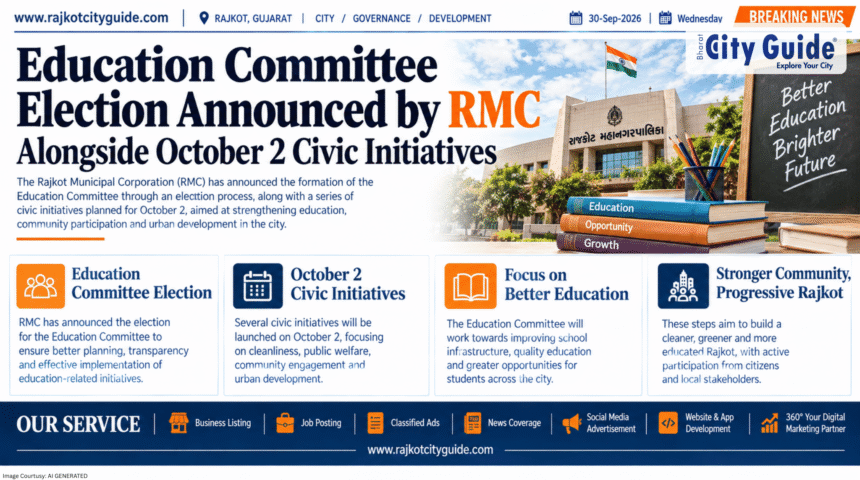
The Rajkot Municipal Corporation (RMC) has officially announced the timeline for the Education Committee Election, initiating the formal filing process for 12 key seats on the municipal school board. This election represents a vital administrative milestone, establishing fresh governance and academic direction for thousands of primary school students across the urban limits of Rajkot.
Alongside the election schedule, RMC administration unveiled civic directives commemorating Gandhi Jayanti on October 2. In tribute to Mahatma Gandhi’s enduring principles of non-violence and public enlightenment, the municipal corporation ordered a mandatory citywide closure of all slaughterhouses and meat markets. Simultaneously, RMC announced free public entry for children at the historic Mahatma Gandhi Museum located at the iconic Alfred High School complex, offering young students an enriching opportunity to explore India’s freedom heritage.
What is Education Committee Election?
The Education Committee Election is a formal statutory procedure conducted by urban local bodies in Gujarat to form the primary education board, commonly known as the Municipal Primary Education Committee or Nagar Shikshan Samiti. Under the provisions of the Gujarat Primary Education Act and the Gujarat Provincial Municipal Corporations (GPMC) Act, municipal corporations maintain dedicated committees tasked with overseeing public elementary education within city limits.
+--------------------------------------------------------------------------+
|          RAJKOT MUNICIPAL CORPORATION - ADMINISTRATIVE MATRIX           |
+--------------------------------------------------------------------------+
                                     |
    +--------------------------------+--------------------------------+
    |                                |                                |
    v                                v                                v
[ MUNICIPAL SCHOOL BOARD ]     [ SANITATION & PUBLIC HEALTH ]  [ CIVIC HERITAGE & CULTURE ]
- 12 Elected/Nominated Seats   - Citywide Slaughterhouse       - Mahatma Gandhi Museum Operations
- Primary School Governance      Closure Orders (Oct 2)        - Free Entry Schemes for Kids
- Academic & Infrastructure    - Meat Market Regulation        - Heritage Promotion & Values
The committee comprises elected municipal councilors, domain experts in academic management, and civic representatives. These 12 seats carry significant statutory authority. Committee members oversee municipal primary school administration, monitor student enrollment drives, manage midday meal logistics, implement educational technology in classrooms, and ensure proper fund allocation for school building maintenance.
Why This News is Important
The simultaneous announcement of the school board election schedule and Gandhi Jayanti civic measures holds multi-faceted significance for Rajkot’s political, social, and educational landscape:
- Restructuring Public Education: Filling the 12 municipal school board seats brings updated policy directives and active administrative supervision to RMC-run primary schools.
- Promoting Value-Based Education: Providing free access to the Mahatma Gandhi Museum allows young students to connect directly with Gandhian philosophy, national history, and civic ethics.
- Upholding Ethical Civic Directives: Enforcing the annual October 2 slaughterhouse closure aligns urban administration with statutory non-violence tributes honoring Mahatma Gandhi’s birthplace heritage in Saurashtra.
Background Information
Rajkot holds an essential position in the life and legacy of Mahatma Gandhi. It was at Alfred High School in Rajkot that Mohandas Karamchand Gandhi completed his high school education in 1887. Recognizing this profound historical connection, the Government of Gujarat and the Rajkot Municipal Corporation redeveloped the historic school building into a world-class Mahatma Gandhi Museum, which was inaugurated by Prime Minister Narendra Modi.
[ Primary School Governance ] ----> [ 12-Seat School Board Election Form Filing ]
                                                  |
                                                  v
[ October 2 Civic Initiatives ] --> [ Gandhi Museum Free Entrance for Children ]
                                --> [ Citywide Slaughterhouse & Meat Shop Closure ]
In parallel, RMC manages dozens of primary schools providing free education, instructional materials, uniforms, and digital learning tools to children from underserved urban backgrounds. Periodically, the municipal general board conducts the Education Committee Election process to reconstitute the school board, ensuring elected members work alongside professional educators to maintain instructional standards.
Key Highlights
- Nomination Timeline: Official form filing begins for 12 key seats of the RMC Municipal Education Committee.
- Free Museum Access for Children: Free entrance granted to young students and children at the Mahatma Gandhi Museum on Gandhi Jayanti (October 2).
- Mandatory Slaughterhouse Closure: Strict citywide closure of all slaughterhouses and retail meat shops ordered across Rajkot on October 2.
- Focus on Heritage & Ethics: Joint push by RMC to align municipal policy with Gandhian values of non-violence, public service, and youth education.
- Administrative Oversight: Reconstitution of the 12-member committee expected to accelerate pending school infrastructure upgrades and digital classroom programs.
Detailed Explanation of the Event
1. Reconstitution of the RMC School Board (12 Seats)
The filing of nomination forms marks the operational beginning of the election process for the 12 seats on the Rajkot Municipal Corporation Shikshan Samiti. Aspiring representatives from major political parties and educationists submit their candidacies to the designated municipal returning officer.
Once form scrutiny and withdrawals conclude, the formal selection or voting process takes place within the municipal general body. The newly appointed 12-member board will elect its Chairman and Vice-Chairman to lead primary education policies across the city.
2. October 2 Gandhi Jayanti Civic Observances
To honor the birth anniversary of Mahatma Gandhi, RMC issuing authority released two key administrative orders:
+--------------------------------------------------------------------------+
|                  GANDHI JAYANTI CIVIC DIRECTIVES SUMMARY                 |
+--------------------------------------------------------------------------+
| Directive Area        | Scope of Implementation                          |
+-----------------------+--------------------------------------------------+
| Animal Welfare        | Full closure of municipal & private slaughterhouses |
| Retail Regulation     | Prohibition on meat, poultry, and fish sales    |
| Heritage Promotion    | Zero-entry-fee access for children at Gandhi Museum|
| Civic Education       | Guided tours & interactive displays for students |
+-----------------------+--------------------------------------------------+
- Slaughterhouse Shutdown: All municipal slaughterhouses, private abattoirs, and retail meat/fish markets within RMC jurisdiction must remain closed on October 2. RMC health and enforcement teams will inspect commercial zones to ensure strict compliance.
- Free Museum Admission: RMC announced that children visiting the Mahatma Gandhi Museum on October 2 will receive free entry. The initiative encourages families and educational groups to explore the 3D visual exhibits, historical artifacts, and interactive galleries detailing Gandhiji’s youth in Rajkot.
Benefits and Importance of the Civic Initiatives
1. Educational Leadership & Governance
Reconstituting the school board ensures active political and administrative accountability. Board members regularly inspect civic schools, address teacher shortages, audit learning materials, and oversee the implementation of national education frameworks.
2. Experiential History Learning
Opening the Mahatma Gandhi Museum free of charge for kids turns history into an immersive learning experience. Children gain exposure to historical photographs, digital projection shows, and archival documents that highlight India’s freedom struggle.
3. Ethical and Moral Awareness
Citywide slaughterhouse closures on Gandhi Jayanti reflect a symbolic commitment to non-violence (Ahimsa) and animal welfare, reinforcing the core values associated with Mahatma Gandhi’s birthplace region.
How It Impacts Different Audiences
| Stakeholder Group | Direct Impact & Event Relevance |
| Primary School Students | Benefit from updated school governance, improved facilities, and free educational museum visits. |
| Parents & Educators | Gain an active civic forum to voice school infrastructure concerns through newly elected board members. |
| Civic Politicians & Candidates | Opportunity to serve on a vital statutory municipal body overseeing public education. |
| Local Commercial Businesses | Meat sellers and abattoir operators must pause operations on Oct 2 in compliance with RMC orders. |
Expert Insights and Technical Perspective
Urban governance experts and municipal education advocates view the formation of civic school boards as a cornerstone of effective local self-governance.
“Public primary schools run by municipal corporations serve as the primary educational gateway for low-income urban families. Timely conduct of the Education Committee Election ensures that administrative resources, teacher appointments, and modern classroom technology receive necessary policy push and budgetary oversight. Combining local administrative updates with heritage-focused civic programs like free museum admission for children strengthens community engagement across the city.”
Challenges and Limitations
While these civic announcements bring administrative direction, municipal authorities face practical execution challenges:
- Maintaining Academic Quality: The incoming 12-member committee must bridge the digital learning gap and improve student retention rates across Rajkot Municipal Corporation (RMC) primary schools.
- Crowd Management at Heritage Sites: Free admission for children on Gandhi Jayanti requires organized ticketing, security staff, and guided tours to manage high visitor volume at the Mahatma Gandhi Museum.
- Strict Enforcement of Civic Closures: Ensuring complete compliance with slaughterhouse and meat market closures across expanded municipal zones requires active vigilance by civic health inspectors.
Future Outlook
Following the completion of nomination filings, the RMC administration will proceed with form verification, candidate lists, and voting procedures during the municipal general board session. Once the 12 members take charge, the committee will prioritize upcoming academic programs, infrastructure modernization, and sports facilities across municipal schools.
Simultaneously, civic celebrations on October 2 are expected to draw significant turnout at the Mahatma Gandhi Museum, boosting cultural tourism and educational awareness across Saurashtra.
Frequently Asked Questions (FAQs)
1. How many seats are up for election in the RMC Education Committee?
A total of 12 seats are scheduled for nomination and election within the Rajkot Municipal Corporation Education Committee.
2. What is the main responsibility of the Municipal Education Committee?
The committee oversees public primary education, manages municipal school infrastructure, monitors teaching standards, and handles student welfare programs in RMC-run schools.
3. Why are slaughterhouses closed in Rajkot on October 2?
RMC orders the closure of all slaughterhouses and meat retail shops on October 2 in honor of Gandhi Jayanti, commemorating Mahatma Gandhi’s principles of non-violence (Ahimsa).
4. Which museum in Rajkot offers free entry for children on October 2?
The Mahatma Gandhi Museum (located at the historic Alfred High School premises) offers free entry to children on Gandhi Jayanti.
5. Who manages the Mahatma Gandhi Museum in Rajkot?
The museum is managed jointly under the supervision of the Rajkot Municipal Corporation (RMC) and the Gujarat Tourism Department.
6. Who can participate in the Education Committee election process?
Eligible municipal councilors and nominated education experts submit nomination forms through their respective political parties or independent channels according to GPMC guidelines.
Conclusion
The official announcement of the Education Committee Election schedule for 12 municipal school board seats marks a key step forward for public primary education in Rajkot. By electing dedicated administrative leaders to manage municipal schools, RMC aims to raise educational standards and improve facilities for young students. Coupled with Gandhi Jayanti directives—including free child admission to the Mahatma Gandhi Museum and a citywide slaughterhouse closure—the Rajkot Municipal Corporation demonstrates a balanced commitment to progressive civic governance, student welfare, and cultural heritage.