Introduction
The historic Rajkot Gandhi Museum—one of Gujarat’s premier heritage and cultural landmarks—is set for a transformative upgrade designed to enhance visitor engagement, family leisure, and tourist footfall. Managed under a joint partnership between the Rajkot Municipal Corporation (RMC) and Gujarat Tourism, the landmark institution stands on the grounds of the former Alfred High School (Mohandas Gandhi Vidyalaya), where Mahatma Gandhi completed his high school education in 1887.
- Introduction
- What is Rajkot Gandhi Museum?
- Why This News is Important
- Background Information
- Key Highlights
- Detailed Explanation of the Event
- Benefits, Features, and Importance
- How It Impacts People
- Expert Insights / Industry Perspective
- Challenges and Limitations
- Future Outlook
- Frequently Asked Questions (FAQs)
- Conclusion
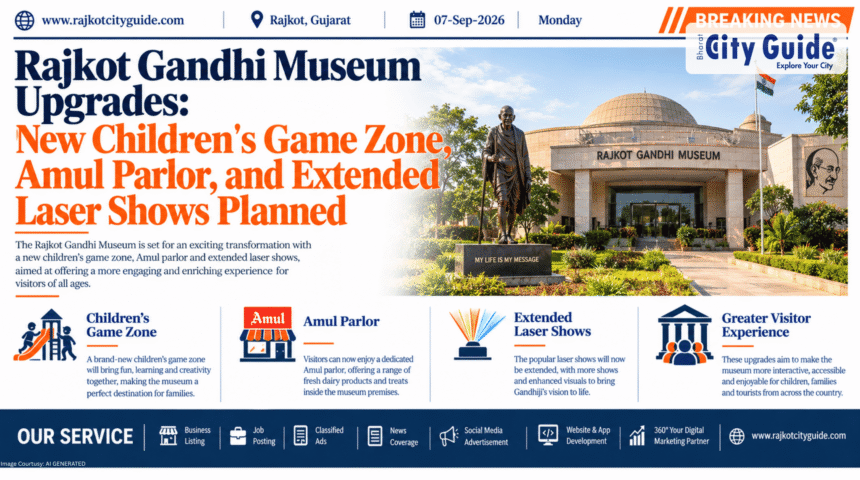
In a strategic initiative aimed at modernizing urban tourism while preserving historical reverence, civic officials are considering introducing a specialized children’s game zone, a dedicated Amul ice cream parlor, a multi-purpose hall for book fairs and academic conferences, and an extended schedule for its popular 3D projection laser light and sound show.
These proposed additions seek to convert the museum precinct into a comprehensive cultural and recreational hub for local families, school excursions, and national tourists alike. By balancing interactive entertainment with Gandhian philosophy, the municipal body aims to make historical learning more accessible and appealing to younger generations.
This article offers an in-depth breakdown of the proposed development plans at the museum, exploring the history of Alfred High School, the current state of its world-class exhibits, the municipal vision driving these upgrades, and the expected impact on Rajkot’s local tourism economy.
What is Rajkot Gandhi Museum?
The Rajkot Gandhi Museum (officially known as the Mahatma Gandhi Museum) is a state-of-the-art experiential museum located at Jubilee Chowk in central Rajkot. Built across the historic premises of the 164-year-old Alfred High School—established in 1853—the site was transformed into a museum following the school’s closure and inaugurated on September 30, 2018, to mark Mahatma Gandhi’s 150th birth anniversary year.
┌───────────────────────────────────────────────────────────────────────────────┐
│               RAJKOT GANDHI MUSEUM (MGM) INSTITUTIONAL PROFILE                │
├───────────────────────────────────────────────────────────────────────────────┤
│  LOCATION               : Jubilee Chowk, Jawahar Road, Rajkot, Gujarat        │
│  HISTORICAL IDENTITY    : Formerly Kathiawar High School / Alfred High School │
│  MAHATMA GANDHI LINK    : Attended 1880–1887; Matriculated in 1887            │
│  MUSEUM INAUGURATION    : September 30, 2018 (Joint RMC & Gujarat Tourism)    │
│  CORE ARCHITECTURE      : Victorian Gothic / Anglo-Norman Heritage Structure   │
│  PRIMARY ATTRACTION     : 39 Digital Galleries & 3D Projection Mapping Show   │
└───────────────────────────────────────────────────────────────────────────────┘
The museum features over 39 specialized galleries that showcase the life, philosophy, and global legacy of Mohandas Karamchand Gandhi. Combining rare historical photographs, life-sized dioramas, interactive digital touchscreens, and thematic installations, the facility covers key phases of Gandhi’s journey:
- Early Childhood & Education: Documenting Gandhi’s formative years in Rajkot, his family background, and his schooling at Kathiawar High School.
- South African Satyagraha: Detailing his transformation into a political activist, the Natal Indian Congress, and the Tolstoy Farm movement.
- Indian Freedom Struggle: Illustrating milestone movements including Champaran, the Dandi Salt March, the Quit India movement, and eventual independence.
- Gandhian Vows & Values: Presenting interactive exhibits dedicated to Truth (Satya), Non-violence (Ahimsa), Swadeshi, and Self-reliance (Bread Labour).
Why This News is Important
The decision by the Rajkot Municipal Corporation (RMC) to introduce recreational amenities and extend show timings marks a major shift in how urban heritage sites are managed in Gujarat:
- Blending Heritage with Modern Leisure: Adding a game zone and quality refreshment options ensures that families can spend longer periods at the complex without compromising the core educational experience.
- Boosting Youth & Student Engagement: Introducing interactive elements helps make historical learning engaging for children who might otherwise find traditional static museum displays unappealing.
- Higher Evening Footfall via Extended Laser Shows: Expanding the popular 3D projection laser show allows more visitors, working professionals, and out-of-town tourists to attend evening performances.
- Monetization and Infrastructure Sustainability: Amenities like an official Amul parlor, rental conference halls, and event spaces generate steady, non-ticket revenue to support ongoing maintenance of the heritage building.
Background Information
The premises housing the museum hold immense historic value in the narrative of Indian independence. Founded on October 17, 1853, by the Nawab of Junagadh and British authorities as Kathiawar High School, it was renamed Alfred High School in 1868. Young Mohandas Gandhi studied here for seven years, graduating in 1887 as one of only two matriculating students from his exam batch.
                 [ HISTORICAL EVOLUTION OF ALFRED HIGH SCHOOL ]
                                       │
 ┌─────────────────────────────────────┼─────────────────────────────────────┐
 ▼                                     ▼                                     ▼
1853: School Founded               1880–1887: Gandhi Studies             2018: Museum Conversion
(Kathiawar High School)            (Graduates Matriculation)            (Inaugurated by PM Narendra Modi)
 └─────────────────────────────────────┬─────────────────────────────────────┘
                                       │
                                       ▼
             2026+: Planned Upgrade into an Interactive Cultural & Family Hub
By 2016, with student enrollments declining and the heritage structure requiring extensive restoration, the Government of Gujarat closed the school and handed the premises over to the Rajkot Municipal Corporation. RMC collaborated with Gujarat Tourism to execute a multi-crore restoration project, preserving the Victorian Gothic facade while inserting modern digital exhibition galleries inside.
While the museum has attracted over a million visitors since its 2018 opening, municipal audits revealed that overall footfall—especially during weekday non-school hours—could be improved by adding modern family amenities, dining spaces, and extended evening entertainment.
Key Highlights
- Dedicated Children’s Game Zone: RMC plans to construct a safe, enclosed play and gaming arena to keep young children entertained during family visits.
- Official Amul Ice Cream Parlor: A modern food and beverage stall operated in partnership with Amul will offer hygienic refreshments within the campus grounds.
- Multi-Purpose Conference & Book Fair Hall: Existing spaces will be upgraded to host educational book fairs, literary seminars, student competitions, and civic events.
- Extended 3D Laser Light Show Timings: Responding to high public demand, authorities plan to increase the frequency and duration of the evening 3D projection mapping show on the museum facade.
- Comprehensive Campus Beautification: Upgrades will include enhanced courtyard lighting, expanded shaded seating areas, improved washroom blocks, and updated directional signage.
Detailed Explanation of the Event
1. RMC’s Multi-Tiered Enhancement Strategy
The Rajkot Municipal Corporation’s standing committee and tourism department have drafted a comprehensive roadmap to maximize the utility of the museum campus. Rather than operating solely as a static viewing gallery, the campus will transition into an integrated public zone where history, literature, dining, and children’s recreation coexist.
                                [ PROPOSED AMPHITHEATRE & HUB LAYOUT ]
                                                  │
 ┌────────────────────────────────────────────────┼────────────────────────────────────────────────┐
 ▼                                                ▼                                                ▼
Recreational Zone                       Culture & Events Zone                            Heritage & Tech Zone
(Game Zone & Amul Parlor)               (Book Fairs & Conference Hall)                   (39 Digital Galleries & Laser Show)
 └────────────────────────────────────────────────┬────────────────────────────────────────────────┘
                                                  │
                                                  ▼
                         Balanced Family Destination for Education & Leisure
2. Upgrading the 3D Projection Mapping Experience
One of the museum’s major attractions is its high-definition 3D projection mapping laser show, which uses the stone facade of the historic Alfred High School as a natural screen. The show narrates Gandhi’s life story using synchronized music, voiceovers, and visual effects.
Currently restricted to fixed evening slots, the municipal body plans to add extra show screenings—especially during weekends, public holidays, and peak vacation seasons—allowing more visitors to enjoy the performance without facing ticket cut-offs.
| Amenity / Feature | Current Operational Status | Proposed Upgrade / Expansion |
| Children’s Entertainment | Open outdoor courtyards | Dedicated indoor/outdoor interactive Game Zone |
| Food & Refreshments | Basic water points / local stalls | Branded Amul Parlor with hygienic seating areas |
| Event Facilities | Standard gallery viewing spaces | Multi-purpose Hall for Book Fairs and Seminars |
| Evening Laser Show | Single fixed evening show slot | Multiple daily shows with extended weekend slots |
Benefits, Features, and Importance
The proposed additions offer structural advantages for various user groups across Rajkot:
- Family-Friendly Environment: Parents visiting with young children can explore the historic galleries while kids enjoy age-appropriate recreational activities in the game zone.
- Educational & Literary Hub: Hosting regular book fairs and seminars turns the museum into a center for regional literature, Gandhian research, and student debates.
- Hygienic Dining Amenities: An official Amul parlor guarantees visitors access to quality dairy products, ice creams, and quick snacks at standardized prices within a secure campus.
- Support for Evening Tourism: Extending laser show schedules encourages evening footfall, benefiting nearby local markets, transport operators, and street food vendors around Jubilee Chowk.
How It Impacts People
For Families and Children
Local families in Rajkot gain a safe, central venue for weekend outings. The combination of green open courtyards, historic exhibits, a children’s play space, and an ice cream parlor offers an affordable, multi-faceted leisure option.
For Students and Educational Institutions
Schools planning excursions benefit from a more dynamic destination. Students can participate in interactive Gandhi quizzes across digital galleries, attend book fairs in the new conference hall, and learn about national history through immersive 3D laser mapping.
For Local Businesses and Tourism Operators
Tour operators, auto-rickshaw drivers, and nearby retailers along Jawahar Road and Jubilee Chowk stand to gain from increased tourist stay durations. Visitors who stay longer to watch evening laser shows spend more on local dining, shopping, and transportation.
Expert Insights / Industry Perspective
Urban planning specialists and museum curators support the move to modernize public heritage sites through mixed-use recreational planning.
Heritage conservationists emphasize that historic structures like the Alfred High School building remain sustainable when integrated into everyday civic life. Adding low-impact amenities like game zones and bookstores in non-historic exterior zones drives footfall without harming the core architectural integrity of Victorian Gothic buildings.
Tourism experts note that modern travelers expect experiential visits that offer dining, resting spaces, and evening entertainment alongside educational exhibits.
Challenges and Limitations
Implementing these new facilities within a protected heritage campus requires addressing several key operational factors:
- Architectural Preservation: Any construction associated with the game zone or conference hall must strictly conform to heritage conservation guidelines to protect the original 19th-century facade.
- Noise Control and Sanctity: Game zones and commercial activity must be kept at a suitable distance from quiet exhibition galleries to preserve the reflective, peaceful atmosphere associated with Gandhian history.
- Crowd Management During Peak Hours: Increasing the frequency of laser shows requires expanded parking facilities, organized queuing lines, and increased security staff around Jubilee Chowk.
Future Outlook
The modernization efforts at the museum reflect a broader push by Gujarat Tourism and the RMC to position Rajkot as a key landmark on the state’s Gandhi Circuit—which includes Sabarmati Ashram in Ahmedabad, Kirti Mandir in Porbandar, and Dandi Kutir in Gandhinagar.
In the coming months, once municipal approvals and architectural layout plans are finalized, construction on the game zone and Amul parlor will begin. With these additions, the museum is expected to double its annual visitor numbers, serving as a model for how heritage preservation and contemporary civic recreation can successfully coexist.
Frequently Asked Questions (FAQs)
1. What new features are being added to the Rajkot Gandhi Museum?
The Rajkot Municipal Corporation plans to add a dedicated children’s game zone, an official Amul ice cream parlor, a multi-purpose hall for book fairs and conferences, and extended timings for the 3D laser light show.
2. Where is the Mahatma Gandhi Museum located in Rajkot?
The museum is located on Jawahar Road at Jubilee Chowk in the heart of Rajkot, Gujarat.
3. What is the historical background of the museum building?
The museum is housed in the historic Alfred High School (originally Kathiawar High School), established in 1853, where Mahatma Gandhi studied from 1880 to 1887.
4. Who manages the Mahatma Gandhi Museum in Rajkot?
The museum is jointly managed and operated by the Rajkot Municipal Corporation (RMC) and Gujarat Tourism.
5. What are the current operating hours of the museum?
The museum galleries are open from 10:00 AM to 7:00 PM (entry ticket counters close at 6:00 PM), with the 3D projection laser show scheduled in the evening. The museum remains closed every Monday.
6. Will the new upgrades alter the historic architecture of the building?
No, all proposed upgrades—including the game zone, Amul parlor, and hall layouts—are designed to sit within dedicated secondary campus zones, preserving the Victorian Gothic heritage structure.
Conclusion
The proposed additions at the Rajkot Gandhi Museum mark an exciting new chapter for one of Gujarat’s most significant cultural landmarks. By introducing a children’s game zone, an Amul parlor, a multi-purpose event hall, and expanded laser show schedules, the Rajkot Municipal Corporation is creating a vibrant, family-friendly space. This balanced approach honours the historic legacy of Alfred High School while providing modern, engaging amenities for generations of future visitors.