Introduction
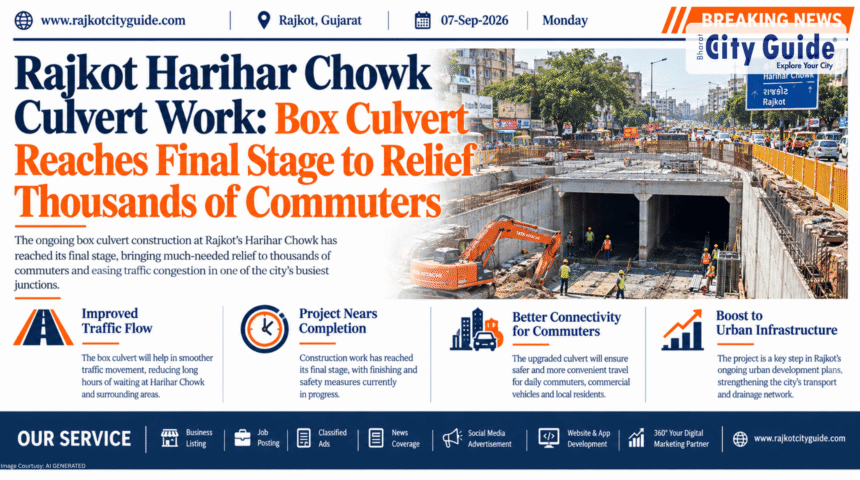
Commuters and commercial drivers navigating central Rajkot are set to experience major traffic relief as the long-awaited Rajkot Harihar Chowk Culvert Work enters its final phase of completion. Located at Harihar Chowk—one of the busiest urban intersections connecting key commercial centers, markets, and transit routes across the city—the ongoing construction of a heavy-duty concrete box culvert has reached its structural conclusion.
- Introduction
- Why This News is Important
- What is Rajkot Harihar Chowk Culvert Work?
- Background Information
- Key Highlights
- Detailed Explanation of the Event
- Benefits, Features, and Importance
- How It Impacts People
- Expert Insights / Industry Perspective
- Challenges and Limitations
- Future Outlook
- Frequently Asked Questions (FAQs)
- Conclusion
According to officials from the Rajkot Municipal Corporation (RMC), civil teams are now putting the finishing touches on the site. The final asphalt carpeting (damarkam) and road surfacing over the newly laid box culvert are scheduled for rapid completion. Once the fresh tar cures and safety barriers are removed, the road will be fully opened to traffic. This move is expected to eliminate bottleneck congestion that has affected thousands of two-wheelers, auto-rickshaws, and commercial vehicles daily.
This article offers an in-depth breakdown of the Harihar Chowk infrastructure upgrade, examining the engineering specifications of box culverts, the causes of central traffic bottlenecks, the civic benefits of modern storm-water drainage systems, and what commuters can expect as full connectivity is restored.
Why This News is Important
The completion of the Harihar Chowk culvert project represents a major operational victory for central Rajkot’s urban mobility and monsoon resilience:
- Immediate Relief from Traffic Bottlenecks: Harihar Chowk serves as a vital crossroad linking major commercial markets, office complexes, and residential zones. Opening the road restores normal traffic flow across central business districts.
- Monsoon Waterlogging Prevention: Modern reinforced concrete box culverts dramatically increase storm-water discharge capacity, helping protect surrounding shops and basements from urban flooding during heavy rains.
- Improved Commuter Safety: Unfinished construction zones, temporary diversions, and exposed road cuts create safety risks—especially for two-wheeler riders at night. Completing the asphalt work restores a smooth, safe driving surface.
- Economic Boost for Central Markets: Extended road closures reduce foot traffic for local shopkeepers and traders. Reopening the intersection restores access for shoppers and commercial delivery vehicles.
What is Rajkot Harihar Chowk Culvert Work?
The Rajkot Harihar Chowk Culvert Work is a high-priority civic infrastructure project undertaken by the Rajkot Municipal Corporation (RMC) to modernize the underground drainage network and widen the surface roadway at Harihar Chowk.
┌───────────────────────────────────────────────────────────────────────────────┐
│              RAJKOT HARIHAR CHOWK CULVERT PROJECT OVERVIEW                    │
├───────────────────────────────────────────────────────────────────────────────┤
│  PROJECT TYPE           : Reinforced Concrete Box Culvert (RCC)               │
│  LOCATION               : Harihar Chowk Intersection, Central Rajkot          │
│  IMPLEMENTING AUTHORITY : Rajkot Municipal Corporation (RMC)                 │
│  CURRENT STATUS         : Structure Complete; Final Asphalt Surfacing On-Going │
│  PRIMARY PURPOSE        : Storm-Water Management & Intersection Road Widening │
│  BENEFICIARIES          : Thousands of Daily Commuters & Local Business Merchants│
└───────────────────────────────────────────────────────────────────────────────┘
A box culvert is a box-shaped concrete structure placed underground beneath roadways to allow rainwater, storm-water runoff, or natural streams to flow freely without disrupting surface vehicular movement.
At Harihar Chowk, the existing drainage channel was prone to overflow during heavy monsoon spells. Additionally, older culvert structures lacked the load capacity to support Rajkot’s expanding vehicular traffic. The upgrade involves:
- Reinforced Concrete (RCC) Box Construction: Replacing old, narrow pipe culverts with heavy-duty rectangular concrete boxes built to handle high water volumes and heavy vehicle loads.
- Underground Channel Expansion: Widening the internal water channel to prevent urban flooding and waterlogging during intense rainfall.
- Surface Road Reconstruction: Applying high-density asphalt layers over the culvert deck to align it smoothly with adjoining roads, creating wider, safer junction turns.
Background Information
Harihar Chowk sits at the heart of Rajkot’s older commercial core, surrounded by bustling market zones, retail outlets, banks, and administrative centers. For years, the intersection faced a dual challenge: severe traffic bottlenecks during rush hours and localized waterlogging during monsoon downpours.
                  [ CENTRAL RAJKOT TRAFFIC & DRAINAGE DYNAMICS ]
                                       │
 ┌─────────────────────────────────────┼─────────────────────────────────────┐
 ▼                                     ▼                                     ▼
Legacy Drainage Channels            Severe Monsoon Flooding               Central Junction Bottlenecks
(Narrow Pipe Culverts)             (Water Stagnation & Damage)           (Traffic Snarls at Harihar Chowk)
 └─────────────────────────────────────┬─────────────────────────────────────┘
                                       │
                                       ▼
                   Engineering Solution: RCC Box Culvert Project
                                       │
                                       ▼
           Final Phase: Asphalt Surfacing (Damarkam) & Full Road Reopening
When heavy monsoon rains struck the region, central drainage lines passing through Harihar Chowk were overwhelmed by high runoff volumes. Water overflowed onto the surrounding asphalt, causing pavement erosion, deep potholes, and traffic slowdowns.
To resolve these recurring issues, the Rajkot Municipal Corporation (RMC) commissioned a structural upgrade. Civil engineering teams excavated the intersection, replaced outdated pipe structures with precast and cast-in-situ RCC box culverts, reinforced the road foundation, and prepared the surface for final asphalt paving.
Key Highlights
- Final Construction Phase: Concrete box culvert installation at Harihar Chowk is structurally complete, with civil teams focusing on final surface integration.
- Asphalt Paving Underway: Asphalt surfacing (damarkam) is entering its final stage to create a smooth transition between the new culvert deck and existing approach roads.
- Relief for Thousands of Commuters: The reopening will clear daily congestion for thousands of two-wheelers, cars, auto-rickshaws, and delivery vans.
- Enhanced Drainage Capacity: The enlarged box culvert prevents rainwater accumulation at the junction, protecting nearby commercial properties.
- Full Connectivity Restored: Normal traffic routes through Harihar Chowk will resume shortly, ending multi-week detours and traffic diversions.
Detailed Explanation of the Event
1. The Engineering Process Behind Box Culvert Construction
Building an RCC box culvert at a busy urban junction like Harihar Chowk requires a precise, multi-stage engineering plan. Civil contractors began by diverting traffic and trenching deep into the intersection to reach the underlying drainage channel.
Workers built a solid base slab, poured high-strength reinforced concrete walls and top slabs (or installed pre-cast concrete box modules), and treated the structure with waterproof coatings to prevent groundwater seepage.
                                [ CULVERT CONSTRUCTION WORKFLOW ]
                                                │
 ┌──────────────────────────────────────────────┼──────────────────────────────────────────────┐
 ▼                                              ▼                                              ▼
Excavation & Base Laying               Box Culvert Construction                  Asphalt & Road Opening
(Trenching & Base Stabilization)       (RCC Casting & Waterproofing)            (Damarkam, Curing & Reopening)
 └──────────────────────────────────────────────┬──────────────────────────────────────────────┘
                                                │
                                                ▼
                         Restoring Smooth Traffic Flow & Drainage Efficiency
2. Transition to Asphalt Surfacing (Damarkam)
With the primary concrete box fully cured and structurally inspected, civil teams filled the surrounding excavations with graded aggregate base materials to prevent future road settling.
Workers are currently applying bitumen primer and laying dense asphalt mix across the culvert deck. Once the asphalt cools, cures, and receives fresh lane markings, municipal authorities will reopen the road for public traffic.
Benefits, Features, and Importance
The table below summarizes the key features and community benefits of the completed culvert project:
| Feature / Aspect | Technical Specification / Detail | Community & Civic Benefit |
| Culvert Architecture | Heavy-duty RCC Box Structure | Higher structural load capacity, handling heavy commercial traffic safely. |
| Drainage Capacity | Expanded hydraulic cross-section | Rapid drainage during heavy rains, stopping localized junction flooding. |
| Road Surface Quality | High-density hot-mix asphalt coating | Smooth riding surface that reduces vehicle wear and eliminates potholes. |
| Traffic Integration | Flush-level junction grading | Removes sharp road humps, improving visibility and driving comfort. |
How It Impacts People
For Daily Commuters and Office Workers
Commuters who travel through Harihar Chowk every day will save valuable travel time once traffic diversions are removed. Smooth junction crossings reduce fuel consumption, eliminate long idling times, and make daily commutes across central Rajkot far more predictable.
For Local Shopkeepers and Business Owners
Traders operating retail stores, wholesale markets, and service outlets around Harihar Chowk will see foot traffic return to normal levels. Clearing construction equipment and dust improves customer access, encouraging shoppers back to central market areas.
For Emergency Services and Public Transit
Ambulances, police vehicles, fire engines, and city buses frequently rely on central thoroughfares like Harihar Chowk to move across Rajkot quickly. Reopening the intersection ensures emergency services can navigate central districts without delays caused by detours.
Expert Insights / Industry Perspective
Civil engineers and urban planning experts emphasize that box culverts are the gold standard for managing urban drainage at high-density road junctions.
Urban infrastructure specialists point out that traditional circular pipe culverts often collect silt, debris, and urban waste, causing sudden blockages during monsoon downpours. Rectangular RCC box culverts feature wider flat-bottom floors that allow higher water velocity, reducing silt buildup and making maintenance access easier for municipal sanitation crews.
Municipal engineers note that completing the asphalt surfacing with proper compaction ensures the road can handle high traffic volumes without developing surface cracks or structural sagging over time.
Challenges and Limitations
Executing major drainage construction at a central intersection presents several real-world challenges:
- Managing High Traffic Densities: Diverting thousands of vehicles through narrow alternative routes during construction creates temporary congestion on nearby secondary streets.
- Weather and Monsoon Dependencies: Heavy rainfall during the construction phase can fill open excavation trenches with water, delaying concrete curing and asphalt paving.
- Underground Utility Networks: Excavating central junctions requires careful coordination to avoid damaging existing water pipelines, power lines, telecommunications conduits, and gas mains.
Future Outlook
The completion of the Harihar Chowk project aligns with the Rajkot Municipal Corporation’s broader commitment to upgrading city infrastructure:
- Citywide Drainage Modernization: Successful box culvert installations at high-density intersections serve as a model for replacing aging pipe culverts in other flood-prone wards across Rajkot.
- Integrated Smart City Road Networks: Upgraded intersections will feature improved street lighting, clear lane markings, and synchronized traffic signals to manage vehicle flow smoothly.
- Long-Term Infrastructure Durability: High-grade RCC box culverts have an operational lifespan of several decades, ensuring reliable drainage and structural stability for central Rajkot well into the future.
Frequently Asked Questions (FAQs)
1. What is the status of the Rajkot Harihar Chowk Culvert Work?
The structural concrete box culvert construction is complete, and teams are finishing final asphalt surfacing (damarkam) before reopening the road to public traffic.
2. Why was a box culvert installed at Harihar Chowk?
The box culvert was installed to replace aging underground drainage channels, increase storm-water capacity during heavy monsoon rains, and widen the surface roadway to prevent traffic bottlenecks.
3. Which agency is managing the Harihar Chowk culvert project?
The project is being planned, executed, and supervised by the Rajkot Municipal Corporation (RMC).
4. How will the completed project benefit commuters in central Rajkot?
Reopening Harihar Chowk eliminates long detours, reduces travel delays, provides a smooth asphalt surface, and prevents monsoon waterlogging at the intersection.
5. What makes a box culvert better than traditional pipe culverts?
Box culverts offer a larger cross-sectional area for water flow, superior structural load strength for heavy vehicles, less silt accumulation, and easier maintenance access for civic crews.
6. When will normal traffic fully resume through Harihar Chowk?
Traffic will resume as soon as the final asphalt layer is fully laid, compacted, and cured, which municipal officials indicate is happening in the coming days.
Conclusion
The completion of the Rajkot Harihar Chowk Culvert Work marks an important achievement for central Rajkot’s urban infrastructure. By replacing outdated underground drainage channels with a modern reinforced concrete box culvert and restoring the road surface with fresh asphalt, the Rajkot Municipal Corporation has addressed both monsoon waterlogging and daily traffic congestion. As barriers are removed and full connectivity returns, thousands of daily commuters, local shopkeepers, and transit operators will enjoy a smoother, safer, and more reliable journey through one of Rajkot’s most vital crossroads.