Introduction
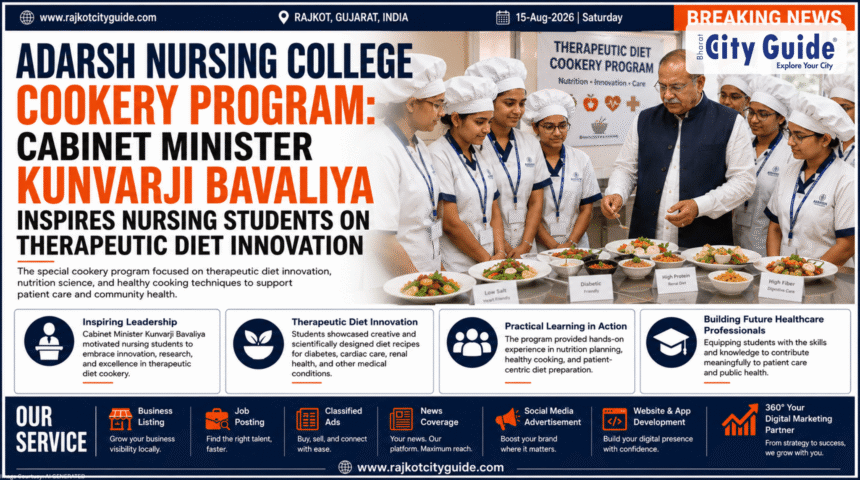
The intersection of nutritional science and bedside patient care took center stage in Jasdan taluka as the Adarsh Nursing College Cookery Program was successfully organized at Shree Adarsh Nursing College in Amrapur, near Jasdan in Rajkot district. The special academic event showcased how modern nursing education moves far beyond theoretical textbooks to embrace practical skill-building in clinical nutrition and therapeutic meal preparation.
- Introduction
- What is Adarsh Nursing College Cookery Program?
- Why This News is Important
- Background Information
- Key Highlights
- Detailed Explanation of the Event
- Benefits, Features, and Importance of Therapeutic Diets
- How It Impacts People
- Expert Insights and Healthcare Perspective
- Challenges and Limitations
- Future Outlook
- Frequently Asked Questions (FAQs)
- Conclusion
Cabinet Minister of Water Resources, Water Supply, and Food & Civil Supplies, Government of Gujarat, Shri Kunvarji Bavaliya, attended the event as the chief guest. His presence highlighted the state government’s emphasis on healthcare training, youth development, and holistic nursing standards across semi-urban and rural centers of Saurashtra.
During the event, nursing students demonstrated their culinary skills by preparing customized therapeutic diets designed for various medical conditions, including diabetes, hypertension, renal disorders, and post-surgical recovery. Rather than treating nutrition as an auxiliary topic, the practical session highlighted that proper diet planning is a core component of medical recovery. As healthcare systems place greater emphasis on preventive care and patient management, events like the Adarsh Nursing College Cookery Program offer a strong model for how nursing institutions can equip future healthcare professionals with actionable clinical skills.
What is Adarsh Nursing College Cookery Program?
The Adarsh Nursing College Cookery Program is an essential practical education workshop organized at Shree Adarsh Nursing College, Amrapur (Vinchhiya/Jasdan area, Rajkot district). Designed as part of the nursing curriculum’s Nutrition and Biochemistry coursework, the program requires student-nurses to plan, prepare, present, and analyze specialized diets known as therapeutic diets.
                  ┌──────────────────────────────────────────────┐
                  │   ADARSH NURSING COLLEGE COOKERY PROGRAM     │
                  │        Shree Adarsh Nursing College, Amrapur │
                  └──────────────────────┬───────────────────────┘
                                         │
       ┌─────────────────────────────────┼─────────────────────────────────┐
       ▼                                 ▼                                 ▼
┌────────────────────────┐    ┌────────────────────────┐    ┌────────────────────────┐
│  DIGNITARY ENGAGEMENT  │    │ THERAPEUTIC DIET SKILLS│    │   COMMUNITY & CAREER   │
│ • Chief Guest: Minister│    │ • Diabetic & Cardiac   │    │ • bedside Patient Care │
│   Kunvarji Bavaliya    │    │ • Low-Sodium / Renal   │    │ • Preventive Health    │
│ • Faculty & Leadership │    │ • High-Protein Recovery│    │ • Holistic Education   │
└────────────────────────┘    └────────────────────────┘    └────────────────────────┘
Therapeutic diets are modified meal plans customized to meet specific medical requirements of hospitalized or recovering patients. These modifications can involve altering nutrient levels (such as low sodium or low sugar), adjusting calorie density, or changing food texture (liquid, semi-solid, soft, or full diet). Through this hands-on competition and practical exhibition, nursing students learn how to turn clinical dietary prescriptions into appetizing, hygienic, and nutritionally balanced meals for real-world healthcare settings.
Why This News is Important
The host venue and regional dignity associated with this event give the Adarsh Nursing College Cookery Program significant educational and social value:
- Dignitary Support for Nursing Education: The presence of senior Cabinet Minister Shri Kunvarji Bavaliya highlights state-level support for healthcare training in regional towns like Jasdan and Vinchhiya.
- Emphasis on Practical Clinical Nutrition: It reinforces that nursing extends beyond administering medication to include holistic care, where nutrition plays a primary role in speeding up patient recovery.
- Skill-Based Learning in Rural Saurashtra: Establishing high-quality practical training platforms in Amrapur demonstrates that regional educational institutes are aligning with modern national healthcare standards.
- Empowerment of Healthcare Trainees: Hands-on exhibitions boost student confidence, preparing them to handle specialized ward duties, intensive care units (ICUs), and community health centers effectively.
Background Information
In modern medical science, nutrition is recognized as an active treatment modality. Improper nutrition during hospital stays can lead to delayed wound healing, compromised immunity, prolonged hospital stays, and increased risk of readmission. Consequently, regulatory bodies like the Indian Nursing Council (INC) mandate comprehensive practical modules on nutrition and dietetics within B.Sc. Nursing, General Nursing and Midwifery (GNM), and Auxiliary Nurse Midwife (ANM) programs.
                      [ HEALTHCARE NUTRITION EVOLUTION ]
                                      │
  ┌───────────────────────────────────┼───────────────────────────────────┐
  ▼                                   ▼                                   ▼
[Theoretical Dietetics]            [Practical Cookery Labs]            [Holistic Patient Care]
 • Classroom Lectures               • Adarsh College Event              • Ward-level Implementation
 • Nutrient Calculations            • Hands-on Meal Preparation         • Faster Recovery & Wellness
Located in Amrapur in the Jasdan-Vinchhiya region of Rajkot district, Shree Adarsh Nursing College has emerged as a key institution for health education in Saurashtra. By organizing specialized practical workshops like the cookery program, the college provides students from semi-urban and rural backgrounds access to experiential learning methods that match top metropolitan nursing schools.
Key Highlights
- Ministerial Presence: Cabinet Minister Kunvarji Bavaliya attended the program as Chief Guest, encouraging students to excel in healthcare service.
- Focus on Therapeutic Diets: Nursing students prepared a variety of specialized therapeutic meals targeted at specific health conditions.
- Live Practical Exhibition: Students cooked and displayed meals, calculating precise nutritional values, caloric content, and dietary restrictions.
- Institutional Leadership Support: College administrators, department heads, and faculty members mentored students throughout the project.
- Interdisciplinary Approach: The event bridged theoretical biochemistry and nutrition principles with practical culinary execution suitable for hospital settings.
- Community Impact: Highlighted the importance of preventive health awareness and dietary discipline in local rural and semi-urban communities.
Detailed Explanation of the Event
The cookery event at Shree Adarsh Nursing College turned the campus lab into an active kitchen and nutrition display area. Participating nursing students were assigned specific patient cases and medical conditions, requiring them to design custom menus based on exact medical criteria.
                         [ EVENT WORKFLOW & EXHIBITION ]
                                        │
  ┌─────────────────────────────────────┼─────────────────────────────────────┐
  ▼                                     ▼                                     ▼
[Menu Planning & Math]               [Hygienic Preparation]               [Dignitary Evaluation]
 • Calorie & Macro Calculations       • Kitchen Sanitation Controls        • Minister Review & Tasting
 • Condition-Specific Restricts       • Appealing Meal Presentation        • Academic Feedback & Awards
Preparation of Specialized Therapeutic Meals
Students demonstrated impressive creativity and clinical understanding by preparing a wide array of specialized meals:
- Diabetic Diets: Formulated with low glycemic index (GI) complex carbohydrates, high fiber content, and minimal simple sugars to ensure stable blood glucose control.
- Hypertensive & Cardiac Diets: Prepared with minimal sodium (salt) substitutes, heart-healthy unsaturated fatty acids, and potassium-rich ingredients.
- Renal Diets: Carefully controlled for fluid balance, potassium, phosphorus, and protein levels tailored for kidney disease management.
- High-Protein Recovery Diets: Designed for post-surgical patients, burn victims, and individuals recovering from severe infections to accelerate tissue repair.
- Pediatric & Geriatric Diets: Textured soft or liquid diets tailored to match the swallowing capabilities and nutritional demands of young children and elderly patients.
Guest Evaluation and Interaction
Cabinet Minister Kunvarji Bavaliya toured the exhibition counters, reviewed the dishes prepared by various student groups, and interacted directly with the young trainees. He appreciated the students’ technical knowledge regarding dietary balance and emphasized that dedicated nursing care combined with proper nutrition forms the true backbone of public health services in Gujarat.
Benefits, Features, and Importance of Therapeutic Diets
The practical learnings showcased during the Adarsh Nursing College Cookery Program demonstrate how customized dietetics directly support medical recovery:
| Health Condition | Therapeutic Modification | Clinical Goal & Patient Benefit |
|---|---|---|
| Diabetes Mellitus | Complex carbs, high fiber, zero refined sugars | Prevents sudden glycemic spikes and maintains long-term HbA1c control. |
| Hypertension (High BP) | Low sodium (<2g/day), DASH diet framework | Reduces intravascular fluid retention and lowers blood pressure. |
| Chronic Kidney Disease (CKD) | Controlled protein, low sodium, potassium & phosphorus | Minimizes accumulation of nitrogenous waste products in the bloodstream. |
| Post-Surgical Healing | High biological value protein, Vitamin C, Zinc | Accelerates collagen synthesis, tissue regeneration, and wound closure. |
| Gastrointestinal Ulcers | Bland, non-spicy, low-fat soft food items | Prevents gastric mucosa irritation and minimizes acid secretion. |
How It Impacts People
This practical educational event has a meaningful ripple effect across multiple groups within the community:
- For Nursing Students: Transforms abstract textbook formulas into practical daily skills. Preparing these meals builds confidence for hospital ward management and patient dietary counseling.
- For Patients and Families: Improves the quality of care in regional healthcare facilities. Patients managed by well-trained nurses receive proper dietary advice, leading to faster healing and better long-term health outcomes.
- For Rural Healthcare Access: Elevates the standard of nursing education in places like Jasdan, Vinchhiya, and rural Rajkot, ensuring local clinics gain highly skilled healthcare staff.
- For the Public Health System: Reduces total healthcare costs by promoting preventive nutrition, reducing hospital stay durations, and avoiding disease complications.
Expert Insights and Healthcare Perspective
Healthcare educators and clinical dietitians frequently highlight that nutritional management is one of the most cost-effective interventions in clinical medicine. However, in many clinical setups, patient feeding is treated as a routine task rather than a controlled medical intervention.
Nursing experts note that practical exhibitions like the Adarsh Nursing College Cookery Program help bridge this gap. Training nurses to understand both the science of nutrition and the practicalities of food preparation ensures they can effectively evaluate whether a patient is receiving and consuming their prescribed nutrients. Experts also point out that in rural and semi-urban communities, nurses often serve as primary health educators. Educating nurses on therapeutic cooking enables them to guide patient families on preparing healthy meals using locally available, affordable ingredients.
Challenges and Limitations
While practical cookery sessions are valuable, institutions encounter real-world challenges when scaling these practices into daily clinical routines:
- Resource Constraints in Public Hospitals: Preparing custom therapeutic meals for hundreds of patients daily requires specialized hospital dietary departments and dedicated budgets, which are often limited in smaller facilities.
- Patient Compliance Issues: Specialized diets—such as salt-restricted or unseasoned meals—are often unpalatable to patients, leading to low compliance once they are discharged home.
- Socioeconomic Factors: Patients from economically disadvantaged backgrounds may struggle to afford or access specific recommended dietary items after leaving the hospital.
- Balancing Academic Demands: Fitting comprehensive practical culinary labs into an already demanding nursing curriculum requires careful schedule management by college faculty.
Future Outlook
Looking forward, practical nutrition modules like the one demonstrated at Shree Adarsh Nursing College are set to become an integral part of modern healthcare training:
- Integration of Digital Nutrition Planning: Future iterations of the cookery program are expected to feature digital apps for automated calorie counting and macronutrient mapping alongside cooking demonstrations.
- Community Outreach Programs: Colleges can extend these cookery workshops into local villages, hosting live nutritional demonstrations for pregnant women, lactating mothers, and elderly citizens.
- Enhanced Career Pathways: Graduates trained in specialized therapeutic diet management will find expanded career opportunities as clinical nurse specialists, hospital dietary managers, and community health officers across Gujarat and beyond.
Frequently Asked Questions (FAQs)
1. What was the main focus of the Adarsh Nursing College Cookery Program?
The main focus of the program was to provide nursing students with practical experience in preparing therapeutic diets tailored to specific medical conditions like diabetes, hypertension, renal diseases, and post-surgery recovery.
2. Who was the chief guest at the Adarsh Nursing College event?
Shri Kunvarji Bavaliya, Cabinet Minister of Water Resources, Water Supply, and Food & Civil Supplies (Government of Gujarat), attended as the Chief Guest.
3. Where is Shree Adarsh Nursing College located?
Shree Adarsh Nursing College is located in Amrapur, situated in the Jasdan/Vinchhiya region of Rajkot district, Gujarat.
4. What is a therapeutic diet in nursing?
A therapeutic diet is a customized meal plan modified in nutrient content, caloric value, or texture to treat or manage a patient’s specific medical condition and aid recovery.
5. Why is cookery practical training important for nursing students?
Practical training helps nursing students translate theoretical nutritional science into actionable bedside skills, allowing them to effectively plan patient diets, counsel families, and support clinical recovery.
6. How do therapeutic diets help hospital patients recover faster?
By delivering precise ratios of essential nutrients, controlling harmful elements like excess sodium or sugar, and aiding tissue repair, therapeutic diets reduce recovery times and lower the risk of complications.
7. What types of diets were prepared during the college program?
Students prepared diabetic-friendly meals, low-sodium cardiac diets, controlled-protein renal diets, high-protein post-surgical recovery meals, and soft digestive diets.
Conclusion
The successful execution of the Adarsh Nursing College Cookery Program at Amrapur highlights the valuable role practical training plays in modern nursing education. Supported by the encouraging presence of Cabinet Minister Shri Kunvarji Bavaliya, the event provided students with practical experience in applying nutritional science to real-world patient care. By mastering the preparation of therapeutic diets, future nurses from Shree Adarsh Nursing College are well-prepared to improve patient outcomes, advocate for preventive nutrition, and elevate healthcare delivery standards across Rajkot and the wider region of Gujarat.