Introduction
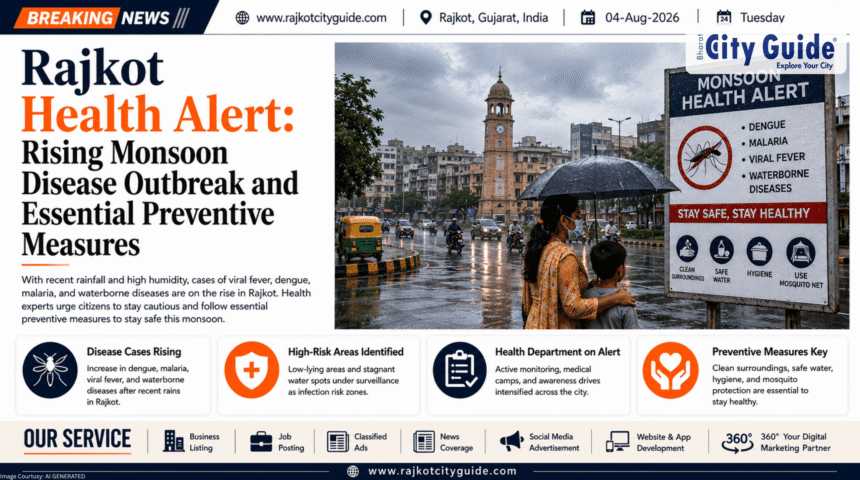
As the monsoon season reaches its peak across Gujarat, the city of Rajkot is experiencing a sudden surge in seasonal illness and vector-borne diseases. The local health administration has officially issued a high-priority Rajkot Health Alert following a notable spike in reported cases of water-borne and mosquito-borne infections. Recent official data highlights that after a relatively long spell of zero or minimal cases, Rajkot has recorded new cases of Dengue, Malaria, and Jaundice, alongside a massive outbreak of gastrointestinal disorders. Over 1,900 individuals have visited urban health centers and hospitals across the city suffering from diarrhea, vomiting, and high fever within a brief reporting window.
- Introduction
- What is Rajkot Health Alert?
- Why This News is Important
- Background Information
- Key Highlights
- Detailed Explanation of the Event
- Health Comparison: Monsoon Diseases at a Glance
- How It Impacts People
- Expert Insights / Industry Perspective
- Challenges and Limitations
- Preventive Measures & Actionable Health Tips
- Future Outlook
- Frequently Asked Questions (FAQs)
- Conclusion
This sudden rise in seasonal illness has put local municipal authorities, healthcare professionals, and residents on high alert. Monsoon rains create ideal breeding grounds for mosquitoes while simultaneously increasing the risk of water contamination through damaged pipelines, overflowing drains, and unhygienic street food stalls. Understanding the current health landscape in Rajkot is critical for citizens, care providers, and families aiming to safeguard their health during these rainy months.
In this comprehensive analysis, we explore the specifics of the current health advisory, break down the numbers, examine the underlying causes of seasonal health risks, and provide actionable guidelines to protect yourself and your family. Staying informed about the Rajkot Health Alert is the first step toward preventing severe health complications and supporting community-wide wellness.
What is Rajkot Health Alert?
The Rajkot Health Alert is an official public health warning and active monitoring initiative launched by the Rajkot Municipal Corporation (RMC) health department. It serves to inform citizens about the localized outbreak of monsoon-related illnesses, including vector-borne diseases like Dengue, Chikungunya, and Malaria, as well as water-borne diseases such as Gastroenteritis (diarrhea and vomiting), Jaundice (Hepatitis A/E), and Typhoid.
When an alert of this nature is raised, the municipal health machinery initiates multi-pronged counter-measures. These include intensive door-to-door health surveys, spatial spraying of insecticides, larvicidal treatments in stagnant water bodies, water sample testing, and public awareness campaigns. The goal of the alert is twofold: to urge citizens to take individual preventive measures and to streamline medical response facilities across civic clinics and hospitals to handle the patient surge effectively.
Why This News is Important
Seasonal shifts always bring minor health fluctuations, but the current health advisory in Rajkot demands serious attention due to several key factors:
- Sudden Resurgence of Vector-Borne Cases: After maintaining negligible numbers for months, the confirmation of fresh Dengue, Malaria, and Jaundice cases indicates that disease transmission vectors are actively circulating in suburban and urban clusters.
- High Volume of Gastrointestinal Diseases: Over 1,900 reported cases of diarrhea, vomiting, and fever in a short span indicate widespread localized contamination of drinking water or poor food hygiene standards.
- Pressure on Public Healthcare Infrastructure: A rapid influx of patients places immense strain on primary health centers (PHCs), public hospitals like Civil Hospital Rajkot, and private clinics.
- Vulnerability of Sensitive Groups: Children, senior citizens, pregnant women, and immunocompromised individuals face severe complications from rapid dehydration caused by diarrhea or platelet drops caused by Dengue.
- Community Prevention Window: Timely intervention and public cooperation during the initial days of an outbreak can prevent localized spikes from escalating into a full-scale citywide epidemic.
Background Information
Rajkot, located in the Saurashtra region of Gujarat, experiences significant seasonal shifts. The monsoon season—typically extending from June through September—brings essential rainfall to the semi-arid region. However, urban infrastructure in rapidly expanding cities often faces challenges during heavy downpours, leading to waterlogging, clogged drainage systems, and temporary contamination of groundwater or municipal supply lines.
Historically, the post-rain period creates stagnation in low-lying pockets, construction sites, discarded containers, and residential rooftops. These water accumulations serve as prime breeding sites for Aedes aegypti (the dengue-transmitting mosquito) and Anopheles (the malaria-transmitting mosquito).
Simultaneously, seasonal flooding often causes cross-contamination between municipal water pipelines and underground sewage networks, especially in older quarters of the city. In past years, Rajkot has witnessed similar monsoon spikes; however, proactive civic measures combined with public participation have historically proved crucial in curbing disease transmission before the onset of winter.
Key Highlights
The primary details surrounding the recent health advisory in Rajkot include:
- Dengue & Malaria Resurgence: Fresh individual cases of Dengue and Malaria confirmed in Rajkot after a prolonged period of control.
- Jaundice Detected: At least one new case of Jaundice (Hepatitis) recorded, pointing toward water contamination risks.
- Gastroenteritis Spike: Over 1,900 patients registered across city hospitals and health centers with symptoms of diarrhea, vomiting, and fever.
- RMC Health Department Mobilization: Multi-team door-to-door checks initiated to inspect domestic water storage containers for mosquito larvae.
- Fines and Compliance: Municipal health teams issuing notices and imposing administrative fines on commercial establishments and households found maintaining mosquito breeding grounds.
- Chlorine Distribution: Free chlorine tablet distribution and water quality testing drives initiated in affected wards.
Detailed Explanation of the Event
According to recent surveillance reports from the Rajkot Municipal Corporation health division, the city’s health map has shifted visibly over the past few weeks. Following scattered to heavy rainfall across various zones, medical OPDs (Outpatient Departments) at government health centers and private facilities have seen a steep rise in daily footfalls.
Vector-Borne Disease Analysis
The identification of fresh Dengue and Malaria cases marks a critical transition point. While a single case might seem minor in isolation, vector-borne infections operate on an exponential scale. A single infected mosquito can transmit the dengue virus to multiple individuals within a residential neighborhood. The Aedes aegypti mosquito is a daytime biter that thrives in clean, stagnant water—often found in domestic water storage drums, flowerpots, discarded tires, and air coolers.
Water-Borne Disease Analysis
The most alarming statistic from the recent update is the high number of gastrointestinal illness cases. More than 1,900 citizens have sought treatment for a combination of acute diarrhea, vomiting, and high fever. Epidemiologists attribute this spike primarily to:
- Water Pipeline Leaks: Subterranean pipeline fractures allowing rainwater or sewage ingress into domestic drinking water lines.
- Unsafe Food Practices: Consumption of uncovered street food, cut fruits, and ice made from untreated water during humid, bacterial-friendly weather.
- Improper Water Storage: Inadequate cleaning of overhead and underground water storage tanks in apartment complexes and houses.
Civic Health Department Action Plan
In response to the situational report, the health department has deployed dedicated field teams across all municipal zones. These teams are performing residential inspections, applying larvicides to non-potable stagnant water, distributing oral rehydration salts (ORS) and chlorine tablets, and issuing public awareness guidelines. Establishments that fail to clean standing water despite warnings face immediate legal notices and penalty charges under public health bylaws.
Health Comparison: Monsoon Diseases at a Glance
| Disease Type | Common Causes | Key Symptoms | Primary Prevention |
| Dengue | Aedes mosquito bite | High fever, severe headache, eye pain, joint pain, skin rash | Eliminate standing clean water, use mosquito repellents |
| Malaria | Anopheles mosquito bite | Chills, high fever, sweating, fatigue, body ache | Bed nets, indoor spraying, removing stagnant water |
| Diarrhea & Vomiting | Contaminated water/food, bacteria/viruses | Loose stools, stomach cramps, nausea, dehydration | Drink boiled water, avoid raw street food, maintain hand hygiene |
| Jaundice (Hepatitis A/E) | Viral contamination of food/water | Yellow skin/eyes, dark urine, loss of appetite, extreme fatigue | Consume safe water, maintain strict food hygiene |
How It Impacts People
The issuing of the Rajkot Health Alert carries widespread implications for various sections of society across the city:
Daily Earners and Working Professionals
Illness leads to lost workdays and reduced income, particularly for daily wage laborers and gig workers. Fever and gastroenteritis require several days of rest and recovery, impacting productivity and household finances.
School Children and Students
Children are particularly susceptible to water-borne pathogens and mosquito bites during school hours. A wave of seasonal illness leads to absenteeism in schools and colleges. Parents are urged to ensure children carry boiled water flasks and wear full-sleeved uniforms.
Families and Household Budgets
Out-of-pocket medical expenses for diagnostic tests (such as Dengue NS1, CBC, Widal), doctor consultations, and medications place a financial burden on lower- and middle-income families.
Healthcare Workers
Nurses, doctors, and municipal field workers face increased workloads, long hours, and heightened exposure risks as they manage crowded OPDs and conduct field surveys.
Expert Insights / Industry Perspective
Public health specialists and medical practitioners emphasize that seasonal disease outbreaks during the monsoon are largely preventable through proactive community hygiene and swift clinical management.
According to public health guidelines, early diagnostic testing is crucial. Patients presenting with high fever accompanied by joint body pain should not self-medicate with non-steroidal anti-inflammatory drugs (NSAIDs) like ibuprofen or aspirin, as these can exacerbate bleeding risks if the underlying illness turns out to be Dengue. Paracetamol remains the safest initial fever reducer, alongside fluid intake.
Furthermore, medical experts point out that controlling vector-borne outbreaks requires a concept known as “Source Reduction.” Pesticide sprays only eliminate adult mosquitoes; destroying larvae by emptying stagnant water containers once every week disrupts the mosquito life cycle entirely.
Challenges and Limitations
Despite active efforts by the municipal corporation, several challenges hinder rapid containment:
- Rapid Urbanization and Construction: Unregulated construction sites often accumulate rainwater, creating unmonitored breeding grounds for mosquitoes.
- Public Apathy: Many residents neglect domestic cleanliness, allowing water to collect in refrigerator drip trays, terrace junk, and garden saucers.
- High Population Density: In densely populated urban pockets, airborne and water-borne pathogens spread rapidly from house to house.
- Under-Reporting in Private Clinics: A portion of sick individuals seek local treatment without official reporting, making precise epidemiological tracking difficult.
- Intermittent Rainfall: Repeated cycles of rain followed by warm sunshine accelerate mosquito breeding cycles and bacterial proliferation in standing water.
Preventive Measures & Actionable Health Tips
To safeguard your household against the threats highlighted in the latest civic advisory, adopt the following evidence-based preventive measures:
1. Vector Control at Home
- Perform a Weekly “Dry Day”: Empty, scrub, and dry out all water storage drums, coolers, flower vases, and pet bowls at least once every seven days.
- Use Mosquito Nets and Screens: Install wire mesh on doors and windows. Use mosquito nets over beds, especially for infants and elderly family members.
- Apply Insect Repellents: Use mosquito repellent creams, sprays, or patches when stepping outdoors during early morning and late afternoon hours when Aedes mosquitoes are most active.
- Wear Protective Clothing: Dress children and adults in light-colored, long-sleeved shirts and full-length trousers.
2. Water Safety Practices
- Boil Drinking Water: Boil drinking water for at least 1 to 2 minutes to kill bacteria, viruses, and parasites.
- Use Chlorine Tablets: If boiling is impractical, use municipal-approved chlorine tablets in drinking water storage tanks as instructed by health workers.
- Clean Overhead Tanks: Regularly disinfect overhead and underground water storage tanks with bleach or professional cleaning services.
3. Food Hygiene Guidelines
- Avoid Raw Street Food: Refrain from consuming roadside cut fruits, uncooked salads, gola, or panic puri made with unverified water sources during the monsoon.
- Eat Freshly Cooked Meals: Consume hot, freshly prepared food. Avoid keeping cooked food uncovered at room temperature for extended periods.
- Practice Strict Hand Hygiene: Wash hands thoroughly with soap and clean water before meals, before cooking, and after using the restroom.
Future Outlook
Over the coming weeks, the trajectory of the disease outbreak in Rajkot will depend heavily on rainfall patterns and the effectiveness of community compliance. If heavy downpours continue without proper drainage management, vector density could rise, leading to additional cases of Dengue and Malaria.
However, with the Rajkot Municipal Corporation intensifying its field operations—combining larvicidal treatment, door-to-door inspections, health awareness drives, and strict penalty enforcement—the rate of new infections is expected to stabilize. Public cooperation remains the single most important factor. If citizens actively eliminate mosquito breeding spots on their properties and adhere to drinking water safety guidelines, Rajkot can successfully control the seasonal disease curve before the onset of the post-monsoon period.
Frequently Asked Questions (FAQs)
Q1: What is the primary cause behind the recent Rajkot Health Alert?
The alert was triggered by a sudden surge in monsoon-related illnesses across Rajkot, including over 1,900 reported cases of diarrhea, vomiting, and fever, alongside new confirmed cases of Dengue, Malaria, and Jaundice.
Q2: What are the main symptoms of Dengue fever to watch out for?
Key symptoms of Dengue include high fever, severe headache, pain behind the eyes, joint and muscle pain, fatigue, nausea, vomiting, and skin rashes. If you notice any of these symptoms, consult a medical doctor promptly.
Q3: How can I protect my drinking water from contamination during monsoon?
Boil your drinking water for at least 1–2 minutes before consumption, use chlorine tablets in storage tanks, clear old water from storage drums regularly, and ensure that household water supply lines have no visible leaks.
Q4: Why are diarrhea and vomiting cases rising in Rajkot?
The spike in gastrointestinal infections is mainly caused by the consumption of contaminated water or unhygienically prepared food, which spreads bacteria and viruses rapidly during warm, rainy weather.
Q5: When are mosquitoes responsible for Dengue most active?
The Aedes aegypti mosquito, which spreads Dengue, is primarily a daytime biter. It is most active during early morning hours after dawn and late afternoon before dusk.
Q6: What action is the Rajkot Municipal Corporation taking to control the outbreak?
The RMC health department has deployed specialized field survey teams to inspect households for mosquito breeding, apply larvicides, issue warnings and fines to violators, test water quality, and distribute chlorine tablets and ORS packets across affected wards.
Q7: Can I take pain relief medication on my own if I develop fever?
It is safest to take Paracetamol for fever management. Avoid self-medicating with pain relievers like Ibuprofen, Aspirin, or Naproxen without medical advice, as these can increase bleeding risks if the fever is caused by Dengue.
Q8: What should I do if someone in my family shows severe dehydration symptoms?
Start administering Oral Rehydration Salts (ORS) or clean boiled water mixed with a pinch of salt and sugar immediately, and transport the patient to the nearest Urban Health Center or hospital for evaluation.
Conclusion
The current Rajkot Health Alert serves as an urgent reminder of the seasonal health risks associated with the monsoon period. While the detection of Dengue, Malaria, and Jaundice cases alongside thousands of gastroenteritis reports is concerning, timely collective action can swiftly bring the situation under control. By understanding the causes of vector-borne and water-borne diseases, maintaining strict personal hygiene, ensuring safe drinking water practices, and systematically eliminating mosquito breeding sites around homes and workplaces, citizens can protect themselves and their communities. Staying vigilant, avoiding panic, and seeking early medical care are key to navigating this monsoon season safely in Rajkot.