Introduction
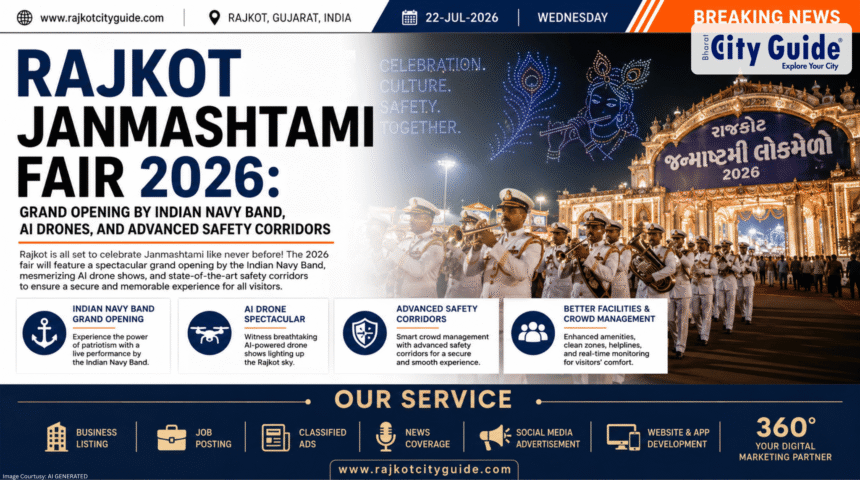
The vibrant spirit of Saurashtra is gearing up for its most anticipated annual celebration as the Rajkot Janmashtami Fair 2026 prepares to open its gates to millions of eager visitors. A landmark event in Gujarat’s cultural calendar, this year’s regional extravaganza promises a breathtaking blend of rich traditions and modern public safety systems. In an unprecedented move, the grand opening ceremony of the Lokmela will feature a majestic live performance by the official Indian Navy Band, injecting a proud sense of national honor into the traditional festivities.
- Introduction
- What is Rajkot Janmashtami Fair 2026?
- Why This News is Important
- Background Information
- Key Highlights
- Detailed Explanation of the Event
- Benefits and Crucial Features
- How It Impacts People
- Expert Insights / Industry Perspective
- Challenges and Limitations
- Future Outlook
- Frequently Asked Questions (FAQs)
- Conclusion
Beyond the musical fanfare, the local administration has substantially upgraded the festival ground infrastructure. Recognizing the immense footfall that floods the Race Course Ground each year, authorities have introduced state-of-the-art Artificial Intelligence (AI) drone monitoring systems alongside dedicated dual emergency corridors. These security improvements ensure that families can celebrate without safety anxieties.
This latest news marks a pivotal shift in how large-scale cultural gatherings are managed in Western India. By combining heritage celebrations with tactical security frameworks, the organizers are setting a new standard for public event management. In this detailed guide, we explore everything you need to know about the upcoming fair, its tech-driven infrastructure, and what makes the 2026 edition an absolute must-visit destination.
What is Rajkot Janmashtami Fair 2026?
The Rajkot Janmashtami Fair 2026, locally referred to as the Rajkot Lokmela, is the largest cultural and commercial fair in the Saurashtra region. Held annually to celebrate the birth anniversary of Lord Krishna (Janmashtami), this five-day festival transforms the heart of Rajkot into a glowing hub of joy, commerce, and community spirit.
The fair features hundreds of diverse commercial stalls, ranging from traditional handicraft bazaars and local garment outlets to immense food courts offering regional culinary delights. Amusement rides—from giant ferris wheels to high-speed roller coasters—serve as central attractions for thrill-seekers. For generations, this event has acted as a key social gathering where people from nearby rural villages and urban districts unite to experience the living folk culture of Gujarat.
Why This News is Important
This update regarding the event is significant because it highlights a major transformation in crowd safety management for mass public gatherings. Historically, managing millions of people over a five-day period poses logistical difficulties, particularly regarding crowd control and immediate medical response capabilities.
The inclusion of high-tech tools like AI-enabled aerial surveillance drones and dedicated emergency corridors reflects a proactive administrative approach. Furthermore, inviting the Indian Navy Band to inaugurate the event adds distinct cultural weight, turning a regional folk fair into a nationally celebrated spectacle. For visitors, local vendors, and city planners, these upgrades guarantee a highly structured environment that minimizes operational hazards.
Background Information
The Rajkot Lokmela has long been a core pillar of cultural identity for the people of Gujarat. Historically managed by the District Administration and the Lokmela Samiti, the fair accommodates an influx of over 1 to 1.5 million people over its operational duration. The venue, Rajkot’s historic Race Course Ground, serves as a central arena that expands dramatically to house temporary structures, amusement parks, and public utilities.
In past iterations, managing massive queues, preventing stampedes, and ensuring rapid movement for emergency services during peak hours required massive manpower. Following recent national and global trends toward smarter event hosting, the Rajkot administrative machinery has integrated proactive technology and specialized safety blueprints into the planning process for 2026, rectifying historical vulnerabilities.
Key Highlights
- Patriotic Inauguration: Grand official opening powered by a live performance from the renowned Indian Navy Band.
- Smart Surveillance: Continuous, real-time crowd management utilizing cutting-edge AI-powered drones.
- Dedicated Medical Corridors: Two specially mapped emergency corridors designed for zero-obstacle medical and fire evacuations.
- Immediate Response Units: 5 fully equipped ambulances and 3 active fire tenders permanently stationed inside the fairgrounds.
- Regulated Amusement Costs: Government-capped fair rides, with ticket prices strictly limited to ₹50 for major rides and ₹35 for children’s rides to ensure affordability.
- Extensive Commercial Zones: Allocation of over 228 strategically organized plots, including 100 dedicated toy stalls and 48 local food stalls.
Detailed Explanation of the Event
Opening Ceremony with a Defense Touch
The Rajkot Janmashtami Fair 2026 is breaking away from conventional inaugural protocols by welcoming the Indian Navy Band. This performance aims to give attendees a close-up look at defense traditions, setting an energetic and patriotic tone for the rest of the multi-day festival.
AI-Driven Crowd Analytics
To keep an eye on the heavy crowds, the local police department and administrative committees are rolling out AI-driven drones. Unlike simple video recording units, these advanced drones use specialized software to measure crowd density, trace foot-traffic patterns, and flag any irregular movement bottlenecks. If a section of the Race Course Ground becomes unsafely crowded, the system instantly alerts ground security teams to redirect incoming crowds.
The Blueprint of Dual Emergency Corridors
One of the most significant engineering updates to the fairground layout is the design of two distinct emergency corridors. These pathways will remain completely clear of pedestrian traffic and commercial stalls. If an emergency occurs, these corridors allow stationed ambulances and fire engines to reach the scene without navigation delays, addressing a common issue at large public festivals.
Benefits and Crucial Features
- Enhanced Public Safety: The use of AI surveillance reduces the reliance on manual tracking, offering a quicker response to potential safety issues.
- Affordable Entertainment: Capping ticket prices ensures the fair remains open to families from all economic backgrounds, keeping the traditional spirit alive.
- Boost for Local Businesses: With organized layout spaces and reliable security, small artisans, toy manufacturers, and food vendors can operate efficiently.
- Boosted Tourism: The addition of unique attractions like the Indian Navy Band draws in tourists from across India, providing an economic lift to Rajkot’s hospitality sector.
How It Impacts People
Impact on Citizens and Travelers
For local citizens and visiting tourists, the updated layout makes navigating the fairgrounds much less stressful. Families traveling with young children or elderly relatives can move through the venue with greater peace of mind, knowing that modern security and emergency services are actively in place.
Impact on Local Small Vendors
Local traders stand to benefit immensely from the structured setup. Well-planned pedestrian paths prevent dangerous bottlenecks, ensuring a steady, manageable flow of foot traffic past toy stalls, handicraft shops, and food booths.
Expert Insights / Industry Perspective
Public event safety analysts note that integrating AI-based predictive analytics with physical barriers marks the future of managing large-scale events. According to municipal planning experts, creating designated emergency lanes inside high-density fairgrounds is an essential best practice that should be adopted across all major regional festivals in India. The tech deployment at Rajkot demonstrates that traditional folk festivals can successfully adopt modern safety innovations without losing their cultural charm.
Challenges and Limitations
While the safety upgrades are comprehensive, executing them successfully brings certain practical challenges:
- Tech Management under Pressure: Operating advanced AI drones continuously in dusty, high-temperature open fields requires constant technical support.
- Enforcing Price Controls: Making sure all ride operators stick to the government-capped rates (₹35–₹50) requires regular monitoring by ground authorities.
- Managing Entry Points: Preventing overcrowding at the main entrances during peak holiday hours remains a demanding task for local police forces.
Future Outlook
The technological framework used for the Rajkot Janmashtami Fair 2026 could serve as a model for other large cultural gatherings across Gujarat, such as the Tarnetar Fair or the Navratri festivals. As smart city infrastructure expands, future iterations will likely include real-time mobile app alerts, automated parking tracking, and digital queue systems for major rides, continuing to blend rich traditions with modern convenience.
Frequently Asked Questions (FAQs)
1. What are the dates for the Rajkot Janmashtami Fair 2026?
The fair runs for five days during the festive season of Janmashtami, typically scheduled around early September, aligning perfectly with standard regional holiday calendars.
2. Who is performing at the opening ceremony of the Rajkot Janmashtami Fair 2026?
The 2026 edition features a grand opening performance by the official Indian Navy Band, bringing a patriotic touch to the start of the event.
3. How will AI technology be used at the fairgrounds?
Advanced AI-powered drones will monitor crowd density and movement across the Race Course Ground in real-time, helping security teams identify and ease crowd congestion quickly.
4. What are the emergency arrangements inside the fair venue?
The venue features two dedicated emergency corridors, along with 5 ambulances and 3 fire engines stationed on-site for immediate response.
5. What are the ticket prices for the amusement rides?
The district administration has capped ticket prices to keep the fair affordable: tickets are set at ₹50 for adults/large rides and ₹35 for children’s rides.
6. Where is the Rajkot Janmashtami Fair 2026 being held?
The event takes place at the historic Race Course Ground located in the center of Rajkot, Gujarat.
Conclusion
The Rajkot Janmashtami Fair 2026 effectively bridges classic cultural heritage with modern safety planning. By combining the musical traditions of the Indian Navy Band with protective measures like AI drone tracking and dedicated emergency lanes, the city of Rajkot is offering a welcoming, secure environment for all its visitors. This year’s balanced approach ensures that the historic Lokmela remains a safe, joyful celebration of community spirit, setting a great example for large public festivals across India.