Introduction
In the current global economic landscape, vocational education is experiencing a major technological revolution. For decades, Industrial Training Institutes (ITIs) across India, particularly institutions designed for women, primarily focused their curriculum on conventional trades. Traditional subjects like basic sewing, primary needlework, standard embroidery, and basic secretarial practices were long considered the default options for female vocational students. While these traditional skills provided baseline livelihood opportunities, they often kept female workers within low-value, low-paying segments of the industrial workforce.
- Introduction
- What is the Concept of Women’s ITI Modern Courses?
- Why This News is Important
- Background Information
- Key Highlights
- Detailed Explanation of the Curricular Transformation
- Benefits and Features of the Modernized Training Model
- How It Impacts People
- Expert Insights / Industry Perspective
- Challenges and Limitations
- Future Outlook
- Frequently Asked Questions (FAQs)
- Conclusion
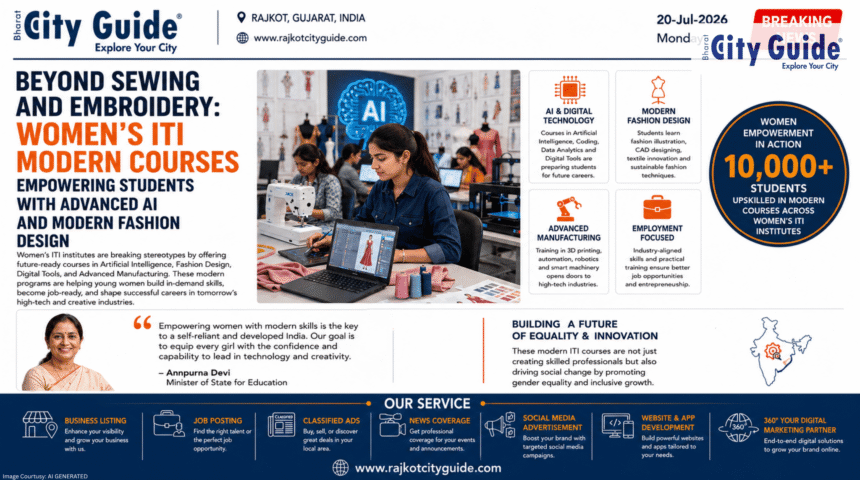
However, as artificial intelligence (AI), machine learning, digital smart manufacturing, and advanced technologies change global industries, vocational frameworks are shifting to keep pace. A prime example of this progressive shift is unfolding in Gujarat, where the state government’s Labor, Skill Development and Employment Department has rolled out a fresh suite of advanced technical programs. By introducing Women’s ITI Modern Courses that center on artificial intelligence programming, drone piloting, advanced computer-aided fashion design, and the Internet of Things (IoT), these institutes are completely changing their approach to female vocational training.
This development marks a major milestone in economic independence and gender-focused skill acquisition. Instead of restricting female students to home-based or manual manufacturing roles, these updated programs actively prepare women for high-paying positions in the tech sector, automated manufacturing, and digital design studios. This detailed article explores the launch of these advanced programs, analyzing their long-term value, underlying structure, and role in building an independent, tech-savvy workforce.
What is the Concept of Women’s ITI Modern Courses?
The concept of Women’s ITI Modern Courses represents an updated approach to industrial skill training, specially tailored to bridge the gap between regional workers and the global tech economy. Administered via the national Craftsmen Training Scheme (CTS) and enhanced by state-level development programs, these modern courses replace legacy manual training with structured, digital-first learning paths. The goal is to move beyond simple mechanical actions and teach students how to work alongside advanced software, algorithmic workflows, and automated systems.
For example, in the newly introduced Artificial Intelligence Programming Assistant trade, the curriculum covers far more than basic computer literacy. Students learn the fundamentals of python programming, data preprocessing, machine learning model fine-tuning, and the practical application of generative AI tools in daily business environments.
Similarly, the transformation of the textile track is a major highlight of these changes. Traditional tailoring classes have been upgraded into comprehensive Fashion Design and Technology programs. In these updated courses, students spend their time mastering advanced computer-aided design (CAD) software, digital pattern grading tools, automated laser cutting machines, and 3D garment visualization applications. These modern courses balance classroom theory with hands-on practice, dedicating approximately 70% of the training hours to direct lab work and real-world industrial projects.
Why This News is Important
The introduction of these advanced courses across vocational centers represents a major step forward for economic development and social progress, driven by several key factors:
- Closing the Tech Gender Gap: While the broader technology sector has grown rapidly, female representation in technical roles has often lagged. These new courses address this imbalance early by training women in advanced tech fields directly after high school.
- Boosting Industrial Earning Potential: Moving from basic manual assembly work to specialized positions like AI data managers or digital design coordinators significantly increases a graduate’s initial earning potential.
- Strengthening Local Manufacturing: As regional businesses embrace automation and smart machinery, they need local technicians who understand these tools. Providing this training locally keeps the regional economy competitive and resilient.
- Optimizing Public Education Assets: Upgrading existing ITI facilities with advanced computer labs and digital tools maximizes the value of public education investments, turning regional schools into centers of high-tech learning.
Background Information
To fully appreciate the scope of this transformation, it helps to understand the historical context of industrial training centers in India. Established under the Directorate General of Training (DGT), ITIs were originally created to provide practical technical training to high school graduates, preparing them to enter the industrial workforce without needing a full four-year engineering degree. However, over the years, a clear divide formed between general ITIs and specialized women’s ITIs. General facilities quickly added courses in electronics, machining, and motor mechanics, while women’s centers often focused entirely on traditional, domestic-oriented skills.
This traditional approach created structural challenges, often steering female graduates into informal, lower-paying sectors like small boutique garment tailoring or basic administrative work. Meanwhile, the global manufacturing landscape was changing rapidly. The emergence of Industry 4.0 brought connected assembly lines, automated machinery, and AI-driven inventory systems, making traditional manual skills less competitive on their own.
Recognizing this growing disconnect, the national Skill India Mission began collaborating with state governments to completely overhaul vocational training. In Gujarat, this vision materialized through the deployment of updated courses across dozens of government and self-financed training centers. By partnering with global technology firms and industrial design experts, these institutes successfully modernized their classrooms, replacing outdated equipment with high-performance workstations, modern testing tools, and current industrial software suites.
Key Highlights
- Comprehensive Academic Transformation: Traditional tailoring and manual crafts are being systematically replaced by high-growth disciplines like artificial intelligence, IoT engineering, and advanced fashion design.
- Widespread Institutional Access: These new courses are being introduced across an extensive network of 67 government ITIs and multiple self-financed facilities across Gujarat.
- Valuable Global Tech Partnerships: The training programs leverage specialized curriculum collaborations with major international technology providers to ensure students learn current industry standards.
- Strong Focus on Practical Learning: The learning model prioritizes hands-on experience, dedicating 70% of course time to direct lab work, digital tools, and industry internships.
- Support for New Businesses: Graduates receive built-in guidance on entrepreneurship, micro-financing options, and digital marketing strategies to help them launch their own modern enterprises.
Detailed Explanation of the Curricular Transformation
The updated curriculum rolled out across the network of institutes introduces two distinct, high-impact learning paths designed to prepare students for the modern economy.
1. The High-Tech and Digital Intelligence Stream
This branch focuses entirely on emerging technical fields, moving past simple software use to teach true computational problem-solving.
- Artificial Intelligence Programming Assistant (AIPA): Students learn how to manage datasets, write functional automation scripts, test AI models, and build basic conversational applications.
- IoT Technician (Smart Agriculture and Smart Cities): This trade teaches students how to install, test, calibrate, and repair smart networks of sensors, microcontrollers, and connected devices.
- Drone Pilot and Maintenance Tech: A highly practical course covering drone mechanics, flight regulations, aerial data collection, and diagnostic maintenance.
2. The Advanced Creative and Design Stream
This track revitalizes traditional creative skills by integrating modern digital tools, turning artistic talent into a valuable technical asset.
- Fashion Design and Technology (FDT): This program replaces manual drafting with advanced computer-aided garment design, digital pattern-making, and structural textile analysis.
- Computer Aided Embroidery and Designing: Students learn to operate complex, multi-needle industrial embroidery machines using custom vector graphics software.
- Apparel Merchandising and Retail Management: Focuses on the business side of the industry, teaching supply chain logistics, e-commerce storefront management, and modern consumer analytics.
Benefits and Features of the Modernized Training Model
1. High-Precision Digital Infrastructure
The primary feature of the updated training centers is the addition of high-performance digital labs. Students train on professional-grade software and hardware, ensuring that their daily practice matches the exact tools, processes, and systems used by leading global firms.
2. Industry-Aligned Certifications
The courses conform to the National Skills Qualifications Framework (NSQF), providing graduates with standardized credentials that are recognized by major employers across the country, significantly simplifying the job hunt.
3. Comprehensive Business and Startup Training
Recognizing that many graduates want to build their own businesses, the modern courses integrate practical business training. Students learn how to build digital portfolios, market their services on global e-commerce platforms, manage cash flows, and apply for government micro-loans.
4. Direct Connections to Industrial Internships
By partnering directly with regional tech clusters and manufacturing hubs, the institutes ensure that every student completes an on-the-job training program, building professional connections and real-world experience before graduation.
How It Impacts People
For Female Students and Aspiring Tech Professionals
For young women entering the workforce, the availability of these advanced courses changes everything. They gain affordable access to high-quality tech training right in their home districts, opening doors to careers in software testing, digital design, and systems management without requiring expensive university degrees.
For Local Families and Communities
When a student graduates from these modern programs and secures a skilled position, it brings lasting financial stability to the entire household. The shift from low-wage manual jobs to stable technical careers provides families with reliable income, helping them invest back into their local communities.
For Regional Employers and Small Businesses
Local tech firms, apparel brands, and industrial manufacturers gain access to a steady, reliable pool of well-trained technicians. Instead of spending months retraining new hires on basic digital tools, companies can bring in productive team members from day one, boosting overall efficiency.
Expert Insights / Industry Perspective
Leading experts in education and workforce development frequently note that the nature of entry-level technical work is shifting rapidly. Industrial analysts emphasize that manual execution alone is no longer enough to secure long-term career growth; modern workers must know how to interact with digital systems, manage data, and troubleshoot automated machinery.
Vocational training specialists point out that adding artificial intelligence and digital design tools directly into regional ITI curriculums is a highly effective way to build a future-ready workforce. By teaching young women how to manage data pipelines, operate advanced CAD software, and supervise automated equipment, these programs build highly resilient skills that will remain in demand for years to come.
Challenges and Limitations
While the rollout of these advanced courses is a massive step forward, long-term success requires careful attention to a few natural challenges:
- Continuous Instructor Retraining: Because software tools and artificial intelligence platforms change rapidly, keeping teaching staff updated on the latest changes requires ongoing investment.
- Maintaining Sensitive Hardware: High-performance computer workstations, 3D printers, and automated industrial machinery require consistent, high-quality maintenance to stay operational.
- Expanding Internet Access in Rural Areas: To maximize the impact of these digital courses, regional campuses must have access to fast, stable internet connections for online research and cloud-based software tools.
Future Outlook
The expansion of these advanced courses marks the beginning of a long-term shift in vocational education. Over the coming years, we can expect to see these digital-first programs become the standard model across all regional training centers.
As augmented reality (AR) and virtual reality (VR) tools become more accessible, future iterations of these courses will likely include immersive simulation labs, allowing students to practice complex tasks like drone repairs or advanced pattern adjustments in a safe, interactive virtual space. The steady growth of these programs ensures that vocational schools will continue to play a key role in building a diverse, capable, and highly competitive tech workforce.
Frequently Asked Questions (FAQs)
1. What makes Women’s ITI Modern Courses different from older, traditional training programs?
These updated courses replace older manual training with advanced digital skills like artificial intelligence programming, drone operations, and computer-aided fashion design.
2. Who is eligible to enroll in these new AI and advanced design courses?
Most of these advanced technical courses are open to students who have successfully completed their 10th-grade exams or equivalent secondary education.
3. How long do these updated technical training programs take to complete?
Under the standard Craftsmen Training Scheme (CTS), most of these modern specialized courses run for a full duration of one year, split across two academic terms.
4. What kinds of jobs can graduates apply for after finishing the AI programming course?
Graduates are well-prepared to step into high-demand roles like artificial intelligence programming assistants, data entry specialists, software testing technicians, and digital office managers.
5. Do these updated courses provide real-world business and entrepreneurship training?
Yes, the modern curriculum includes dedicated modules covering digital marketing, portfolio creation, e-commerce strategies, and step-by-step guidance on securing small business loans.
6. Are the certificates earned from these new programs recognized by private employers?
Absolutely. All these courses are fully certified under the National Skills Qualifications Framework (NSQF), ensuring broad recognition from major employers nationwide.
Conclusion
The successful introduction of advanced technical tracks across industrial training centers represents a monumental victory for inclusive education and economic development. By actively replacing outdated manual training with Women’s ITI Modern Courses focused on artificial intelligence, connected devices, and modern digital design, the region is showing how public education can adapt to the needs of the future.
These programs do far more than just teach new tech skills; they break down old stereotypes, boost long-term earning potential, and give young women the tools they need to build successful, independent careers. As more students graduate from these modern digital classrooms and enter the workforce, their growing technical expertise will help drive innovation, strengthen local industries, and build a brighter, more inclusive economic future for the entire region.