Introduction
Education is one of the most powerful tools for empowerment, independence, and social participation. Yet for many children with disabilities and special educational needs, access to meaningful learning remains shaped by barriers rather than opportunity. In India’s diverse and expansive education system, the conversation is increasingly shifting from simply providing education to ensuring that every child — regardless of physical, cognitive, sensory, developmental, or emotional differences — can learn, participate, and thrive with dignity.
- Introduction
- This May Include Support For:
- Core Benefits:
- Common Categories:
- 1. Accessibility
- 2. Participation
- 3. Individualization
- 4. Respect and Belonging
- Important Focus Areas:
- This May Include:
- Examples:
- This Includes:
- Better Indicators:
- Emerging Possibilities:
- Priorities:
- 1. What are Inclusive Classrooms in India?
- 2. Why is inclusive education important?
- 3. What are major barriers?
- 4. Can mainstream schools support special needs students?
- 5. What is the role of parents?
- 6. How does technology help?
- 7. Is inclusion only about disability?
This is where Inclusive Classrooms in India become essential.
Inclusive education is not merely about placing children with disabilities into mainstream schools. It is about transforming school environments, teaching practices, infrastructure, attitudes, and policies so that every learner feels supported, valued, and capable. It recognizes diversity as a strength rather than a challenge.
For India, building inclusive classrooms is both a social justice imperative and an educational necessity. As awareness of disability rights, neurodiversity, and equitable learning grows, schools, educators, families, and policymakers are increasingly exploring how to make inclusion more practical, sustainable, and impactful.
In this comprehensive guide, we explore the importance of Inclusive Classrooms in India, common barriers, government frameworks, teaching strategies, infrastructure needs, technology solutions, teacher capacity building, and the future of equitable education.
What Are Inclusive Classrooms in India?
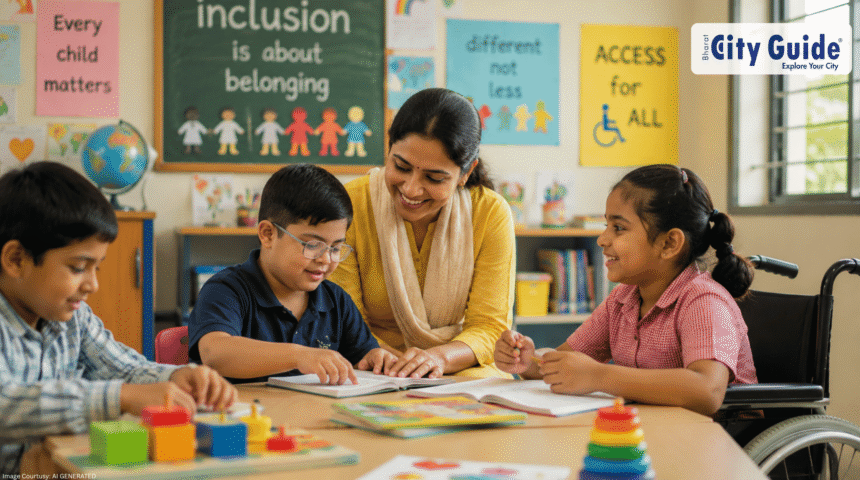
Inclusive Classrooms in India are learning environments where students with and without disabilities or special needs learn together in supportive settings that adapt to diverse requirements.
This May Include Support For:
- Physical disabilities
- Visual impairments
- Hearing impairments
- Autism spectrum differences
- Learning disabilities
- ADHD
- Intellectual disabilities
- Speech and language needs
- Emotional and behavioral challenges
The goal is participation, accessibility, and equal opportunity.
Why Inclusive Education Matters
Core Benefits:
- Equal opportunity
- Social belonging
- Reduced stigma
- Peer empathy
- Better long-term integration
- Individual dignity
Inclusive education benefits all students, not only those with disabilities.
Understanding Special Needs in Indian Education
Special needs can vary widely.
Common Categories:
- Developmental
- Cognitive
- Physical
- Sensory
- Behavioral
- Emotional
Each student’s needs may differ significantly, making individualized support essential.
Current Challenges to Inclusive Classrooms in India
1. Infrastructure Gaps
Many schools still lack:
- Ramps
- Accessible toilets
- Elevators
- Braille materials
- Assistive devices
Physical inaccessibility can immediately limit participation.
2. Teacher Preparedness
Many educators may not receive sufficient practical training in:
- Differentiated instruction
- Behavior support
- Disability inclusion
- Assistive technology
3. Social Stigma
Misconceptions around disability can create:
- Isolation
- Bullying
- Low expectations
- Exclusion
4. Resource Constraints
Government and low-income schools may face:
- Staff shortages
- Limited specialists
- Financial restrictions
Key Principles of Inclusive Classrooms
1. Accessibility
The environment must be physically and educationally accessible.
2. Participation
Students should actively engage, not merely be present.
3. Individualization
Teaching must adapt to diverse learning profiles.
4. Respect and Belonging
Inclusion requires social acceptance.
Government Support and Policy Landscape
India has increasingly emphasized inclusive education through disability rights and educational policy frameworks.
Important Focus Areas:
- Universal access
- Equity
- Foundational learning
- Teacher capacity
- Assistive systems
Implementation remains the key challenge.
Universal Design for Learning (UDL)
UDL encourages flexible teaching strategies for diverse learners.
This May Include:
- Visual aids
- Audio tools
- Flexible assessments
- Interactive methods
- Alternative communication
Classroom Strategies for Inclusion
Differentiated Instruction
Teachers can adapt:
- Pace
- Content
- Assessment
- Communication style
Peer Support Systems
Buddy systems can encourage:
- Social connection
- Participation
- Confidence
Sensory-Friendly Spaces
Quiet zones may help students with sensory overload.
Visual Learning Tools
Charts, icons, and structured instructions can improve accessibility.
Role of Special Educators
Special educators can support:
- Individual plans
- Intervention
- Teacher collaboration
- Family coordination
Parent and Family Involvement
Families play a vital role in:
- Advocacy
- Communication
- Continuity
- Emotional support
Strong home-school collaboration improves outcomes.
Assistive Technology and Digital Inclusion
Technology can significantly enhance inclusion.
Examples:
- Screen readers
- Speech-to-text
- AAC devices
- Captioning
- Adaptive keyboards
Inclusion Beyond Academics
True inclusion also includes:
- Sports
- Arts
- Social activities
- Leadership opportunities
Mental Health and Emotional Safety
Students with disabilities may also face:
- Anxiety
- Isolation
- Self-esteem challenges
Schools must prioritize psychological safety.
Teacher Training: The Backbone of Inclusion
For Inclusive Classrooms in India to succeed, teachers need:
- Practical strategies
- Empathy
- Disability literacy
- Continuous support
Challenges in Rural India
Rural schools may face:
- Specialist shortages
- Accessibility issues
- Awareness gaps
- Funding limitations
Localized solutions are essential.
Community Awareness and Cultural Change
Inclusion requires broader societal participation.
This Includes:
- Parent awareness
- Peer education
- School campaigns
- Positive representation
Measuring Inclusion Success
Success should not only mean enrollment.
Better Indicators:
- Participation
- Learning growth
- Emotional wellbeing
- Peer inclusion
- Accessibility
Future Trends in Inclusive Education in India
Emerging Possibilities:
- AI learning support
- Accessible EdTech
- Better policy integration
- Teacher micro-credentials
- Community-driven inclusion models
Best Practices for Building Inclusive Classrooms
Priorities:
- Accessibility audits
- Teacher development
- Parent collaboration
- Flexible teaching
- Assistive tools
- Anti-stigma culture
Frequently Asked Questions (FAQs)
1. What are Inclusive Classrooms in India?
They are educational environments where students with diverse abilities learn together with support and accessibility.
2. Why is inclusive education important?
It promotes equity, dignity, social integration, and learning opportunity.
3. What are major barriers?
Infrastructure, stigma, teacher training, and resources.
4. Can mainstream schools support special needs students?
Yes, with proper training, support systems, and accessibility.
5. What is the role of parents?
Parents support advocacy, continuity, and collaboration.
6. How does technology help?
Assistive tools can improve communication, access, and independence.
7. Is inclusion only about disability?
No, it broadly supports diverse learning needs and equitable participation.
Conclusion
Inclusive Classrooms in India represent a vital shift toward educational equity, dignity, and opportunity for all learners. Building truly inclusive schools requires more than policy declarations — it demands practical infrastructure, teacher preparedness, assistive tools, family collaboration, and cultural transformation.
When schools embrace diversity not as a burden but as a reality of human learning, education becomes more compassionate, effective, and just.
For India’s future, inclusive classrooms are not simply an educational reform — they are a societal commitment to ensuring every child is seen, supported, and empowered.
Creating inclusive education is ultimately about creating a more inclusive nation.