Introduction
India’s digital transformation has been one of the most ambitious governance shifts in the world. Over the past decade, the country has moved rapidly from paper-based administration to digital-first public service delivery. However, one of the biggest challenges in this journey has been ensuring that rural populations are not left behind.
- Introduction
- Definition
- Key Goals:
- 1. Bringing Government Services to Villages
- 2. Digital Banking Access in Rural Areas
- 3. Supporting Digital Literacy
- 4. Boosting Rural Entrepreneurship
- 5. Enabling E-Governance
- 1. Government Services
- 2. Financial Services
- 3. Education Services
- 4. Healthcare Services
- 5. Utility Services
- 1. Reduced Travel Burden
- 2. Increased Financial Inclusion
- 3. Job Creation
- 4. Empowerment of Women Entrepreneurs
- 1. Internet Connectivity
- 2. Biometric Authentication
- 3. Cloud-Based Platforms
- 1. Internet Connectivity Issues
- 2. Awareness Gaps
- 3. Infrastructure Limitations
- 4. Training Requirements
- Positive Outcomes:
- Responsibilities:
- Expected Developments:
- 1. What are Common Service Centres?
- 2. Who runs CSCs?
- 3. What services do CSCs provide?
- 4. Are CSCs available in cities?
- 5. How do CSCs help rural India?
- 6. What is their role in Digital India?
- 7. Are CSCs profitable?
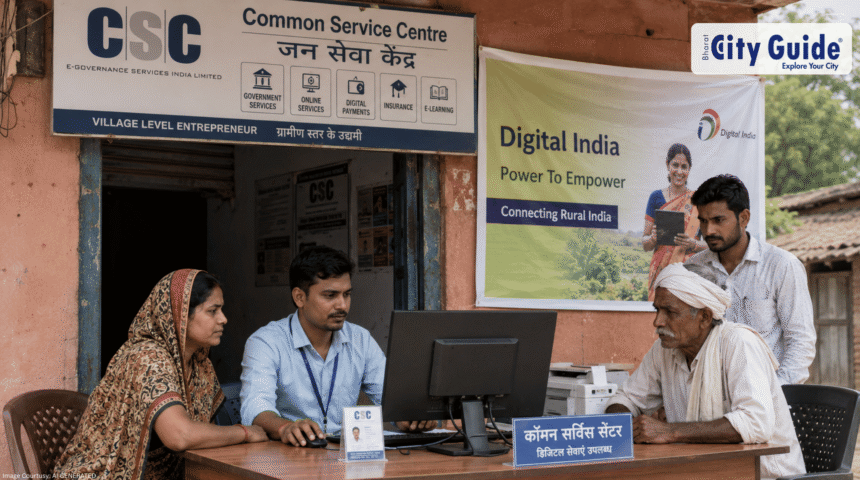
To bridge this gap, the government introduced a network of digital access points known as Common Service Centres (CSCs). These centres have become a crucial link between citizens and government services, especially in rural and semi-urban areas.
In this article, we explore Exploring How India’s Common Service Centres Turned Rural Hubs Into Digital Tech Icons, examining their role in digital inclusion, rural empowerment, economic impact, and future potential.
What Are Common Service Centres (CSCs)?
Common Service Centres are digital service delivery points established under India’s Digital India program. They act as access hubs for government, financial, and utility services.
Definition
CSCs are physical facilities that provide e-governance, banking, insurance, and utility services to citizens in rural and remote areas.
Objectives of Common Service Centres
Key Goals:
- Promote digital inclusion
- Deliver government services locally
- Reduce digital divide
- Enable financial access
- Support rural entrepreneurship
Structure of the CSC Network
The CSC ecosystem operates through:
- Village Level Entrepreneurs (VLEs)
- District-level management
- State and central government coordination
Exploring How India’s Common Service Centres Turned Rural Hubs Into Digital Tech Icons
CSCs have significantly transformed rural areas into digital access points.
1. Bringing Government Services to Villages
Before CSCs, rural citizens had to travel long distances for:
- Certificates
- Pension services
- Aadhaar updates
Now, these services are available locally.
2. Digital Banking Access in Rural Areas
CSCs offer:
- Banking transactions
- Money transfers
- Balance inquiries
This has improved financial inclusion significantly.
3. Supporting Digital Literacy
CSCs help rural citizens learn:
- Internet usage
- Online applications
- Digital payments
4. Boosting Rural Entrepreneurship
Each CSC is run by a local entrepreneur, creating:
- Employment opportunities
- Local business ownership
5. Enabling E-Governance
Government services available through CSCs include:
- Utility bill payments
- Application forms
- Certificates and registrations
Services Provided by CSCs
1. Government Services
- Aadhaar services
- PAN card applications
- Pension schemes
2. Financial Services
- Banking transactions
- Insurance enrollment
- Loan applications
3. Education Services
- Online courses
- Skill development programs
4. Healthcare Services
- Telemedicine consultations
- Health insurance enrollment
5. Utility Services
- Electricity bills
- Water bills
- Mobile recharges
Role of CSCs in Rural Digital Transformation
CSCs act as:
- Digital bridges
- Service delivery points
- Economic empowerment centers
Impact on Rural India
1. Reduced Travel Burden
Citizens no longer need to visit cities for basic services.
2. Increased Financial Inclusion
Banking services are now accessible in villages.
3. Job Creation
Thousands of Village Level Entrepreneurs are employed.
4. Empowerment of Women Entrepreneurs
Many CSC operators are women.
Role in Digital India Mission
CSCs are a core pillar of the Digital India initiative, supporting:
- Digital governance
- Digital economy
- Digital empowerment
Technology Used in CSCs
1. Internet Connectivity
Enables real-time service delivery.
2. Biometric Authentication
Used for secure identity verification.
3. Cloud-Based Platforms
Support data storage and service access.
Challenges Faced by CSCs
1. Internet Connectivity Issues
Rural connectivity remains uneven.
2. Awareness Gaps
Some citizens are unaware of services.
3. Infrastructure Limitations
Electricity and hardware issues in remote areas.
4. Training Requirements
Continuous training needed for operators.
Economic Impact of CSCs
Positive Outcomes:
- Rural income generation
- Local entrepreneurship growth
- Reduced service delivery costs
Social Impact
CSCs have improved:
- Social inclusion
- Access to welfare schemes
- Awareness of government programs
Urban vs Rural Digital Divide
CSCs help reduce the gap by:
- Providing equal access to services
- Bringing technology to remote areas
- Encouraging digital participation
Role of Village Level Entrepreneurs (VLEs)
VLEs are the backbone of CSCs.
Responsibilities:
- Operating service centers
- Assisting citizens
- Managing digital transactions
CSCs and Financial Technology Growth
They support:
- UPI transactions
- Digital wallets
- Online banking adoption
Expansion of CSC Network
CSCs are now expanding across:
- Villages
- Semi-urban areas
- Remote regions
Future of Common Service Centres
Expected Developments:
- AI-based service assistance
- Expanded healthcare services
- Advanced digital literacy programs
- Greater private sector collaboration
Policy Support for CSCs
Government support includes:
- Subsidies
- Infrastructure funding
- Training programs
Frequently Asked Questions (FAQs)
1. What are Common Service Centres?
They are rural digital service hubs in India.
2. Who runs CSCs?
Village Level Entrepreneurs operate them.
3. What services do CSCs provide?
Government, banking, and utility services.
4. Are CSCs available in cities?
Mostly in rural and semi-urban areas.
5. How do CSCs help rural India?
They provide digital access and financial inclusion.
6. What is their role in Digital India?
They are a key implementation pillar.
7. Are CSCs profitable?
Yes, they support rural entrepreneurship.
Conclusion
India’s Common Service Centres have become a powerful force in bridging the digital divide between urban and rural populations. By delivering essential services at the village level, they have transformed remote communities into digitally connected ecosystems.
The Exploring How India’s Common Service Centres Turned Rural Hubs Into Digital Tech Icons highlights how innovation in governance can create large-scale social and economic transformation.
As India continues its digital journey, CSCs will remain central to ensuring inclusive growth, empowering rural citizens, and strengthening the foundation of a truly digital nation.