Introduction
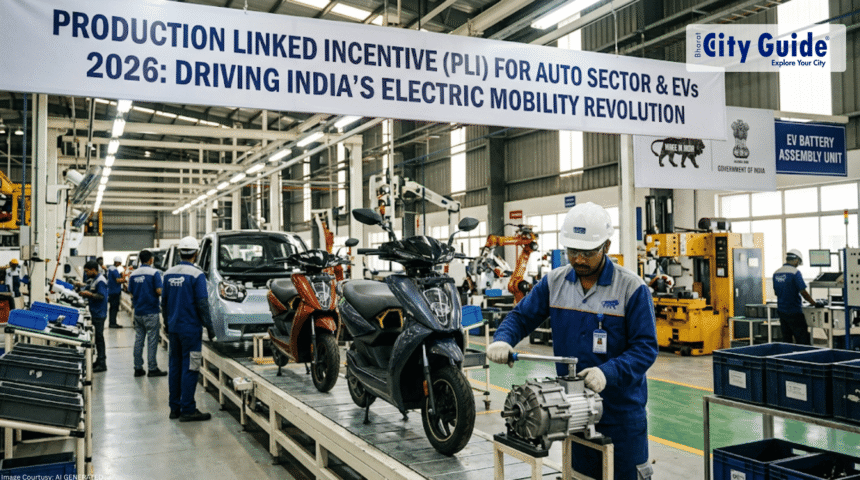
India’s electric mobility transformation is accelerating. With oil imports exceeding $200 billion annually and urban pollution at 10%, EV adoption is both economic and environmental necessity. The Production Linked Incentive (PLI) for Auto Sector and EVs, allocated ₹25,938 Cr, incentivizes domestic manufacturing, battery production, and EV sales, making 2026 a pivotal year for India’s green mobility ambitions.
By 2030, India targets 30% EV sales, driven by battery cost reductions, localization, and fiscal incentives under PLI. The scheme also fosters jobs, startup growth, and export opportunities, especially in Gujarat’s automotive clusters like Dholera and Sanand.
Policy Overview
The PLI Auto/EV Scheme provides 14–18% incentives on incremental sales or production, while the 50 GWh Advanced Cell Chemistry (ACC) battery PLI supports ₹18,100 Cr investments in domestic cell and pack manufacturing.
Key Features
- Eligible Companies: 23 manufacturers, including Tata, Mahindra, Hyundai, Ola
- Battery Targets: 50 GWh, focus on lithium-ion, solid-state, and hydrogen integration
- Localization: 30% target for components
- Employment: 7.5 lakh direct and indirect jobs expected
- Export Incentives: PLI linked to incremental export production, boosting $50 billion in exports by 2030
Key Objectives & Provisions
Objectives
- Localize 30% of EV and auto components
- Produce 50 GWh of advanced EV batteries
- Generate 7.5 lakh jobs in manufacturing, R&D, and EV infrastructure
- Support exports of EVs, batteries, and auto components
- Align with India’s 2030 EV sales target of 30%
Provisions
- Sales/production incentives: 14–18% on incremental sales
- Battery PLI: ₹18,100 Cr for domestic cell/pack production
- Technology support: H2, solid-state, and advanced chemistries
- MSME and vendor development: Encourage local suppliers for battery and EV components
- Dholera Hub: Key manufacturing and assembly cluster for EVs
Policy in Simple Terms
PLI is cash incentives for EV makers and auto manufacturers scaling production in India.
- More Tata Nexons or Mahindra EVs made locally = cheaper prices, jobs, and energy savings
- Battery manufacturers investing in domestic packs = stable supply, export potential, and lower import reliance
- MSMEs supporting charging and component supply = business opportunities and skill development
| Incentive Type | Target / Allocation | Impact |
| Auto Manufacturing | 14–18% incremental sales | Cheaper EVs, higher output |
| Battery Production | 50 GWh ACC cells/packs | Energy security, localization |
| Jobs | 7.5 lakh | Skilled employment, MSME growth |
Who Is Affected and How
EV Manufacturers
- Tata, Mahindra, Hyundai, Ola expand factories
- Benefit from subsidized costs, sales incentives, and tech adoption
- Can export to global markets, boosting India’s green export footprint
MSMEs & Suppliers
- Charging infrastructure developers see demand rise
- Battery component manufacturers gain new contracts
- Gujarat automotive clusters like Dholera/Sanand see employment boost
Consumers
- Lower running costs: EV owners save up to ₹1 lakh per 5 years on fuel
- Greater vehicle affordability due to domestic production and PLI incentives
- Access to locally manufactured batteries, enhancing reliability
Real-Life Implications
- Rajkot commuter buys ₹10L EV, saves daily fuel cost and maintenance
- Wellness coach uses EVs to conduct mobile classes, reducing commuting expenses
- MSMEs supply parts for charging stations and battery packs, generating new revenue streams
Expected Benefits
Short-Term (2026–2027)
- 50% component localization achieved
- EV sales rise, aligning with FAME-III successor targets
- MSME supplier network growth, especially in Gujarat and Tamil Nadu
Long-Term (2026–2030)
- 30% EV penetration in total vehicle sales by 2030
- $50 billion in EV and battery exports
- Reduction of $20 billion in oil imports
- Boost to green mobility jobs, R&D, and domestic supply chain resilience
| Metric | Short-Term | Long-Term |
| EV Sales | 5.6 lakh (2025 baseline) | 30% of new vehicles by 2030 |
| Battery Production | 25 GWh | 50 GWh |
| Jobs Created | 3–4 lakh | 7.5 lakh |
| Oil Savings | $10 Bn | $20 Bn |
Concerns, Challenges, or Criticisms
- Battery Import Dependence: China supplies 80% of raw materials
- Charging Infrastructure Gaps: India needs 10 lakh charging points, only 1 lakh installed
- Startups Ramp-Up: Smaller EV firms may struggle to meet PLI thresholds
- Grid & Tech: EV battery recycling, grid integration, and hydrogen adoption require additional investments
Real-Life Implications
- Rajkot commuters switch to PLI-approved EVs, cutting fuel costs by 50%
- Wellness centers operate mobile classes on EVs, reducing travel expenses and carbon footprint
- MSMEs supplying battery components grow businesses, hire skilled workforce, and expand exports
What This Means for Common Citizens
- Buy PLI-approved EVs for lower prices and long-term savings
- Support domestic battery manufacturing by choosing locally made EVs
- MSME and startup employees gain skilled employment in battery/EV clusters
- Environmental benefit: Reduction of urban pollution and carbon footprint
Tip: Check state subsidies and PLI-linked EV promotions for additional savings.
Future Outlook
- Budget 2026: PLI incentives for hydrogen EVs and scrappage 2.0
- 2030 Vision: 30% EV sales, 50 GWh battery production, and full localization of key components
- Infrastructure Build-Out: 10 lakh charging stations by 2030, focus on urban and highway corridors
- Export Strategy: PLI-linked EVs and batteries to global markets, especially Europe and Southeast Asia
Conclusion: What Citizens Should Know
The PLI Auto & EV scheme is driving India’s electric mobility revolution, supporting:
- Cheaper EVs and batteries
- Job creation in manufacturing, battery, and infrastructure
- Energy security and oil import reduction
- Green transition and urban pollution reduction
Citizens should:
- Buy PLI-approved EVs to maximize subsidies and incentives
- Support domestic supply chains via local service and battery purchases
- Monitor pliautoscheme.in for updates on manufacturers and approved incentives
- Explore green mobility jobs in battery, assembly, and charging networks
By 2026, PLI is accelerating India’s transition to electric mobility, green jobs, and domestic manufacturing leadership.
Key Takeaways
- 14–18% incentives on incremental sales for auto/EV manufacturers
- 50 GWh ACC battery PLI for domestic cells and packs
- 7.5 lakh jobs in manufacturing, R&D, and infrastructure
- EV sales target: 30% by 2030
- Benefits: Cheaper vehicles, energy savings, export growth, pollution reduction
- Challenges: Charging infrastructure, battery imports, startup scale-up
- 2026 Outlook: Hydrogen EVs, scrappage push, and export expansion
FAQs
Q1: What is the PLI Auto & EV scheme?
A: It’s a government incentive program providing 14–18% cashback on incremental EV/auto sales and subsidies for domestic battery manufacturing.
Q2: Which companies are eligible?
A: 23 approved manufacturers including Tata, Mahindra, Hyundai, Ola.
Q3: What is the battery target under PLI?
A: 50 GWh of advanced cell chemistry (ACC) batteries for EVs by 2030.
Q4: How many jobs will PLI Auto/EV create?
A: Approximately 7.5 lakh direct and indirect jobs across manufacturing, battery, and supply chain.
Q5: How does PLI benefit consumers?
A: Lower EV prices, cheaper batteries, and long-term fuel savings.
Q6: What is the localization target?
A: 30% of EV components, including batteries, motors, and assemblies, should be manufactured domestically.
Q7: How can citizens access PLI-approved EVs?
A: Check pliautoscheme.in for approved models and manufacturers.
Q8: What is the 2026 future outlook for PLI Auto/EV?
A: Hydrogen vehicle incentives, scrappage 2.0 policy, and expansion of domestic battery production with export focus.