Introduction
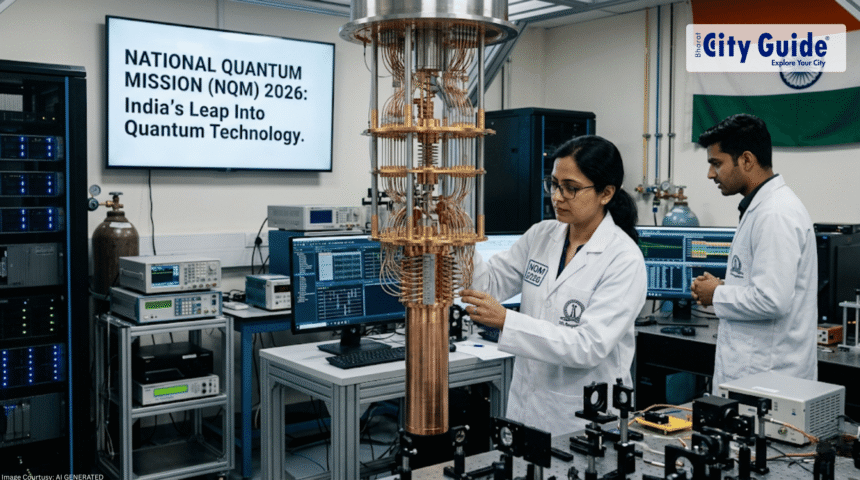
Quantum technology promises a revolution in computation, communication, and materials science, potentially transforming banking, health, logistics, and AI security. The National Quantum Mission (NQM), approved in 2023 with ₹6,003 crore, is India’s strategic initiative to secure a leadership position in the global quantum race by 2030-31.
Classical computing struggles with highly complex problems, while quantum computing can offer speedups of 1,000x, enabling breakthroughs in drug discovery, encryption, optimization, and secure communication. With the rapid expansion of AI and cyber threats in 2026, NQM is crucial for national security and economic competitiveness.
Policy Overview
The NQM aims to build a quantum ecosystem encompassing research, technology development, industry collaboration, and skilled human resources. The mission structure includes:
- 4 Thematic Hubs (T-Hubs): Computing, Sensing, Materials, and Communication
- 2 Prototype Systems: Medium-to-large-scale quantum processors (50–1000 qubits)
- 1000+ Researchers: Across India in collaboration with universities and research institutes
- Satellite-based Quantum Key Distribution (QKD): Secure communication channels
- I-Hubs: Quantum research incubators in Delhi, Pune, Bangalore, and Hyderabad
Funding & Collaborations:
- ₹6,003 Cr phase-1 approved; Phase-2 expected ₹10,000 Cr in 2026 for scale-up
- 206 projects funded domestically, plus international partnerships with USA, Australia, Germany, and Japan
Key Objectives & Provisions
Objectives
- Establish global quantum leadership in computing and communication
- Generate intellectual property and patents in quantum technologies
- Develop a skilled workforce for emerging quantum sectors
- Enable secure financial transactions, defense communication, and healthcare solutions
Provisions
- Mission Secretariat under DST to coordinate projects
- Public-private partnerships for applied R&D
- International access facilities for knowledge exchange
- Skilling & education: Training 10,000 students in quantum computing, sensing, and communication
In Simple Terms
NQM creates super-computers solving unsolvable problems:
- Secure banking and UPI transactions
- Faster personalized medicine discovery
- Optimized logistics and AI computation
- Unhackable communication networks
| Hub | Focus Area | Key Feature |
| Computing | 1000-qubit processors | Solving complex optimization problems |
| Sensing | Precision health & materials | Advanced detection & measurement |
| Communication | Quantum key distribution | Unhackable, satellite-based links |
| Materials | Advanced materials research | New superconductors, batteries |
Who Is Affected and How
- Researchers & Startups: Access to T-Hubs, infrastructure, and funding; incubators in Pune/Delhi/Bangalore/Hyderabad
- Citizens: Quantum-secure UPI payments, banking transactions, and health data encryption
- Pharma & Health Sector: Faster drug discovery using quantum algorithms
- Defense & Security: Secure, unbreakable communication networks
Example Impact:
- Rajkot bank implements quantum encryption to prevent cyberattacks
- Wellness coach in Mumbai leverages quantum-informed drug research for personalized wellness plans
Expected Benefits
Short-Term (2026–2028)
- Patents and publications from T-Hubs
- Creation of 1,000+ quantum research jobs
- Secure communication trials for banks and government agencies
Long-Term (2030–2031)
- GDP boost of 0.5–1% through quantum-enabled pharmaceutical, logistics, and AI applications
- India positioned as a global hub for quantum R&D and IP
- Mass adoption of quantum-secure digital infrastructure
| Metric | Target by 2031 |
| Qubits | 1000+ in prototype systems |
| Researchers | 1000+ active |
| Quantum-secure networks | Satellite QKD operational nationwide |
| Patents/IP | 500+ patents |
Concerns, Challenges, or Criticisms
- Talent shortage: Skilled quantum scientists are limited; global brain drain risks
- High costs: Cryogenic systems and prototype infrastructure expensive
- Project delays: Advanced hardware may face procurement and development lags
- Ethical concerns: Quantum AI and cryptography applications need strict guidelines
Real-Life Implications
- Financial sector: Quantum encryption safeguards online banking and mobile wallets
- Healthcare: Accelerated quantum simulations reduce drug development time
- Logistics: Optimized routing saves fuel and time for enterprises
- Education: Upskilling programs enable students to secure high-demand quantum jobs
What This Means for Common Citizens
- Digital Security: Safer UPI and online banking transactions
- Job Opportunities: Quantum skilling programs for students and professionals
- Healthcare Advancements: Faster development of vaccines and therapies
- Awareness: Citizens should understand the value of quantum literacy in tech careers
How to Engage:
- Take online courses in quantum computing, cryptography, and AI
- Follow DST India for programs, internships, and grants
- Encourage startups and MSMEs to explore quantum-enabled solutions
Future Outlook
- 2026: Prototype systems live; first T-Hubs operational
- 2027–2028: Expand satellite-based quantum key distribution
- 2030–2031: India as a global quantum R&D and IP hub, Phase-2 funding of ₹10,000 Cr
- Global Standards: Participation in international quantum standards and IP frameworks
Conclusion: What Citizens Should Know
The National Quantum Mission positions India at the forefront of a technology revolution. Citizens, students, and professionals should:
- Track DST announcements and enroll in quantum courses
- Explore opportunities in quantum-secure banking, drug discovery, and AI applications
- Support startups leveraging quantum innovation
- Understand that secure digital services and jobs of the future depend on quantum technologies
Quantum technology is not just science fiction—it’s becoming part of everyday life by 2026, from secure UPI payments to advanced healthcare.
Key Takeaways
- ₹6,003 Cr Phase-1 funding, with Phase-2 ₹10,000 Cr projected
- 4 thematic hubs, 1000+ researchers
- Benefits: Innovation, security, jobs, GDP growth
- Challenges: Talent shortage, high costs, ethical concerns
- Citizens: Upskill for quantum-ready careers
- 2026 Milestone: First prototypes operational
FAQs
Q1: What is the National Quantum Mission?
A: NQM is India’s government initiative to develop quantum computing, communication, sensing, and materials, with funding, research hubs, and skilling programs.
Q2: When will quantum systems become operational?
A: Phase-1 prototypes (50–1000 qubits) expected by 2026–2027, with full-scale deployment by 2030.
Q3: Who can participate in NQM programs?
A: Researchers, students, startups, and private firms; 10,000+ skilling spots in quantum computing and cryptography.
Q4: How will NQM affect citizens?
A: Safer digital banking (quantum encryption), faster drug discovery, optimized logistics, and job opportunities in high-tech sectors.
Q5: What are the biggest challenges?
A: Talent shortage, high infrastructure costs, global brain drain, and ethical use of quantum AI.
Q6: How can students benefit from NQM?
A: Through internships, research projects, skilling programs, and future employment in quantum computing, sensing, and secure communication.
Q7: Where can I learn more?
A: Visit DST India for updates on hubs, funding, and quantum skilling initiatives.