Introduction
The magnificent murals and sculptures of the Ajanta Caves are celebrated as some of the greatest achievements of ancient Indian art. Carved into a horseshoe-shaped cliff overlooking the Waghora River in Maharashtra, these caves date back to around the 2nd century BCE and continued to develop for several centuries.
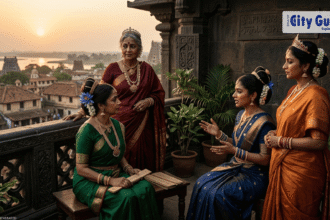
While kings, monks, and wealthy merchants are often credited with creating and funding the caves, a lesser-known story lies hidden in inscriptions and artistic traditions: the involvement of Buddhist women, including nuns, in supporting and influencing this artistic legacy.
These women—sometimes donors, patrons, or members of the monastic community—played a meaningful role in shaping the spiritual and artistic environment of the Ajanta complex.
This article explores the fascinating possibility that Buddhist nuns and women patrons contributed to the artistic and religious life of Ajanta during its earliest phase, revealing an overlooked dimension of ancient Buddhist history.
The Ajanta Caves: A Masterpiece of Ancient Buddhist Art
The Ajanta Caves consist of 30 rock-cut caves carved into basalt cliffs.
These caves include:
- Monasteries (viharas) where monks lived
- Prayer halls (chaityas) used for worship
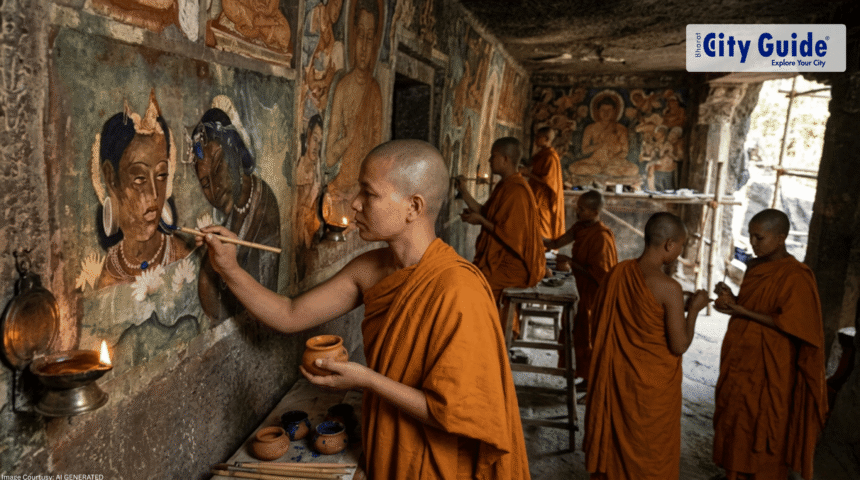
- Murals illustrating Buddhist teachings
- Sculptures of the Buddha and bodhisattvas
The caves were built during two main phases:
- Early phase (2nd century BCE – 1st century BCE)
- Later phase (5th century CE during the Vakataka dynasty)
The earliest caves were created by followers of early Buddhist traditions, long before the rise of large imperial patronage.
Evidence of Women in Ajanta’s Early Buddhist Community
Archaeological inscriptions from ancient Buddhist sites across India suggest that women were active supporters of Buddhist institutions.
These inscriptions often mention:
- Female donors
- Merchant women
- Royal women
- Buddhist nuns
Although many inscriptions at Ajanta Caves are fragmentary, historical patterns from other sites show that women frequently sponsored cave construction, sculptures, and murals.
Such inscriptions commonly include phrases like:
- “Gift of a nun”
- “Donation of a laywoman”
- “Offering by a merchant’s wife”
These records demonstrate that women were financially and spiritually invested in Buddhist artistic projects.
Buddhist Nuns and the Artistic Tradition
The presence of Buddhist nuns (bhikkhunis) in ancient India is well documented in early Buddhist texts.
These women followed monastic life under the Buddhist order established by Gautama Buddha.
Nuns were involved in:
- Teaching Buddhist philosophy
- Supporting monasteries
- Encouraging religious art and architecture
- Promoting spiritual learning
Although most artistic work was physically performed by skilled artisans, religious patrons—including nuns—often guided the themes and subjects of the artwork.
This means Buddhist nuns may have influenced the depiction of important stories in the Ajanta murals.
Murals That Reveal Women’s Presence
One of the most remarkable aspects of the Ajanta Caves is its rich mural paintings.
These murals depict:
- Scenes from the Jataka tales
- Royal courts and everyday life
- Devotional worship
- Women participating in religious life
In several paintings, women appear in roles beyond simple spectators.
They are shown as:
- Devotees engaged in prayer
- Members of royal courts
- Figures participating in spiritual narratives
These artistic representations suggest that women played a visible role in the Buddhist cultural world that produced Ajanta’s masterpieces.
Women Patrons in Early Buddhist Art
Across ancient Buddhist sites in India—such as Sanchi Stupa and Karle Caves—inscriptions reveal that women were major donors.
Their contributions often funded:
- Construction of caves
- Sculptures and pillars
- Religious paintings
- Monastic facilities
These donations demonstrate that women in ancient India could control wealth and use it to support religious institutions.
It is highly likely that similar contributions were made at Ajanta.
Artistic Themes Influenced by Buddhist Teachings
The murals at Ajanta Caves illustrate Buddhist teachings about compassion, morality, and enlightenment.
Common themes include:
- The previous lives of the Buddha
- Acts of generosity and sacrifice
- The pursuit of enlightenment
These themes were central to Buddhist philosophy and would have been familiar to both monks and nuns within the monastic community.
Thus, women participating in Buddhist life may have influenced the narratives chosen for artistic representation.
Why Women Artists and Patrons Remain Hidden
Despite their likely involvement, the contributions of Buddhist nuns and women patrons remain largely invisible in mainstream history.
Several factors explain this historical gap:
- Ancient records often emphasized male monks or royal patrons
- Many inscriptions have been damaged or lost
- Early historians focused on political history rather than social contributions
As a result, the story of women connected to Ajanta’s artistic heritage has only recently begun to attract scholarly attention.
Rediscovering Women’s Role in Ajanta
Modern historians and archaeologists are increasingly exploring gender roles in ancient Buddhist communities.
By examining inscriptions, literature, and art, researchers are uncovering evidence that:
- Women participated actively in Buddhist religious life
- Female donors funded artistic and architectural projects
- Buddhist nuns contributed to spiritual and cultural development
These findings suggest that the story of the Ajanta Caves Buddhist nuns is part of a broader pattern of female involvement in early Buddhist art.
The Legacy of Ajanta
Today, the Ajanta Caves are recognized as a UNESCO World Heritage Site.
They remain one of the most important examples of ancient Buddhist art anywhere in the world.
Their murals continue to inspire artists, historians, and travelers, offering a vivid glimpse into the spiritual and cultural life of ancient India.
Within this legacy lies the overlooked contribution of women—patrons, devotees, and possibly nuns—who helped shape the artistic tradition of Ajanta.
Conclusion
The hidden story of the Ajanta Caves Buddhist nuns highlights an often-forgotten dimension of ancient history.
While kings and monks are frequently credited with creating the Ajanta masterpieces, the evidence suggests that women—including Buddhist nuns and lay patrons—also played meaningful roles in supporting these artistic achievements.
From sponsoring cave construction to influencing spiritual narratives, women were active participants in the Buddhist cultural world of the 2nd century BCE.
Recognizing their contributions helps us see the Ajanta Caves not only as a monument of art and religion but also as a testament to the collaborative efforts of a diverse and dynamic ancient society.
FAQs
1. What are the Ajanta Caves?
The Ajanta Caves are a group of rock-cut Buddhist caves known for their murals and sculptures.
2. When were the Ajanta Caves built?
The earliest caves date back to around the 2nd century BCE.
3. Did women contribute to Buddhist art at Ajanta?
Historical patterns suggest that women—including donors and nuns—supported Buddhist institutions and artistic projects.
4. What do the Ajanta murals depict?
The murals illustrate Buddhist teachings, royal life, and stories from the Jataka tales.
5. Why are women’s contributions less known?
Many historical records focused on male monks and rulers, leaving women’s roles underrepresented.