Introduction
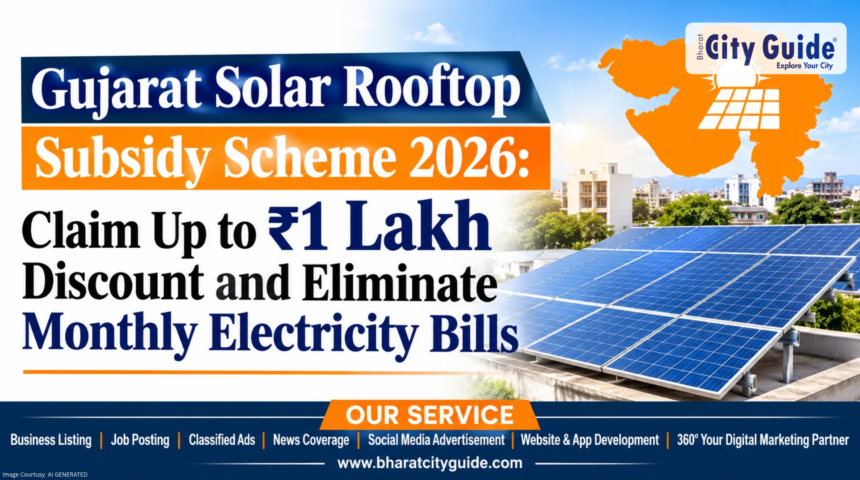
In a landmark step toward clean energy transition and household financial relief, the state government of Gujarat has announced major updates regarding the Gujarat Solar Rooftop Subsidy Scheme 2026. Under the revised financial incentives aligned with the national PM Surya Ghar Muft Bijli Yojana, residential electricity consumers across Gujarat can now claim direct discounts and subsidies up to ₹1,00,000 when installing rooftop solar panel systems. The scheme specifically targets middle-class households paying monthly electricity bills around ₹2,000, offering them an attractive pathway to achieve zero electricity bills.
- Introduction
- What is Gujarat Solar Rooftop Subsidy Scheme 2026?
- Why This News is Important
- Background Information
- Key Highlights
- Detailed Breakdown of System Capacity, Cost, and Subsidies
- Step-by-Step Online Application Process
- Essential Documents Required for Application
- Financial and Environmental Benefits for Citizens
- How It Impacts Different Sections of Society
- Expert Insights and Energy Sector Perspective
- Frequently Asked Questions (FAQs)
- Conclusion
The newly updated initiative provides direct financial assistance to lower and middle-income families, enabling them to generate their own clean electricity. By installing rooftop solar photovoltaic (PV) panels, households can generate sufficient solar power to offset domestic appliance consumption, feed surplus electricity back into the state power grid via net metering, and receive credits on their electricity bills. Gujarat, already a national leader in renewable energy infrastructure, continues to streamline the online application process to ensure fast approval and direct bank transfer of subsidy amounts.
This policy update comes at a crucial time as electricity demand across urban centers like Ahmedabad, Surat, Vadodara, and Rajkot reaches record levels. By reducing initial installation costs through government subsidies, the state encourages widespread adoption of rooftop solar technology. The comprehensive guide below breaks down the eligibility criteria, financial breakdown, required documents, step-by-step application workflow, and long-term economic benefits of installing rooftop solar systems under this scheme.
What is Gujarat Solar Rooftop Subsidy Scheme 2026?
The Gujarat Solar Rooftop Subsidy Scheme 2026 is a joint incentive initiative launched by the Gujarat Energy Development Agency (GEDA) and the Ministry of New and Renewable Energy (MNRE) under the PM Surya Ghar framework. It provides capital subsidies directly to residential electricity consumers who install grid-connected solar rooftop systems on their private houses, apartment complexes, or housing societies.
Key parameters defining the 2026 scheme include:
- Direct Subsidy Support: Up to ₹78,000 central subsidy combined with state-level top-up incentives, bringing total financial support up to ₹1,00,000 depending on system capacity and consumer category.
- Target Audience: Residential consumers with monthly electricity bills ranging between ₹1,000 and ₹2,000 (consuming approximately 150 to 300 units per month).
- Net Metering Integration: Installation of bi-directional net meters by DISCOMs (UGVCL, DGVCL, MGVCL, PGVCL, Torrent Power) to record solar export and import power.
- Emplicated Vendor Installation: Solar installations executed exclusively through empanelled vendors using high-efficiency Indian-made (DCR compliant) solar modules.
Why This News is Important
The enhancement of rooftop solar subsidies carries immense financial, environmental, and infrastructural significance across Gujarat. First, for domestic consumers facing rising living costs, electricity bills represent a recurring monthly burden. By installing a 2 kW or 3 kW solar rooftop system, a family paying ₹2,000 monthly can effectively reduce their electricity bill to zero or even earn credits for surplus electricity exported to the grid.
Second, the simplified digital application procedure removes bureaucratic hurdles. Consumers can apply online, choose certified vendors, track inspection reports, and receive subsidy disbursements directly into their linked bank accounts via Direct Benefit Transfer (DBT) without visiting physical government offices.
Finally, widespread residential solar adoption supports India’s broader renewable energy targets. By decentralizing power generation, Gujarat reduces transmission losses, eases peak daytime loads on state thermal power stations, and speeds up the transition toward carbon-neutral green cities.
Background Information
Gujarat has historically led India’s solar energy revolution, launching pioneering solar policies over a decade ago. The success of the Surya Gujarat Yojana positioned the state at the top of national rooftop solar installations, accounting for over 70% of India’s total residential rooftop capacity.
With the launch of the nationwide PM Surya Ghar: Muft Bijli Yojana, the central and state governments combined financial portals to create a unified digital application system. The 2026 update optimizes subsidy rates, guarantees component quality through mandatory Domestic Content Requirement (DCR) solar cells, and enforces a mandatory 5-year comprehensive maintenance warranty from installation vendors.
+-----------------------------------------------------------------------+
|             GUJARAT SOLAR ROOFTOP SUBSIDY SCHEME AT A GLANCE          |
+--------------------------+--------------------------------------------+
| Nodal Implementing Agency| GEDA & State DISCOMs (PGVCL, DGVCL, etc.)  |
| Target Beneficiaries     | Domestic Residential Property Owners       |
| Targeted Monthly Bill    | ₹1,000 to ₹2,000 (150–300 Units/Month)     |
| Maximum Financial Support| Up to ₹1,00,000 (Combined Central + State) |
| Standard System Capacities| 1 kW, 2 kW, 3 kW and Above                 |
| Mandatory Equipment Norm | DCR Compliant Solar Panels Made in India   |
| System Warranty          | 5-Year Comprehensive Maintenance Contract  |
+--------------------------+--------------------------------------------+
These measures ensure that residential buyers receive high-quality, long-lasting solar equipment capable of generating clean power for more than 25 years.
Key Highlights
- Up to ₹1 Lakh Total Subsidy: Substantial financial discount for residential rooftop solar installations.
- Targeted for ₹2000 Monthly Bills: Ideal for middle-class homes consuming 150 to 300 units of electricity per month.
- 3 kW System Sweet Spot: A 3 kW capacity system receives up to ₹78,000 central subsidy plus state incentives, covering a major portion of total installation costs.
- Zero Monthly Electricity Bills: Provides free electricity up to 300 units per month, with net metering benefits for surplus generation.
- Simplified Online Portal: Direct application, feasibility approval, vendor selection, and DBT subsidy tracking through a single digital platform.
- 5-Year Free Maintenance: Empanelled vendors must provide 5 years of free repair and system maintenance support.
Detailed Breakdown of System Capacity, Cost, and Subsidies
Understanding system sizing and financial returns helps consumers choose the right capacity based on their rooftop space and monthly electricity consumption:
1. 1 kW Solar Rooftop System
- Suitable For: Small homes with monthly bills around ₹1,000 (approx. 100-120 units).
- Rooftop Area Required: Approx. 100 sq. ft. clear shadow-free roof space.
- Estimated Central Subsidy: ₹30,000.
- Daily Power Generation: 4 to 4.5 units per day.
2. 2 kW Solar Rooftop System
- Suitable For: Medium homes with monthly bills around ₹1,500 to ₹2,000 (approx. 150-200 units).
- Rooftop Area Required: Approx. 200 sq. ft. shadow-free area.
- Estimated Central Subsidy: ₹60,000.
- Daily Power Generation: 8 to 9 units per day.
+-----------------------------------------------------------------------+
|               CAPACITY, COST & SUBSIDY BREAKDOWN MATRIX               |
+------------------+-------------------+----------------+---------------+
| System Capacity  | Rooftop Area Req. | Approx. Cost   | Subsidy Amount|
+------------------+-------------------+----------------+---------------+
| 1 kW System      | 100 Sq. Ft.       | ₹50,000–55,000 | ₹30,000       |
| 2 kW System      | 200 Sq. Ft.       | ₹1,00,000–1.10L| ₹60,000       |
| 3 kW System      | 300 Sq. Ft.       | ₹1,45,000–1.55L| ₹78,000–1.00L |
| Above 3 kW       | 300+ Sq. Ft.      | Varies by Size | Fixed ₹78,000 |
+------------------+-------------------+----------------+---------------+
3. 3 kW Solar Rooftop System (Most Popular Choice)
- Suitable For: Standard families with monthly bills of ₹2,000+ using air conditioners, washing machines, and refrigerators.
- Rooftop Area Required: Approx. 300 sq. ft. shadow-free roof area.
- Estimated Total Subsidy: ₹78,000 central subsidy plus eligible state incentives (up to ₹1,00,000 total discount).
- Daily Power Generation: 12 to 14 units per day (approx. 360-400 units monthly).
Step-by-Step Online Application Process
Filing an application for the solar rooftop subsidy scheme involves a straightforward digital procedure:
Step 1: Registration on National / State Portal
Visit the official PM Surya Ghar / National Portal for Solar Rooftop. Select Gujarat as your state, choose your local electricity distribution company (e.g., DGVCL, PGVCL, UGVCL, MGVCL, or Torrent Power), and enter your 11-digit Consumer Account Number (Consumer No. printed on your electricity bill), active mobile number, and email ID.
Step 2: Feasibility Approval by DISCOM
Log in using your registered consumer credentials and submit an application for Solar Rooftop Installation. Local DISCOM technical teams will verify your transformer capacity and issue an online Technical Feasibility Approval.
+-----------------------------------------------------------------------+
|                 STEP-BY-STEP APPLICATION WORKFLOW                     |
+--------------------------+--------------------------------------------+
| Stage                    | Action Required by Consumer / Vendor       |
+--------------------------+--------------------------------------------+
| Step 1: Digital Reg.     | Register on portal with Consumer CA Number |
| Step 2: Technical Approval| DISCOM issues Technical Feasibility clearance|
| Step 3: Vendor Selection | Choose registered empanelled solar vendor  |
| Step 4: Installation     | Vendor installs DCR panels & inverter      |
| Step 5: Net Metering     | DISCOM installs bi-directional net meter   |
| Step 6: Inspection & DBT | Commissioning certificate & direct subsidy |
+--------------------------+--------------------------------------------+
Step 3: Selecting an Empanelled Vendor and Signing Agreement
Once feasibility is approved, select any registered, empanelled solar vendor from the portal’s approved list. Discuss system capacity (mono-PERC or bifacial DCR panels), review the net cost breakdown, and sign the installation agreement.
Step 4: System Installation and Net Meter Commissioning
The chosen vendor installs the solar panels, inverter, earthing kit, and lightning arrester on your rooftop. Upon completing physical installation, the vendor submits a plant completion report to the DISCOM. A DISCOM officer inspects the site, installs the bi-directional Net Meter, and issues an official Commissioning Certificate.
Step 5: Subsidy Credit via Direct Benefit Transfer (DBT)
After the commissioning certificate is uploaded, enter your cancelled cheque and bank account details on the portal. The subsidy amount (up to ₹1,00,000) will be transferred directly into your bank account via Direct Benefit Transfer (DBT) within 30 days.
Essential Documents Required for Application
To prevent application rejections or approval delays, applicants must keep digital copies of the following documents ready:
- Latest Electricity Bill: Recent monthly light bill showing consumer name, address, and consumer account number.
- Identity Proof: Aadhaar Card, PAN Card, or Voter ID of the electricity connection holder.
- Proof of Property Ownership: Latest tax bill, property index copy, sale deed, or NOC from society (for apartment residents).
- Applicant’s Bank Details: Clear scanned copy of a cancelled cheque or bank passbook showing IFSC code and account number for DBT subsidy credit.
- Passport Size Photograph: Recent photograph of the applicant.
- Rooftop Site Photo: Clear photograph of the open rooftop area where panels will be mounted.
Financial and Environmental Benefits for Citizens
Installing a grid-connected rooftop solar system offers major long-term benefits:
1. Significant Financial Savings
A 3 kW solar system generates approximately 360 to 400 units of electricity per month, saving ₹2,000 to ₹2,500 on monthly light bills. Over a year, households save ₹24,000 to ₹30,000, recovering their net out-of-pocket investment within 3 to 4 years.
2. 25-Year Long-Term Power Generation
Quality DCR solar panels come with a 25-year performance warranty. Once the initial investment cost is recovered, households enjoy virtually free electricity for over 20 years.
3. Income Generation via Net Metering
If your solar system generates more power than your home consumes, the excess electricity flows into the DISCOM grid. Under net metering rules, the utility company credits your account or pays for surplus units exported at government-approved feed-in tariffs.
4. Protecting Against Future Tariff Hikes
Generating your own green power insulates your household from periodic utility tariff increases, fuel adjustment charges, and high summer peak rates.
How It Impacts Different Sections of Society
The enhanced rooftop solar scheme creates a positive impact across Gujarat’s socio-economic landscape:
- For Middle-Class Households: Eliminates monthly utility bill worries, freeing up household income for education, healthcare, and savings.
- For Housing Societies and Apartments: Group housing societies (GHS) and Resident Welfare Associations (RWAs) can install common solar systems for elevators, water pumps, and corridor lighting, reducing maintenance fees for residents.
- For Local Solar Vendors and Technicians: Boosts green job creation, creating business opportunities for local solar installers, electrical contractors, and maintenance engineers across Gujarat.
- For State Power DISCOMs: Reduces heavy peak load pressure on distribution transformers during hot summer afternoons when solar production is highest.
Expert Insights and Energy Sector Perspective
Energy analysts and renewable technology experts praise Gujarat’s proactive push toward residential solar adoption. According to industry experts, pairing generous upfront capital subsidies with a streamlined digital portal removes financial barriers for lower-middle-income families.
Solar engineers emphasize the importance of choosing high-efficiency DCR (Domestic Content Requirement) panels equipped with modern micro-inverters or string inverters. Proper structural mounting elevated above roof surfaces ensures optimal ventilation, preventing efficiency drops during high summer temperatures.
Furthermore, consumer protection experts advise homeowners to hire only portal-empanelled vendors to ensure valid 5-year maintenance coverage, quality earthing installations, and seamless net meter processing through local DISCOM offices.
Frequently Asked Questions (FAQs)
What is the maximum subsidy available under the Gujarat Solar Rooftop Scheme 2026?
Eligible residential consumers can claim up to ₹78,000 in central subsidy under the PM Surya Ghar scheme, with total financial benefits reaching up to ₹1,00,000 when combined with state-level incentives for specific capacity systems.
Who is eligible for the solar rooftop subsidy in Gujarat?
Any residential consumer holding an active domestic electricity connection in Gujarat, owning a private home or valid rooftop rights, and installing an approved grid-connected solar system is eligible.
How much rooftop area is required to install a 3 kW solar system?
A standard 3 kW rooftop solar system requires approximately 300 square feet of clear, unshaded rooftop space receiving direct sunlight throughout the day.
How long does it take to receive the subsidy in the bank account?
Once installation is complete, the net meter is commissioned, and bank details are uploaded, the subsidy is credited via Direct Benefit Transfer (DBT) within 30 days.
Can tenants living in rented houses apply for this solar subsidy?
Generally, the electricity connection and property ownership must match. Tenants require explicit written permission (NOC) and property owner documentation to apply.
What happens to the excess electricity generated by solar panels?
Excess electricity is automatically exported to the DISCOM grid through the bi-directional net meter. Your monthly electricity bill will show net units (Import minus Export), reducing your net bill amount.
Are there any maintenance costs after installing the solar rooftop system?
Empanelled vendors are legally required to provide 5 years of comprehensive free maintenance and repair services. Beyond 5 years, basic panel cleaning with water is usually all that is needed.
Conclusion
The Gujarat Solar Rooftop Subsidy Scheme 2026 offers a transformative opportunity for domestic electricity consumers across the state. By offering subsidies up to ₹1,00,000 and zero monthly electricity bills for households paying around ₹2,000 monthly, the government has made green energy accessible to every family.
This initiative provides immediate relief from electricity expenses while building long-term financial security for middle-class homes.
As Gujarat accelerates its green energy transition, home and property owners are encouraged to apply through the official digital portal. Installing a rooftop solar system delivers clear economic benefits, guaranteed long-term savings, and a cleaner environment, securing free, renewable solar power for decades to come.