Introduction
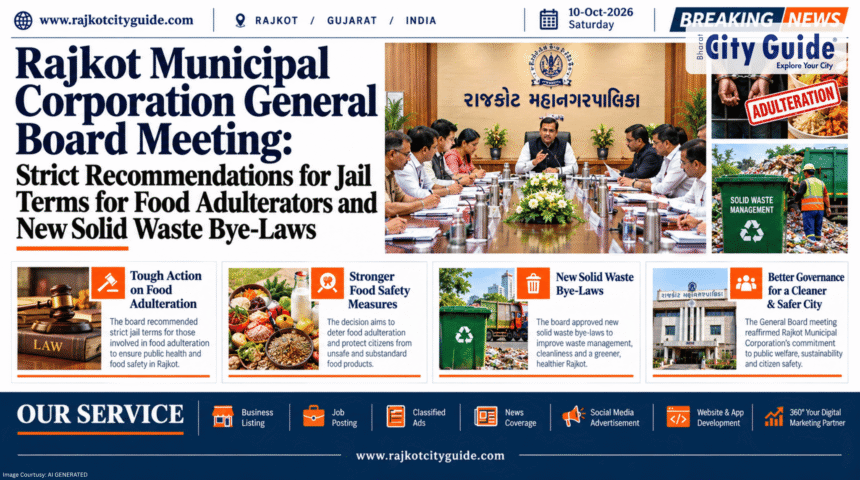
The Rajkot Municipal Corporation is set to convene a crucial General Board meeting on October 17, where pivotal urban governance policies and stringent regulatory reforms will be presented for formal approval. High on the legislative agenda is a decisive move to curb food adulteration across the city by formally recommending strict imprisonment terms for unethical food manufacturers and vendors. Municipal authorities are preparing a comprehensive policy resolution urging higher state authorities to introduce non-bailable legal provisions that send repeat food adulterators directly behind bars.
- Introduction
- What is Rajkot Municipal Corporation?
- Why This News is Important
- Background Information
- Key Highlights
- Detailed Explanation of the Event
- Benefits and Importance of the Proposed Reforms
- How It Impacts People
- Expert Insights and Legal Perspective
- Challenges and Operational Considerations
- Frequently Asked Questions (FAQs)
- Conclusion
In addition to revolutionary food safety reforms, the municipal body is scheduled to officially adopt and implement new Solid Waste Management Bye-Laws. These updated regulations establish an advanced operational framework for urban sanitation, mandating 4-way waste segregation at source, imposing heavier financial penalties on public polluters, and establishing strict compliance guidelines for bulk waste generators. The upcoming General Board assembly promises to be one of the most impactful policy-making sessions of the year for Rajkot’s civic infrastructure.
By pairing punitive measures against compromised food quality with modern waste management protocols, the civic body aims to elevate urban living standards across all 18 administrative wards. As elected corporators, administrative heads, and civic leaders prepare to debate these major proposals, the decisions taken on October 17 will redefine consumer protection, public health, and environmental sustainability for the entire population of Rajkot.
What is Rajkot Municipal Corporation?
The Rajkot Municipal Corporation (RMC) is the chief urban local government body responsible for managing civic infrastructure, public health, urban planning, and municipal services across Rajkot, Gujarat. Governing an expanding urban metropolis of over 1.5 million residents, the civic body operates through an elected General Board led by the Mayor and an executive wing headed by the Municipal Commissioner.
The operational jurisdiction of the civic administration encompasses critical municipal functions, including primary healthcare, water treatment and distribution, sewerage systems, solid waste management, street lighting, public parks, town planning, and fire emergency services. To maintain law and enforcement, specialized branches—such as the Health and Food Safety Wing, Solid Waste Management (SWM) Department, and Town Planning Division—regularly conduct field operations.
The General Board meeting represents the highest legislative forum within the corporation. Elected corporators gather in the assembly hall to debate budget allocations, pass local bye-laws, review administrative performance, and submit policy recommendations to the State Government of Gujarat.
Why This News is Important
The upcoming General Board session carries immense significance for public welfare, consumer safety, and urban environmental management. Food adulteration—involving synthetic chemicals in dairy products, artificial dyes in spices, substandard edible oils, and toxic additives in festival sweets—poses a grave threat to public health. By formally voting to demand criminal jail sentences for adulterators, the municipal corporation is signaling zero tolerance toward businesses that endanger consumer lives for profit.
Second, the formal adoption of new Solid Waste Management Bye-Laws marks a vital evolution in how the city handles its daily garbage output. As Rajkot expands, traditional waste dumping methods create environmental hazards and strain landfill capacities. Implementing modern bye-laws enforces strict waste segregation at the household level, helping the city improve its standing in national cleanliness rankings like Swachh Survekshan.
Finally, passing these statutory resolutions establishes a benchmark for municipal governance across Gujarat. When a major urban center like Rajkot adopts strict anti-adulteration resolutions and modern waste management laws, it creates momentum for neighboring municipal bodies—such as Ahmedabad, Surat, Vadodara, and Bhavnagar—to implement similar public health protections.
Background Information
In recent months, the food safety department of the civic body has conducted aggressive surveillance drives across dairy units, sweet manufacturing plants, edible oil refineries, and local eateries. While inspectors frequently seized and destroyed thousands of kilograms of adulterated food products, existing legal frameworks under the Food Safety and Standards Act (FSSAI) often resulted in prolonged tribunal delays or small monetary fines that failed to deter habitual offenders.
Recognizing the limitations of existing penalties, elected civic leaders and administrative heads resolved to seek statutory amendments. The proposed General Board resolution specifically urges the state government to empower municipal authorities to register criminal police cases (FIRs) carrying mandatory jail terms for severe food adulteration offenses.
+-----------------------------------------------------------------------+
|                GENERAL BOARD KEY PROPOSALS AT A GLANCE                |
+--------------------------+--------------------------------------------+
| Legislative Agenda       | Proposed Policy Reform                     |
+--------------------------+--------------------------------------------+
| Food Safety Enforcement  | Recommendation to enact mandatory jail time|
| Waste Management         | Adoption of new SWM Bye-Laws & 4-way rules |
| Source Segregation       | Mandatory Wet, Dry, Sanitary, & Special    |
| Bulk Waste Generators    | Mandated on-site processing for complexes  |
| Penalty Framework        | Elevated spot fines for public littering   |
| Meeting Date             | October 17, 2026                           |
+--------------------------+--------------------------------------------+
Concurrently, the civic body’s Solid Waste Management department prepared updated bye-laws aligned with national environmental directives. These new rules replace outdated waste collection frameworks, introducing mandatory four-way segregation at source and enforcing the “Polluter Pays” principle against commercial establishments violating sanitation norms.
Key Highlights
- General Board Meeting Date: The General Board is scheduled to assemble on October 17 to vote on crucial policy resolutions.
- Jail Term Recommendation: Formal resolution proposing mandatory imprisonment and non-bailable criminal charges for severe food adulterators.
- New Solid Waste Bye-Laws: Formal implementation of updated Solid Waste Management rules to modernize city-wide sanitation.
- Mandatory 4-Way Waste Segregation: Households and commercial units must separate waste into Wet, Dry, Sanitary, and Domestic Hazardous categories.
- Bulk Waste Generator Mandate: Large residential societies, commercial complexes, and hotel chains required to process organic waste on-site.
- Elevated Financial Penalties: Strict spot fines for open littering, commercial dumping into storm drains, and non-compliance with waste segregation.
Detailed Explanation of the Event
The October 17 General Board meeting will bring together elected corporators from all 18 municipal wards, committee chairpersons, Mayor Nehal Shukla, and Municipal Commissioner administration teams. The assembly agenda features several comprehensive policy proposals designed to transform city administration and public safety protocols.
The centerpiece of the session is the anti-food adulteration policy proposal. Under this proposal, the General Board will officially vote on a representation urging the Gujarat State Government to amend municipal and public health statutes. The goal is to classify severe, deliberate food adulteration—such as manufacturing synthetic milk, using chemical dyes in food, or selling toxic ghee—as a major criminal offense punishable by mandatory imprisonment rather than simple monetary fines.
+-----------------------------------------------------------------------+
|               PROPOSED SOLID WASTE SEGREGATION FRAMEWORK              |
+--------------------------+--------------------------------------------+
| Category                 | Approved Waste Items                       |
+--------------------------+--------------------------------------------+
| 🟢 Wet Waste             | Organic food scraps, fruit peels, garden debris|
| 🔵 Dry Waste             | Paper, plastic, cardboard, glass, metals   |
| ⚪ Sanitary Waste        | Used diapers, sanitary napkins, medical wipes|
| ⚫ Special Care / Haz.   | Batteries, electronics, CFL bulbs, chemicals|
+--------------------------+--------------------------------------------+
Simultaneously, the board will vote to enact the new Solid Waste Management Bye-Laws. These bye-laws legally bind every household, commercial shop, hospital, and industrial unit to segregate waste into four distinct categories before handing it to municipal collection tippers. The rules also grant sanitation inspectors explicit authority to issue heavy spot fines to habitual open-litterers and non-compliant commercial establishments.
Benefits and Importance of the Proposed Reforms
The passage of these policy resolutions during the General Board session will deliver far-reaching benefits for urban living standards:
1. Robust Deterrence Against Food Adulteration
The prospect of mandatory criminal imprisonment creates a powerful deterrent against unethical food processors. Knowing that selling contaminated food can lead to jail time will discourage commercial adulterators who previously viewed small administrative fines as an acceptable business expense.
2. Modernizing City-Wide Sanitation and Waste Processing
Enforcing 4-way waste segregation at source prevents recyclable and organic materials from mixing into contaminated landfill waste. This allows composting facilities and recycling plants to process waste efficiently, extending the lifespan of municipal dumpsites.
3. Elevating National Cleanliness Rankings
Adopting modern, enforceable solid waste bye-laws aligns the city with national Swachh Survekshan evaluation criteria, helping the municipality secure higher national rankings and access central infrastructure development grants.
4. Protecting Public Health and Groundwater
Systematic waste segregation and aggressive food safety enforcement work together to prevent disease outbreaks, reduce chemical toxicity in foods, and stop toxic leachate from polluting underground water tables.
How It Impacts People
The implementation of these board decisions will influence various groups across the municipal region:
- For General Consumers and Families: Provides greater assurance of food purity when purchasing dairy, spices, edible oils, and sweets, while fostering cleaner residential neighborhood lanes.
- For Households and Residents: Requires adopting a 4-bin segregation routine at home for wet, dry, sanitary, and hazardous domestic waste to avoid refusal of collection or fines.
- For Commercial Food Business Operators: Mandates strict adherence to food safety standards, raw material testing, and kitchen hygiene to avoid severe legal action and business closure.
- For Bulk Waste Generators (Societies & Complexes): Requires large housing societies, marriage halls, and commercial centers to install on-site organic waste composters or face processing surcharges.
Expert Insights and Legal Perspective
Legal analysts and public health experts strongly endorse the decision to push for criminal imprisonment in severe food adulteration cases. According to legal scholars, food adulteration is not merely a technical trade violation; it is a direct assault on human life and public safety. Treating chemical adulteration as a serious criminal offense aligns municipal governance with constitutional mandates regarding the right to health under Article 21.
Environmental engineers and waste management consultants praise the formal rollout of the 4-way segregation bye-laws. Experts emphasize that source segregation is the single most critical factor in successful municipal solid waste processing. When citizens separate organic waste from dry recyclables and sanitary items, landfill diversion rates can exceed 70%, turning municipal waste into valuable compost and Refuse-Derived Fuel (RDF).
Furthermore, civic governance observers point out that passing clear, enforceable bye-laws equips frontline municipal inspectors with transparent legal tools. Eliminating legal ambiguities ensures that enforcement actions are conducted fairly and hold up strongly during judicial appeals.
Challenges and Operational Considerations
While the proposed reforms are visionary, successful execution will require addressing several practical operational challenges:
- Securing State Legislative Support: Because enacting mandatory jail terms requires state-level statutory amendments, the civic body must actively coordinate with the Gujarat State Assembly and Law Department to turn its recommendation into law.
- Public Awareness and Behavioral Change: Educating over 1.5 million residents to systematically practice 4-way waste segregation at home requires sustained media campaigns, school drives, and door-to-door volunteer outreach.
- Upgrading Collection Fleet Logistics: Ensuring that municipal garbage tippers feature separate compartments for all four waste categories to prevent segregated household waste from being mixed together during transport.
- Fair Enforcement without Harassment: Establishing clear administrative checks to ensure that sanitation inspectors and food safety officers exercise fining and reporting powers transparently without harassing small street vendors.
Frequently Asked Questions (FAQs)
What are the main topics on the agenda for the upcoming Rajkot Municipal Corporation General Board meeting?
The main agenda topics include recommending mandatory jail imprisonment for food adulterators and formally adopting new Solid Waste Management Bye-Laws for the city.
When is the General Board meeting scheduled to take place?
The General Board session is scheduled to take place on October 17, 2026, at the municipal corporation headquarters.
Why is the municipal corporation proposing jail terms for food adulteration?
Current monetary fines under existing regulations often fail to deter repeat offenders. Recommending non-bailable jail sentences creates a strong legal deterrent against businesses endangering public health.
What is 4-way waste segregation under the new bye-laws?
It is a mandatory rule requiring households and businesses to separate waste into four distinct dustbins: Wet Waste (organic), Dry Waste (recyclables), Sanitary Waste, and Special Care/Hazardous Waste.
How do the new bye-laws affect bulk waste generators like large housing societies?
Large residential complexes, commercial malls, and hotel venues are legally required to process their organic wet waste on-site using composting units or certified processing partners.
What penalties can citizens face for open littering or non-segregation?
The new bye-laws empower municipal sanitation inspectors to issue elevated spot fines and administrative notices to individuals and commercial establishments violating waste disposal rules.
How can citizens report food adulteration or illegal garbage dumping?
Citizens can report violations directly through the RMC civic mobile app, by calling the municipal helpline, or by submitting written complaints to their local Ward Office.
Conclusion
The upcoming General Board session of the Rajkot Municipal Corporation marks a decisive watershed in urban governance, public health protection, and environmental stewardship. By recommending strict imprisonment terms for food adulterators and enacting modern Solid Waste Management Bye-Laws, the civic leadership is taking bold steps to safeguard the well-being of its citizens.
These twin initiatives demonstrate an administrative commitment to addressing root-cause urban challenges. Deterring unethical food practices protects consumer health during peak festive seasons, while mandatory 4-way waste segregation lays the groundwork for a cleaner, greener, and more sustainable city environment.
As elected corporators assemble on October 17 to debate and pass these landmark proposals, residents across all 18 municipal wards can look forward to a higher quality of life. The successful implementation of these visionary policies will reinforce Rajkot’s reputation as a progressive, health-conscious, and well-governed urban center in Gujarat.