Introduction
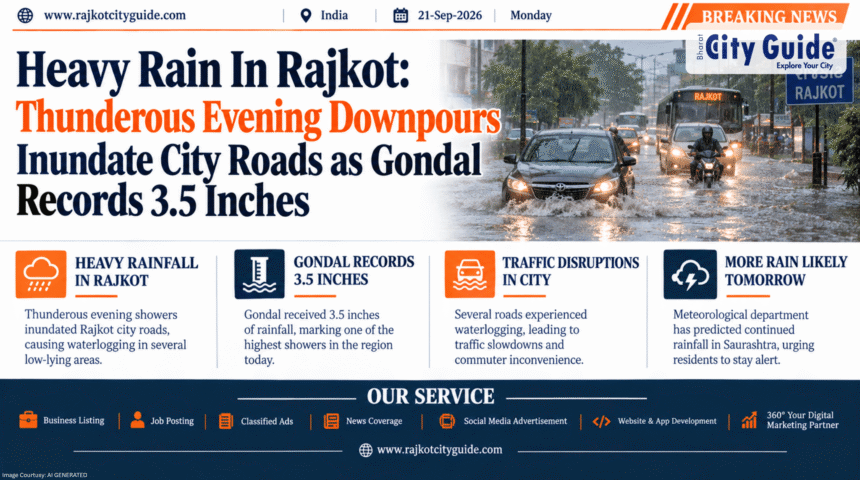
A sudden shift in atmospheric conditions brought intense evening precipitation across the Saurashtra peninsula, leading to Heavy Rain In Rajkot and severe waterlogging in neighboring talukas. Following an extended spell of warm and humid weather, dark clouds rapidly enveloped the skies over Rajkot city, accompanied by sharp lightning strikes and thunderous squalls. Within an hour, the urban center received approximately one inch of rainfall, transforming key arterial avenues, underpasses, and market crossroads into flowing streams of runoff.
- Introduction
- What is Heavy Rain In Rajkot?
- Why This News is Important
- Background Information
- Key Highlights
- Detailed Explanation of the Event
- Benefits, Features, and Importance
- How It Impacts People
- Expert Insights and Industry Perspective
- Challenges and Limitations
- Future Outlook
- Frequently Asked Questions (FAQs)
- Conclusion
While the downpour in Rajkot brought temporary relief from late-summer humidity, nearby Gondal taluka experienced far more severe conditions. Gondal recorded a massive 3.5 inches of torrential rainfall in a brief period, resulting in intense surface runoff, submerged low-lying residential sectors, and overflowing rural check dams. The sudden deluge disrupted late-evening commutes, triggered municipal drainage pumping responses, and prompted agricultural authorities to evaluate ground conditions across rural farming belts. As atmospheric troughs remain active over the Arabian Sea and Saurashtra landmass, municipal bodies across Rajkot district remain on heightened alert.
What is Heavy Rain In Rajkot?
The event designated as Heavy Rain In Rajkot represents localized high-intensity monsoon convective precipitation that impacts the major urban center of Saurashtra and its surrounding agrarian hinterlands.
+--------------------------------------------------------------------------------+
|                   SAURASHTRA CONVECTIVE RAINFALL DYNAMICS                     |
+--------------------------------------------------------------------------------+
                                         |
    +------------------------------------+------------------------------------+
    |                                    |                                    |
    v                                    v                                    v
[ ATMOSPHERIC TROUGH ]         [ RAJKOT URBAN ZONE ]            [ GONDAL RURAL BELT ]
- Arabian Sea moisture stream  - 1 Inch rapid downpour          - 3.5 Inches torrential deluge
- Late-evening thunder activity- Urban street waterlogging      - Localized stream overflow
- Sudden temperature drop      - Traffic slowdown at crossroads - Check dam inflow surge
Characterized by rapid cloud formation, high wind bursts, and heavy precipitation within a 60 to 90-minute window, these late-monsoon rain bands occur when moist air masses from the Arabian Sea collide with localized thermal currents over the central Saurashtra plateau. Because Rajkot serves as the commercial, transport, and administrative hub of Saurashtra, intense rainfall events quickly affect regional supply chains, highway traffic along National Highway 27, and regional reservoir storage management.
Why This News is Important
The occurrence of severe rainfall across Rajkot and Gondal carries major civic, hydrological, and agricultural significance:
- Hydrological Inflow to Municipal Reservoirs: Rapid runoff recharges crucial local reservoirs—such as the Aji-1, Nyari-1, and Bhadar dams—securing long-term drinking water reserves for the urban population.
- Urban Infrastructure Drainage Test: High-intensity rain within brief time windows tests municipal stormwater drainage, underpass pumping systems, and road engineering durability.
- Impact on Standing Kharif Crops: While moderate moisture benefits late-stage groundnut and cotton crops, sudden waterlogging in fields can risk root rot or pod degradation if water remains stagnant.
Background Information
Rajkot district, situated in the semi-arid geographic core of Gujarat’s Saurashtra region, historically relies on erratic monsoon weather patterns driven by Arabian Sea depressions and Bay of Bengal low-pressure systems. Monsoons in this region are often marked by long dry spells punctuated by sudden, intense downpours capable of dropping a significant portion of the seasonal quota in just a few days.
In recent weeks, monsoon activity across Western India had shown signs of slowing down, leading to rising daytime temperatures and heightened humidity across Rajkot, Jamnagar, Junagadh, and Amreli. However, the unexpected formation of an upper-air cyclonic circulation over the northeast Arabian Sea re-energized moisture convergence along coastal and inland Gujarat. This development triggered intense evening convection cells directly over the Rajkot-Gondal belt, producing intense lightning and heavy rainfall.
Key Highlights
- Rajkot City Downpour: Rajkot recorded over an inch of precipitation during an intense late-evening thunderstorm accompanied by violent lightning strikes.
- Gondal Deluge: Nearby Gondal taluka witnessed torrential rainfall exceeding 3.5 inches, leading to swift surface flooding and overflowing drainage channels.
- Urban Waterlogging: Key traffic hubs in Rajkot—including Yagnik Road, Kalavad Road, Mavdi Main Road, 150 Feet Ring Road, and several railway underpasses—saw temporary water accumulation.
- Commuter Disruption: Evening rush-hour commuters faced heavy traffic jams, waterlogged vehicle breakdowns, and reduced visibility across major crossroad junctions.
- Reservoir and Stream Inflows: Local riverbeds and rural check dams across Gondal and Rajkot registered rapid water level increases, raising storage levels across regional water bodies.
Detailed Explanation of the Event
[Moisture Convergence] ➔ [Thunderstorm Over Central Saurashtra] ➔ [1 Inch Rain in Rajkot / 3.5 Inches in Gondal] ➔ [Waterlogging & Drainage Activation]
1. Thunderstorms Strike Rajkot City
Around dusk, heavy, dark rain clouds quickly blanketed the Rajkot skyline. What began as light breezes swiftly transformed into high-velocity squalls, accompanied by intense lightning and thunder. Heavy rain lashed all major municipal zones, including the West Zone (Kalavad Road, University Road, Raiya Road) and East Zone (Aji Vasahat, Kuvadva Road). Within an hour, storm runoff covered major roads, creating water accumulation ranging from several inches to over a foot at low-lying intersections.
2. Torrential Deluge in Gondal Taluka
While Rajkot city coped with an inch of rain, Gondal experienced far more aggressive downpours. The rural and urban areas of Gondal recorded 3.5 inches of rain within a couple of hours.
Gondal’s local markets, low-lying residential neighborhoods, and connecting roads saw immediate waterlogging. Small river streams (nallas) overflowed, depositing silt and water onto connecting state highways and rural roads. Local authorities advised caution near open bridges and low-lying causeways.
3. Civic Administration and Emergency Response
In response to the rapid water accumulation, the Rajkot Municipal Corporation (RMC) activated its emergency control rooms and dispatched drainage response crews to key locations. Dewatering pumps were deployed to clear railway underpasses—such as the Mahila College underpass and Raiya road underpass—to prevent stranded vehicles. Municipal workers cleared clogged storm inlets along main roads to allow accumulated water to drain out once the storm moved inland.
Benefits, Features, and Importance
1. Urban Water Security Enrichment
Events of Heavy Rain In Rajkot play a critical role in refilling urban reservoirs like the Aji Dam, Nyari Dam, and Lalpari Lake. Surface runoff captured by these structures guarantees raw water availability for domestic and commercial supply through the dry months ahead.
2. Groundwater Table Recharge
The heavy downpours across open rural spaces in Gondal and Rajkot talukas promote deep soil moisture absorption and recharge depleted borewells, open wells, and subsurface aquifers across the central Saurashtra region.
3. Immediate Atmospheric Cooling
The sudden thunderstorm broke a prolonged spell of late-summer heat and oppressive humidity, bringing down ambient evening temperatures by several degrees and offering welcome relief to city residents.
How It Impacts People
| Affected Group | Direct Impact & Operational Outcomes |
|---|---|
| Urban Drivers & Commuters | Experience traffic delays, slow travel speeds, waterlogged roads, and vehicle stalls. |
| Local Agrarian Farmers | Gains useful soil moisture for late-stage crops, but faces risks of localized standing water in low fields. |
| Municipal Civic Teams | Requires immediate dewatering operations, traffic diversions, and clearing clogged stormwater lines. |
| Local Retail Merchants | Face temporary footfall drops during peak evening shopping hours due to street flooding. |
Expert Insights and Industry Perspective
Meteorological experts at the India Meteorological Department (IMD) highlight that late-monsoon storms in Saurashtra are frequently driven by localized mesoscale convective systems. These systems develop rapidly when warm daytime surface temperatures interact with high humidity levels pushed inland from the Arabian Sea.
Hydrological engineers stress the growing necessity for resilient urban drainage infrastructure in rapidly expanding cities like Rajkot. As paved surfaces replace open soil, natural rainwater absorption decreases. Upgrading stormwater drainage networks, maintaining clear catchment channels, and designing modern dewatering systems are essential to handling sudden high-volume downpours without paralyzing city traffic.
Challenges and Limitations
While heavy rainfall brings critical water security, it also presents distinct civic and operational challenges:
- Road Surface Degradation: Heavy water flow accelerates bitumen breakdown, leading to potholes and road surface erosion across high-traffic corridors like 150 Feet Ring Road.
- Traffic Gridlock at Underpasses: Low-lying railway underpasses remain vulnerable to rapid submergence, creating major bottlenecks along city transit lines during unexpected downpours.
- Risk of Silt Accumulation in Agriculture: Intense surface runoff in rural areas like Gondal can wash away topsoil or cause temporary standing water in low-lying groundnut and cotton fields.
Future Outlook
According to regional weather forecasts issued by the IMD, isolated thunderstorms and light-to-moderate rain spells are expected to continue across Saurashtra over the next 24 to 48 hours. District administration teams in Rajkot and Gondal remain on alert, keeping monitoring systems active along major river basins and low-lying check dams.
As the monsoon system advances, the municipal corporation plans to accelerate post-rain maintenance work, including patching damaged road surfaces, clearing silt from drainage channels, and keeping emergency dewatering teams stationed near key transit bottlenecks.
Frequently Asked Questions (FAQs)
How much rainfall was recorded during the recent spell in Rajkot city?
Rajkot city recorded approximately 1 inch of rainfall within an hour during an intense late-evening thunderstorm.
How much rain fell in Gondal taluka during the same event?
Gondal taluka experienced a heavy downpour, recording over 3.5 inches of rain that led to swift surface waterlogging.
Which areas in Rajkot experienced major waterlogging?
Major areas affected by waterlogging included Kalavad Road, Yagnik Road, Mavdi Main Road, 150 Feet Ring Road, and low-lying railway underpasses.
Were local water reservoirs impacted by the rainfall?
Yes, the storm runoff generated significant inflows into rural check dams and regional reservoirs like Aji and Nyari dams, boosting municipal water reserves.
What caused the sudden heavy downpour in Rajkot and Gondal?
The sudden rain was triggered by localized convective atmospheric systems formed by the convergence of moisture from the Arabian Sea with warm inland air masses.
Are more heavy rains expected in the Rajkot district soon?
Regional IMD bulletins indicate that scattered thunderstorm activity and light-to-moderate rain spells may continue across central Saurashtra over the next 24 to 48 hours.
Conclusion
The recent spell of Heavy Rain In Rajkot and the torrential deluge in Gondal serve as a clear reminder of the dynamic, high-intensity nature of Saurashtra’s monsoon climate. While the sudden downpour created brief traffic bottlenecks and urban waterlogging, it brought much-needed atmospheric cooling and provided critical water inflows to local dams and agricultural fields. With municipal crews working to clear drainage channels and weather stations keeping a close eye on regional cloud movements, Rajkot and its surrounding towns remain prepared to handle further late-monsoon rainfall events.