Introduction
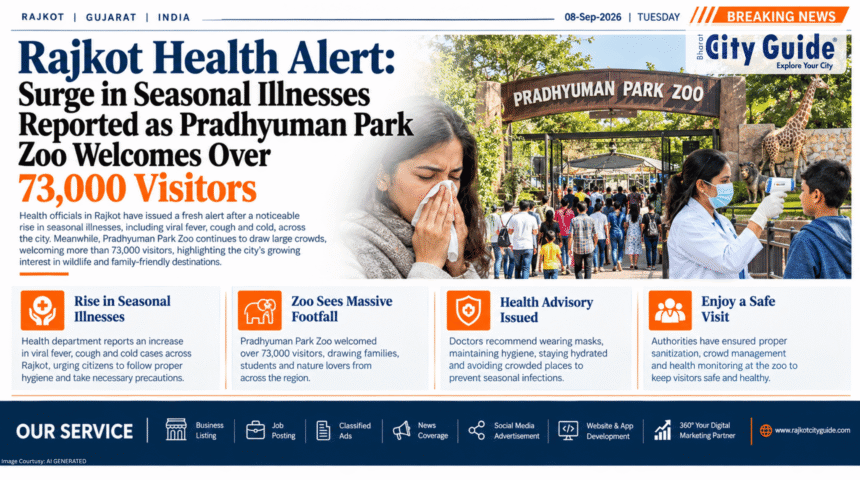
A major Rajkot Health Alert has been raised across central Gujarat as municipal healthcare records indicate a sharp surge in seasonal viral infections, cold, cough, and fever cases. According to official data from the Rajkot Municipal Corporation (RMC) health department, civic health centers and government dispensaries registered over 1,400 cases of upper respiratory tract infections, cold, cough, and high fever in a single week.
- Introduction
- What is Rajkot Health Alert?
- Why This News is Important
- Background Information
- Key Highlights
- Detailed Explanation of the Event
- Benefits, Features, and Importance
- How It Impacts People
- Expert Insights / Industry Perspective
- Challenges and Limitations
- Future Outlook
- Frequently Asked Questions (FAQs)
- Conclusion
This health advisory comes at a delicate time when the city recently witnessed massive public gatherings during peak festive holidays. Pradhyuman Park Zoo—one of Rajkot’s largest recreational and eco-tourism landmarks—recorded a turnout of more than 73,000 tourists during the festival break. The convergence of fluctuating seasonal temperatures, high humidity, and large public crowds at tourist attractions has created ideal conditions for the transmission of seasonal airborne pathogens and vector-borne illnesses.
Civic medical officers have advised citizens to practice basic preventive hygiene, avoid self-medication, and seek immediate medical evaluation at urban primary health centers (UPHCs) if fever symptoms persist. This detailed report explores the current health scenario in Rajkot, analyzing municipal health metrics, crowded tourist trends at Pradhyuman Park, vectors of seasonal disease transmission, and protective health measures.
What is Rajkot Health Alert?
The Rajkot Health Alert is an administrative and medical advisory issued by the health department of the Rajkot Municipal Corporation (RMC) to warn citizens, local healthcare providers, and civic sanitation teams about rising seasonal disease trends.
┌───────────────────────────────────────────────────────────────────────────────┐
│                     RAJKOT HEALTH & TOURISM SNAPSHOT                          │
├───────────────────────────────────────────────────────────────────────────────┤
│  MUNICIPAL HEALTH CASES  : 1,400+ Cold, Cough & Fever Cases in RMC OPDs       │
│  MAJOR SYMPTOMS REPORTED : High Fever, Sore Throat, Body Ache & Fatigue       │
│  FESTIVAL ZOO VISITORS   : 73,000+ Tourists at Pradhyuman Park Zoo            │
│  PRIMARY CONTENDERS      : Seasonal Viral Flu, Vector-Borne Diseases          │
│  CIVIC RESPONSE STATUS   : Fumes, Fogging & Water Sample Testing Triggered    │
└───────────────────────────────────────────────────────────────────────────────┘
The alert focuses on two interconnected urban phenomena:
- Surge in OPD Inflow: Urban Primary Health Centers (UPHCs), Civil Hospital Rajkot, and private clinics are recording high outpatient numbers suffering from acute respiratory infections and viral fevers.
- Mass Tourist Footfall: Peak holiday periods draw tens of thousands of visitors to public spaces like Pradhyuman Park Zoo, Race Course Ground, and Jubilee Garden, increasing the likelihood of community-level virus transmission.
Why This News is Important
The simultaneous surge in hospital visits and heavy public gathering at city parks highlights key public health priorities:
- Early Detection & Outbreak Control: Timely tracking of fever and viral symptoms prevents minor seasonal flu surges from evolving into major epidemics of vector-borne diseases like Dengue, Chikungunya, or Malaria.
- Managing Public Gathering Risks: With 73,000+ visitors crowding Pradhyuman Park Zoo during holiday breaks, public health teams must closely monitor crowded locations for sanitation and vector control.
- Protecting Vulnerable Populations: Young children, senior citizens, and individuals with underlying respiratory or cardiovascular conditions face higher risks of complications during seasonal flu shifts.
- Optimizing Healthcare Resources: Issuing health warnings helps municipal hospitals stock essential fever medications, diagnostic kits, and oral rehydration solutions.
Background Information
Seasonal transitions in Saurashtra—particularly shifts between monsoon rains and early autumn humidity—frequently trigger surges in viral fevers, waterborne infections, and mosquito breeding. Rainwater accumulation in unmaintained containers, construction sites, and open storm-water drains serves as a breeding site for Aedes aegypti and Anopheles mosquitoes.
                  [ MONSOON-AUTUMN TRANSITION & HEALTH IMPACT ]
                                       │
 ┌─────────────────────────────────────┼─────────────────────────────────────┐
 ▼                                     ▼                                     ▼
Fluctuating Weather & Humidity       Heavy Festival Crowd Gatherings      Mosquito Breeding & Stagnant Water
(Ideal Virus Transmission)           (73,000+ Zoo Tourists)              (Risk of Vector-Borne Outbreaks)
 └─────────────────────────────────────┬─────────────────────────────────────┘
                                       │
                                       ▼
             RMC Outpatient Registers: 1,400+ Cold, Cough & Fever Patients
                                       │
                                       ▼
             Civic Countermeasures: Anti-Larval Spraying & Fogging Drives
Simultaneously, major religious festivals and national holidays encourage families across Gujarat to visit recreational hubs in Rajkot. Pradhyuman Park Zoo, spread across 137 acres near Aji Dam, serves as a central destination for regional tourists. While tourism brings economic activity, dense crowding during changing weather conditions often correlates with localized spikes in airborne infections.
Key Highlights
- Over 1,400 Viral Cases Registered: RMC municipal health centers recorded more than 1,400 patients presenting with viral cold, cough, and fever symptoms over a single monitoring period.
- Record Visitors at Pradhyuman Park Zoo: Over 73,000 tourists visited the zoo during the recent holiday season, making it one of the most frequented spots in the region.
- RMC Health Machinery on Alert: Civic authorities have deployed door-to-door health survey workers, anti-larval spraying teams, and thermal fogging units across high-density residential wards.
- Monsoonal Vector Risks: Vector-borne diseases like Dengue, Chikungunya, and Malaria are under active surveillance alongside seasonal flu.
- Civic Health Advisory Issued: Health officers strongly advise against self-medication, emphasizing adequate hydration and timely consultation at government UPHCs.
Detailed Explanation of the Event
1. The Surge in Seasonal Illnesses
The outpatient departments (OPDs) of Rajkot Municipal Corporation (RMC)-run health centers have experienced an influx of patients over recent weeks. Doctors report that the primary complaint involves sudden onset of high fever accompanied by severe sore throat, dry cough, body pain, and general exhaustion.
Changing weather patterns—characterized by hot, humid daytime temperatures followed by cooler night air—compromise natural immune defenses, making individuals more susceptible to seasonal influenza and rhinovirus infections.
                                [ RMC HEALTH ACTION PLAN ]
                                            │
 ┌──────────────────────────────────────────┼──────────────────────────────────────────┐
 ▼                                          ▼                                          ▼
Door-to-Door Surveys                      Vector Control                             Public Awareness
(Identifying Fever Cases)                 (Anti-Larval & Fogging)                    (Hydration & Safe Water)
 └──────────────────────────────────────────┬──────────────────────────────────────────┘
                                            │
                                            ▼
                  Preventing Secondary Outbreaks & Ensuring Timely Care
2. Massive Footfall at Pradhyuman Park Zoo
While healthcare facilities were managing patient influxes, Rajkot’s primary tourist destination—Pradhyuman Park Zoo—saw intense public activity. Positioned near LalPari Lake, the zoo features vast open enclosures housing lions, tigers, leopards, and diverse avifauna.
During the holiday week, families and regional tourists filled the park, pushing visitor numbers past 73,000. Municipal staff managed ticket queues, battery-operated vehicle rides, and food courts to handle the record crowds safely.
Benefits, Features, and Importance
The table below outlines key aspects of Rajkot’s municipal health management and civic tourist infrastructure:
| Civic Sector | Infrastructure / Feature | Strategic Importance |
| Urban Primary Healthcare | Network of 20+ UPHCs across Rajkot wards | Provides free diagnostic testing, fever medicines, and consultation near residents. |
| Vector Control Squads | Dedicated anti-larval spraying & fogging teams | Targets mosquito breeding sites in open water bodies, construction zones, and drains. |
| Eco-Tourism Facilities | Pradhyuman Park Zoo (137 Acres) | Offers urban green space and environmental education for thousands of visitors. |
| Disease Surveillance | Daily OPD data tracking by RMC Health Dept | Enables early detection of seasonal spikes and rapid deployment of medical teams. |
How It Impacts People
For Local Citizens and Families
Residents must navigate changing weather while staying vigilant against viral infections. Families visiting crowded public parks or attending social functions are encouraged to maintain hand hygiene and wear protective masks if exhibiting mild cough or cold symptoms.
For Healthcare Providers and Hospitals
Both public and private hospitals are seeing elevated patient loads. Doctors are prioritizing blood tests for patients with persistent high fever to rule out Dengue, Malaria, or Typhoid before administering targeted treatments.
For Tourists and Travelers
Tourists visiting Rajkot’s major attractions—including Pradhyuman Park Zoo, Watson Museum, and Rotary Dolls Museum—should take basic health precautions. Carrying hand sanitizers, drinking boiled or purified bottled water, and avoiding unhygienic roadside food helps prevent gastroenteritis and viral infections while traveling.
Expert Insights / Industry Perspective
Public health specialists and epidemiologists stress that seasonal illness spikes during festival seasons require a balanced approach between civic vigilance and personal care.
Medical officers note that when large crowds gather at public parks during weather transitions, respiratory droplets spread quickly among close-contact groups. Health experts emphasize that citizens should avoid purchasing over-the-counter antibiotics without a doctor’s prescription, as viral fevers do not respond to antibiotics, and improper usage contributes to antimicrobial resistance.
Civic sanitation experts highlight that controlling mosquito breeding around residential water storage tanks is the most effective defense against vector-borne disease outbreaks during the post-monsoon period.
Challenges and Limitations
Controlling seasonal disease outbreaks in a growing urban center like Rajkot presents several structural challenges:
- Unreported Cases in Private Clinics: Many citizens seek treatment at private neighborhood dispensaries without official logging, making exact case tracking difficult for municipal epidemiologists.
- Mosquito Breeding in Private Residences: Despite RMC fogging drives, stagnant water stored in open household drums, overhead tanks, and discarded tires provides undetected breeding grounds for mosquitoes.
- Crowd Density at Recreational Hubs: Managing hygiene and waste disposal during peak tourist surges at sprawling facilities like Pradhyuman Park Zoo requires continuous staffing and monitoring.
Future Outlook
In the coming weeks, municipal authorities will expand proactive health measures across Rajkot:
- Intensified Door-to-Door Health Screening: RMC health workers will continue ward-level surveys to identify hidden fever cases and distribute oral rehydration salts and basic fever treatments.
- Expanded Vector Control Campaigns: Anti-larval chemical treatment will be intensified around water bodies near LalPari Lake, Aji River banks, and low-lying urban wards.
- Enhanced Visitor Facilities at Pradhyuman Park: Following record tourist turnouts, zoo administrators plan to streamline digital ticketing, add shaded rest areas, and increase drinking water stations for future holiday seasons.
Frequently Asked Questions (FAQs)
1. What triggered the Rajkot Health Alert?
The alert was triggered by a rapid increase in seasonal cold, cough, and fever cases—exceeding 1,400 patients in RMC health centers—occurring alongside heavy tourist footfall during festival holidays.
2. How many visitors attended Pradhyuman Park Zoo during the holiday period?
Pradhyuman Park Zoo recorded over 73,000 visitors during the recent festival holiday break.
3. What are the main symptoms reported by patients in Rajkot?
Patients primarily present with high fever, persistent dry cough, sore throat, severe body aches, head pain, and general physical fatigue.
4. What steps is the Rajkot Municipal Corporation taking to control the outbreak?
RMC has deployed door-to-door health survey teams, stepped up anti-larval spraying and fogging in vulnerable wards, ensured medicine stocks at UPHCs, and increased water safety testing.
5. How can tourists protect themselves when visiting public attractions in Rajkot?
Visitors should carry hand sanitizer, stay hydrated with safe drinking water, avoid unhygienic street food, and use mosquito repellents when visiting outdoor locations like Pradhyuman Park Zoo.
6. Where should citizens go if they experience high fever symptoms?
Citizens can visit their nearest Urban Primary Health Center (UPHC) or the Civil Hospital Rajkot for free medical evaluation, diagnostic blood tests, and prescribed treatment.
Conclusion
The latest Rajkot Health Alert underscores the delicate balance between public recreation and civic health management during peak holiday seasons. While over 73,000 tourists enjoyed the wildlife attractions at Pradhyuman Park Zoo, the surge of more than 1,400 seasonal fever cases across RMC health centers serves as a reminder for community vigilance. By combining proactive municipal vector control with personal precautions—such as staying hydrated, practicing hand hygiene, and seeking timely medical advice—residents and visitors alike can help keep Rajkot healthy and resilient.