Introduction
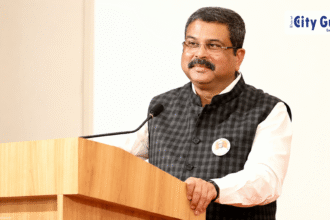
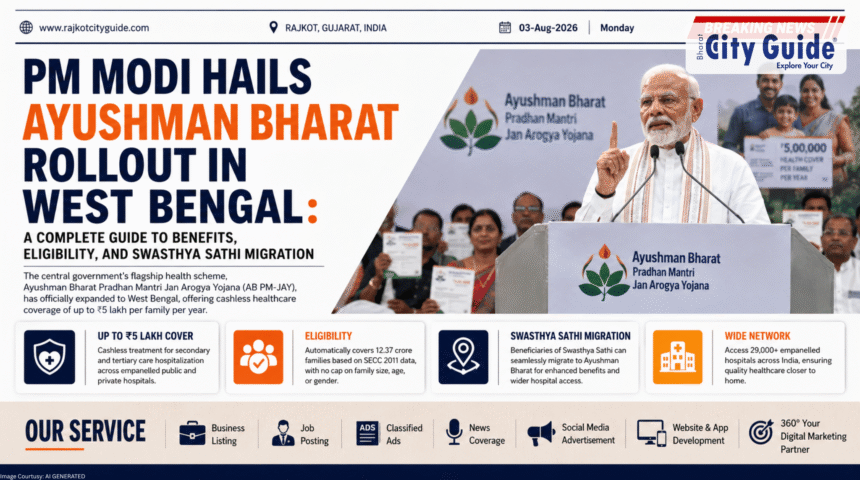
In a historic turning point for universal healthcare in India, Prime Minister Narendra Modi recently hailed the official rollout of the Ayushman Bharat Pradhan Mantri Jan Arogya Yojana (AB PM-JAY) in West Bengal. The significant decision was taken during the very first cabinet meeting presided over by West Bengal’s newly elected Chief Minister, Suvendu Adhikari. Expressing immense satisfaction over this development, PM Modi emphasized that the welfare of the people of West Bengal remains the topmost priority for the government, and the introduction of a “double-engine government” will ensure the seamless and rapid delivery of crucial Central welfare schemes across the state.
- Introduction
- What is Ayushman Bharat?
- Current Situation and Latest Updates in West Bengal
- Why is This Important for West Bengal?
- Key Highlights of the Rollout
- Detailed Explanation of Main Features and Eligibility
- Technical and Operational Architecture
- Comparative Analysis: Ayushman Bharat vs. Swasthya Sathi
- Advantages and Disadvantages of the Transition
- Launch Timeline and Future Outlook
- Frequently Asked Questions (FAQs)
- Conclusion
For nearly eight years, the residents of West Bengal were unable to access the structural benefits of this Central flagship scheme due to political standoffs between the previous state government and the Union Health Ministry. However, following the recent legislative assembly elections, the freshly formed state cabinet swiftly cleared the path for the immediate implementation of the health assurance network. In addition to this healthcare milestone, the cabinet passed several other pivotal resolutions, including accelerating the transfer of land to the Border Security Force (BSF) within 45 days for erecting critical fencing along the international Bangladesh border.
If you are a resident of West Bengal, an healthcare professional, or a citizen tracking national policy transformations, this massive integration reshapes how medical financing operates in eastern India. This comprehensive article dives deep into the intricate details of the Ayushman Bharat implementation in West Bengal. By reading further, you will discover the concrete details of the official rollout timeline, eligibility frameworks, out-of-pocket savings metrics, and how existing state-sponsored health cardholders will transition into this massive nationwide healthcare umbrella.
What is Ayushman Bharat?
Launched nationally in September 2018 under the visionary guidance of the Ministry of Health and Family Welfare, Ayushman Bharat Pradhan Mantri Jan Arogya Yojana (AB PM-JAY) stands tall as the world’s largest publicly funded health assurance and insurance program. The core philosophy of this means-tested national enterprise is rooted in providing comprehensive financial protection against catastrophic health expenses to low-income, economically vulnerable, and socio-economically marginalized households across the country.
At its foundational level, the scheme offers a massive health cover of up to ₹5 lakh per eligible family per year specifically allocated for secondary and tertiary care hospitalizations. The infrastructure functions through a fully digitized, paperless, and cashless architecture, which means an eligible beneficiary does not need to pay a single rupee out of pocket when admitted to any empanelled public or private healthcare provider in the country.
Beyond just insurance coverage, the overarching Ayushman Bharat ecosystem is divided into two broad pillars:
- Ayushman Bharat Health and Wellness Centres (now Ayushman Arogya Mandirs): These decentralized grassroots centers focus on primary healthcare, maternal health, child immunization, and regular diagnostic screening for non-communicable diseases (NCDs) like diabetes and hypertension.
- Pradhan Mantri Jan Arogya Yojana (PM-JAY): The health insurance arm providing ₹5 lakh insurance support for severe medical interventions, surgeries, and critical illness treatments.
By completing its nationwide implementation map with the inclusion of West Bengal as the 36th participating State/UT, the program now ensures structural health security for approximately 55 crore individual beneficiaries across India, acting as a structural safety net against poverty driven by medical debts.
Current Situation and Latest Updates in West Bengal
The implementation of the Ayushman Bharat scheme in West Bengal marks the resolution of a prolonged administrative impasse. Following the recent change in leadership, Chief Minister Suvendu Adhikari met virtually with Union Health Minister J.P. Nadda to formalize the integration roadmap. Shortly thereafter, a formal Memorandum of Understanding (MoU) was signed at Vigyan Bhawan in New Delhi between the National Health Authority (NHA) and the Department of Health and Family Welfare of West Bengal, making the state the 36th territory to officially launch the system.
The current situation reveals a robust, well-funded mobilization plan backed heavily by the Central government:
- Massive Financial Influx: To revitalize the long-neglected medical infrastructure of the state, the Union Health Ministry has conveyed a comprehensive resource envelope of ₹3505.59 crore for the financial year 2026-27 under the National Health Mission (NHM). An initial “mother sanction” amount of ₹527.58 crore has already been disbursed to initiate ground operations immediately.
- The July 1 Rollout Timeline: The official phase of beneficiary hospital admissions and card activations began on July 1. Ground-level data enrollment systems are working at an accelerated pace across every single district.
- Amrit Pharmacy Deep Discounts: Under the newly expanding healthcare directives, the state is vastly scaling up its number of Affordable Medicines and Reliable Implants for Treatment (AMRIT) pharmacies. The state government has submitted a proposal to push the count of these pharmacies to 469 from the current baseline of just 117, ensuring critical and life-saving medicines remain accessible at steep discounts ranging from 50% to 80%.
- New Medical Infrastructure Proposals: To support the wave of new patient loads, CM Suvendu Adhikari has forwarded administrative proposals to set up state-of-the-art medical colleges in the districts of Kalimpong, Alipurduar, and Dakshin Dinajpur, alongside setting up a specialized premier AIIMS facility in North Bengal.
Why is This Important for West Bengal?
The introduction of Ayushman Bharat to West Bengal completely shifts the dynamic of healthcare equity for millions of residents. Previously, the state operated its own medical card scheme called Swasthya Sathi. However, Swasthya Sathi faced immense criticism over low hospital reimbursement rates, which caused many premium private hospitals to turn away patients, alongside a total lack of cross-state utility.
The Portability Advantage
The single greatest consumer benefit of moving to the Ayushman Bharat ecosystem is its absolute national portability. Under the old state-centric system, if a laborer from Murshidabad or a resident of Asansol traveled outside West Bengal for advanced cancer therapies or complex cardiac surgeries, their health card became functionally useless. With PM-JAY integration, a beneficiary from West Bengal can walk completely cashless into any of the 24,000+ empanelled hospitals across India—whether it is a super-specialty hospital in Mumbai, Delhi, Bengaluru, or Chennai.
Drastic Drop in Out-of-Pocket Expenses
Historically, out-of-pocket health expenditure has been one of the primary drivers forcing lower-middle-class Indian families into generational poverty cycles. Union Health Minister J.P. Nadda highlighted that since the inception of Ayushman Bharat nationwide, India’s average out-of-pocket healthcare expenses have plummeted from a devastating 64.6% down to a much more manageable 43.4%. The extension of these systematic savings to West Bengal means families no longer have to liquidate land, gold, or take high-interest local loans to survive unexpected medical emergencies.
Key Highlights of the Rollout
- Total Coverage Limit: ₹5 lakh per family per year on a family-floater basis, reset annually.
- Cashless and Paperless Operations: Zero cash deposits required at the time of admission, treatment, or discharge at empanelled centers.
- Seamless Migration Profile: Approximately 6 crore individuals currently covered under the state’s previous Swasthya Sathi scheme will be automatically mapped and transitioned over into the Ayushman Bharat database.
- Universal Senior Citizen Expansion: In line with recent national amendments, every single citizen residing in West Bengal aged 70 years and above will receive coverage, completely independent of their household income or economic status.
- Pre-Existing Conditions Covered: Unlike commercial health insurance, every medical condition and chronic illness is covered from day one of card activation.
Detailed Explanation of Main Features and Eligibility
To understand how Ayushman Bharat fundamentally benefits a normal citizen, we must break down its operating features, documentation structures, and implementation rules.
Complete Medical Cover and Cashless Security
The ₹5 lakh annual envelope provides an all-encompassing shield that starts before a patient even enters the hospital door. It covers up to 3 days of pre-hospitalization expenses (such as diagnostic scans, doctor consultations, and early medicines) and extends up to 15 days of post-hospitalization costs (including follow-up checkups, rehabilitative care, and recovery drugs). This ensures the patient is fully supported until they return to health.
Comprehensive Treatment Packages
The scheme covers more than 1,900 complex medical procedures and treatment packages. This includes expensive treatments such as:
- Oncology (Cancer care, chemotherapy, and radiation)
- Cardiology (Bypass surgeries, stenting, and pacemaker implantations)
- Neurosurgery and Polytrauma interventions
- Neonatal and pediatric intensive care units (NICU/PICU)
- Orthopedic surgeries (Joint replacements and fracture fixations)
Strict Eligibility Parameters
Ayushman Bharat is primarily a means-tested entitlement program designed around the
Socio Economic and Caste Census (SECC) database. In rural areas, eligibility is extended to families living in single-room mud houses, landless laborers, female-headed households with no adult male member, and traditional tribal communities. In urban sectors, it automatically maps street vendors, ragpickers, domestic helpers, construction workers, plumbers, rickshaw pullers, and artisans.
Required Onboarding Documents
To claim or generate an Ayushman Card (Ayushman Vay Vandana card for seniors), individuals need to present basic verified documentation at any local citizen service center (Common Service Center – CSC), government hospital helpdesk, or authorized digital portal:
- Aadhaar Card: Serving as the definitive biometric identity protocol.
- Ration Card / Food Security Card: To verify family unit composition.
- Active Mobile Number: For OTP verification and digital card generation.
Technical and Operational Architecture
The smooth execution of the world’s largest health assurance model relies on a highly advanced, decentralized, yet unified digital infrastructure handled by the National Health Authority (NHA).
+-------------------------------------------------------------+
|               National Health Authority (NHA)               |
|            Central Cloud Core & PM-JAY Database            |
+-------------------------------------------------------------+
                               |
                               v
+-------------------------------------------------------------+
|         State Health Agency (SHA) - West Bengal             |
|          Local Monitoring & Hospital Empanelment             |
+-------------------------------------------------------------+
                               |
                               v
+-------------------------------------------------------------+
|               Hospital IT Node (TMS Portal)                 |
|    Real-Time Biometric Auth -> Cashless Approval Process    |
+-------------------------------------------------------------+
The Transaction Management System (TMS)
Every empanelled hospital operates an online portal linked directly to the Central NHA servers. When a patient arrives, an official known as the Ayushman Mitra verifies the individual’s identity using Aadhaar biometrics or facial recognition. Once authenticated, the medical case sheet is uploaded digitally, and pre-authorization approvals from the State Health Agency (SHA) are granted within hours, completely bypassing traditional insurance paperwork.
Anti-Fraud Control Systems
To prevent institutional malpractice, duplicate claims, and unnecessary surgeries, the NHA utilizes advanced Artificial Intelligence (AI) and Machine Learning (ML) analytical engines. These tools constantly scan hospital claim signatures, trigger automatic audits for suspicious patterns, and maintain a robust national blacklist system for bad actors trying to exploit the public treasury.
Comparative Analysis: Ayushman Bharat vs. Swasthya Sathi
To clarify the structural shift occurring within West Bengal’s healthcare landscape, it is helpful to contrast the incoming Ayushman Bharat scheme with the legacy Swasthya Sathi framework.
| Evaluation Factor | Legacy Swasthya Sathi Scheme | Newly Rolled Out Ayushman Bharat (PM-JAY) |
| Geographical Portability | Restricted almost entirely to hospitals within West Bengal. | Absolute National Portability. Valid across 24,000+ empanelled Indian hospitals. |
| Hospital Acceptance | Faced widespread rejection by major private chains due to low package rates. | Extensive Network Availability. Standardized CGHS-aligned payment models attract premium providers. |
| Senior Citizen Coverage | Integrated within the static family budget pool with no special allocations. | Dedicated Special Cover. All seniors aged 70+ get an independent, un-capped ₹5 lakh card. |
| Central Funding Support | Borne entirely by the state exchequer, creating massive fiscal constraints. | Cooperative Fiscal Split. Financed via a sustainable 60:40 Central-State funding matrix. |
| Digital Architecture | Standalone state IT system with limited real-time fraud checking. | Unified Digital Stack. Driven by the National Health Authority with advanced AI fraud prevention. |
Advantages and Disadvantages of the Transition
Key Advantages
- Financial Protection: Eliminates medical debt for approximately 6 crore citizens in Bengal.
- True Healthcare Freedom: Patients can choose top-tier specialized treatment centers outside their home state without worrying about regional boundaries.
- No Cap on Family Size: The scheme covers all members of an eligible family, ensuring that large or multi-generational households are not left exposed.
- Immediate Protection: Eliminates waiting periods for critical health concerns like pre-existing heart diseases or advanced stage tumors.
Challenges and Implementation Limitations
- Transition Logistics: Managing the structural database migration from Swasthya Sathi to the PM-JAY system can lead to initial technical friction and digital mismatches for remote rural beneficiaries.
- Internet Dependency: The heavy reliance on real-time biometric tracking and stable internet connectivity can cause delays in remote primary centers during severe monsoon phases or power outages.
- Overcrowding Pressures: Top-performing public hospitals may face significant surges in patient intake, requiring quick extensions of beds and medical personnel.
Launch Timeline and Future Outlook
The rollout followed a structured, efficient timeline designed to minimize service gaps for the population. Following the landmark initial cabinet meeting in May, the formal inter-governmental MoU was executed swiftly in June. The system officially went live on July 1, opening up hospital gateways for cashless admissions.
The next phase focuses on expanding primary care infrastructure. Over the coming months, the state intends to convert thousands of rural sub-centers into modern, tech-enabled centers. This shift will be supported by a large injection of Central funds, helping to build a comprehensive, multi-tiered public health network across West Bengal.
Frequently Asked Questions (FAQs)
1. Will my existing Swasthya Sathi card stop working in West Bengal?
No, your existing healthcare protection will not experience any sudden disruptions. Chief Minister Suvendu Adhikari officially stated that the nearly 6 crore individuals currently covered under the Swasthya Sathi network will be systematically and safely migrated into the Ayushman Bharat program. The state machinery is carefully cross-mapping databases to ensure that families retain continuous, uninterrupted medical cover during this transition phase. New applicants who never held a state health card can also apply directly for fresh card enrollment.
2. How can I check if I am eligible for the Ayushman Bharat scheme?
Checking your eligibility for the Ayushman Bharat scheme is a straightforward process. You can visit the official national web portal at pmjay.gov.in and access the “Am I Eligible?” tab. By entering your active mobile number and selecting your state, you can search the national Socio-Economic and Caste Census database using your name, ration card number, or household details. Alternatively, you can visit the nearest localized Common Service Center (CSC) or check with an Ayushman Mitra helpdesk located inside any empanelled public hospital.
3. What are the benefits for senior citizens under the new West Bengal rollout?
The new rollout brings monumental benefits for the elderly population of West Bengal. Under the expanded national guidelines of the Ayushman Bharat initiative, every single individual aged 70 years and above is entitled to free health assurance cover of up to ₹5 lakh per year. This senior citizen health benefit is entirely universal, meaning it does not look at household income, poverty lines, or socio-economic criteria. Seniors belonging to families already covered under PM-JAY will receive a distinct, dedicated card exclusively for themselves.
4. Can a patient from West Bengal get cashless treatment in another state?
Yes, this is one of the foundational benefits of the Ayushman Bharat program. The entire digital framework of PM-JAY is built upon absolute national portability. If an eligible beneficiary from West Bengal needs to travel to cities like Delhi, Mumbai, or Bengaluru for specialized treatments, they can walk into any hospital empanelled under the scheme across India. They only need to present their Ayushman card and complete their biometric authentication to access entirely cashless hospitalizations.
5. Are pre-existing diseases covered under the Ayushman Bharat scheme?
Yes, the scheme provides complete coverage for pre-existing conditions from the very first day. Unlike commercial health insurance plans that carry long waiting periods or exclude chronic ailments, Ayushman Bharat ensures that conditions like diabetes, hypertension, advanced cardiovascular conditions, and cancer are covered immediately. There is no medical examination required before card issuance, ensuring that those in urgent need of surgeries or intensive treatments face no financial barriers.
6. How much does it cost to get an Ayushman Bharat card in West Bengal?
Obtaining an Ayushman Bharat card is entirely free of cost for all eligible citizens. The Government of India and the West Bengal state administration handle all operational costs of the program. Beneficiaries should never pay any fees or service charges to local operators, hospital staff, or digital centers to print or activate their cards. If any center demands money for enrollment, citizens can report the incident directly to the national health helpline number at 14555.
7. What components are included within the ₹5 lakh insurance cover?
The ₹5 lakh health envelope is highly comprehensive, covering almost every expense related to an inpatient hospitalization. It includes all costs for room charges, nursing care, surgeon fees, ICU operations, surgical implants, diagnostic laboratory tests, and blood units. Furthermore, it covers necessary medicines and doctor consultations up to 3 days prior to the formal admission date, alongside post-hospitalization recovery checkups and prescription drugs for up to 15 days after discharge.
Conclusion
The successful integration of West Bengal into the Ayushman Bharat network stands as a historic milestone for public welfare and cooperative governance in India. By opening up the world’s largest health assurance model to over 6 crore citizens within the state, the new administration has successfully bridged a long-standing healthcare gap. Prime Minister Narendra Modi’s validation of the rollout reflects a deep commitment to ensuring that vital developmental benefits reach every corner of the nation seamlessly through a aligned administration.
For the average resident of West Bengal, this transition offers a major upgrade over past initiatives. The introduction of absolute national portability, CGHS-aligned premium private hospital networks, and dedicated, non-capped insurance allocations for senior citizens completely changes the family safety net during medical emergencies. Backed by a robust financial allocation of over ₹3500 crore from the Central government, the state’s healthcare landscape is poised for a major infrastructural revival.
Moving forward, the focus shifts to ensuring thorough, grassroots card registration, ironclad IT system connections across rural districts, and the rapid construction of proposed medical colleges. If you or your family members are currently covered under the older state systems, it is highly recommended to stay updated with local municipality notifications, keep your Aadhaar documents ready, and complete your transition to the Ayushman Bharat platform to secure comprehensive health coverage nationwide.