Introduction
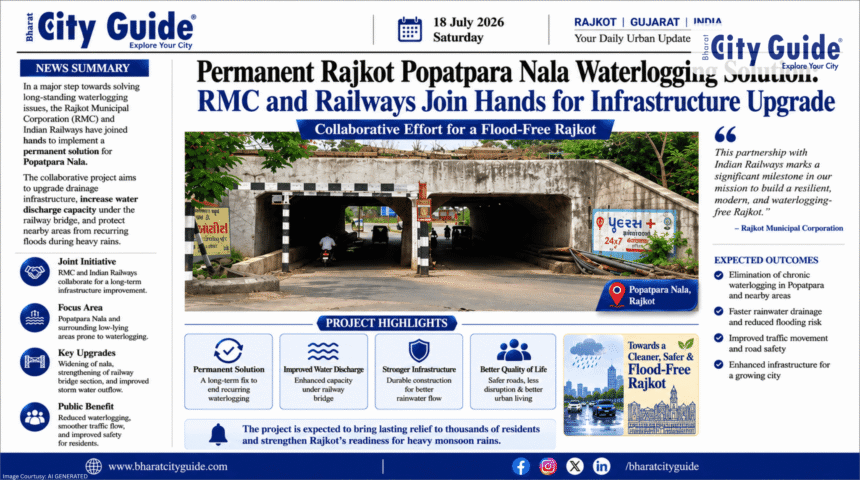
For years, the arrival of the monsoon season in Rajkot has brought with it a recurring sense of dread for residents and commuters near the Popatpara Nala. Every time heavy rains lash the city, this low-lying area transforms into a bottleneck, where water accumulates rapidly, paralyzing traffic and creating significant hardships for those who rely on this route. This annual struggle has long been a point of contention and a primary concern for municipal authorities. However, recent developments indicate a positive shift. The Rajkot Municipal Corporation (RMC) has initiated a strategic dialogue with the Railway authorities, aiming to implement a comprehensive Rajkot Popatpara Nala Waterlogging Solution that could finally put an end to this seasonal misery.
- Introduction
- What is the Rajkot Popatpara Nala Waterlogging Solution?
- Why This News is Important
- Background Information
- Key Highlights
- Detailed Explanation of the Event
- Benefits and Importance of the Project
- How It Impacts People
- Expert Insights and Industry Perspective
- Challenges and Limitations
- Future Outlook
- Frequently Asked Questions (FAQs)
- Conclusion
This initiative is not merely about clearing drains; it is a major infrastructure project that involves deep coordination between local civic bodies and central government departments. The importance of this project cannot be overstated. As Rajkot continues to expand as a major industrial and commercial hub in Gujarat, the efficiency of its transport corridors and the resilience of its drainage systems are paramount. The proposed pipeline project, set to be executed at a cost of several crores, represents a long-term investment in the city’s urban stability. By addressing the root cause of the waterlogging—the insufficient capacity of the current drainage path beneath the railway line—the authorities are looking to make this the last year that citizens have to endure flooded roads in this area. This article delves into the details of the project, the collaborative efforts behind it, and what it means for the future of Rajkot’s infrastructure.
What is the Rajkot Popatpara Nala Waterlogging Solution?
The Rajkot Popatpara Nala Waterlogging Solution refers to a strategic engineering and civil infrastructure project aimed at permanently mitigating the flooding issues at the Popatpara railway underpass and its surrounding areas. Historically, the Popatpara Nala has been a problematic point because rainwater from adjacent localities flows into this low-lying zone, but the existing drainage infrastructure fails to discharge this volume of water effectively, especially during heavy downpours.
The proposed solution involves the installation of a high-capacity, dedicated drainage pipeline. This is not a simple cleaning operation; it is a structural intervention. The project entails laying a massive pipeline that will bypass or augment the current drainage capacity, allowing for the rapid evacuation of stormwater. Because this area is adjacent to and partially beneath railway tracks, the project requires technical permissions, safety clearances, and physical coordination with the Indian Railways. By laying a new pipeline that connects to the city’s main drainage network, the RMC intends to ensure that water no longer accumulates, even during intense rainfall events. The “solution” is defined by its focus on permanent prevention rather than temporary, reactive pump-based measures that have been employed in the past.
Why This News is Important
The significance of this project transcends the immediate relief of local residents. It is important for several key reasons:
- Public Safety: Waterlogging in low-lying areas is a major safety hazard. It increases the risk of road accidents, damages vehicles, and poses a threat to pedestrians. A permanent solution directly translates to a safer commute.
- Urban Resilience: Rajkot is a growing city. As urban density increases, infrastructure must evolve to handle the runoff from paved surfaces. Addressing waterlogging at a critical transit point like Popatpara proves that the city is committed to sustainable and resilient urban planning.
- Economic Impact: Flooded roads cause traffic jams, leading to lost man-hours, delayed deliveries for local businesses, and increased fuel consumption. An efficient drainage system supports economic continuity during the monsoon.
- Inter-Departmental Cooperation: This project serves as a model for how the Rajkot Municipal Corporation and the Railways can coordinate on public welfare projects. Infrastructure often falls under different jurisdictions; the ability to bridge these gaps is a sign of good governance.
- Citizen Satisfaction: For years, Popatpara residents have faced immense frustration. Seeing the authorities take concrete, multi-crore action to solve a chronic problem restores trust between the citizens and the administration.
Background Information
The Popatpara Nala issue is not new. For as long as the railway overbridge and underpass have served the area, the accumulation of rainwater has been a recurring theme. The geography of Rajkot plays a role, with several localities sloping towards the railway line. During the monsoon, the sheer volume of water often exceeds the capacity of the small culverts or old drainage lines installed years ago.
In previous monsoons, the RMC resorted to temporary fixes. These included deploying high-capacity diesel pumps to suck water out of the area as it accumulated and clearing debris from existing drains. While these measures provided immediate relief, they were unsustainable. The pumps were often overwhelmed by the speed of water accumulation, and they required constant monitoring. Furthermore, as the city expanded, the increased load of sewage and stormwater meant that the legacy drainage systems were no longer adequate. The realization that temporary measures were failing to provide long-term peace of mind led the RMC to seek a more robust, engineering-based Rajkot Popatpara Nala Waterlogging Solution.
Key Highlights
The proposed project to resolve the Popatpara flooding issue is structured around several critical components:
- Coordinated Approach: RMC has initiated an official, documented correspondence with the Railway authorities to secure necessary permits and technical clearances.
- Pipeline Installation: The core of the project is the installation of a large-diameter pipeline designed to handle high volumes of stormwater.
- Multi-Crore Investment: The project is estimated to cost several crores of rupees, reflecting its scale and the complexity of the engineering work involved near railway tracks.
- Permanent Mitigation: The goal is to move away from the temporary “pump-out” method and create an automated, high-capacity discharge route.
- Target Deadline: Authorities have expressed intent to complete necessary phases to ensure this becomes the “last year” of the waterlogging problem.
- Railway Synergy: The work requires specific expertise to ensure it does not compromise the stability of the railway tracks above, necessitating joint surveys between RMC and Railway engineers.
Detailed Explanation of the Event
The recent movement regarding the Rajkot Popatpara Nala Waterlogging Solution is rooted in the RMC’s commitment to monsoon preparedness. Following the previous year’s grievances, municipal engineers assessed the catchment area and identified that the lack of a proper discharge outlet near the railway track was the primary culprit.
The process began with the Rajkot Municipal Corporation (RMC) preparing a Detailed Project Report (DPR) for a storm-water pipeline. Given that the pipeline would pass through or near railway land, RMC officials reached out to the Divisional Railway Manager’s office. The correspondence focuses on obtaining a “No Objection Certificate” (NOC) and establishing a work schedule that aligns with railway safety protocols.
Once the permission is granted, the construction phase will commence. This is a complex engineering task. It involves excavating the ground—likely using trenchless technology (such as pipe jacking) if digging is not feasible under the tracks—to install the reinforced concrete pipes. Once connected, the water will flow away from the Popatpara area towards the primary city storm-water drains. This bypasses the old, choked channels that currently trap the water. The RMC is prioritizing this project in the current fiscal budget to ensure that the work can be completed without bureaucratic delays.
Benefits and Importance of the Project
The transition from temporary solutions to a permanent pipeline infrastructure offers transformative benefits for the city.
Enhanced Traffic Flow
Popatpara is a vital artery. When it floods, traffic is diverted to other routes, causing congestion throughout the city. A permanent solution ensures that this route remains open even during heavy rains, effectively reducing the overall traffic load on the city during the monsoon.
Reduction in Maintenance Costs
Currently, the RMC spends significant funds every year renting pumps, employing diesel, and paying manpower to operate them throughout the monsoon. Over a few years, these recurring costs add up. A permanent pipeline requires only minimal maintenance (occasional cleaning), proving to be a fiscally responsible decision in the long run.
Property Value and Commercial Stability
Businesses in the area often suffer during the monsoon due to lack of customer access. Similarly, residents find it difficult to move in and out of their homes. By securing the area against flooding, the project will likely stabilize local property values and encourage commercial activity without the fear of monsoon-induced interruptions.
Health and Hygiene
Stagnant water is a breeding ground for mosquitoes and bacteria, leading to the spread of waterborne diseases. By ensuring water is discharged rapidly, the project contributes to the overall public health of the Popatpara neighborhood.
How It Impacts People
This project affects various segments of society in Rajkot:
- Residents: For those living in the immediate vicinity, it means no more anxiety every time the sky turns gray. It means their homes and vehicles remain safe from water damage.
- Students: Many students pass through this area to reach schools and colleges. A flood-free route ensures they don’t miss classes or get delayed.
- Commuters and Office Goers: Thousands of professionals use this road daily. A permanent solution removes the biggest hurdle in their commute, leading to a more reliable schedule.
- Local Businesses: Shop owners who see footfall drop significantly when the area floods will benefit from consistent access for their customers.
- Daily Wage Earners: For people who travel on two-wheelers or walk, flood-free roads are a matter of safety and dignity, preventing them from having to wade through contaminated water.
Expert Insights and Industry Perspective
Urban planning experts often emphasize that “Drainage is the lifeline of a city.” In the context of Rajkot’s development, the Popatpara solution is a perfect example of what experts call “Retrofitting Infrastructure.”
According to civil engineering professionals, the challenge in Indian cities often lies in the “silo” approach, where different government bodies (like the Corporation and the Railways) operate independently. The current progress on the Rajkot Popatpara Nala Waterlogging Solution is a sign of “Collaborative Urban Governance.” Experts suggest that for such projects to succeed, the design must account for “100-year rain events”—statistical data that predicts the heaviest possible rainfall. The proposed pipeline must be oversized to account for climate change and the increasing trend of sudden, heavy rainfall, ensuring it remains relevant for decades to come.
Furthermore, industry perspectives highlight the importance of “Smart Drainage.” Ideally, the RMC should incorporate sensor-based monitoring in the new pipeline to detect blockages in real-time, allowing for proactive maintenance rather than reactive cleaning.
Challenges and Limitations
While the project is promising, it is not without its challenges:
- Technical Constraints: Working near railway tracks is inherently difficult. Any excavation must ensure the structural integrity of the tracks is not compromised. This requires high-precision engineering and specialized contractors.
- Bureaucratic Coordination: The dependency on Railway approvals can be a bottleneck. Even with the best intentions, administrative procedures and the wait for clearances can delay the project.
- Utility Relocation: Underground, the area is likely filled with existing utility lines—electric cables, gas pipelines, and existing sewage lines. Mapping these and relocating them without service disruption is a significant operational challenge.
- Weather Dependency: The actual physical work can only be carried out during the non-monsoon months. This creates a tight window for the RMC to finish the project. If the work is not completed before the rains begin, the cycle of flooding might persist for one more year.
Future Outlook
The outlook for the Popatpara area is highly optimistic. With the municipal corporation actively pursuing the Rajkot Popatpara Nala Waterlogging Solution, the residents are closer than ever to a permanent resolution. If the current coordination with the Railway authorities remains on track, we can expect the commencement of the pipeline work shortly after the necessary technical approvals.
In the coming years, this project will likely serve as a blueprint for the RMC. The administration will have a proven model of how to resolve chronic drainage issues through inter-departmental synergy. As Rajkot continues to grow, such robust infrastructure projects will be the difference between a city that thrives despite the monsoon and one that struggles to stay afloat.
Frequently Asked Questions (FAQs)
1. What is the main goal of the Rajkot Popatpara Nala Waterlogging Solution?
The primary goal is to install a permanent, high-capacity pipeline to drain stormwater effectively, preventing the annual flooding that occurs in the Popatpara area.
2. Why is the Railway authority involved in this project?
The area prone to flooding is situated near and beneath railway infrastructure. Any major excavation or pipeline installation in this zone requires safety permissions and technical clearances from the Railways.
3. Will this project stop the waterlogging immediately?
The project is a permanent civil work intervention. Once completed, it is expected to eliminate the waterlogging issue entirely, unlike the temporary pumps used in the past.
4. How long will the project take to complete?
The timeline depends on the finalization of the Railway clearances and the excavation process. However, the authorities are aiming to expedite the process to ensure significant relief by the next monsoon cycle.
5. What happens if the pipeline gets blocked in the future?
Modern infrastructure projects include inspection chambers and manholes, allowing for regular maintenance and cleaning, ensuring the system remains functional for the long term.
6. Will there be traffic disruptions during the construction?
Given the location, some temporary traffic diversions might be required during the construction phase. The RMC is expected to plan this in a way that minimizes public inconvenience.
7. Who is funding the Rajkot Popatpara Nala Waterlogging Solution?
The project is being handled by the Rajkot Municipal Corporation, with budgetary allocations made for urban infrastructure and drainage development.
Conclusion
The persistent issue of waterlogging at the Popatpara Nala has been a source of frustration for Rajkot’s citizens for far too long. However, the proactive steps taken by the Rajkot Municipal Corporation to coordinate with the Railway authorities signal a turning point. By shifting focus from temporary, recurring fixes to a permanent engineering solution, the city administration is demonstrating a commitment to long-term urban resilience.
This initiative is a reminder that effective city management relies on collaboration, planning, and investment in foundational infrastructure. As the pipeline project moves forward, it promises to alleviate the burden on commuters, protect local properties, and significantly improve the quality of life for the residents of Popatpara. The successful implementation of the Rajkot Popatpara Nala Waterlogging Solution will not only be a victory for the people of this neighborhood but also a testament to Rajkot’s evolving capacity to handle complex urban challenges. Citizens can look forward to a future where heavy rains bring relief rather than disruption.