Introduction
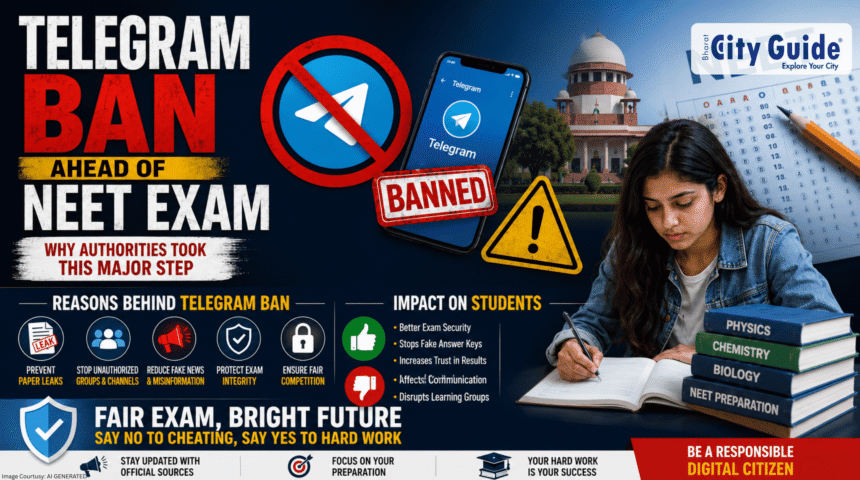
The topic of telegram ban has become one of the most discussed issues among students, parents, educators, and technology experts. Ahead of the NEET examination, authorities reportedly considered temporary restrictions on Telegram to prevent the spread of leaked question papers and unauthorized exam-related content.
- Introduction
- What is Telegram and Why Is It So Popular?
- Why Was a Telegram Ban Considered Before the NEET Exam?
- Understanding the Growing Problem of Exam Paper Leaks
- How a Temporary Telegram Ban Works
- Impact of Telegram Ban on Students
- Why NEET Exam Security Is a National Priority
- Government Measures to Prevent Paper Leaks
- Role of Technology Platforms in Exam Security
- Public Reaction to the Telegram Ban
- Challenges in Implementing a Telegram Ban
- Could Similar Restrictions Happen During Other Exams?
- What Students Should Do During Such Restrictions
- How Educational Communities Can Adapt
- Future of Telegram in India
- Key Lessons From the Telegram Ban Debate
- Frequently Asked Questions (FAQs)
- Conclusion
The move has sparked a nationwide debate. While some people believe the temporary telegram ban is necessary to protect the integrity of competitive examinations, others argue that it affects millions of genuine users who rely on the platform for communication, education, and business purposes.
In this detailed article, we will explore the reasons behind the Telegram restrictions, the connection with NEET exam security, the impact on students, government concerns regarding paper leaks, and what the future may hold for messaging platforms during major examinations.
What is Telegram and Why Is It So Popular?
Telegram is a cloud-based messaging platform that allows users to send messages, photos, videos, documents, and large files. It is widely known for its speed, security features, large group capacities, and channel-based communication system.
Key Features of Telegram
- End-to-end encrypted chats
- Large group support
- Public and private channels
- File sharing up to several gigabytes
- Cloud storage functionality
- Multi-device synchronization
- Bot integration and automation tools
Because of these features, Telegram has become popular among:
- Students
- Teachers
- Coaching institutes
- Businesses
- Content creators
- Communities and organizations
However, these same features have sometimes been misused for spreading unauthorized content, including examination papers and answer keys.
Why Was a Telegram Ban Considered Before the NEET Exam?
The primary reason behind discussions around a temporary telegram ban was the growing concern over examination paper leaks.
Competitive examinations such as NEET involve millions of students. Any paper leak can create serious issues, including:
- Unfair advantages for certain candidates
- Loss of examination credibility
- Legal complications
- Stress among genuine students
- Delays in result announcements
Authorities have observed that leaked materials often circulate rapidly through messaging platforms due to their large groups and forwarding capabilities.
Main Reasons Behind the Telegram Ban Discussions
- Prevention of question paper leaks
- Control of fake answer keys
- Reduction of misinformation
- Protection of exam integrity
- Monitoring suspicious communication channels
- Limiting unauthorized distribution of exam content
The government and examination authorities aim to ensure a fair environment for every candidate appearing in the exam.
Understanding the Growing Problem of Exam Paper Leaks
Exam paper leaks are not a new issue in India. Over the years, several recruitment tests, entrance examinations, and competitive exams have faced allegations of leaked papers.
Common Methods Used in Paper Leak Networks
- Sharing screenshots of question papers
- Circulating PDFs through messaging apps
- Selling answer keys through private groups
- Creating fake channels promising leaked papers
- Using social media platforms for distribution
Telegram’s large-group capabilities have made it attractive for both legitimate educational communities and individuals attempting to misuse the platform.
This does not mean Telegram itself is responsible for paper leaks. Rather, authorities are concerned about how some users exploit digital platforms.
How a Temporary Telegram Ban Works
A temporary telegram ban is different from a permanent shutdown.
Temporary Restrictions May Include
- Blocking access for a limited period
- Restricting specific channels
- Monitoring suspicious groups
- Limiting content distribution
- Coordinating with platform administrators
The objective is usually to address a specific security concern during a sensitive period such as a national examination.
Once the risk period passes, normal access can often be restored.
Impact of Telegram Ban on Students
The proposed or temporary telegram ban has created mixed reactions among students.
Positive Effects
Better Exam Security
A reduction in unauthorized content sharing may help maintain fairness.
Reduced Misinformation
Students often receive fake answer keys and false exam updates through unofficial channels.
Increased Trust in Results
A secure examination process improves confidence in the final results.
Negative Effects
Loss of Educational Resources
Many students use Telegram channels for:
- Notes
- Practice tests
- Lecture recordings
- Study materials
Communication Challenges
Students preparing for NEET often depend on group discussions and peer support.
Coaching Institute Difficulties
Many coaching institutes distribute educational content through Telegram channels.
As a result, a temporary restriction may affect genuine users along with those involved in unauthorized activities.
Why NEET Exam Security Is a National Priority
The National Eligibility cum Entrance Test (NEET) is one of India’s most important entrance examinations.
Every year, millions of students compete for admission into medical colleges.
Why Security Matters
- High competition levels
- Limited seats
- Career-defining examination
- Public trust in the education system
- Merit-based selection process
Any compromise in examination security can impact thousands of deserving students.
This is why authorities often adopt strict measures before and during the examination period.
Government Measures to Prevent Paper Leaks
The discussion surrounding the telegram ban is only one part of a broader strategy.
Other Security Measures Include
- Enhanced digital surveillance
- Monitoring suspicious online activity
- Secure transportation of question papers
- Multiple security checks at exam centers
- Use of advanced encryption systems
- Coordination with law enforcement agencies
Authorities continue to improve security mechanisms every year to reduce the chances of examination malpractice.
Role of Technology Platforms in Exam Security
Technology companies play an important role in preventing misuse of their services.
How Platforms Can Help
- Removing suspicious channels
- Cooperating with authorities
- Detecting illegal content distribution
- Responding quickly to complaints
- Improving moderation systems
Many messaging platforms actively work with governments and agencies when serious legal violations are identified.
Public Reaction to the Telegram Ban
Public opinion regarding the temporary telegram ban remains divided.
Supporters Say
- Exam integrity must come first.
- Strict measures discourage cheating.
- Honest students deserve a fair process.
- Temporary inconvenience is acceptable.
Critics Say
- Millions of legitimate users are affected.
- Educational communities suffer.
- Alternative methods may be more effective.
- Blanket restrictions may not solve the root problem.
The debate highlights the challenge of balancing digital freedom with examination security.
Challenges in Implementing a Telegram Ban
While the idea appears straightforward, implementation presents several challenges.
Major Challenges
Large User Base
Millions of people use Telegram daily for legitimate purposes.
Alternative Platforms
Users can quickly move to other messaging services.
Technical Limitations
Blocking a platform completely can be difficult.
Privacy Concerns
Excessive monitoring may raise privacy-related questions.
Therefore, authorities must carefully evaluate the effectiveness and consequences of any restrictions.
Could Similar Restrictions Happen During Other Exams?
The discussion around a telegram ban may influence future examination policies.
Authorities could consider similar measures during:
- JEE examinations
- Government recruitment tests
- State-level entrance exams
- Professional certification exams
However, future decisions will likely depend on risk assessments and security intelligence.
What Students Should Do During Such Restrictions
Students should focus on official information sources rather than relying on rumors.
Recommended Actions
- Follow official exam websites
- Check government announcements
- Use verified educational platforms
- Avoid suspicious groups
- Report fake paper leak claims
- Continue preparation without distractions
Students should remember that genuine success comes from preparation rather than shortcuts.
How Educational Communities Can Adapt
Educational groups can reduce dependence on a single platform.
Alternative Solutions
- Official websites
- Learning management systems
- Email newsletters
- Mobile learning apps
- Online classrooms
- Institutional portals
Diversifying communication channels helps ensure continuity even if one platform faces restrictions.
Future of Telegram in India
Despite discussions around temporary restrictions, Telegram remains one of the most widely used messaging platforms in India.
Expected Developments
- Stronger content moderation
- Better cooperation with authorities
- Enhanced security measures
- Improved reporting mechanisms
- More focus on compliance requirements
Experts believe that technology platforms and regulators will continue working toward a balance between security and user freedom.
Key Lessons From the Telegram Ban Debate
The controversy highlights several important lessons.
Important Takeaways
- Exam security is becoming increasingly digital.
- Messaging platforms can be misused by bad actors.
- Fair examinations remain a national priority.
- Technology companies have growing responsibilities.
- Students should rely on official sources.
- Long-term solutions require collaboration rather than restrictions alone.
The debate also demonstrates the complex relationship between technology, education, and public policy.
Frequently Asked Questions (FAQs)
Is Telegram permanently banned in India?
No. Discussions have primarily focused on temporary restrictions or targeted actions related to specific security concerns rather than a permanent nationwide ban.
Why was Telegram linked to NEET paper leak concerns?
Authorities were concerned that leaked examination materials and unauthorized content could be circulated rapidly through large groups and channels.
Does Telegram support educational activities?
Yes. Millions of students and educators use Telegram for sharing notes, lectures, study materials, and academic discussions.
Can a Telegram ban completely stop paper leaks?
Not necessarily. Experts believe that paper leak prevention requires multiple security measures, not just platform restrictions.
How can students stay updated during a Telegram ban?
Students should rely on official examination websites, government notifications, and recognized educational institutions.
Are other messaging platforms also monitored during exams?
Authorities may monitor various digital platforms when investigating examination-related misconduct.
What should students do if they receive leaked paper claims?
Students should avoid sharing such content and report suspicious activity to the relevant authorities.
Conclusion
The discussion surrounding the telegram ban ahead of the NEET examination reflects the growing challenge of maintaining exam security in the digital age. Authorities are under increasing pressure to prevent paper leaks, protect fairness, and preserve public confidence in competitive examinations.
While a temporary telegram ban may help limit the spread of unauthorized content during sensitive periods, it also raises concerns for millions of legitimate users who depend on the platform for learning and communication. The long-term solution will likely involve stronger examination security systems, improved cooperation with technology companies, and greater awareness among students.
For NEET aspirants and other competitive exam candidates, the most reliable path to success remains focused preparation, trusted study resources, and adherence to official guidelines.