



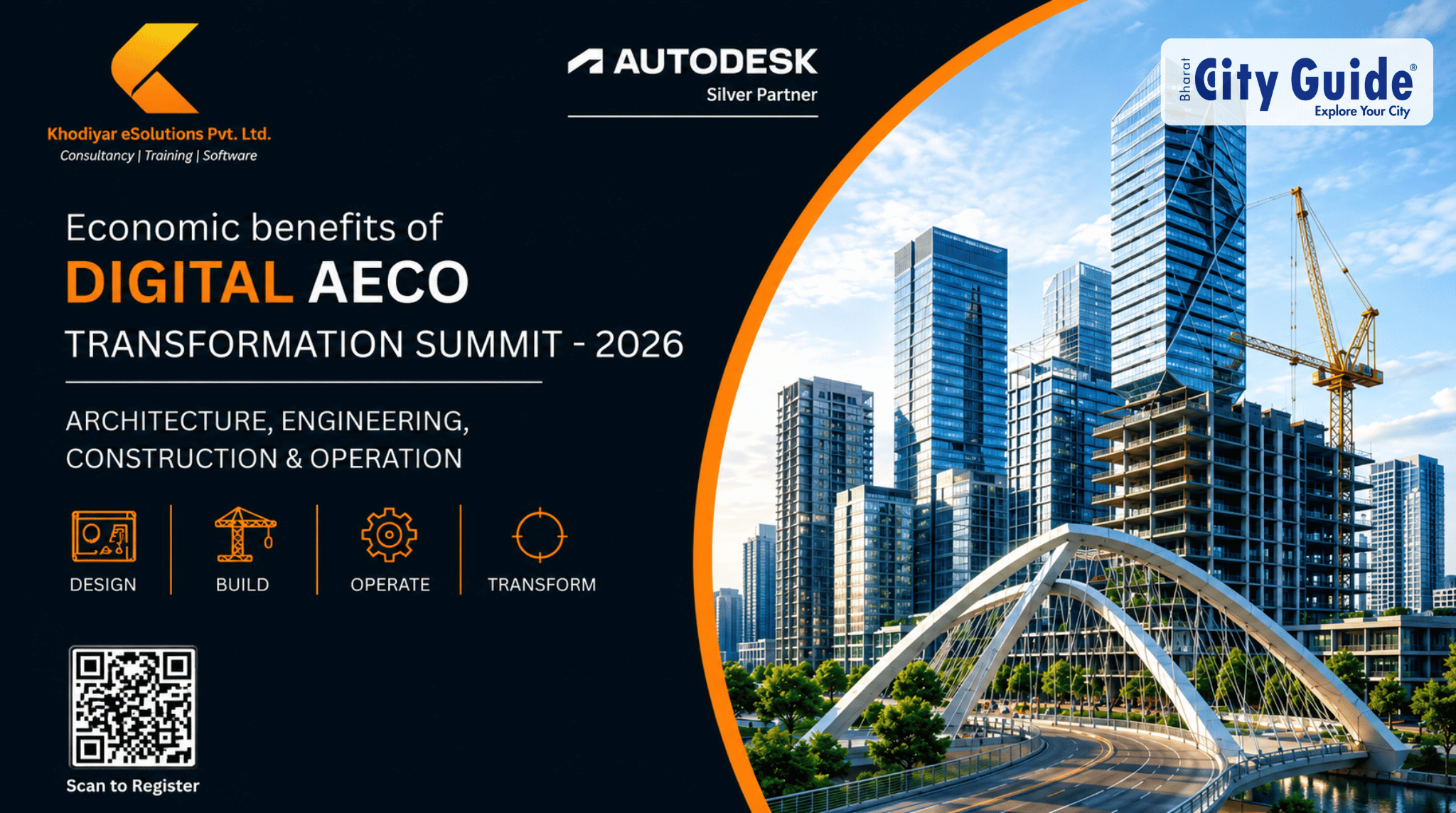
Economic Benefits of Digital AECO Transformation Summit 2026: Shaping the Future of Architecture, Engineering, Construction, and Operations
About This Event
Economic Benefits of Digital AECO Transformation Summit 2026
The Architecture, Engineering, Construction, and Operations (AECO) industry is experiencing a digital revolution unlike anything seen before. Technologies such as Building Information Modeling (BIM), Artificial Intelligence (AI), Digital Twins, Cloud Collaboration, and Automation are transforming the way infrastructure and construction projects are planned, designed, executed, and maintained.
To address these rapidly evolving trends, the Economic Benefits of Digital AECO Transformation Summit 2026 brings together industry leaders, architects, engineers, contractors, project managers, technology providers, and decision-makers to explore how digital transformation is creating measurable economic value across the construction ecosystem.
The summit serves as a platform for discussing innovation, productivity improvements, cost optimization, sustainability, and future-ready business strategies in the AECO sector.
Understanding the AECO Industry
AECO stands for:
- Architecture
- Engineering
- Construction
- Operations
These four sectors collectively shape the built environment, including residential projects, commercial buildings, industrial facilities, transportation networks, and smart cities.
Traditionally, the industry relied heavily on manual processes, paper-based documentation, and disconnected workflows. However, increasing project complexity and growing demand for efficiency have accelerated the adoption of digital technologies.
Today, organizations worldwide are investing heavily in digital transformation to improve project outcomes and remain competitive.
What is Digital AECO Transformation?
Digital AECO Transformation refers to the integration of advanced technologies into every stage of the project lifecycle.
This transformation includes:
Building Information Modeling (BIM)
A digital representation of physical and functional characteristics of a facility.
Cloud-Based Collaboration
Real-time project coordination among architects, engineers, contractors, and stakeholders.
Artificial Intelligence
Automated analysis, predictive modeling, and intelligent decision-making.
Digital Twins
Virtual replicas of physical assets that enable monitoring and optimization throughout the lifecycle.
Automation
Reducing repetitive tasks and increasing operational efficiency.
Data Analytics
Using project data to improve planning, forecasting, and performance management.
These technologies enable organizations to make faster, smarter, and more cost-effective decisions.
Why Digital Transformation Matters in 2026
Construction and infrastructure projects are becoming increasingly complex.
Challenges include:
- Rising construction costs
- Labor shortages
- Tight project schedules
- Sustainability requirements
- Risk management concerns
- Regulatory compliance
Digital transformation helps organizations address these challenges while improving profitability and productivity.
As governments and private developers invest heavily in infrastructure projects, technology adoption has become a necessity rather than a choice.
Key Themes of the Summit
The Economic Benefits of Digital AECO Transformation Summit 2026 focuses on several critical industry topics.
Economic Impact of Digital Technologies
Participants will explore how technology investments generate measurable returns through:
- Reduced project costs
- Faster delivery timelines
- Improved resource utilization
- Lower operational expenses
Building Information Modeling (BIM)
BIM continues to be one of the most influential technologies in the AECO industry.
Benefits include:
- Enhanced collaboration
- Better project visualization
- Reduced design errors
- Improved project coordination
Smart Construction Technologies
Emerging technologies such as drones, robotics, IoT devices, and AI-powered systems are transforming construction workflows.
These innovations improve efficiency and reduce project risks.
Digital Project Management
Modern project management platforms enable teams to collaborate seamlessly regardless of location.
Digital tools improve communication, transparency, and accountability.
Sustainable Infrastructure Development
Technology plays a critical role in designing and managing environmentally responsible projects.
The summit explores strategies for achieving sustainability goals through digital innovation.
Economic Benefits of Digital Transformation
One of the primary objectives of the summit is to highlight the financial advantages of adopting digital technologies.
Reduced Project Costs
Digital workflows help eliminate costly design conflicts and construction errors.
Organizations can identify problems before construction begins, reducing expensive rework.
Faster Project Delivery
Automated processes and real-time collaboration accelerate project timelines.
Faster completion leads to earlier revenue generation and improved profitability.
Improved Productivity
Technology enables teams to accomplish more work with fewer resources.
Automation reduces manual effort and increases operational efficiency.
Better Risk Management
Advanced analytics and predictive tools help organizations identify potential issues before they become major problems.
Enhanced Asset Performance
Digital twins and smart monitoring systems improve operational efficiency throughout an asset’s lifecycle.
The Role of BIM in Industry Transformation
Building Information Modeling has become the foundation of modern construction practices.
BIM allows stakeholders to:
- Visualize projects before construction
- Improve coordination between disciplines
- Detect design conflicts early
- Enhance project planning
- Improve lifecycle management
Organizations that successfully implement BIM often experience significant reductions in project delays and budget overruns.
Artificial Intelligence in Construction
Artificial Intelligence is rapidly becoming a key driver of innovation.
Applications include:
Predictive Analytics
Forecasting project outcomes based on historical data.
Schedule Optimization
Identifying opportunities to improve project timelines.
Safety Monitoring
Detecting potential hazards and improving workplace safety.
Resource Allocation
Optimizing workforce and equipment utilization.
AI-powered systems are helping companies make smarter decisions while reducing operational inefficiencies.
Digital Twins: The Future of Asset Management
Digital twins create virtual representations of physical assets.
These models provide real-time insights into:
- Building performance
- Energy consumption
- Maintenance requirements
- Operational efficiency
By continuously monitoring assets, organizations can reduce maintenance costs and extend infrastructure lifespan.
Smart Cities and Infrastructure Development
Digital transformation extends beyond individual projects.
Smart city initiatives rely heavily on technologies such as:
- IoT sensors
- Data analytics
- Intelligent transportation systems
- Smart energy management
- Connected infrastructure
The summit explores how these innovations are creating economic opportunities while improving urban living standards.
Benefits for Industry Professionals
The summit provides valuable insights for various stakeholders.
Architects
Learn about advanced design tools and collaborative workflows.
Engineers
Explore innovative technologies that improve project accuracy and efficiency.
Contractors
Discover methods for reducing costs and increasing productivity.
Project Managers
Understand how digital platforms improve coordination and decision-making.
Facility Managers
Learn strategies for optimizing operational performance through digital technologies.
Business Leaders
Gain insights into maximizing return on technology investments.
Why Rajkot is an Ideal Location
Rajkot has emerged as one of Gujarat’s leading industrial and engineering centers.
The city is known for:
- Manufacturing excellence
- Engineering expertise
- Entrepreneurial growth
- Infrastructure development
- Technology adoption
Events such as the Digital AECO Transformation Summit contribute to Rajkot’s growing reputation as a hub for innovation and industrial advancement.
Future Trends in the AECO Industry
The future of AECO will be driven by continued technological innovation.
Key trends include:
Artificial Intelligence Expansion
AI will increasingly automate complex decision-making processes.
Greater BIM Adoption
More organizations will integrate BIM across project lifecycles.
Autonomous Construction Equipment
Automation will improve productivity and safety.
Advanced Sustainability Solutions
Technology will support environmentally responsible construction practices.
Integrated Digital Ecosystems
Organizations will adopt connected platforms that unify design, construction, and operations.
Why You Should Attend
The Economic Benefits of Digital AECO Transformation Summit 2026 offers an opportunity to:
- Learn from industry experts
- Explore emerging technologies
- Understand economic benefits of digital transformation
- Build professional networks
- Discover innovative business strategies
- Stay competitive in a rapidly evolving industry
For professionals seeking to future-proof their careers and organizations, the summit provides valuable insights into the next generation of AECO technologies.
Final Thoughts
The Economic Benefits of Digital AECO Transformation Summit 2026 represents an important milestone for the Architecture, Engineering, Construction, and Operations industry. As digital technologies continue to reshape project delivery and asset management, organizations that embrace innovation will be best positioned for long-term success.
From BIM and AI to Digital Twins and Smart Construction, the technologies discussed at the summit are not merely trends—they are becoming essential tools for achieving efficiency, profitability, sustainability, and competitive advantage.
For architects, engineers, contractors, project managers, and business leaders, this summit offers a unique opportunity to understand how digital transformation is unlocking new economic opportunities and shaping the future of the built environment.